
Families all over the world are still grappling with the coronavirus pandemic. The reopening of economies as well as the prospect of the new school year have thrown parents into turmoil, amid uncertainty over the role of children in spreading the virus. People are concerned and with good reason whether hard-hit countries like the US that are reopening too quickly will further spread infection.
The situation will come to a head soon because it is untenable in most households for parents to work full time while their children are at home. Reports are already emerging on the effect this is likely to have on women and their careers. Many have been forced to take on more childcare and household duties, damaging their professional prospects, while children stand to lose out on the mental and social health benefits associated with attending school.
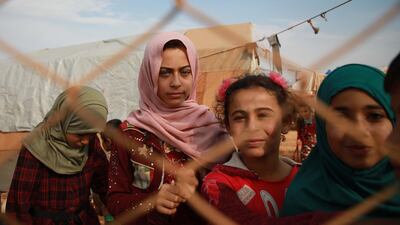
These trends can cause even deeper harm to women and children in vulnerable areas in the Middle East, such as refugee camps; communities where economic decline is pronounced or where gender-based violence is already a problem.
Humanitarian groups warned early in the pandemic and the ensuing lockdowns in countries around the world that the restrictions and the loss of jobs and economic prospects could lead to an increase in domestic abuse.
Statistics from UN Women estimate that one in three women around the world had experienced sexual or physical harm by an intimate partner in their lifetimes even before the pandemic. The organisation warned that the economic, health and security strains as well as cramped lockdown conditions were likely to cause a “shadow pandemic” of domestic violence.
The issue was brought to the fore last week as a result of a widespread social media trend in which women posted black and white images of themselves, and which was supposed to highlight the murder in July of a Turkish woman, Pinar Gultekin, by an ex-boyfriend who strangled her and burnt her body. Though it is unclear what spurred such an act, it raises the question of whether this shadow pandemic has taken hold in the Middle East and what can be done to combat it.
UN Women says there has been an increase in domestic violence all over the world. Between mid-March and May, reports of such violence increased by 30 per cent in France and Singapore, and demand for emergency shelters increased in Canada, the US, the UK, Germany and Spain.
In countries like Syria, where the war has not ended and the coronavirus is surging, it is harder to come by real figures. This is due to multiple reasons: from weak civil society structures that cannot quantify incidents of abuse nor offer help to the women, to societal pressure that forces victims at times to accept their lot in life rather than risk the perceived damage to their reputations for walking out on their partners.
The pandemic exacerbates these issues, limiting avenues for women to seek help or shelter from abusive partners, and placing pressure on health resources that are diverted towards treating the immediate public health emergency presented by the virus.

For women, the economic collapse in Syria is likely to make matters worse. The currency has crashed. Economic recovery is a distant prospect as no reconstruction aid will flow in without a political deal and because of recently imposed US sanctions. Syria cannot afford a full lockdown even if the virus surges.
Yet despite all these factors pointing to heightened risk of domestic abuse, there is little data on the impact of the pandemic on vulnerable women. A paper written by Maria Al Abdeh, the executive director of Women Now for Development, which works on empowering women in Syria, and Champa Patel of Chatham House, said that 17 per cent of women in opposition-controlled areas in Syria who were interviewed reported being subjected to sexual or gender-based violence during the pandemic. A number of media reports have also discussed a rise in cases in the capital Damascus.
The paucity of statistics is a problem. Warnings by UN bodies and civil society organisations all point to an increased risk of domestic violence, especially in a country traumatised by war and lacking in economic opportunities, and where women have had to bear the burden of supporting households while the men were off fighting.
Understanding the true scale of this malaise is necessary if we are to find solutions to fight this. Solutions range from revising laws and social customs that often fail to support the victim, to providing shelters and mental health support to battered women, and making it easier for them to report abuse.
The shadow pandemic is still very much in the shadows in countries like Syria. It needs to be dragged into the light.
Kareem Shaheen is a former Middle East correspondent based in Canada

