


Unlike previous pandemics, Covid-19 has spread like wildfire across the globe, which can be attributed to the globalised world we live in. According to the World Health Organisation, there are currently more than a million confirmed cases worldwide and over 100,000 deaths spread to at least 195 countries. Millions of people, from all walks of life, are having to adapt to what is an unprecedented challenge we are all facing.
Much of the news has instilled fear – an emotion that puts humans in fight-or-flight mode, and which can suppress the immune system. We have seen supermarket shelves emptied, irrational behaviour, and the mental health of those in isolation being affected.
As social beings, it is understandable that solitude might seem challenging. But it has given us the space to revisit and challenge old constructs and be creative in the process. This period is unlike anything we have experienced in recent times; we have never before been forced to stop and change our way of life so radically and in such a short space of time.
This pandemic is affecting all echelons of society, bringing humanity together and forcing it to build resilience at all levels – for individuals, governments and organisations. It has taught us two key lessons: that what happens in other countries is just as important to us, and that we can bring the human race closer together in order to achieve collective prosperity.
Across all sectors, people are working together like never before to combat the pandemic, and we are realising that we need to improve in some areas and stop certain practices. Humanity must rise positively and innovatively to this challenge in order to limit the devastating losses to our healthcare and economic systems.
Nevertheless, I believe there are ways in which this virus will benefit humanity and the planet in the long run.
Compassion and collaboration
The compassion and empathy being spread around the world are heart-warming and reassuring because the world still faces many inequities that needed addressing even before the pandemic. We are being made to think of those who may not have a roof over their heads, seeking shelter, and/or feeding their families. For instance, a video of a woman in China unable to say goodbye to her mother before she passed away shook me personally.
There has been unprecedented collaboration among companies who are re-purposing their workshops, event centres and laboratories to support healthcare systems. Examples include fashion houses such as Dior producing masks and Louis Vuitton Moet Hennessy creating hand sanitisers. Meanwhile, partnerships among large pharmaceutical companies are being struck.

There is renewed respect and appreciation for frontline workers who are often forgotten, especially those in the healthcare and food and beverage sectors. To keep our communities healthy, they work tirelessly, putting in long shifts – often late at night – while risking their own lives to care for others.
Digitisation
There has been an expedited transition to digitalisation. With flights being grounded and remote working procedures being put in place, people are now conducting almost all their business from home, paving the way for virtual meetings and events. This will help organisations manage expenses better but also allow more people to attend, giving greater and safer access to events worldwide.
Never has such a large segment of the world's population had to change so quickly in the way things are done.
For instance, lack of affordable child care had forced many mothers to leave the workplace. In 2016, a report by the Centre for American Progress stated that two million parents had to make career sacrifices owing to the challenges of balancing child care and employment. But with current changes, working mothers might be able to extend their maternity leave or remain at work. Organisations, meanwhile, are ironing out technical issues and learning these lessons. Parents should not have to sacrifice their careers because of forced mobility. Thanks to technology, many more people can continue to work.

Paradigm shifts
There is no doubt that the status quo and the many constructs we are so used to are being re-evaluated.
When we think of schools, we think of buildings where children sit and learn. But with education being conducted remotely, the notion of distance learning will no longer be frowned upon, and children living in developing nations will be able to access education without the need for brick and mortar infrastructure. I am hopeful that every person will have access to affordable and quality education by 2030 – one of the targets within the UN's Sustainability Development Goals framework – and perhaps this pandemic will help expedite it.
It is also important to understand that mankind and Planet Earth are not mutually exclusive. Our planet has started to heal itself, and that is promising. Pollution levels have dropped, with some cities having seen a 25-50 per cent reduction. I hope we learn from this, and that once the pandemic is behind us, we will appreciate nature more, value the resources we have, and change our behaviour to reduce carbon emissions.
There is a common denominator in the fight against climate change and in dealing with this pandemic, and it is that we need to follow and accept the science.
Going forward, the non-essential consumption of wildlife must stop. Animals not necessary for consumption should be allowed to do what they are supposed to: be part of an ecosystem that supports the planet.
Positive use of data
Data is increasingly key and new technologies are being deployed towards important tasks, such as drones to sanitise streets without the risk of exposing people to chemicals. Meanwhile, a growing sector is one that concerns new technologies that can provide solutions to public policy challenges. We have seen many countries use them to contain the spread of Covid-19.
-
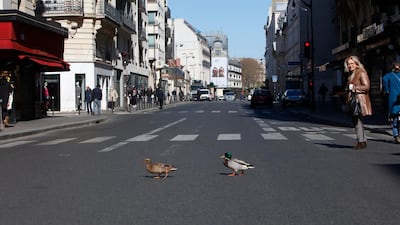
A couple of ducks spotted on Paris's Rue de Sevres. Getty Images -
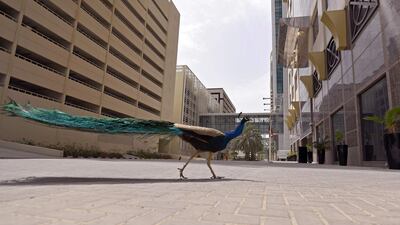
A lone peacock walks along a street in Dubai. AFP -
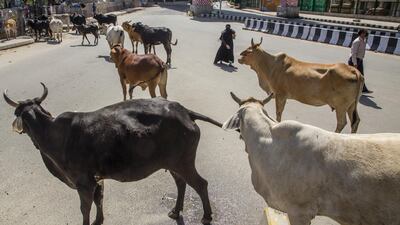
A herd of cows walk on a deserted road in New Delhi, India. Getty Image -
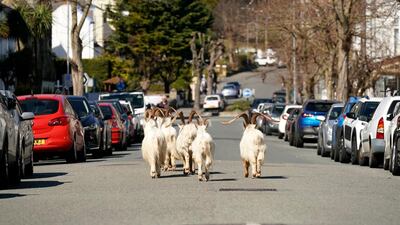
Mountain goats roam the streets of LLandudno in Wales. Getty Images -

A sign reads "Attention, wild animals, danger, stay away" near cows on the Mare e Sol beach in Coti-Chiavari, on the French Mediterranean island of Corsica. AFP -
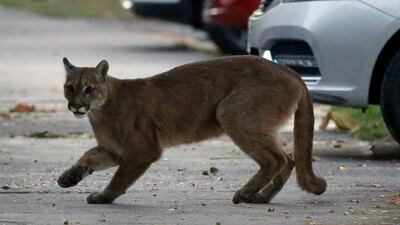
A juvenile puma in the streets of Santiago. AFP -
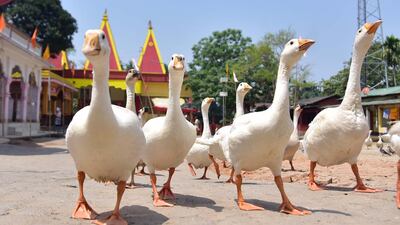
A flock of geese on the gander in Assam. Anuwar Ali / Getty Images


Singapore, for example, has launched an application called TraceTogether that has been downloaded by more than 600,000 people to trace and record the movements of residents within a two-metre radius of someone with the virus. This app is another illustration of the solidarity shown towards others, as it is open-sourced for other nations and developers to use.
Finally, it is important to understand that every cloud has a silver lining. This pandemic will pass. But for now, stay home, stay safe and make good use of your time to do the things you have always wanted to do. I hope that when things get better, we will continue to see humanity working together, experience more inclusion, and allow our planet to heal itself, which in turn heals us.
Sheikha Shamma bint Sultan bin Khalifa Al Nahyan is chief executive officer of Alliances for Global Sustainability

