
On November 19, while US President Donald Trump was meeting Russian President Vladimir Putin and Chinese President Xi Jinping at Kylin Villa in Shenzhen, China, a historic decision was reached in The Hague at the International Court of Justice. The ICJ is a short distance from the very court that issued an arrest warrant for Mr Putin in March 2023, the International Criminal Court.
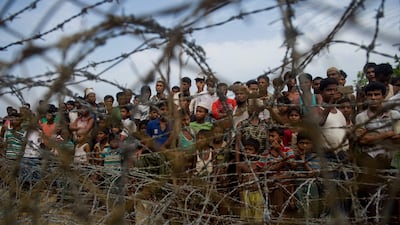
On the same day as the historic trilateral summit in Shenzhen, the ICJ, the UN's highest court, ruled that Myanmar committed genocide against the Rohingya people in a brutal 2017 military operation where villagers were hunted down and sometimes burnt alive in their huts. Where babies and children were slaughtered, and men and women raped in a “clearance operation”.
It was the first time a state had been found responsible for genocide.
What is stunning about the decision is that the case was brought by a small West African nation, the Gambia, which had no skin in the game and lies thousands of kilometres from Myanmar, on the Atlantic Ocean. One man, the former justice minister Abubacarr Tambadou, a lawyer and politician, essentially awakened the conscience of the world.
In 2018, as part of a delegation from the Organisation of Islamic Co-operation, Mr Tambadou visited the refugee camps in Cox's Bazar, Bangladesh. Survivors' stories of rape, mass killings and ethnic cleansing reminded him too clearly of Rwanda, where he had spent a decade as a prosecutor at the UN's International Criminal Tribunal for Rwanda. "I could smell the stench of genocide from miles away."
In earlier cases, the court never found that a state had itself committed genocide. Even in Bosnia v Serbia (2007), a war where hideous atrocity crimes occurred, it ruled that Serbia had failed to prevent the genocide at Srebrenica.
-
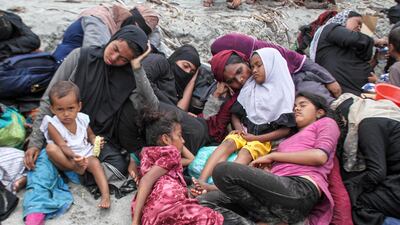
Rohingya women and children rest on the sand after making the sea crossing from Bangladesh to Aceh province, Indonesia. Reuters -
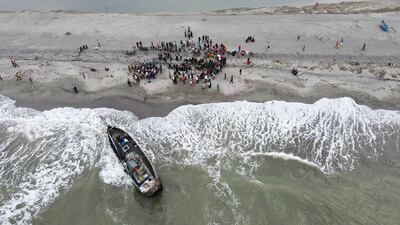
A boat carrying Rohingya stranded on Lampanah beach, Aceh province. The UN says the official recorded drowning toll of 350 in 2022 was the 'tip of the iceberg', with many more feared dead. Reuters -
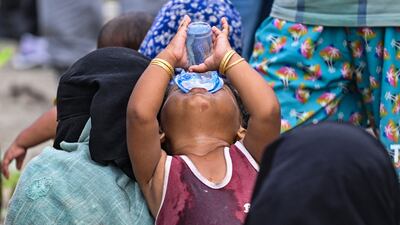
A child drinks after arriving by boat in Indonesia. Many Rohingya are fleeing refugee camps in Cox's Bazaar, Bangladesh, where kidnapping, rape and violence have become common. AFP -
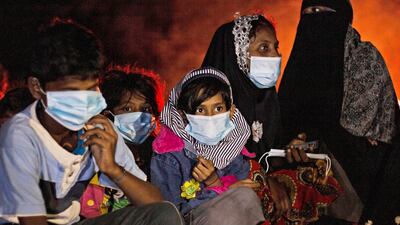
Families sit by a fire on a beach on Idaman Island in East Aceh, Indonesia. Despite the risks of crossing the Andaman Sea, the prospect of life in Malaysia and Indonesia attracts thousands. AP -

People smugglers charge about $5,000 for a seat on a vessel from Bangladesh to Indonesia, Thailand or Malaysia. Conditions on board are often grim. AFP -
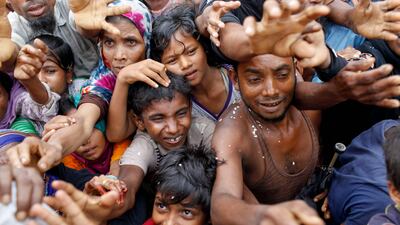
Rohingya refugees from Myanmar wait for aid at the Kutupalong refugee camp, the largest in the world, in Bangladesh. AFP -
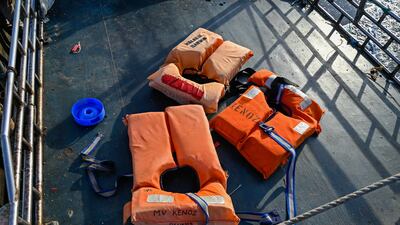
Lifejackets lie in a boat used to ferry Rohingya refugees across the water. AFP -
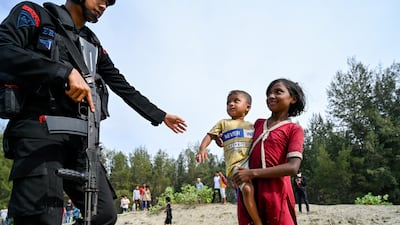
Indonesian police assist Rohingya refugee children at a beach in Aceh province. AFP -
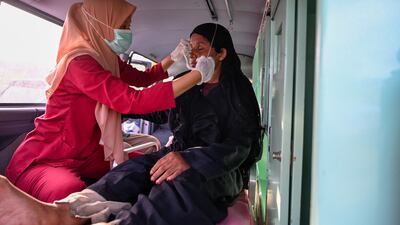
A health worker helps a Rohingya refugee after she arrived by boat on the coast of Aceh. AFP


In Croatia v Serbia (2015), the court completely dismissed the genocide claims.
This is because proving genocide is hard. The bar is high because intent must be proven. The Genocide Convention, adopted by the UN in 1948 in the aftermath of the horrors of the Holocaust, defines it as "acts committed with intent to destroy, in whole or in part, a national, ethnical, racial or religious group, as such".
Myanmar argued their brutal tactics were to fight militants. But the court found that, whatever its military goals, the only reasonable explanation for its conduct was an intent to destroy the Rohingya minority. Myanamar didn’t deny the violence – it was too well-documented – but they argued other purposes: counter-insurgency, forced displacement and punishment.
That is important for the next big case at the ICJ, Gaza, where Israel's central defence is that it is fighting Hamas in self-defence after the attacks of October 7, 2023.
So what does the genocide label actually mean, and how will the verdict be enforced? It doesn’t mean individuals are punished – that is the job of the ICC. In November 2024, its prosecutor asked judges for an arrest warrant for Min Aung Hlaing, the general who led the 2017 operation. He has since named himself Myanmar's president.
The court has ordered reparations, but The ICJ has no police force. If Myanmar ignores the ruling, enforcement falls to the UN Security Council. But the Security Council is often blocked, because China and Russia are almost certain to use their veto.
It also means safe passage and “return”. There are more than a million Rohingya still in the refugee camps of Cox's Bazar.
Everyone is now analysing how the judges words last week will bear on the Gaza case, which South Africa brought against Israel under the Genocide Convention in December 2023, less than three months after the start of the war.
More than 74,000 people have been killed in Gaza, according to the Palestinian Health Ministry, many of them women and children who died terrible deaths crushed under the rubble. Amnesty International has concluded that Israel is committing genocide. Human Rights Watch has accused it of forced displacement and acts of genocide.
So have leading genocide scholars, including the Israeli-born Holocaust historian Omer Bartov, who now teaches at Brown University, and the International Association of Genocide Scholars.
Israel denies the allegations.
The ruling may take years: South Africa has until November 2027 to submit its next written pleading, and Israel has until 2029 to respond.
Some believe that what happened last week for the Rohingya will not necessarily mean a win for South Africa and the Palestinians. And the years that lawyers on both sides spend preparing could cost many more Palestinian lives. The bombs are still dropping in Gaza, despite a so-called ceasefire.
Others believe the Gambia's win sets a precedent and sends a clear and strong message: on the very day Mr Trump, Mr Putin and Mr Xi met, the court showed that international law still exists.
It means that states must abide by international law. Philippe Sands, who was part of the Gambia's legal team, was in the courtroom when the case against Myanmar was argued. He later told the BBC that Gaza was "the elephant in the room. Everybody knew that the court's approach in this case would have implications in the next one". Had the Gambia lost, he said, South Africa's case would effectively have been over.
-
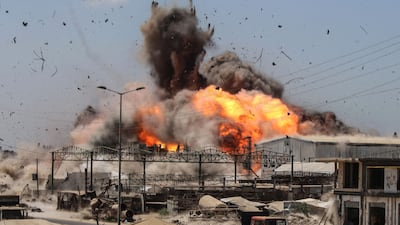
A fireball rises during an Israeli strike in central Gaza. AFP -
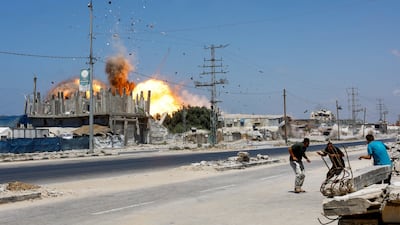
Smoke and flames rise during the strike in Al Zawayda. Reuters -
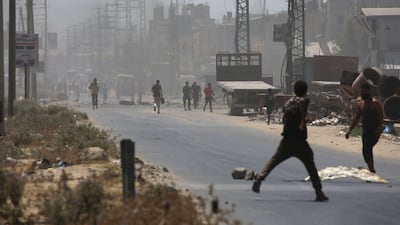
Palestinians flee following an Israeli strike in Maghazi, central Gaza Strip. AFP -
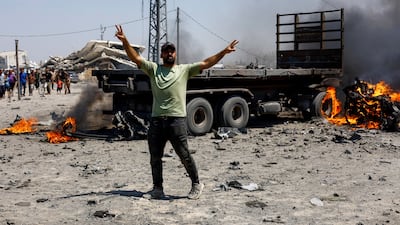
A fire burns after a strike on a flatbed trailer. Reuters -
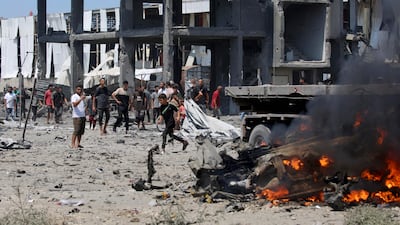
Palestinians gather at the site of an Israeli strike in Maghazi. AFP -
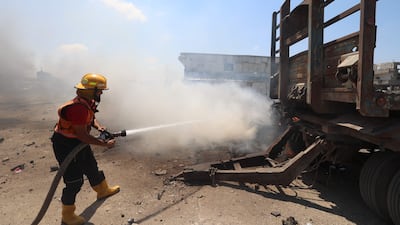
A firefighter tries to extinguish the flames of a burning lorry in Maghazi, in the central Gaza Strip. AFP -
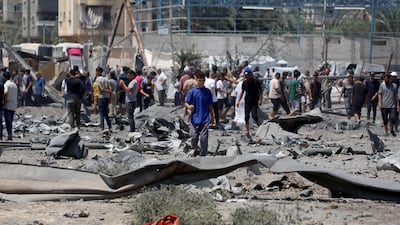
Gazans at the site of an Israeli strike in Maghazi. AFP


Gambia v Myanmar was not just about putting Myanmar on trial. As Mr Tambadou once said, it was about "our collective humanity, which is on trial here".
More importantly, it has shown that one man can start the process of justice, and that one state can prevail against another. At the start of his fight against Myanmar, Mr Tambadou faced the court and evoked the line often attributed to Edmund Burke, a line that forces all of us never to look away: "The only thing necessary for the triumph of evil is that good men do nothing."