

Israeli Prime Minister Benjamin Netanyahu initiated a war he knew Israel could not win on its own, wagering instead that he could get US President Donald Trump into finishing the job for him. So far, the gamble appears to have partially paid off: Mr Trump, despite his well-known aversion to entangling the US in another “forever war”, nonetheless authorised a strike that significantly degraded Iran’s nuclear infrastructure, effectively removing the prospect of nuclear weaponisation in the near and medium terms.
Tactically, it was a success for Israel. Strategically, however, the outcome remains far less certain.
The Islamic Republic’s core command-and-control architecture remains intact, at least for now. The political leadership, including supreme leader Ayatollah Ali Khamenei and the Islamic Revolutionary Guard Corps, retains operational cohesion. Iran’s coercive institutions – the IRGC, the Ministry of Intelligence and the Basij paramilitary forces – continue to function with efficacy. Even former establishment insiders and political dissidents, such as former parliamentary speaker Mehdi Karroubi, issued calls for national unity under enemy bombardment. No high-level defections have been reported.
The Iranian public did not rise against its rulers. Faced with existential threat, most Iranians retreated into survival mode. There are signs of a limited “rally-around-the-flag” effect, as nationalist sentiment temporarily bridges the divide between establishment and society. The outlawed Mojahedin-e-Khalq, which had supported Iraq’s war against Iran in the 1980s, remains marginal. Reza Pahlavi, the exiled crown prince who publicly endorsed Israeli air strikes, may find himself in a similar position as the number of civilian casualties rises.
Equally disheartening from the perspective of Israeli strategic planners is the absence of internal insurgency. The editorial pages of The Jerusalem Post called for support to Iran’s Baloch, Kurdish and Arab minorities, long marginalised and intermittently restive, but apart from minor incidents, no large-scale armed uprisings have materialised. Iran’s centralised security state, hardened by decades of internal unrest, appears firmly in control, even in the historically volatile border regions.
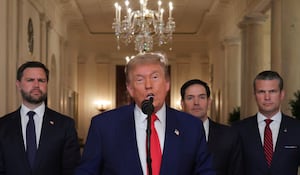
This leaves Israel trapped in an open-ended conflict. The air campaign continues, but with diminishing returns. Iran has so far demonstrated strategic patience, avoiding retaliation against US military assets. This restraint reflects a calculated decision to avoid full-scale American involvement. Mr Trump’s address to the nation following the strikes was consistent with his long-standing reluctance to engage in major overseas military commitments. Regime change in Tehran does not appear to be part of Washington’s current agenda.
-
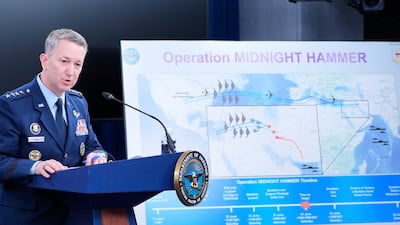
Gen Dan Caine, Chairman of the Joint Chiefs of Staff, holds a press conference at the Pentagon after the US military struck three sites in Iran. AP -
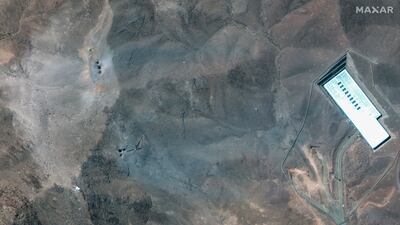
A handout satellite image made available by Maxar Technologies shows craters and ash on a ridge at the Fordow underground uranium enrichment following US air strikes. EPA -
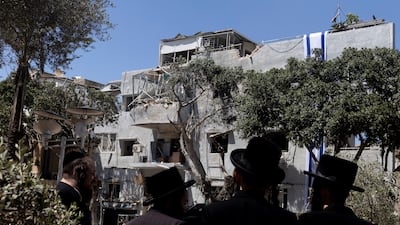
Ultra-Orthodox Jewish men look in shock at a building ruined in an Iranian missile strike in Haifa, Israel. Getty Images -
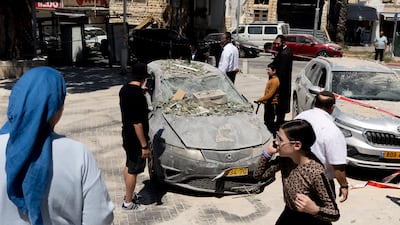
Cars damaged in Haifa. Getty Images -
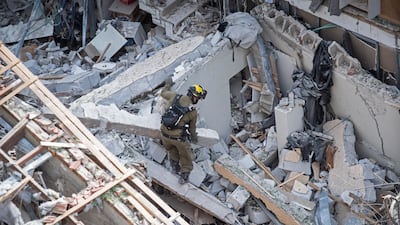
Debris in Tel Aviv. Israel was hit by a wave of aerial attacks from Iran after the US entered the war overnight and bombed several Iranian nuclear sites. Getty Images -
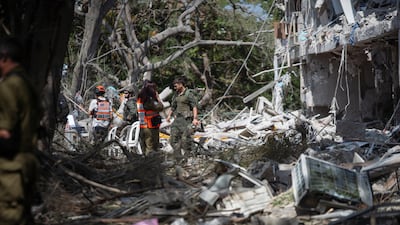
Emergency workers search for survivors in the Ramat Aviv neighbourhood of Tel Aviv, after it was bombed. Getty Images -
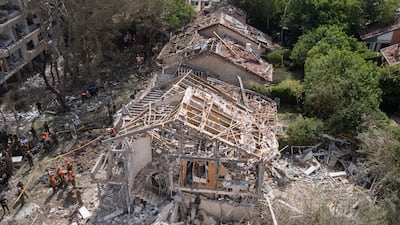
Residential buildings destroyed at the site of an Iranian air strike in Ramat Aviv. Getty Images -
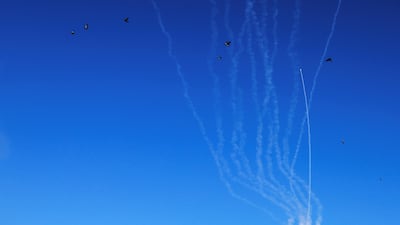
Missiles launched from Iran are intercepted over Tel Aviv. Reuters -
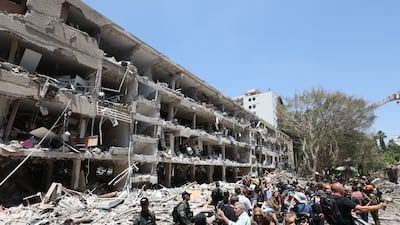
Israeli emergency teams at the site of an Iranian missile strike on a residential complex in Tel Aviv. EPA -
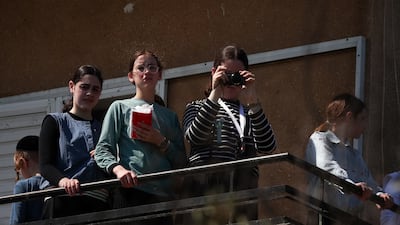
People look at a site bombed in Haifa. Reuters -
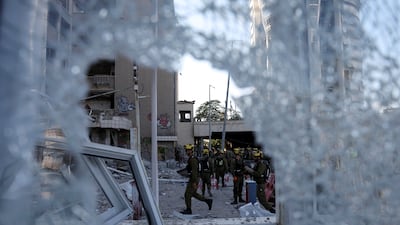
Israeli emergency personnel at a building hit by an Iranian missile strike, in Haifa. Reuters -
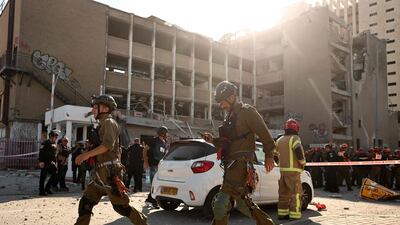
Israeli emergency personnel at a building hit by an Iranian missile strike, in Haifa. AFP -
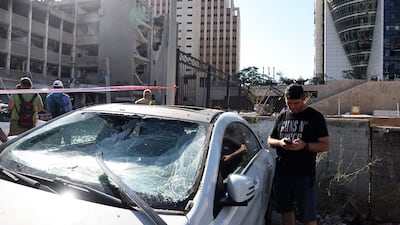
A car hit by a missile launched from Iran, in Haifa. AFP -

Israeli emergency personnel at a building hit by an Iranian missile strike, in Haifa. AFP -
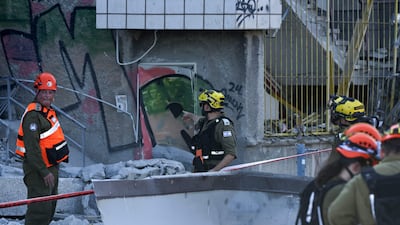
Israeli emergency personnel at a building hit by an Iranian missile strike, in Haifa. AFP -
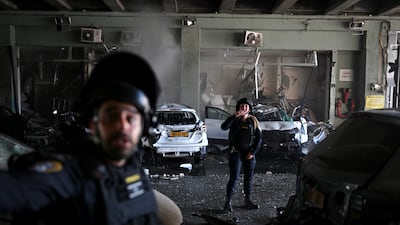
Israeli emergency personnel at a building hit by an Iranian missile strike, in Haifa. AFP -
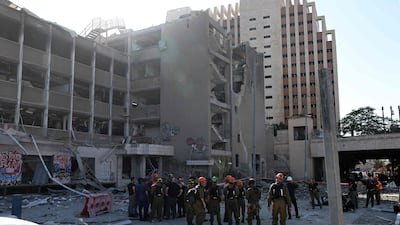
Israeli emergency personnel at a building hit by an Iranian missile strike, in Haifa. AFP -
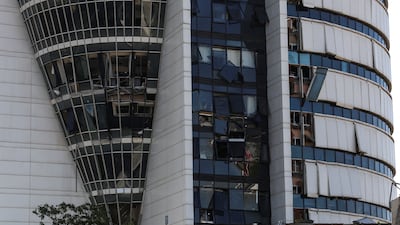
People gather outside a damaged building in Haifa. Reuters -
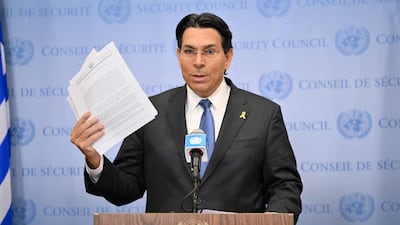
Israeli ambassador to the UN in Geneva addresses and emergency session. AFP -
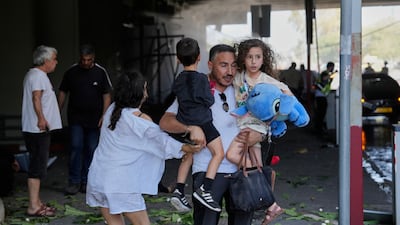
Israelis flee an Iranian missile strike in the port city of Haifa. AP Photo -
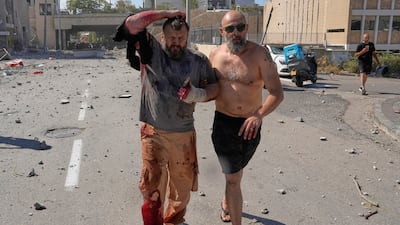
An injured man is helped after an Iranian missile strike in Haifa. AP Photo -
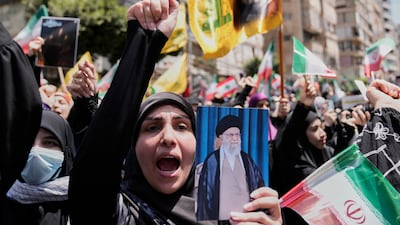
A protester holds up a portrait of Iran's supreme leader Ayatollah Ali Khamenei at a demonstration against Israeli attacks on Iran, in Beirut, Lebanon. AP Photo -
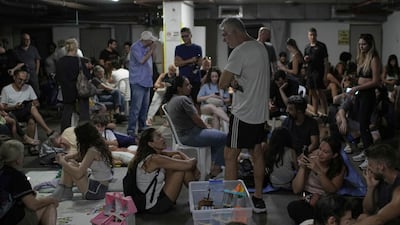
People take shelter as air raid sirens warn of incoming Iranian strikes in Tel Aviv. AP Photo -
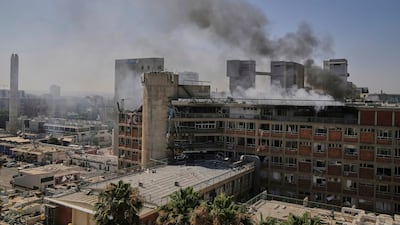
Smokes rises from Soroka Medical Centre, in Beersheba, southern Israel, after it was hit by an Iranian missile. AP -
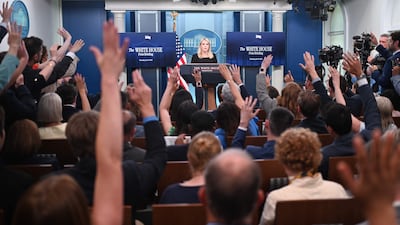
White House press secretary Karoline Leavitt takes questions from reporters. She said President Donald Trump would decide whether the US would join Israel’s war on Iran 'in the next two weeks'. AFP -
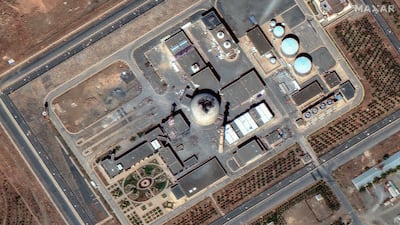
Iran's Arak heavy water reactor, in central Iran, after Israeli air strikes. Reuters -
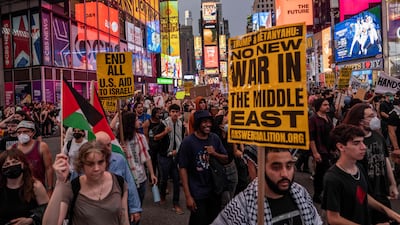
People march in Times Square, New York, to call on President Trump not to go to war with Iran. AFP -
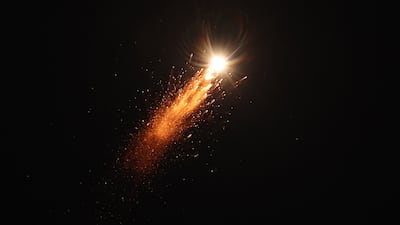
Israel's Iron Dome air defence system intercepts missiles fired from Iran over Tel Aviv. EPA -
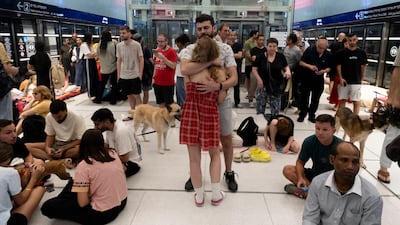
Israelis shelter in an underground train station in Ramat Gan after a missile warning. Getty Images -
Israeli special forces check the remains of a suspected Iranian ballistic missile in northern Israel. Reuters -
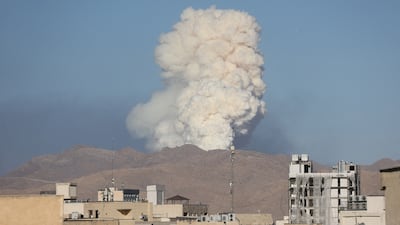
Smoke rises after an Israeli attack in the Iranian capital, Tehran. Reuters -
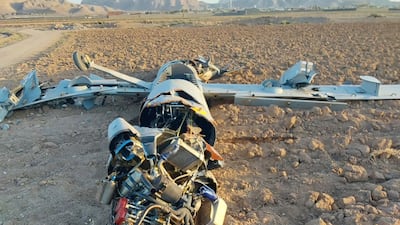
A picture released by Iran's armed forces claims to show an Israeli drone shot down outside the central city of Isfahan. AP -

People take cover inside a cable car tunnel in Haifa after an Iranian missile attack. Reuters -
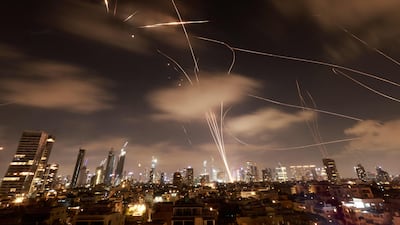
Israeli air defence systems fire at Iranian missiles over Tel Aviv. AFP -
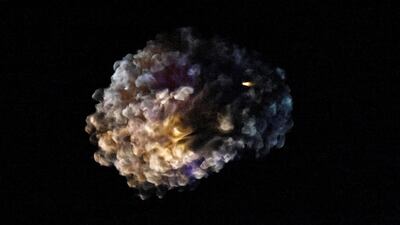
Missiles are intercepted above Ashkelon, Israel. Reuters -
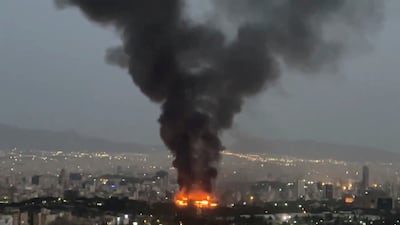
Smoke rises in Tehran. Reuters -
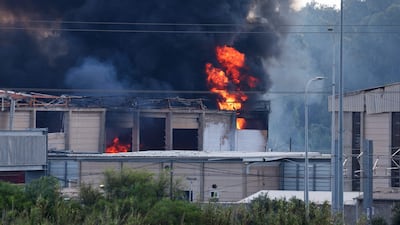
A building burns after strikes on the Israeli city of Herzliya, near Tel Aviv. AFP -
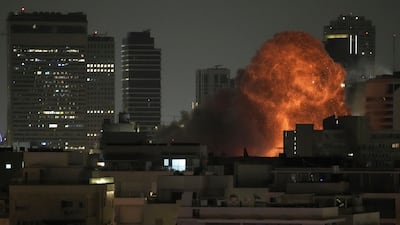
An Iranian missile causes an explosion in Tel Aviv. AP -
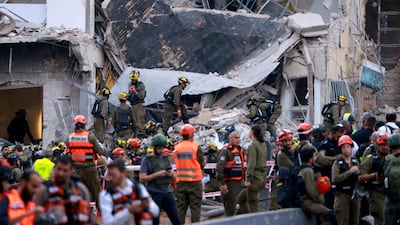
Rescuers sift through the remains of a damaged building in Tel Aviv after a barrage of Iranian rockets. AFP -

A wounded man is treated after an explosion in Tehran. AP


This posture places Mr Netanyahu and Israel in an increasingly precarious position. Without a decisive knockout blow and lacking a regional coalition to share the burden, Israel risks strategic overextension. Worse still, Iran retains escalation options. There is the risk of Tehran, under continued bombardments from Israel, internationalising the conflict by targeting energy infrastructure in the region or blocking international waterways.
It is possible that Israel, as the initiator of the war, finds itself diplomatically isolated by the resulting global outcry, while the regime it sought to dismantle claims victory through survival. The Iranian leadership, adept at constructing narratives of resistance, would present endurance as triumph, not through battlefield success but through continued existence. As with the war with Iraq from 1980 to 1988, the longer the war continues, the more it may consolidate the regime’s position.
This is the central miscalculation of Mr Netanyahu’s strategy. It was predicated on the flawed assumption that external pressure alone could produce regime change or mass revolt. It underestimated the establishment’s institutional resilience, overestimated the opposition’s capacity to mobilise and misread the limits of American political will. It also conflated tactical success – the destruction of centrifuges – with strategic transformation. But Iran is not Gaza, and the IRGC is not Hamas. The Islamic Republic has a deeper state apparatus and a long record of survival under duress.
If Israel’s objective was to delay Iran’s nuclear ambitions, it has done so, temporarily. But if the broader aim was to induce regime collapse or significant internal instability, current indicators point to failure. The greater risk now is that Israel becomes entangled in a protracted war of attrition against a regime that specialises in strategic endurance. The longer the conflict drags on without resolution, the more Mr Netanyahu’s gamble threatens to backfire, both diplomatically and domestically, as Israeli society confronts the toll of a campaign with no clear exit.
In the end, the Islamic Republic may emerge from this conflict damaged but intact. If Israel is eventually compelled, by international pressure or operational fatigue, to suspend its bombing campaign, Tehran will claim victory. And in the political logic of authoritarian regimes, mere survival in the face of overwhelming external force is often enough to do so. Mr Netanyahu may succeed in delaying Iran’s nuclear programme, but at the price of strategic stalemate – and an emboldened adversary.

