

The climate crisis rages on unabated, and its consequences continue to imperil millions of lives and livelihoods. Southern Africa is currently facing its worst food crisis in decades due to severe drought. Further north, the Sahara experienced rare flooding for the first time in decades. According to the World Food Programme, a staggering 21 million people are now malnourished due to impacts of climate change on food production.
In cities like Errachidia, in southeast Morocco, nearly three inches of rain fell over just two days in September – more than four times the normal rainfall for the entire month and over half a year’s worth for the area. Earlier this year, Hurricane Beryl tore through parts of the Caribbean, causing widespread devastation and loss of life.
We know the steps required to alter this path – from investing in renewable energy and reducing emissions to limiting global temperature rise below 1.5°C above pre-industrial levels.
In the meantime, we must build resilience within communities facing the harshest impacts of the crisis. But addressing this challenge is neither cheap nor easy; it demands significant financial commitment and resources, especially for vulnerable communities in developing countries.
Despite this situation, global climate finance remains chronically inadequate. According to the UN Environmental Programme’s Adaptation Gap Report 2024, international public adaptation finance flows to developing countries increased only marginally from 2021 to 2022, rising from $22 billion to $28 billion – an improvement, to be sure, but only a fraction of the $187–359 billion needed annually. This shortfall not only allows the problem to persist but results in higher post-disaster recovery costs.
-

Participants at the Cop29 venue in Baku, Azerbaijan. Reuters -
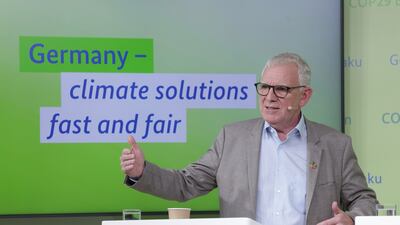
Jochen Flasbarth, State Secretary in the German Ministry for Economic Co-operation and Development, speaks in the Germany pavilion. Getty Images -
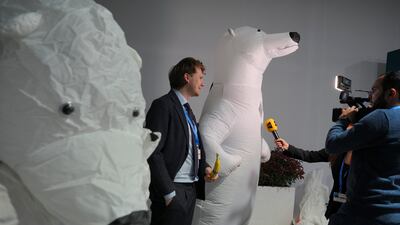
Nuclear power activists demonstrate. AP -
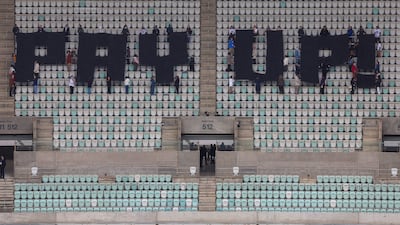
Activists hold a protest calling on developed nations to provide financing. Reuters -
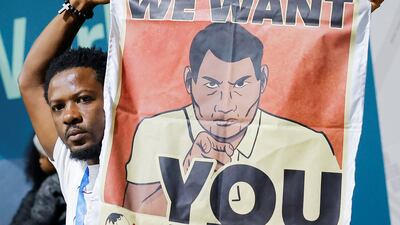
An activist holds up a sign. Reuters -
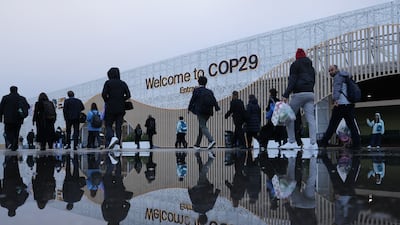
Conference participants arrive on day four. Getty Images -
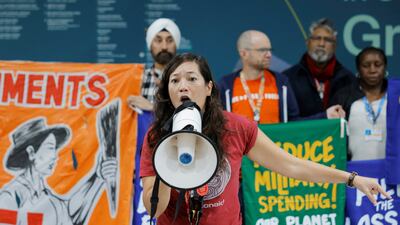
Another protest. Reuters -
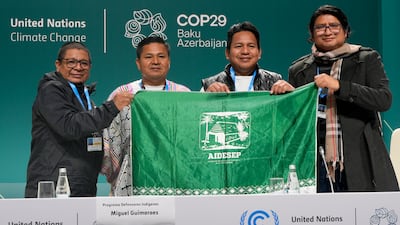
From left, Jorge Perez, Rolando Escobar, Miguel Vasquez and Esteban Cama at a session on Indigenous communities in the Peruvian Amazon. AP -
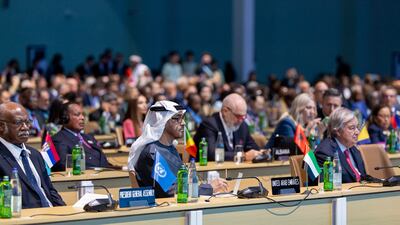
President Sheikh Mohamed attends the World Leaders Climate Action Summit at Cop29, in Azerbaijan's capital Baku. UAE Presidential Court -
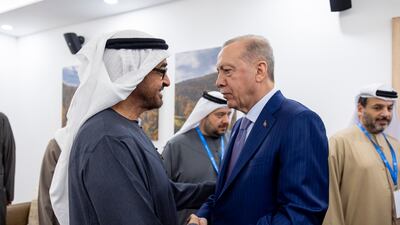
Sheikh Mohamed greets Recep Tayyip Erdogan, President of Turkey. WAM -
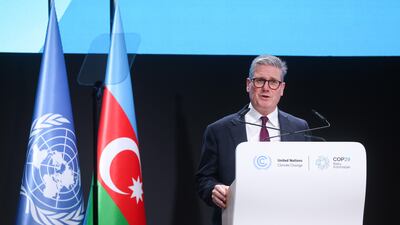
British Prime Minister Keir Starmer at Cop29. Bloomberg -

Ding Xuexiang, China's first Vice Premier, at Cop29. Bloomberg -
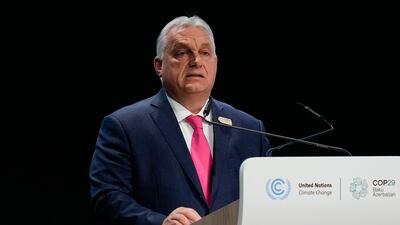
Hungary's Prime Minister Viktor Orban at a plenary session at Cop29. AP -
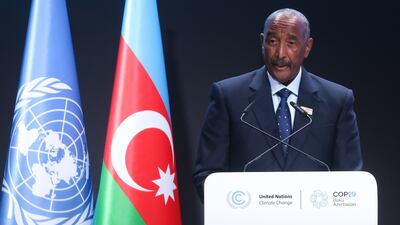
Sudan's military leader Abdel Fattah Al Burhan, at Cop29. Bloomberg -
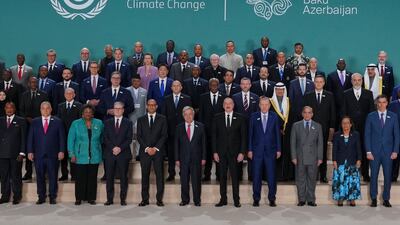
World leaders pose for a group photo at the Cop29 United Nations Climate Change Conference, in Baku, Azerbaijan. AP -
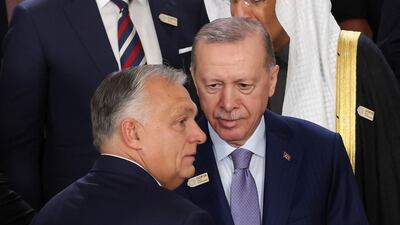
Hungarian Prime Minister Viktor Orban, left, stands next to Turkish President Recep Tayyip Erdogan. Reuters -
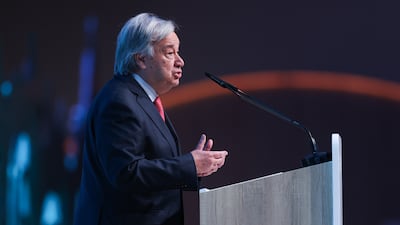
Antonio Guterres, UN secretary-general, addresses Cop29. Bloomberg -
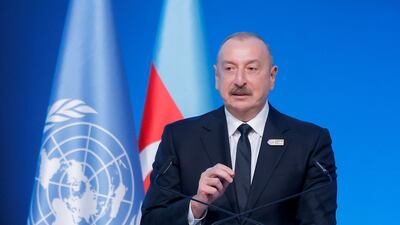
Azerbaijan's President Ilham Aliyev speaks during the Cop29 opening ceremony. Reuters -
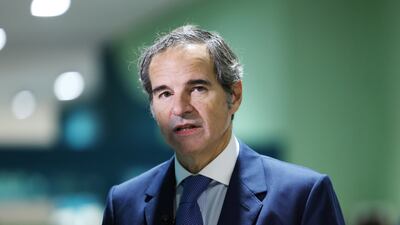
Rafael Grossi, director general of International Atomic Energy Agency (IAEA), at Cop29. Bloomberg -

Activists demonstrate for climate justice and a ceasefire in the Israel-Hamas war in Gaza, on day one of Cop29. AP -
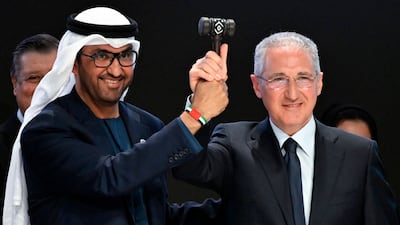
Cop28 President Dr Sultan Al Jaber and Cop29 President Mukhtar Babayev at the official handover. AFP -
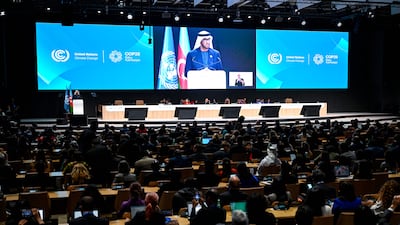
Dr Al Jaber, Minister of Industry and Advanced Technology, delivers a speech during the opening of Cop29 in Baku. AFP -
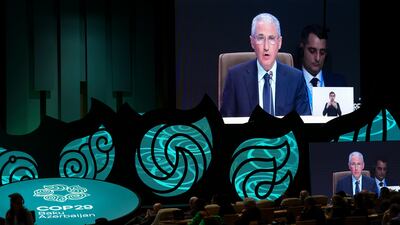
Mr Babayev speaks during the opening plenary session. AP -
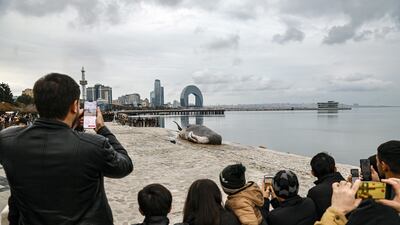
An installation depicting a beached whale by the Belgian art collective Captain Boomer on an embankment in Baku. EPA -

The Turkey Solidarity Centre pavilion. Bloomberg -
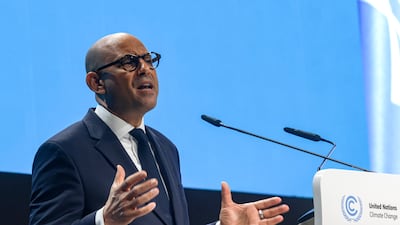
Simon Stiell, executive secretary of the UN Framework Convention on Climate Change, speaks during the opening ceremony. EPA -
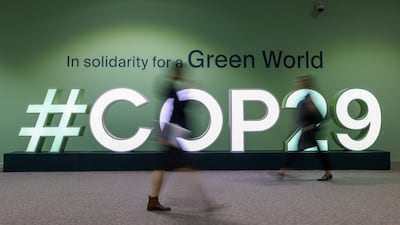
People begin arriving for the start of Cop29 in Baku. Bloomberg -
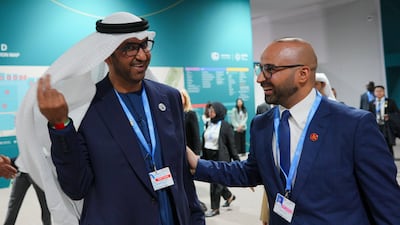
Dr Al Jaber at Cop29 with Moroccan climate researcher Cherif El Khalil. AP -

A mosaic adorns a wall at the Cop29 venue, Baku Stadium, in the capital of Azerbaijan. Bloomberg -

A woman tries out a VR headset at the tourism booth as the Cop29 UN climate summit gets under way in Baku, Azerbaijan. AP


These facts are not new. Countries have long agreed on the need for additional climate financing to support climate action, particularly in developing countries.
It was at the 15th session of the Conference of the Parties to the UN Framework Convention on Climate Change (Cop15), in 2009, that developed nations pledged to mobilise $100 billion annually by 2020 to support climate action in developing countries.
This commitment, formalised in the Cancun Agreements at Cop16 in 2010 and reaffirmed in the Paris Agreement in 2015, aimed to help these nations mitigate emissions and adapt to worsening climate impacts. However, this target was only met in 2022 – two years behind schedule and only after a decade of protracted negotiations and delays. The scale of need is now greater than the initial goal, with the gap between pledged funds and actual requirements growing continuously.
I have just returned from Cop29, in Baku, Azerbaijan, where world leaders are aiming to close the climate finance gap and accelerate global climate action. Dubbed “the finance Cop,” Cop29 must be laser-focused on securing the necessary resources to expand adaptation and mitigation efforts, enabling vulnerable nations to build resilience and transition to sustainable energy. Achieving this goal requires ensuring that countries have access to the resources they need to adapt and build resilience – efforts that are estimated to cost up to $300 billion each year until 2030.
Success also involves funding a just, equitable transition to clean, low-carbon energy, which will demand $4 trillion annually in renewable energy investments until 2030. While there has been progress in climate finance, including commitments to the Green Climate Fund and the launch of the Loss and Damage Fund at Cop28, these initiatives barely meet the scale of need.
As long as this chronic shortfall persists, progress will continue to stall. Communities on the frontlines will continue to pay the highest price – particularly those in least-developed countries, landlocked developing countries and small island developing states, which lack the resources to adapt to escalating climate volatility. Without adequate support, their fundamental rights and dignity are jeopardised.
Predictable and additional climate financing is essential for adaptation, from constructing flood defences to advancing drought-resistant agriculture. These measures strengthen community resilience and enhance recovery capacity.
Beyond adaptation, financing must enable developing nations to implement comprehensive climate action plans, tackle both immediate and long-term challenges, and invest in green technologies and sustainable practices that align economic growth with environmental preservation. As the climate crisis intensifies, the demand for these initiatives and resources will only continue to grow, affecting communities, ecosystems and economies globally.
The global community must fulfil its financial commitments in line with the urgency and scale of the crisis. Adequate, predictable and equitably mobilised climate financing can drive sustainable development and empower nations to build resilience.
I urge world leaders at Cop29 to move beyond rhetoric and make tangible progress on climate finance. By closing the gap between pledges and actual action, we can protect vulnerable communities from the worst effects of the climate crisis and ensure a future grounded in human dignity and sustainability.

