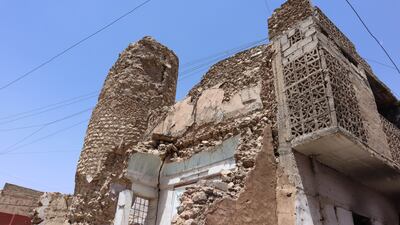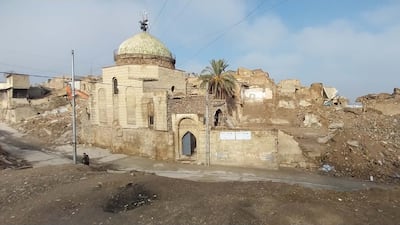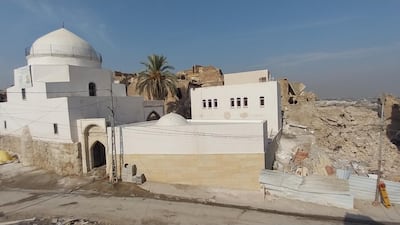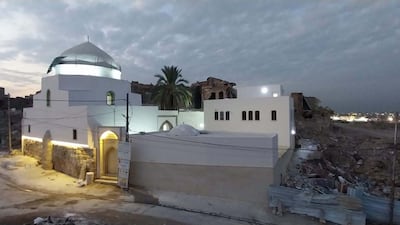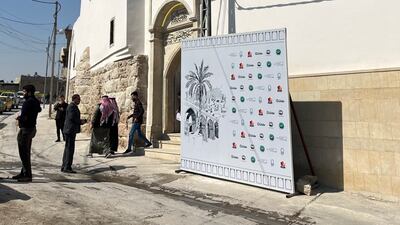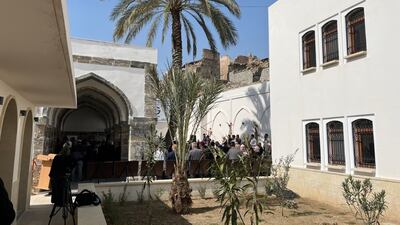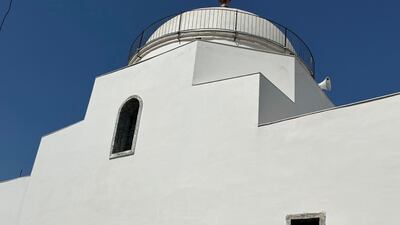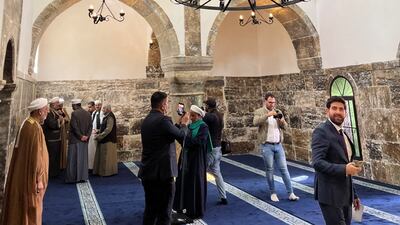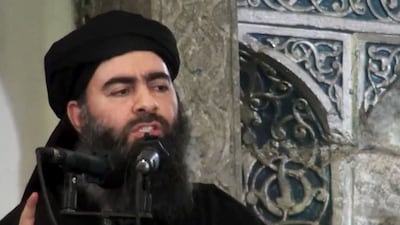
A decade ago, from the 12th-century Al Nouri Mosque – a historic landmark in the Iraqi city of Mosul – ISIS declared the establishment of the caliphate, undoubtedly marking a significant shift in modern terrorism. Led by Abu Bakr Al Baghdadi, ISIS aimed to establish the foundations of an Islamic state across territories in Iraq and Syria, imposing its interpretation of Sharia and launching a campaign of systematic terror.
Reflecting on the early days of ISIS's presence in Mosul, it has become evident that one of the group’s primary objectives was to initiate a "purification campaign" aimed at eradicating all things that did not adhere to their extreme misunderstanding of Islam. This involved forcibly deporting Christians, perpetrating genocide against the Yazidis, and arresting and executing Sunnis whom they deemed apostates. The terrorists also sought to eliminate any Shiite presence in Mosul and its surrounding areas. For several years, ISIS managed to achieve these heinous goals.
However, examining the events of the past decade alone does not provide sufficient answers as to why ISIS emerged so rapidly and was able to establish itself swiftly in Mosul and Raqqa. While numerous straightforward explanations can provide insight into the transformative events of June 2014 that reshaped Mosul and the global counter-terrorism landscape, several factors stand out. These include the sectarianism that took root following the 2003 invasion, the ongoing political conflict in Iraq, and some of the nefarious influences of Turkey and Iran. Additionally, the Middle East underwent significant political shifts during this period.
For decades before the rise of ISIS, Mosul experienced significant social and political changes. Since the 1970s, Christians in Mosul had expressed increasing discomfort, with no attempts or initiatives by local community leaders to address these issues. Saddam Hussein showed little interest, relying on a tribal system that proved more loyal to his regime. This neglect created further vacuums, and manifestations of these divisions became more pronounced after the 2003 US-led invasion.
Mosul was primed to fall into ISIS's hands, influenced by factors such as the sectarianism inherent in Iraq's political system and the waning interest of its people in maintaining the city's stability. Mosul had become so disconnected from reality that it appeared the only force capable of filling the ensuing vacuum was ISIS. The wake-up moment for the people of Mosul came tragically late.
Since its liberation, Mosul has witnessed several initiatives to reconstruct what was destroyed; the UAE-supported Unesco initiative to restore Christian and Muslim landmarks, as well as historic houses, stands out. However, the city remains socially tumultuous, with Iran-backed militants wielding major influence. The people, once again silenced, are unable to advocate for their rights. It may take decades before the people of Mosul find the right environment to begin meaningful dialogue and reconciliation.
Sectarian divisions between Sunni and Shiite communities deepened during ISIS’s reign, exacerbated by retaliatory violence and the sectarian militias that mobilised against the radicals. The Kurdistan Regional Government and Shiite militias played pivotal roles in countering ISIS, but were sometimes at odds with each other, reflecting broader regional dynamics.
Mosul was primed to fall into ISIS's hands, influenced by the sectarianism inherent in Iraq's political system and the waning interest of its people in maintaining the city's stability
In the broader regional and global context, ISIS’s rise had far-reaching implications. The group's ability to inspire and co-ordinate terrorist attacks beyond its controlled territories demonstrated the transnational nature of modern extremism. ISIS-affiliated groups and sympathisers conducted attacks in Europe, the Middle East, and beyond, prompting heightened security measures and international co-operation in countering terrorist financing, recruitment networks and online propaganda.
The Global Coalition to Defeat ISIS employed a multifaceted approach that combined military operations, intelligence sharing, and diplomatic efforts to degrade ISIS’s capabilities and dismantle its infrastructure. Although military victories drove ISIS militants into hiding, weakened their territorial hold and disrupted its command structure, efforts to counter the organisation’s propaganda, rehabilitate former militants, and support communities affected by violence require sustained international commitment and innovative strategies. Importantly, ISIS’s underlying ideological appeal to vulnerable communities and militant recruits persists.
Even after losing control over its physical territory, ISIS continues to exert influence through its expanding branches in various regions; these continue to maintain ISIS’s position as the deadliest terrorist organisation in the world, according to the 2024 Global Terrorism Index. It is still able to inspire and mobilise affiliates across the Middle East, Africa and South-East Asia. These branches operate with a significant degree of autonomy while adhering to the core ideological tenets established during the height of its power.
In fact, although ISIS’s ideology expanded through a potent combination of religious extremism and sophisticated propaganda, we must not forget the lessons learnt from the past. Conditions conducive to a terrorist organisation’s development – consider, for instance, the early stages following Al Qaeda’s formation – often lead to unforeseeable consequences. ISIS benefited from a framework that allowed it to not only declare a “caliphate”, but also bring together physically and intellectually a number of ideologues that the movement had never before seen. This developed an ideological corpus whose breadth, development and implications we will fully understand only with the passage of time.
Other than ideology, ISIS shifting towards a decentralised operational model has allowed the group to expand to several regions of Africa and Asia, with some provinces – such as those in the Sahel – growing steadily. However, the Sahel may lack the appeal of other scenarios; liberating Timbuktu cannot match the symbolism of liberating Mosul or Damascus. In fact, the grievances that drive such militancy in the Sahel are mainly rooted in local issues and tend to differ markedly from the objectives pursued by global Islamic extremism.
However, while the militants’ current agenda may seem focused on local issues, a crucial lesson gleaned from past experiences is that it is merely a matter of time until, under opportune conditions, they will attempt to internationalise their actions. The occurrence of attacks in the West should not be the sole criterion for assessing the immediacy of the threat. Nor should the fact that an extremist organisation holds and governs de facto territory be a criterion for assessing the urgency of the situation.
If none of the organisations active in the Sahel have yet opted to declare an Islamist administration, it is not due to lack of capability – quite the opposite; terrorist groups already administer territory. It is simply that a pragmatic cost-benefit analysis based on past experiences by these organisations shows that, for the time being, it is better not to do so.
Many challenges persist in post-ISIS Iraq, including governance deficits, economic disparities and unresolved sectarian tensions
One of the most disturbing facts about the past 10 years is that, despite the potential for effective and successful global mobilisation, such as forming the Coalition, sustaining such initiatives – and finding consensus to expand their activities – remains challenging. This difficulty is exemplified by Iraq, the main partner in the Coalition, requesting that it leave and end its mandate in the country. This request has raised numerous questions among various communities in Iraq who fear a resurgence of ISIS. Despite the political difficulties and dynamics in the country, the Coalition should continue to collaborate with Baghdad.
Many challenges persist in post-ISIS Iraq, including governance deficits, economic disparities and unresolved sectarian tensions. Reconstruction efforts are hindered by political instability, corruption and competing regional interests. The detention of thousands of ISIS fighters and their families in Iraqi prisons and displacement camps poses security and humanitarian challenges, necessitating comprehensive strategies for justice, rehabilitation and community reintegration.
Looking ahead, the 10th anniversary of ISIS’s “caliphate” declaration should be both a moment for reflection but also a call to action against the persistent and evolving threat of extremism. As seen in the intricate dynamics of post-ISIS Iraq, sustainable peace and stability hinge on inclusive governance, economic development and reconciliation initiatives that address underlying grievances and prevent an extremist resurgence. International solidarity and co-operation remain essential in confronting the evolving threat posed by radical ideologies and ensuring a peaceful future for affected regions.

The Buckingham Murders
Starring: Kareena Kapoor Khan, Ash Tandon, Prabhleen Sandhu
Director: Hansal Mehta
Rating: 4 / 5
Monster Hunter: World
Capcom
PlayStation 4, Xbox One
Infiniti QX80 specs
Engine: twin-turbocharged 3.5-liter V6
Power: 450hp
Torque: 700Nm
Price: From Dh450,000, Autograph model from Dh510,000
Available: Now
Afro%20salons
%3Cp%3E%3Cstrong%3EFor%20women%3A%3C%2Fstrong%3E%3Cbr%3ESisu%20Hair%20Salon%2C%20Jumeirah%201%2C%20Dubai%3Cbr%3EBoho%20Salon%2C%20Al%20Barsha%20South%2C%20Dubai%3Cbr%3EMoonlight%2C%20Al%20Falah%20Street%2C%20Abu%20Dhabi%3Cbr%3E%3Cstrong%3EFor%20men%3A%3C%2Fstrong%3E%3Cbr%3EMK%20Barbershop%2C%20Dar%20Al%20Wasl%20Mall%2C%20Dubai%3Cbr%3ERegency%20Saloon%2C%20Al%20Zahiyah%2C%20Abu%20Dhabi%3Cbr%3EUptown%20Barbershop%2C%20Al%20Nasseriya%2C%20Sharjah%3C%2Fp%3E%0A
Game Changer
Director: Shankar
Stars: Ram Charan, Kiara Advani, Anjali, S J Suryah, Jayaram
Rating: 2/5
Heavily-sugared soft drinks slip through the tax net
Some popular drinks with high levels of sugar and caffeine have slipped through the fizz drink tax loophole, as they are not carbonated or classed as an energy drink.
Arizona Iced Tea with lemon is one of those beverages, with one 240 millilitre serving offering up 23 grams of sugar - about six teaspoons.
A 680ml can of Arizona Iced Tea costs just Dh6.
Most sports drinks sold in supermarkets were found to contain, on average, five teaspoons of sugar in a 500ml bottle.
Benefits of first-time home buyers' scheme
- Priority access to new homes from participating developers
- Discounts on sales price of off-plan units
- Flexible payment plans from developers
- Mortgages with better interest rates, faster approval times and reduced fees
- DLD registration fee can be paid through banks or credit cards at zero interest rates
Our legal consultant
Name: Dr Hassan Mohsen Elhais
Position: legal consultant with Al Rowaad Advocates and Legal Consultants.
How green is the expo nursery?
Some 400,000 shrubs and 13,000 trees in the on-site nursery
An additional 450,000 shrubs and 4,000 trees to be delivered in the months leading up to the expo
Ghaf, date palm, acacia arabica, acacia tortilis, vitex or sage, techoma and the salvadora are just some heat tolerant native plants in the nursery
Approximately 340 species of shrubs and trees selected for diverse landscape
The nursery team works exclusively with organic fertilisers and pesticides
All shrubs and trees supplied by Dubai Municipality
Most sourced from farms, nurseries across the country
Plants and trees are re-potted when they arrive at nursery to give them room to grow
Some mature trees are in open areas or planted within the expo site
Green waste is recycled as compost
Treated sewage effluent supplied by Dubai Municipality is used to meet the majority of the nursery’s irrigation needs
Construction workforce peaked at 40,000 workers
About 65,000 people have signed up to volunteer
Main themes of expo is ‘Connecting Minds, Creating the Future’ and three subthemes of opportunity, mobility and sustainability.
Expo 2020 Dubai to open in October 2020 and run for six months
Some of Darwish's last words
"They see their tomorrows slipping out of their reach. And though it seems to them that everything outside this reality is heaven, yet they do not want to go to that heaven. They stay, because they are afflicted with hope." - Mahmoud Darwish, to attendees of the Palestine Festival of Literature, 2008
His life in brief: Born in a village near Galilee, he lived in exile for most of his life and started writing poetry after high school. He was arrested several times by Israel for what were deemed to be inciteful poems. Most of his work focused on the love and yearning for his homeland, and he was regarded the Palestinian poet of resistance. Over the course of his life, he published more than 30 poetry collections and books of prose, with his work translated into more than 20 languages. Many of his poems were set to music by Arab composers, most significantly Marcel Khalife. Darwish died on August 9, 2008 after undergoing heart surgery in the United States. He was later buried in Ramallah where a shrine was erected in his honour.
TICKETS
Tickets start at Dh100 for adults, while children can enter free on the opening day. For more information, visit www.mubadalawtc.com.
It's up to you to go green
Nils El Accad, chief executive and owner of Organic Foods and Café, says going green is about “lifestyle and attitude” rather than a “money change”; people need to plan ahead to fill water bottles in advance and take their own bags to the supermarket, he says.
“People always want someone else to do the work; it doesn’t work like that,” he adds. “The first step: you have to consciously make that decision and change.”
When he gets a takeaway, says Mr El Accad, he takes his own glass jars instead of accepting disposable aluminium containers, paper napkins and plastic tubs, cutlery and bags from restaurants.
He also plants his own crops and herbs at home and at the Sheikh Zayed store, from basil and rosemary to beans, squashes and papayas. “If you’re going to water anything, better it be tomatoes and cucumbers, something edible, than grass,” he says.
“All this throwaway plastic - cups, bottles, forks - has to go first,” says Mr El Accad, who has banned all disposable straws, whether plastic or even paper, from the café chain.
One of the latest changes he has implemented at his stores is to offer refills of liquid laundry detergent, to save plastic. The two brands Organic Foods stocks, Organic Larder and Sonnett, are both “triple-certified - you could eat the product”.
The Organic Larder detergent will soon be delivered in 200-litre metal oil drums before being decanted into 20-litre containers in-store.
Customers can refill their bottles at least 30 times before they start to degrade, he says. Organic Larder costs Dh35.75 for one litre and Dh62 for 2.75 litres and refills will cost 15 to 20 per cent less, Mr El Accad says.
But while there are savings to be had, going green tends to come with upfront costs and extra work and planning. Are we ready to refill bottles rather than throw them away? “You have to change,” says Mr El Accad. “I can only make it available.”
KILLING OF QASSEM SULEIMANI
The five pillars of Islam
Mercer, the investment consulting arm of US services company Marsh & McLennan, expects its wealth division to at least double its assets under management (AUM) in the Middle East as wealth in the region continues to grow despite economic headwinds, a company official said.
Mercer Wealth, which globally has $160 billion in AUM, plans to boost its AUM in the region to $2-$3bn in the next 2-3 years from the present $1bn, said Yasir AbuShaban, a Dubai-based principal with Mercer Wealth.
“Within the next two to three years, we are looking at reaching $2 to $3 billion as a conservative estimate and we do see an opportunity to do so,” said Mr AbuShaban.
Mercer does not directly make investments, but allocates clients’ money they have discretion to, to professional asset managers. They also provide advice to clients.
“We have buying power. We can negotiate on their (client’s) behalf with asset managers to provide them lower fees than they otherwise would have to get on their own,” he added.
Mercer Wealth’s clients include sovereign wealth funds, family offices, and insurance companies among others.
From its office in Dubai, Mercer also looks after Africa, India and Turkey, where they also see opportunity for growth.
Wealth creation in Middle East and Africa (MEA) grew 8.5 per cent to $8.1 trillion last year from $7.5tn in 2015, higher than last year’s global average of 6 per cent and the second-highest growth in a region after Asia-Pacific which grew 9.9 per cent, according to consultancy Boston Consulting Group (BCG). In the region, where wealth grew just 1.9 per cent in 2015 compared with 2014, a pickup in oil prices has helped in wealth generation.
BCG is forecasting MEA wealth will rise to $12tn by 2021, growing at an annual average of 8 per cent.
Drivers of wealth generation in the region will be split evenly between new wealth creation and growth of performance of existing assets, according to BCG.
Another general trend in the region is clients’ looking for a comprehensive approach to investing, according to Mr AbuShaban.
“Institutional investors or some of the families are seeing a slowdown in the available capital they have to invest and in that sense they are looking at optimizing the way they manage their portfolios and making sure they are not investing haphazardly and different parts of their investment are working together,” said Mr AbuShaban.
Some clients also have a higher appetite for risk, given the low interest-rate environment that does not provide enough yield for some institutional investors. These clients are keen to invest in illiquid assets, such as private equity and infrastructure.
“What we have seen is a desire for higher returns in what has been a low-return environment specifically in various fixed income or bonds,” he said.
“In this environment, we have seen a de facto increase in the risk that clients are taking in things like illiquid investments, private equity investments, infrastructure and private debt, those kind of investments were higher illiquidity results in incrementally higher returns.”
The Abu Dhabi Investment Authority, one of the largest sovereign wealth funds, said in its 2016 report that has gradually increased its exposure in direct private equity and private credit transactions, mainly in Asian markets and especially in China and India. The authority’s private equity department focused on structured equities owing to “their defensive characteristics.”
SPECS
%3Cp%3E%3Cstrong%3EEngine%3A%20%3C%2Fstrong%3E4-litre%20flat-six%0D%3Cbr%3E%3Cstrong%3EPower%3A%20%3C%2Fstrong%3E525hp%20(GT3)%2C%20500hp%20(GT4)%0D%3Cbr%3E%3Cstrong%3ETorque%3A%20%3C%2Fstrong%3E465Nm%20(GT3)%2C%20450Nm%20(GT4)%0D%3Cbr%3E%3Cstrong%3ETransmission%3A%20%3C%2Fstrong%3ESeven-speed%20automatic%0D%3Cbr%3E%3Cstrong%3EPrice%3A%20%3C%2Fstrong%3EFrom%20Dh944%2C000%20(GT3)%2C%20Dh581%2C700%20(GT4)%0D%3Cbr%3E%3Cstrong%3EOn%20sale%3A%20%3C%2Fstrong%3ENow%0D%3Cbr%3E%3C%2Fp%3E%0A
Profile box
Company name: baraka
Started: July 2020
Founders: Feras Jalbout and Kunal Taneja
Based: Dubai and Bahrain
Sector: FinTech
Initial investment: $150,000
Current staff: 12
Stage: Pre-seed capital raising of $1 million
Investors: Class 5 Global, FJ Labs, IMO Ventures, The Community Fund, VentureSouq, Fox Ventures, Dr Abdulla Elyas (private investment)
Sreesanth's India bowling career
Tests 27, Wickets 87, Average 37.59, Best 5-40
ODIs 53, Wickets 75, Average 33.44, Best 6-55
T20Is 10, Wickets 7, Average 41.14, Best 2-12
Biog
Mr Kandhari is legally authorised to conduct marriages in the gurdwara
He has officiated weddings of Sikhs and people of different faiths from Malaysia, Sri Lanka, Russia, the US and Canada
Father of two sons, grandfather of six
Plays golf once a week
Enjoys trying new holiday destinations with his wife and family
Walks for an hour every morning
Completed a Bachelor of Commerce degree in Loyola College, Chennai, India
2019 is a milestone because he completes 50 years in business
Innotech Profile
Date started: 2013
Founder/CEO: Othman Al Mandhari
Based: Muscat, Oman
Sector: Additive manufacturing, 3D printing technologies
Size: 15 full-time employees
Stage: Seed stage and seeking Series A round of financing
Investors: Oman Technology Fund from 2017 to 2019, exited through an agreement with a new investor to secure new funding that it under negotiation right now.
The specs
Engine: 3.0-litre six-cylinder turbo
Power: 398hp from 5,250rpm
Torque: 580Nm at 1,900-4,800rpm
Transmission: Eight-speed auto
Fuel economy, combined: 6.5L/100km
On sale: December
Price: From Dh330,000 (estimate)
What the law says
Micro-retirement is not a recognised concept or employment status under Federal Decree Law No. 33 of 2021 on the Regulation of Labour Relations (as amended) (UAE Labour Law). As such, it reflects a voluntary work-life balance practice, rather than a recognised legal employment category, according to Dilini Loku, senior associate for law firm Gateley Middle East.
“Some companies may offer formal sabbatical policies or career break programmes; however, beyond such arrangements, there is no automatic right or statutory entitlement to extended breaks,” she explains.
“Any leave taken beyond statutory entitlements, such as annual leave, is typically regarded as unpaid leave in accordance with Article 33 of the UAE Labour Law. While employees may legally take unpaid leave, such requests are subject to the employer’s discretion and require approval.”
If an employee resigns to pursue micro-retirement, the employment contract is terminated, and the employer is under no legal obligation to rehire the employee in the future unless specific contractual agreements are in place (such as return-to-work arrangements), which are generally uncommon, Ms Loku adds.
ETFs explained
Exhchange traded funds are bought and sold like shares, but operate as index-tracking funds, passively following their chosen indices, such as the S&P 500, FTSE 100 and the FTSE All World, plus a vast range of smaller exchanges and commodities, such as gold, silver, copper sugar, coffee and oil.
ETFs have zero upfront fees and annual charges as low as 0.07 per cent a year, which means you get to keep more of your returns, as actively managed funds can charge as much as 1.5 per cent a year.
There are thousands to choose from, with the five biggest providers BlackRock’s iShares range, Vanguard, State Street Global Advisors SPDR ETFs, Deutsche Bank AWM X-trackers and Invesco PowerShares.
Company%20profile
%3Cp%3E%3Cstrong%3ECompany%20name%3A%20%3C%2Fstrong%3EHakbah%0D%3Cbr%3E%3Cstrong%3EStarted%3A%20%3C%2Fstrong%3E2018%0D%3Cbr%3E%3Cstrong%3EFounder%3A%20%3C%2Fstrong%3ENaif%20AbuSaida%0D%3Cbr%3E%3Cstrong%3EBased%3A%20%3C%2Fstrong%3ESaudi%20Arabia%0D%3Cbr%3E%3Cstrong%3ESector%3A%20%3C%2Fstrong%3EFinTech%0D%3Cbr%3E%3Cstrong%3ECurrent%20number%20of%20staff%3A%20%3C%2Fstrong%3E22%20%0D%3Cbr%3E%3Cstrong%3EInitial%20investment%3A%20%3C%2Fstrong%3E%24200%2C000%0D%3Cbr%3E%3Cstrong%3EInvestment%20stage%3A%20%3C%2Fstrong%3Epre-Series%20A%0D%3Cbr%3E%3Cstrong%3EInvestors%3A%20%3C%2Fstrong%3EGlobal%20Ventures%20and%20Aditum%20Investment%20Management%0D%3Cbr%3E%3Cbr%3E%3C%2Fp%3E%0A
Jewel of the Expo 2020
252 projectors installed on Al Wasl dome
13.6km of steel used in the structure that makes it equal in length to 16 Burj Khalifas
550 tonnes of moulded steel were raised last year to cap the dome
724,000 cubic metres is the space it encloses
Stands taller than the leaning tower of Pisa
Steel trellis dome is one of the largest single structures on site
The size of 16 tennis courts and weighs as much as 500 elephants
Al Wasl means connection in Arabic
World’s largest 360-degree projection surface