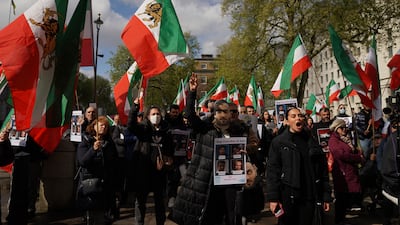
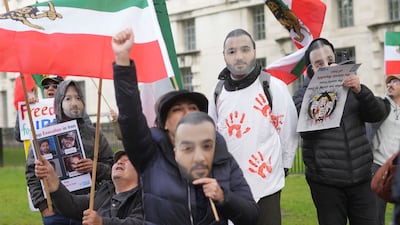
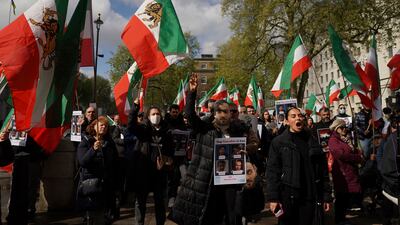
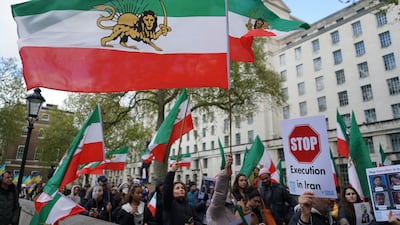
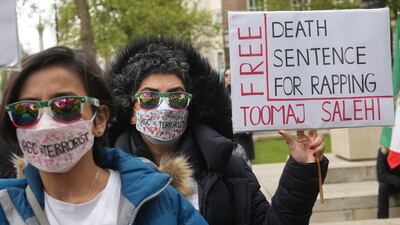
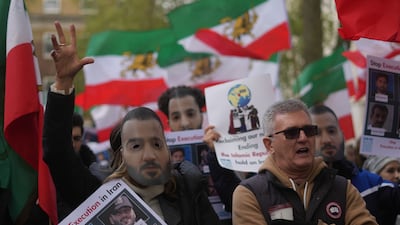
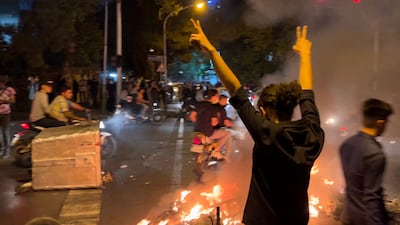
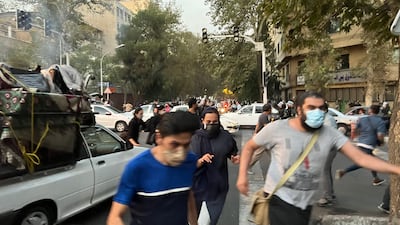
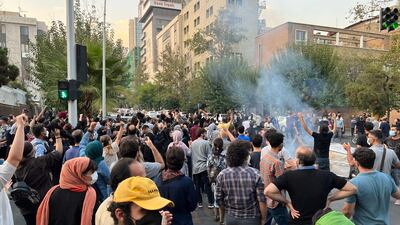
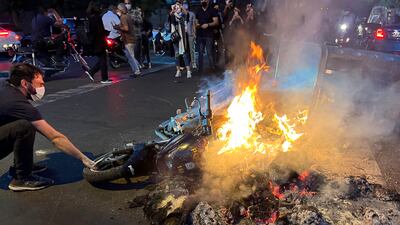
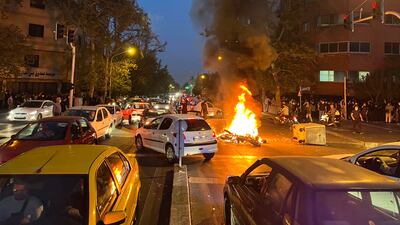
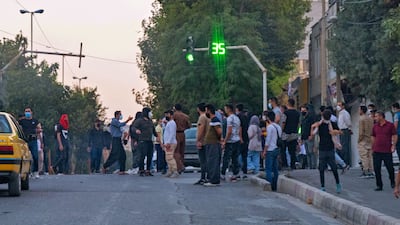
Last weekend, dozens of cities around the world saw a familiar sight: Iranians protesting against the Islamic Republic, a regime many of them have long opposed. In Toronto, a key site of Iranian diaspora, at least 8,000 took to streets on April 27. Such solidarity demonstrations had been common during the height of the 2022-23 “Women, Life, Freedom” movement but had gone dormant for a while. But last week, a disturbing piece of news from Iran shocked the nation and jolted many Iranians to renewed action.
On April 24, a court in Isfahan issued a death sentence for Toomaj Salehi, a 33-year-old rapper whose acerbic critiques of the regime made him into a popular star. It was most unexpected. In October 2022, as the anti-regime movement was rocking Iran, Salehi was arrested and convicted of a capital crime – one notorious for its vague definition – known as “spreading corruption on Earth”. Although the regime has previously used this charge to send thousands of dissidents to their deaths, Salehi’s lawyers were able to appeal to the Supreme Court, which called on prosecutors to drop some of the charges. Last year, he was sentenced to more than six years in prison. In November, he was released on bail, and many assumed he would be included in a general amnesty that saw the release of thousands of Iranians who were arrested during the 2022-2023 protests.
But Isfahan’s “revolutionary courts”, a part of the judiciary close to the security services, decided to up the ante by sentencing Salehi to execution. The decree was even more shocking because it appeared to contradict the Supreme Court’s previous ruling.
Salehi is popular – even loved – among many Iranians across the political spectrum. Born in a village in central Iran’s Chahrmahal and Bakhtiari province, he followed his father’s trade of metalwork and got an engineering degree. But he also always loved music and poetry (specifically that of the 11th century poet Omar Khayyam) and decided at the age of 25 to sell his motorcycle and some furniture to start producing music.
Before long, Salehi revolutionised the Iranian music scene. His bold songs take the regime to task for its corruption and tyranny, a mission that has appealed to a wide range of Iranians.
Street protests against his sentencing have not been limited to the diaspora. Last week, pensioners in the southwestern city of Ahvaz chanted: “Toomaj is a nation. Free him!”
The long list of political and artistic personalities that have come out against the death sentence include Shirin Ebadi and Narges Mohammadi, Iran’s two only Nobel peace laureates. The latter warned the country’s theocratic government it would face “an eruption” of popular anger. Dozens of Iranian musicians and artists have also joined the chorus. Keyhan Kalhor, one of the most celebrated Iranian musicians alive, wrote: “Our silence equals support for oppression and the oppressor.”
If many Iranian artists are known for their artfully subtle criticisms, Salehi represents a new generation too fed up with decades of the regime’s repression and failure to have time for niceties
Kalhor’s short message fits the spirit of Salehi’s work. In one of his most well-known songs, Rathole, Salehi enjoins those who protect the regime explicitly or implicitly to fear the rage of the people and look for a “rathole” to hide in. “You saw the people’s pain but you closed your eyes,” he says. “You saw the oppressed were being oppressed but ignored them.”
Salehi’s music has had an especially electric effect because he doesn’t beat around the bush. Unlike many rappers who use complex plays on words and sound effects, he uses a relatively simple beat and straightforward and explicit Persian. His lyrics are almost all directly political and target various ills in Iranian society. In one, he took on the crisis of drug addiction in Iran and blamed it on disastrous policies. In another, he attacked a 25-year Iran-China deal in 2021 widely perceived to favour the Chinese. The very name of this song made its position clear: Turkmenchay, reminiscent of the 1828 Treaty of Turkmenchay with Russia in which Iran gave up control of some of its territories in the South Caucasus and is thus infamous among Iranians.
If many Iranian artists are known for their artfully subtle criticisms, Salehi represents a new generation too fed up with decades of the regime’s repression and failure to have time for niceties. In another song, Nadidi 2 (“You didn’t see”), he directly addresses the Supreme Leader Ayatollah Ali Khamenei, Iran’s most powerful figure.
“From your office, you can’t hear the sound of poverty,” he sings. “You don’t understand homelessness in cold nights. Come see the depth of pain in people’s eyes. For one night, look at the city from my eyes!”
In a country in which people are sentenced to prison for the mildest criticisms of Mr Khamenei, such bold confrontation can be awe-inspiring for many. But Salehi went even further after the Women, Life, Freedom movement. In one of his most visually arresting music videos, Fortune Telling, we see him attending a divination session reading coffee grounds to decipher the future of Iran. In his cup he sees “blood and rage”, “corpses of old and young people” and “a regime that has deprived us of light”.
But more importantly, he predicts a good future in which oppressors have been arrested and people have a better life. The song’s chorus, repeatedly whispered throughout the track, asks him to get the results of the cup reading to the Supreme Leader. If protest music is a reflection of politics of an era, Salehi’s perfectly fits the rageful and youth-led movements of post-2017.
Shortly after his arrest, Iran’s state TV broadcast videos of Salehi blindfolded, visibly beaten and distressed. He was shown apologising for a message on social media in which he had asked the security forces to abandon their posts to avoid oppressing the Iranian people. Repeated state media reports have smeared him since, occasionally claiming he has collaborated with the regime.
But if the authorities thought they had tamed Salehi, they were obviously wrong. After he was bailed in November, he could have bid his time in silence. Instead, he published an explosive 14-minute video in which he denied all allegations of collaboration and said he had even refused to hand over access to his social media accounts despite experiencing brutal torture. “I was severely tortured at the time of my arrest,” he said. “They broke my arms and my legs. They were hitting my face and my head, so at first I tried to cover myself with my hands, and they broke my fingers.”
The death sentence Salehi has now received seems to be punishment for his open refusal to stand down. The question now is how successfully his supporters protesting on the streets can stand up for him.

Skewed figures
In the village of Mevagissey in southwest England the housing stock has doubled in the last century while the number of residents is half the historic high. The village's Neighbourhood Development Plan states that 26% of homes are holiday retreats. Prices are high, averaging around £300,000, £50,000 more than the Cornish average of £250,000. The local average wage is £15,458.
RESULT
Arsenal 0 Chelsea 3
Chelsea: Willian (40'), Batshuayi (42', 49')
If%20you%20go
%3Cp%3E%0DThere%20are%20regular%20flights%20from%20Dubai%20to%20Addis%20Ababa%20with%20Ethiopian%20Airlines%20with%20return%20fares%20from%20Dh1%2C700.%20Nashulai%20Journeys%20offers%20tailormade%20and%20ready%20made%20trips%20in%20Africa%20while%20Tesfa%20Tours%20has%20a%20number%20of%20different%20community%20trekking%20tours%20throughout%20northern%20Ethiopia.%20%20The%20Ben%20Abeba%20Lodge%20has%20rooms%20from%20Dh228%2C%20and%20champions%20a%20programme%20of%20re-forestation%20in%20the%20surrounding%20area.%26nbsp%3B%3C%2Fp%3E%0A%3Cp%3E%3Cbr%3E%3Cbr%3E%3C%2Fp%3E%0A
Mercer, the investment consulting arm of US services company Marsh & McLennan, expects its wealth division to at least double its assets under management (AUM) in the Middle East as wealth in the region continues to grow despite economic headwinds, a company official said.
Mercer Wealth, which globally has $160 billion in AUM, plans to boost its AUM in the region to $2-$3bn in the next 2-3 years from the present $1bn, said Yasir AbuShaban, a Dubai-based principal with Mercer Wealth.
“Within the next two to three years, we are looking at reaching $2 to $3 billion as a conservative estimate and we do see an opportunity to do so,” said Mr AbuShaban.
Mercer does not directly make investments, but allocates clients’ money they have discretion to, to professional asset managers. They also provide advice to clients.
“We have buying power. We can negotiate on their (client’s) behalf with asset managers to provide them lower fees than they otherwise would have to get on their own,” he added.
Mercer Wealth’s clients include sovereign wealth funds, family offices, and insurance companies among others.
From its office in Dubai, Mercer also looks after Africa, India and Turkey, where they also see opportunity for growth.
Wealth creation in Middle East and Africa (MEA) grew 8.5 per cent to $8.1 trillion last year from $7.5tn in 2015, higher than last year’s global average of 6 per cent and the second-highest growth in a region after Asia-Pacific which grew 9.9 per cent, according to consultancy Boston Consulting Group (BCG). In the region, where wealth grew just 1.9 per cent in 2015 compared with 2014, a pickup in oil prices has helped in wealth generation.
BCG is forecasting MEA wealth will rise to $12tn by 2021, growing at an annual average of 8 per cent.
Drivers of wealth generation in the region will be split evenly between new wealth creation and growth of performance of existing assets, according to BCG.
Another general trend in the region is clients’ looking for a comprehensive approach to investing, according to Mr AbuShaban.
“Institutional investors or some of the families are seeing a slowdown in the available capital they have to invest and in that sense they are looking at optimizing the way they manage their portfolios and making sure they are not investing haphazardly and different parts of their investment are working together,” said Mr AbuShaban.
Some clients also have a higher appetite for risk, given the low interest-rate environment that does not provide enough yield for some institutional investors. These clients are keen to invest in illiquid assets, such as private equity and infrastructure.
“What we have seen is a desire for higher returns in what has been a low-return environment specifically in various fixed income or bonds,” he said.
“In this environment, we have seen a de facto increase in the risk that clients are taking in things like illiquid investments, private equity investments, infrastructure and private debt, those kind of investments were higher illiquidity results in incrementally higher returns.”
The Abu Dhabi Investment Authority, one of the largest sovereign wealth funds, said in its 2016 report that has gradually increased its exposure in direct private equity and private credit transactions, mainly in Asian markets and especially in China and India. The authority’s private equity department focused on structured equities owing to “their defensive characteristics.”
HIV on the rise in the region
A 2019 United Nations special analysis on Aids reveals 37 per cent of new HIV infections in the Mena region are from people injecting drugs.
New HIV infections have also risen by 29 per cent in western Europe and Asia, and by 7 per cent in Latin America, but declined elsewhere.
Egypt has shown the highest increase in recorded cases of HIV since 2010, up by 196 per cent.
Access to HIV testing, treatment and care in the region is well below the global average.
Few statistics have been published on the number of cases in the UAE, although a UNAIDS report said 1.5 per cent of the prison population has the virus.
What can victims do?
Always use only regulated platforms
Stop all transactions and communication on suspicion
Save all evidence (screenshots, chat logs, transaction IDs)
Report to local authorities
Warn others to prevent further harm
Courtesy: Crystal Intelligence
The specs: 2018 Renault Megane
Price, base / as tested Dh52,900 / Dh59,200
Engine 1.6L in-line four-cylinder
Transmission Continuously variable transmission
Power 115hp @ 5,500rpm
Torque 156Nm @ 4,000rpm
Fuel economy, combined 6.6L / 100km
Bawaal%20
%3Cp%3E%3Cstrong%3EDirector%3A%3C%2Fstrong%3E%20Nitesh%20Tiwari%3C%2Fp%3E%0A%3Cp%3E%3Cstrong%3EStars%3A%3C%2Fstrong%3E%20Varun%20Dhawan%2C%20Janhvi%20Kapoor%3C%2Fp%3E%0A%3Cp%3E%3Cstrong%3ERating%3A%3C%2Fstrong%3E%201%2F5%3C%2Fp%3E%0A
Explainer: Tanween Design Programme
Non-profit arts studio Tashkeel launched this annual initiative with the intention of supporting budding designers in the UAE. This year, three talents were chosen from hundreds of applicants to be a part of the sixth creative development programme. These are architect Abdulla Al Mulla, interior designer Lana El Samman and graphic designer Yara Habib.
The trio have been guided by experts from the industry over the course of nine months, as they developed their own products that merge their unique styles with traditional elements of Emirati design. This includes laboratory sessions, experimental and collaborative practice, investigation of new business models and evaluation.
It is led by British contemporary design project specialist Helen Voce and mentor Kevin Badni, and offers participants access to experts from across the world, including the likes of UK designer Gareth Neal and multidisciplinary designer and entrepreneur, Sheikh Salem Al Qassimi.
The final pieces are being revealed in a worldwide limited-edition release on the first day of Downtown Designs at Dubai Design Week 2019. Tashkeel will be at stand E31 at the exhibition.
Lisa Ball-Lechgar, deputy director of Tashkeel, said: “The diversity and calibre of the applicants this year … is reflective of the dynamic change that the UAE art and design industry is witnessing, with young creators resolute in making their bold design ideas a reality.”
World%20Food%20Day%20
%3Cp%3ECelebrated%20on%20October%2016%2C%20to%20coincide%20with%20the%20founding%20date%20of%20the%20United%20Nations%20Food%20and%20Agriculture%20Organisation%2C%20World%20Food%20Day%20aims%20to%20tackle%20issues%20such%20as%20hunger%2C%20food%20security%2C%20food%20waste%20and%20the%20environmental%20impact%20of%20food%20production.%20%0D%3C%2Fp%3E%0A
THE BIO
Favourite place to go to in the UAE: The desert sand dunes, just after some rain
Who inspires you: Anybody with new and smart ideas, challenging questions, an open mind and a positive attitude
Where would you like to retire: Most probably in my home country, Hungary, but with frequent returns to the UAE
Favorite book: A book by Transilvanian author, Albert Wass, entitled ‘Sword and Reap’ (Kard es Kasza) - not really known internationally
Favourite subjects in school: Mathematics and science
UAE currency: the story behind the money in your pockets
Tightening the screw on rogue recruiters
The UAE overhauled the procedure to recruit housemaids and domestic workers with a law in 2017 to protect low-income labour from being exploited.
Only recruitment companies authorised by the government are permitted as part of Tadbeer, a network of labour ministry-regulated centres.
A contract must be drawn up for domestic workers, the wages and job offer clearly stating the nature of work.
The contract stating the wages, work entailed and accommodation must be sent to the employee in their home country before they depart for the UAE.
The contract will be signed by the employer and employee when the domestic worker arrives in the UAE.
Only recruitment agencies registered with the ministry can undertake recruitment and employment applications for domestic workers.
Penalties for illegal recruitment in the UAE include fines of up to Dh100,000 and imprisonment
But agents not authorised by the government sidestep the law by illegally getting women into the country on visit visas.
The Voice of Hind Rajab
Starring: Saja Kilani, Clara Khoury, Motaz Malhees
Director: Kaouther Ben Hania
Rating: 4/5
COMPANY%20PROFILE
%3Cp%3E%3Cstrong%3EName%3A%3C%2Fstrong%3E%20PlanRadar%3Cbr%3E%3Cstrong%3EStarted%3A%20%3C%2Fstrong%3E2013%3Cbr%3E%3Cstrong%3ECo-founders%3A%20%3C%2Fstrong%3EIbrahim%20Imam%2C%20Sander%20van%20de%20Rijdt%2C%20Constantin%20K%C3%B6ck%2C%20Clemens%20Hammerl%2C%20Domagoj%20Dolinsek%3Cbr%3E%3Cstrong%3EBased%3A%20%3C%2Fstrong%3EVienna%2C%20Austria%3Cbr%3E%3Cstrong%3ESector%3A%20%3C%2Fstrong%3EConstruction%20and%20real%20estate%3Cbr%3E%3Cstrong%3ECurrent%20number%20of%20staff%3A%20%3C%2Fstrong%3E400%2B%3Cbr%3E%3Cstrong%3EInvestment%20stage%3A%20%3C%2Fstrong%3ESeries%20B%3Cbr%3E%3Cstrong%3EInvestors%3A%3C%2Fstrong%3E%20Headline%2C%20Berliner%20Volksbank%20Ventures%2C%20aws%20Gr%C3%BCnderfonds%2C%20Cavalry%20Ventures%2C%20Proptech1%2C%20Russmedia%2C%20GR%20Capital%3C%2Fp%3E%0A
Timeline
2012-2015
The company offers payments/bribes to win key contracts in the Middle East
May 2017
The UK SFO officially opens investigation into Petrofac’s use of agents, corruption, and potential bribery to secure contracts
September 2021
Petrofac pleads guilty to seven counts of failing to prevent bribery under the UK Bribery Act
October 2021
Court fines Petrofac £77 million for bribery. Former executive receives a two-year suspended sentence
December 2024
Petrofac enters into comprehensive restructuring to strengthen the financial position of the group
May 2025
The High Court of England and Wales approves the company’s restructuring plan
July 2025
The Court of Appeal issues a judgment challenging parts of the restructuring plan
August 2025
Petrofac issues a business update to execute the restructuring and confirms it will appeal the Court of Appeal decision
October 2025
Petrofac loses a major TenneT offshore wind contract worth €13 billion. Holding company files for administration in the UK. Petrofac delisted from the London Stock Exchange
November 2025
180 Petrofac employees laid off in the UAE
The%20specs
%3Cp%3E%3Cstrong%3EEngine%3A%20%3C%2Fstrong%3E4.0-litre%2C%20flat%20six-cylinder%3Cbr%3E%3Cstrong%3ETransmission%3A%20%3C%2Fstrong%3Eseven-speed%20PDK%3Cbr%3E%3Cstrong%3EPower%3A%20%3C%2Fstrong%3E510hp%3Cbr%3E%3Cstrong%3ETorque%3A%20%3C%2Fstrong%3E470Nm%3Cbr%3E%3Cstrong%3EPrice%3A%20%3C%2Fstrong%3Efrom%20Dh634%2C200%3Cbr%3E%3Cstrong%3EOn%20sale%3A%20%3C%2Fstrong%3Enow%3C%2Fp%3E%0A
The Greatest Royal Rumble card as it stands
50-man Royal Rumble - names entered so far include Braun Strowman, Daniel Bryan, Kurt Angle, Big Show, Kane, Chris Jericho, The New Day and Elias
Universal Championship Brock Lesnar (champion) v Roman Reigns in a steel cage match
WWE World Heavyweight Championship AJ Styles (champion) v Shinsuke Nakamura
Intercontinental Championship Seth Rollins (champion) v The Miz v Finn Balor v Samoa Joe
United States Championship Jeff Hardy (champion) v Jinder Mahal
SmackDown Tag Team Championship The Bludgeon Brothers (champions) v The Usos
Raw Tag Team Championship (currently vacant) Cesaro and Sheamus v Matt Hardy and Bray Wyatt
Casket match The Undertaker v Chris Jericho
Singles match John Cena v Triple H
Cruiserweight Championship Cedric Alexander v tba
UAE squad
Humaira Tasneem (c), Chamani Senevirathne (vc), Subha Srinivasan, NIsha Ali, Udeni Kuruppuarachchi, Chaya Mughal, Roopa Nagraj, Esha Oza, Ishani Senevirathne, Heena Hotchandani, Keveesha Kumari, Judith Cleetus, Chavi Bhatt, Namita D’Souza.
UAE currency: the story behind the money in your pockets