


The Democratic Party in the US is acutely aware that Israeli Prime Minister Benjamin Netanyahu’s brazen disregard for American President Joe Biden could prove costly for his bid to retain the White House. Unless Mr Biden and his senior party colleagues stand up to Mr Netanyahu, the outcome could be dire for them.
There is a battle between two fates currently playing out.
First is the fate of the US President, who faces tough electoral odds. He is likely to lose to predecessor Donald Trump if he continues to show weakness in the face of an Israeli leader confident of continued US arms supplies to his government, regardless of its actions. Second is the fate of Mr Netanyahu and his far-right government.
Mr Netanyahu views Israel’s war on Gaza as an existential one for him politically, and he probably fears a grim end to his term unless he receives assurances within the framework of a deal that would prevent his prosecution on several counts. Meanwhile, Mr Trump will view the Biden-Netanyahu clash as an opportunity to expose Mr Biden’s frailties.
Whether or not US diplomatic efforts will lead to a “peace pause” between Israel and Hamas, much damage has been done. Indeed, what ensues after this pause – which is still anticipated at the time of writing this article, but not guaranteed – poses even greater challenges for Mr Biden, as humanitarian ceasefires are temporary and fleeting, and permanent political solutions are significantly more difficult to find.
In a significant departure from the norm, US Senate Majority Leader Chuck Schumer in a speech levied harsh criticism at Mr Netanyahu, deeming him a “major obstacle to peace”. The Senate’s senior-most Democrat emphasised that if the Netanyahu government remains in power after the war, the US must take more effective measures to achieve comprehensive peace.

Mr Schumer also called for new elections in Israel. Most notably, he did not limit his discourse to merely addressing the need for a ceasefire, the release of hostages, and the suffering of Palestinians resulting from the war on Gaza. Instead, he elevated the discourse to a crucial political level by stating that Israel’s rejection of the two-state solution is a “grave mistake” that must be rectified.
The speech was effectively a warning from the US that a decision by Mr Netanyahu to invade Rafah in a way that disregards American conditions would be a “red line” due to the humanitarian catastrophe that is expected to follow.
Mr Schumer is not a marginal figure in the Senate or the Democratic Party. He is even among America’s staunchest supporters of Israel. His stance is probably the result of concerns that Mr Biden’s toleration of Mr Netanyahu’s behaviour will lead to his defeat in the presidential election. American voters, it seems, have little respect for a president who tolerates humiliation from foreign leaders.
Israeli politicians were quick to emphasise that their country is an independent state, and that Mr Netanyahu’s policies enjoy popular support.
The governing Likud party asserted that the Israeli public supports complete victory over Hamas, rejects international dictates for establishing a Palestinian state, and opposes the Palestinian Authority’s return to Gaza. It also asked Mr Schumer to respect the elected Israeli government and not undermine it.
At home, the Republican Party was also quick to criticise the senator’s comments, when Senate Minority Leader Mitch McConnell accused his colleague of calling for removing the democratically elected leader of Israel while rejecting interference in American politics. Likewise, Speaker of the House of Representatives Mike Johnson, also a Republican, characterised Mr Schumer’s positions as wrong and inappropriate, demanding to stand by Israel and extend full support to America’s friends and allies.
This electoral one-upmanship is expected to further deepen the divisions in America. But ultimately, it is Mr Biden who will most likely pay the price for his position, given that the spotlight is on him.
The Biden administration is aware of Israel’s attempts to drag the President down, despite the continuous shipments of weapons it has approved. But its reliance on soft diplomacy, aimed at persuasion and appeasement, could be seen as a lack of assertiveness on its part.
To be fair to the Biden team, it has so far restrained Israel and Iran from escalating the war in Gaza. It has also persuaded the Palestinian Authority to initiate structural reforms, which has led to Mohammad Mustafa’s appointment as Prime Minister.
-
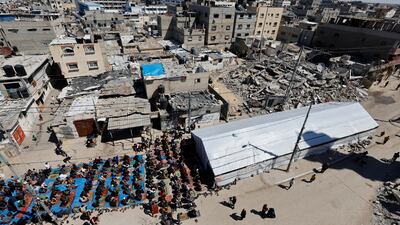
Palestinians perform the first Friday prayers of Ramadan near the ruins of a mosque in Rafah, southern Gaza. Reuters -
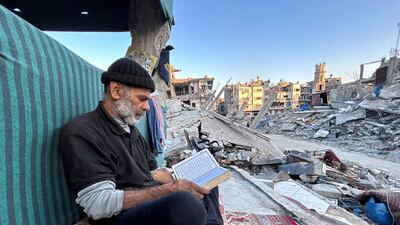
A Palestinian man reads the Quran as he waits to break his fast in Beit Lahia, northern Gaza. Reuters -
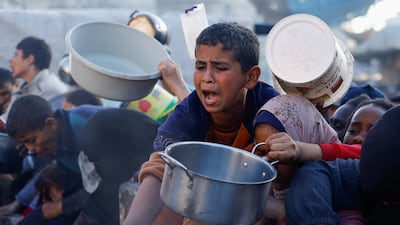
Children wait to receive food in Rafah. The UN has warned that many in Gaza are facing famine. Reuters -

Palestinians break their fast amid the rubble of their destroyed home in Rafah. Reuters -

Displaced Palestinians in Rafah decorate their homes with sheets to mark the holy month. AFP -

Palestinians shop for Ramadan lanterns in Rafah. AFP -
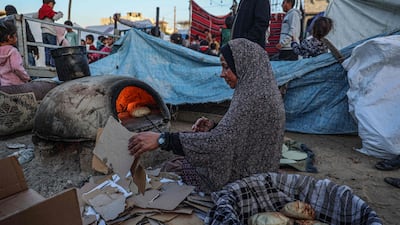
A displaced Palestinian woman bakes bread for iftar in Rafah. AFP -
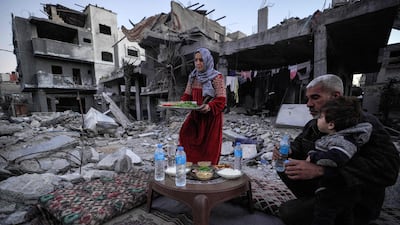
A family break fast amid the ruins of their home in Deir al-Balah, the central Gaza Strip. AFP -

Palestinians share an iftar meal at a camp in Rafah, the southern Gaza Strip. AFP -

A displaced Palestinian man prays in Rafah, the southern Gaza Strip. AFP -
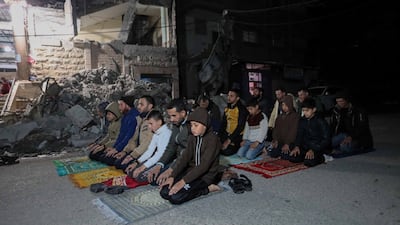
Palestinians pray taraweeh on the rubble of Rafah's Al Huda Mosque, which was destroyed in Israeli air strikes. Getty Images -

Palestinians walk past kiosks set up next to destroyed buildings in Al Nusairat refugee camp, the Gaza Strip EPA -
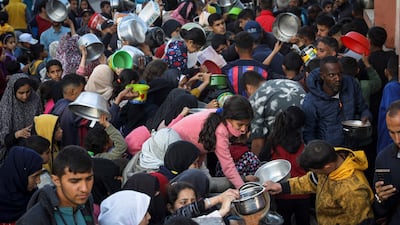
Palestinians collect food before the first iftar of Ramadan in Rafah. AFP -

Palestinians gather to collect food in Rafah, the southern Gaza Strip. AFP -
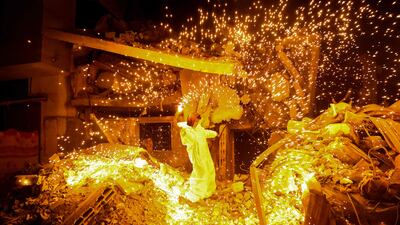
A Palestinian child plays with a sparkler in Rafah, in southern Gaza, on the eve of Ramadan. AFP -

Displaced Palestinians in Rafah decorate their tent in preparation for Ramadan. Getty Images -

Palestinian children carry traditional lanterns in Rafah on the eve of Ramadan. AFP -

Children play at a camp for displaced Palestinians in Rafah. AFP -

A girl plays with a cat at a camp in Rafah. AFP -

A child carries a small Ramadan lantern in Gaza city. AFP -

A displaced Palestinian child sells handmade Ramadan lanterns in Rafah. AFP -

A Palestinian street vendor sells traditional 'fanous' lanterns in Rafah. AFP -

A child touches decorative lights and lanterns at a shop in Deir al-Balah in central Gaza. AFP


Mr Mustafa is an independent economic adviser who understands the language of reform. He played a pivotal role in launching the Gaza Reconstruction Mechanism in 2014 when he served as deputy prime minister in the national unity government, formed in collaboration with Hamas. He also previously served as chairman of the board of directors at the Palestine Investment Fund and spent 15 years at the World Bank in Washington.
Another noteworthy achievement of the Biden team is the ongoing behind-the-scenes work with Arab leaders playing important roles in achieving “peace pauses” as well as preparing for a permanent settlement.
That said, both Israel and Iran see Mr Biden as a president of half measures.
The US’s secret negotiations with the Iranian regime will remain a half measure as long as they are patchy and selective in addressing the problems posed by Tehran’s proxies in the Middle East. These include the Houthi attacks in the Red Sea and Hezbollah’s low-intensity battles with Israel that have made Lebanon much less secure.
Mr Biden must be firm and decisive with Iranian leaders who need him, especially since they do not wish for him to lose the White House. Avoidance behaviour is not a policy. Procrastination and prevarication are not policies either.
The crux of the matter is that Israel’s actions have led to the forced displacement of hundreds of thousands of ordinary Palestinians. Despite opposition from the international community – including the US – it has imposed this as a fait accompli after Hamas’s October 7 attacks.
There is little doubt that its squabbles with the Likud party do not bode well for the Democratic Party. If the world’s only superpower cannot show decisiveness in the face of the Israeli government’s audacity, this will not only continue to adversely affect the future of millions of Palestinians, but also Mr Biden’s re-election chances in November.

