Turkey's President Recep Tayyip Erdogan visits the centre of Kahramanmaras city, days after it was ruined in last year's earthquake. AP


After Turkey's earthquake, voters put their trust in Erdogan to rebuild


Michael Daventry
Michael Daventry
  • English
  • Arabic

February 06, 2024

I heard the most harrowing anecdote about Turkey’s worst-ever natural disaster a couple of weeks after it happened.

“It got to the point where we would walk the devastated streets in silence, not daring to dislodge rubble or utter a sound. We didn’t want the people trapped underneath to hear a sound, because if they did, they would call out to us. There simply wasn’t anything we could do to help them.”

The words belonged not to a survivor, but a journalist sent to cover the aftermath.

Thousands of people – we will never know precisely how many – survived the initial tremor when it struck shortly after four o’clock in the morning. We know this because of the phone calls, WhatsApp messages and shrieks that came from those trapped beneath the wreckage of what used to be their bedrooms.

A collapsed building in Hatay, southern Turkey. EPA

Indeed, one of those who was reported to have called for help was a member of parliament for the governing Justice and Development Party (AKP), Yakup Tas. He and his family perished at home in the town of Adiyaman.

It was the result of two tremors, the largest of which measured 7.8 – a magnitude never before recorded in Turkey. The two quakes struck within nine hours of each other.

That helps to explain why the scale of devastation was so vast. More than 50,000 people died. Over 100,000 were injured. Many more who survived suddenly had no place to live, because three quarters of a million of homes either collapsed or were damaged beyond repair, according to the government department overseeing the rebuilding effort.

Perhaps no country could have been fully prepared for a natural disaster like this one, but there is consensus across Turkey that the initial response was not quick enough. Just one of the unbearable tragedies from those colossal earthquakes in February last year is that the help did not come quickly enough.

Turkish President Recep Tayyip Erdogan said as much himself five days after the earthquake when he told reporters on a visit to the disaster zone: “Our interventions have not reached the speed we want.”

It was true. Additional heavy machinery capable of lifting rubble took days to reach the area. There was a shortage of basic supplies like food, water and fuel, and often the aid and volunteers that did arrive would be sent to places where the need was not necessarily the most urgent.

The events in the south-east have served to focus political minds in the opposite, most populous end of the country: Istanbul

Then there was the poor co-ordination. There were times when government agencies, charities and private individuals appeared to compete with each other in the rescue effort. It meant there were locations that received a glut of attention, while other areas – like those devastated streets toured by the journalists – echoed with voices calling for help that would never come.

A year has passed, and the tours of the earthquake disaster zone have resumed. This time, ministers are in triumphant mood: on Saturday, keys to the first reconstructed homes were handed over to earthquake victims – whose names were drawn out of a hat – in Turkey’s southernmost city, Antakya.

Inevitably, given the gargantuan task ahead to rebuild, not everyone who lost their home has yet got one back. Many thousands live in temporary accommodation – guest houses, shipping containers and tents are all still in use.

Mr Erdogan’s pre-election promise last year was to build 319,000 homes within 12 months of the disaster. The pledge has only been partially met – 46,000 homes are ready so far, and this week the president said he hoped to quadruple that figure by the end of 2024.

The provinces that make up the disaster zone are a political microcosm of Turkey: Mr Erdogan and the AKP are a dominant force, as they have been for the past two decades, but parties representing the centre left, opposition-minded nationalists, religious conservatives and Kurds were all in with a shout.

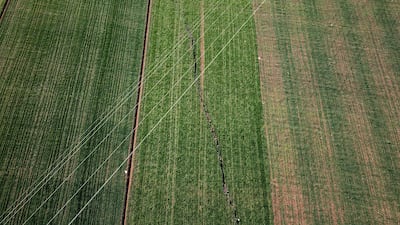
  • Cracks on a farm in Kahramanmaras, the epicentre of the first 7.8-magnitude earthquake, in south-eastern Turkey. AFP
    Cracks on a farm in Kahramanmaras, the epicentre of the first 7.8-magnitude earthquake, in south-eastern Turkey. AFP
  • The ground has cracked open in various areas as a result of the earthquake in Turkey and neighbouring Syria. AFP
    The ground has cracked open in various areas as a result of the earthquake in Turkey and neighbouring Syria. AFP
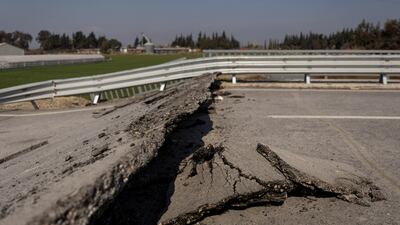
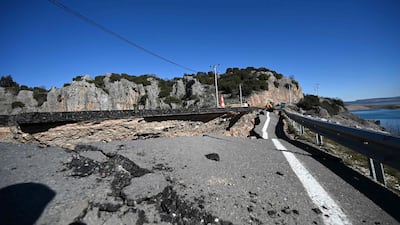
  • A motorway damaged by the quake, in Hatay, Turkey. Reuters
    A motorway damaged by the quake, in Hatay, Turkey. Reuters
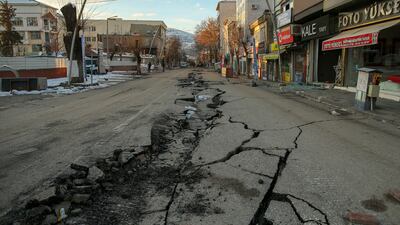
  • A destroyed road near Koseli village, in Kahramanmaras. AP
    A destroyed road near Koseli village, in Kahramanmaras. AP
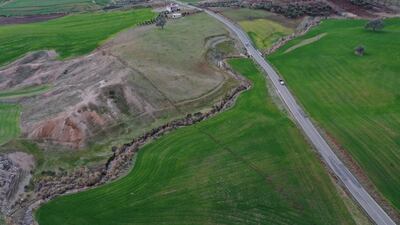
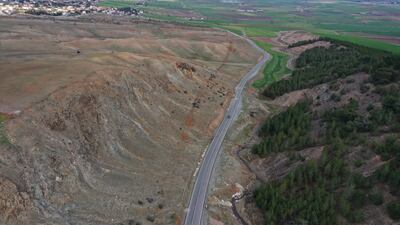
  • Grasslands and a motorway split in two, near Tevekkeli village, in Kahramanmaras. Reuters
    Grasslands and a motorway split in two, near Tevekkeli village, in Kahramanmaras. Reuters
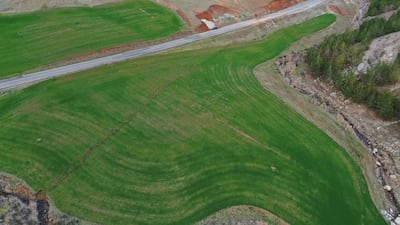
  • Cracks in the ground, near Tevekkeli village, in Kahramanmaras. Reuters
    Cracks in the ground, near Tevekkeli village, in Kahramanmaras. Reuters
  • A road near the quake’s epicentre, in Pazarcik, Kahramanmaras. AFP
    A road near the quake’s epicentre, in Pazarcik, Kahramanmaras. AFP
  • Land on either side of the ruptures moved in opposite directions up to seven metres in some locations, according to data from the California Institute of Technology. AFP
    Land on either side of the ruptures moved in opposite directions up to seven metres in some locations, according to data from the California Institute of Technology. AFP
  • Villages such as Tevekkeli, above, and small towns directly above the fault line suffered some of the most severe shaking. Reuters
    Villages such as Tevekkeli, above, and small towns directly above the fault line suffered some of the most severe shaking. Reuters
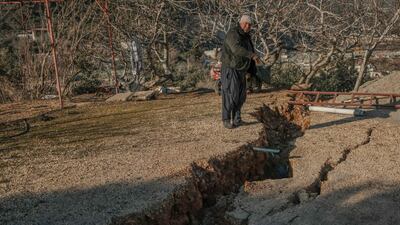
  • A resident shows the giant cracks next to his home in Nurdagi. AFP
    A resident shows the giant cracks next to his home in Nurdagi. AFP
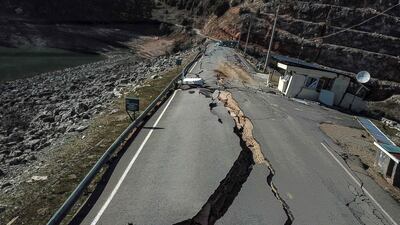
  • A damaged road in Golbasi, Adiyaman province. AP
    A damaged road in Golbasi, Adiyaman province. AP
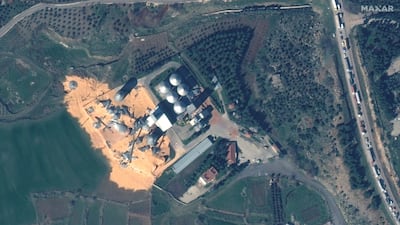
  • Grain silos damaged by the earthquake, in Nurdagi. Reuters
    Grain silos damaged by the earthquake, in Nurdagi. Reuters
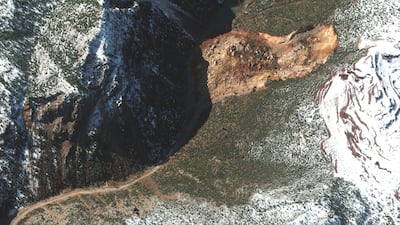
  • A blocked road after a landslide caused by the earthquake, in the Islahiye region of Turkey's Gaziantep. AP
    A blocked road after a landslide caused by the earthquake, in the Islahiye region of Turkey's Gaziantep. AP

Just 12 weeks after the disaster, they were given the opportunity to respond to ineffective relief efforts. Voters chose not to take it. It was a clear sign they saw Mr Erdogan, not his rival – who also promised a rebuilding effort but not on the same timescale – as the best hope they had to rebuild their lives.

Another opportunity is coming at the end of next month when voting takes place for local mayors, assemblies and neighbourhood leaders. There is little sign of a dramatic electoral shift then, either.

Yet the events in the south-east have served to focus political minds in the opposite, most populous end of the country: Istanbul. The sprawling metropolis was last struck by an earthquake of similar magnitude in 1999, when official records say 20,000 people died. Most experts expect another tremor of similar magnitude within three decades of it.

The prophesied Great Istanbul Earthquake would strike a city of about 16 million residents, many of whom live in dangerous housing. Mehmet Ozhaseki, the minister for Environment, Urbanisation and Climate Change, said last year that one tenth of the city’s six million homes were at “great risk” and needed to change immediately. This is also a part of the country that, unlike the south-east, is close to the sea, presenting a grave risk of tsunamis.

That is why the two frontrunners in Istanbul’s mayoral election on March 31 have placed earthquake preparedness at the centre of their campaigns.

The pledges from Mr Erdogan’s candidate, Murat Kurum, closely resemble those of the president: he promises to build hundreds of thousands of new quake-resistant homes in a single five-year term as mayor.

In doing so he hopes to unseat the incumbent Ekrem Imamoglu, a member of the opposition Republican People’s Party, or CHP, who says it’s still not clear how vulnerable Istanbul is to an earthquake – because his municipal teams haven’t been able to inspect existing buildings.

He claims the government is obstructing this work; Mr Kurum makes an identical claim about municipal institutions run by Mr Imamoglu. The two men represent either side of the big line that divides everybody in Turkey today: do you support Mr Erdogan, or oppose him?

Ultimately it will be for voters to decide which side’s election promises to believe – and, when Istanbul’s earthquake inevitably strikes, which they will trust to rebuild.


UAE currency: the story behind the money in your pockets
Series info

Test series schedule 1st Test, Abu Dhabi: Sri Lanka won by 21 runs; 2nd Test, Dubai: Play starts at 2pm, Friday-Tuesday

ODI series schedule 1st ODI, Dubai: October 13; 2nd ODI, Abu Dhabi: October 16; 3rd ODI, Abu Dhabi: October 18; 4th ODI, Sharjah: October 20; 5th ODI, Sharjah: October 23

T20 series schedule 1st T20, Abu Dhabi: October 26; 2nd T20, Abu Dhabi: October 27; 3rd T20, Lahore: October 29

Tickets Available at www.q-tickets.com

Stat Fourteen Fourteen of the past 15 Test matches in the UAE have been decided on the final day. Both of the previous two Tests at Dubai International Stadium have been settled in the last session. Pakistan won with less than an hour to go against West Indies last year. Against England in 2015, there were just three balls left.

Key battle - Azhar Ali v Rangana Herath Herath may not quite be as flash as Muttiah Muralitharan, his former spin-twin who ended his career by taking his 800th wicket with his final delivery in Tests. He still has a decent sense of an ending, though. He won the Abu Dhabi match for his side with 11 wickets, the last of which was his 400th in Tests. It was not the first time he has owned Pakistan, either. A quarter of all his Test victims have been Pakistani. If Pakistan are going to avoid a first ever series defeat in the UAE, Azhar, their senior batsman, needs to stand up and show the way to blunt Herath.

England's Ashes squad

Joe Root (captain), Moeen Ali, Jimmy Anderson, Jofra Archer, Jonny Bairstow, Stuart Broad, Rory Burns, Jos Buttler, Sam Curran, Joe Denly, Jason Roy, Ben Stokes, Olly Stone, Chris Woakes. 

Mrs%20Chatterjee%20Vs%20Norway
%3Cp%3E%3Cstrong%3EDirector%3A%3C%2Fstrong%3E%20Ashima%20Chibber%C2%A0%3C%2Fp%3E%0A%3Cp%3E%3Cstrong%3EStars%3A%3C%2Fstrong%3E%20Rani%20Mukerji%2C%20Anirban%20Bhattacharya%20and%20Jim%20Sarbh%C2%A0%3C%2Fp%3E%0A%3Cp%3E%3Cstrong%3ERating%3A%3C%2Fstrong%3E%202%2F5%3C%2Fp%3E%0A
Infiniti QX80 specs

Engine: twin-turbocharged 3.5-liter V6

Power: 450hp

Torque: 700Nm

Price: From Dh450,000, Autograph model from Dh510,000

Available: Now

Dark Souls: Remastered
Developer: From Software (remaster by QLOC)
Publisher: Namco Bandai
Price: Dh199

Key facilities
  • Olympic-size swimming pool with a split bulkhead for multi-use configurations, including water polo and 50m/25m training lanes
  • Premier League-standard football pitch
  • 400m Olympic running track
  • NBA-spec basketball court with auditorium
  • 600-seat auditorium
  • Spaces for historical and cultural exploration
  • An elevated football field that doubles as a helipad
  • Specialist robotics and science laboratories
  • AR and VR-enabled learning centres
  • Disruption Lab and Research Centre for developing entrepreneurial skills
Where to buy

Limited-edition art prints of The Sofa Series: Sultani can be acquired from Reem El Mutwalli at www.reemelmutwalli.com

Mercer, the investment consulting arm of US services company Marsh & McLennan, expects its wealth division to at least double its assets under management (AUM) in the Middle East as wealth in the region continues to grow despite economic headwinds, a company official said.

Mercer Wealth, which globally has $160 billion in AUM, plans to boost its AUM in the region to $2-$3bn in the next 2-3 years from the present $1bn, said Yasir AbuShaban, a Dubai-based principal with Mercer Wealth.

Within the next two to three years, we are looking at reaching $2 to $3 billion as a conservative estimate and we do see an opportunity to do so,” said Mr AbuShaban.

Mercer does not directly make investments, but allocates clients’ money they have discretion to, to professional asset managers. They also provide advice to clients.

“We have buying power. We can negotiate on their (client’s) behalf with asset managers to provide them lower fees than they otherwise would have to get on their own,” he added.

Mercer Wealth’s clients include sovereign wealth funds, family offices, and insurance companies among others.

From its office in Dubai, Mercer also looks after Africa, India and Turkey, where they also see opportunity for growth.

Wealth creation in Middle East and Africa (MEA) grew 8.5 per cent to $8.1 trillion last year from $7.5tn in 2015, higher than last year’s global average of 6 per cent and the second-highest growth in a region after Asia-Pacific which grew 9.9 per cent, according to consultancy Boston Consulting Group (BCG). In the region, where wealth grew just 1.9 per cent in 2015 compared with 2014, a pickup in oil prices has helped in wealth generation.

BCG is forecasting MEA wealth will rise to $12tn by 2021, growing at an annual average of 8 per cent.

Drivers of wealth generation in the region will be split evenly between new wealth creation and growth of performance of existing assets, according to BCG.

Another general trend in the region is clients’ looking for a comprehensive approach to investing, according to Mr AbuShaban.

“Institutional investors or some of the families are seeing a slowdown in the available capital they have to invest and in that sense they are looking at optimizing the way they manage their portfolios and making sure they are not investing haphazardly and different parts of their investment are working together,” said Mr AbuShaban.

Some clients also have a higher appetite for risk, given the low interest-rate environment that does not provide enough yield for some institutional investors. These clients are keen to invest in illiquid assets, such as private equity and infrastructure.

“What we have seen is a desire for higher returns in what has been a low-return environment specifically in various fixed income or bonds,” he said.

“In this environment, we have seen a de facto increase in the risk that clients are taking in things like illiquid investments, private equity investments, infrastructure and private debt, those kind of investments were higher illiquidity results in incrementally higher returns.”

The Abu Dhabi Investment Authority, one of the largest sovereign wealth funds, said in its 2016 report that has gradually increased its exposure in direct private equity and private credit transactions, mainly in Asian markets and especially in China and India. The authority’s private equity department focused on structured equities owing to “their defensive characteristics.”

LOVE%20AGAIN
%3Cp%3EDirector%3A%20Jim%20Strouse%3C%2Fp%3E%0A%3Cp%3EStars%3A%20Priyanka%20Chopra%20Jonas%2C%20Sam%20Heughan%2C%20Celine%20Dion%3C%2Fp%3E%0A%3Cp%3ERating%3A%202%2F5%3C%2Fp%3E%0A
Bugatti Chiron Super Sport - the specs:

Engine: 8.0-litre quad-turbo W16 

Transmission: 7-speed DSG auto 

Power: 1,600hp

Torque: 1,600Nm

0-100kph in 2.4seconds

0-200kph in 5.8 seconds

0-300kph in 12.1 seconds

Top speed: 440kph

Price: Dh13,200,000

Bugatti Chiron Pur Sport - the specs:

Engine: 8.0-litre quad-turbo W16 

Transmission: 7-speed DSG auto 

Power: 1,500hp

Torque: 1,600Nm

0-100kph in 2.3 seconds

0-200kph in 5.5 seconds

0-300kph in 11.8 seconds

Top speed: 350kph

Price: Dh13,600,000

Elvis
%3Cp%3E%3Cstrong%3EDirector%3A%3C%2Fstrong%3E%20Baz%20Luhrmann%3C%2Fp%3E%0A%3Cp%3E%3Cstrong%3EStars%3A%3C%2Fstrong%3E%20Austin%20Butler%2C%20Tom%20Hanks%2C%20Olivia%20DeJonge%3C%2Fp%3E%0A%3Cp%3E%3Cstrong%3ERating%3A%3C%2Fstrong%3E%204%2F5%3C%2Fp%3E%0A
Email sent to Uber team from chief executive Dara Khosrowshahi

From: Dara

To: Team@

Date: March 25, 2019 at 11:45pm PT

Subj: Accelerating in the Middle East

Five years ago, Uber launched in the Middle East. It was the start of an incredible journey, with millions of riders and drivers finding new ways to move and work in a dynamic region that’s become so important to Uber. Now Pakistan is one of our fastest-growing markets in the world, women are driving with Uber across Saudi Arabia, and we chose Cairo to launch our first Uber Bus product late last year.

Today we are taking the next step in this journey—well, it’s more like a leap, and a big one: in a few minutes, we’ll announce that we’ve agreed to acquire Careem. Importantly, we intend to operate Careem independently, under the leadership of co-founder and current CEO Mudassir Sheikha. I’ve gotten to know both co-founders, Mudassir and Magnus Olsson, and what they have built is truly extraordinary. They are first-class entrepreneurs who share our platform vision and, like us, have launched a wide range of products—from digital payments to food delivery—to serve consumers.

I expect many of you will ask how we arrived at this structure, meaning allowing Careem to maintain an independent brand and operate separately. After careful consideration, we decided that this framework has the advantage of letting us build new products and try new ideas across not one, but two, strong brands, with strong operators within each. Over time, by integrating parts of our networks, we can operate more efficiently, achieve even lower wait times, expand new products like high-capacity vehicles and payments, and quicken the already remarkable pace of innovation in the region.

This acquisition is subject to regulatory approval in various countries, which we don’t expect before Q1 2020. Until then, nothing changes. And since both companies will continue to largely operate separately after the acquisition, very little will change in either teams’ day-to-day operations post-close. Today’s news is a testament to the incredible business our team has worked so hard to build.

It’s a great day for the Middle East, for the region’s thriving tech sector, for Careem, and for Uber.

Uber on,

Dara

The Kites

Romain Gary

Penguin Modern Classics

Updated: February 06, 2024, 6:33 AM