


After seemingly endless delays on Turkey’s Sweden decision, the denouement came in a flash. Turkish parliament approved Sweden's Nato entry last Tuesday, President Recep Tayyip Erdogan signed off two days later and the next day, the US approved a $23 billion sale of F-16s to Turkey, as promised by President Joe Biden.
It’s not exactly the father killing the fattened calf to celebrate the return of his prodigal younger son, but it’s not that far off either. Turkey’s zig-zag foreign policy increasingly seems to be mainly zags: no country within the western orbit has in recent years taken so many questionable steps, from the US perspective, only to be welcomed back with open arms.
As Ankara delayed its approval for Sweden’s Nato membership for nearly two years, many argued that Turkey had imperiled European security and deserved to be removed from the alliance. Instead, Turkey has been trebly rewarded for its stonewalling: the US jets; Stockholm’s partial compliance on Kurds in Sweden; and Nato member Canada lifting a years-long embargo on defence exports to Turkey.
Nato is mainly a Russian-facing security bloc, yet Ankara and Moscow are on friendly terms and bilateral trade has boomed since early 2022. The Biden administration has openly indicated it is no fan of Ankara’s stifling of free expression or questionable interpretation of the rule of law. And as previously detailed, during the continuing Israel-Gaza war Turkey’s leaders have regularly and harshly criticised Israel and its ally, the US, leading to domestic boycotts and looting. There’s been no real pushback to any of this.
The day before he approved Sweden’s Nato entry, Mr Erdogan welcomed Iranian President Ebrahim Raisi to Ankara to discuss Israel-Gaza and more. Keep in mind, Iran-backed groups have hit US positions in Syria and Iraq more than 150 times since October, probably including Sunday's drone attack on the Syrian-Jordan border that killed three US soldiers.
-
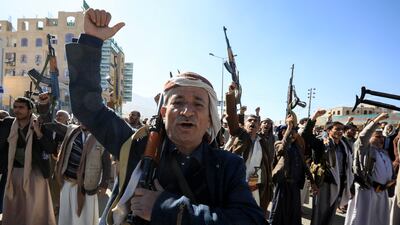
Houthi fighters shout gather in Sanaa. The rebels have launched attacks in the Red Sea in response to the Gaza war. EPA -
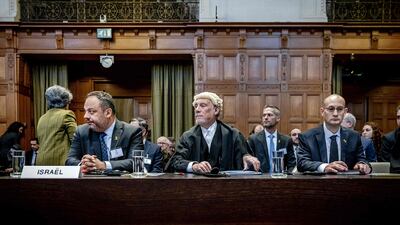
From left, Israeli Foreign Ministry adviser Tal Becker, lawyer Malcolm Shaw and Gilad Noam, deputy attorney general for international affairs, at the International Court of Justice in The Hague. AFP -

A Palestinian man injured in an Israeli strike receives treatment in Khan Younis, southern Gaza. AP -

Palestinian medics mourn after members of the Palestinian Red Crescent were killed in an Israeli strike in Deir Al Balah. Reuters -
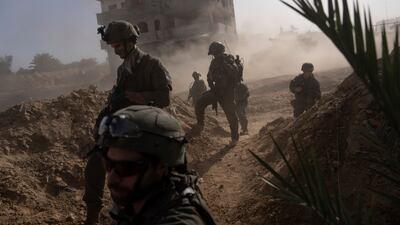
Israeli soldiers take up positions during a ground operation in Khan Younis. AP -
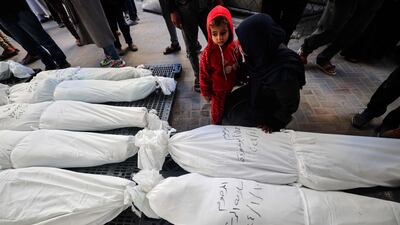
Mourners gather at Al Najar hospital in Rafah, after several relatives of a member of the Hamas general military council were killed in a strike. AFP -
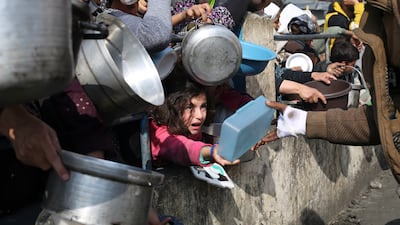
Palestinians wait to receive food aid in Rafah. AP -

A mass grave in Rafah. More than 23,000 people have been killed in Gaza since October 7. AFP -

Palestinians search the rubble of destroyed buildings after an Israeli attack on Rafah. AFP -
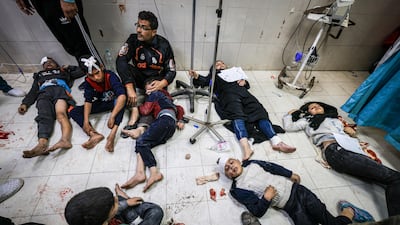
Injured Palestinians receive treatment at Nasser hospital in Khan Younis. AFP -
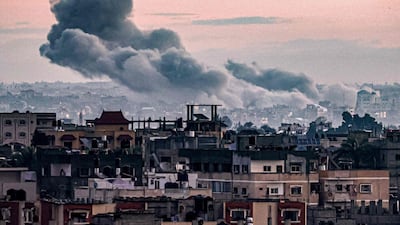
Smoke rises over Khan Younis in the southern Gaza Strip, as seen from Rafah, during sustained Israeli air strikes. AFP -
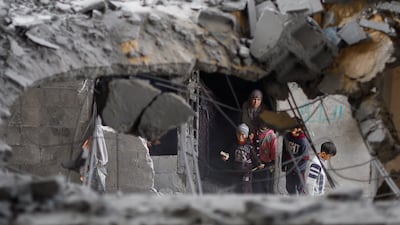
The destruction has spread throughout the Gaza Strip, from the north to Rafah in the south. Reuters -
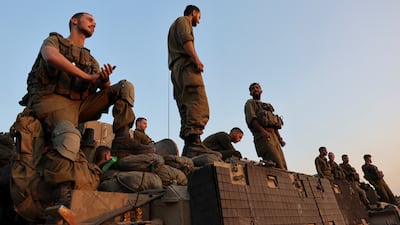
Israeli soldiers stand on an armoured personnel carrier near the Israel-Gaza border, in southern Israel. Reuters -
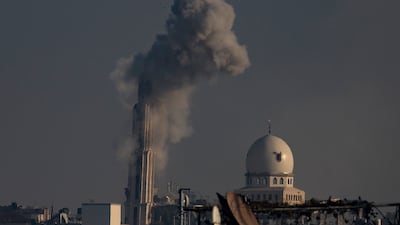
Smoke rises following Israeli air strikes in Khan Younis, the southern Gaza Strip. EPA -
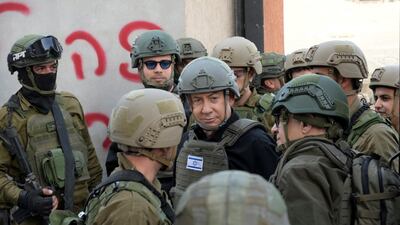
Israeli Prime Minister Benjamin Netanyahu receives a security briefing with commanders and soldiers in the northern Gaza Strip. AP -
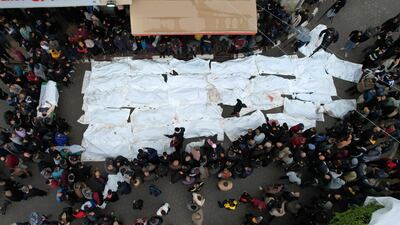
Palestinians mourn their relatives killed in an Israeli strike on the Al Maghazi refugee camp. AFP -
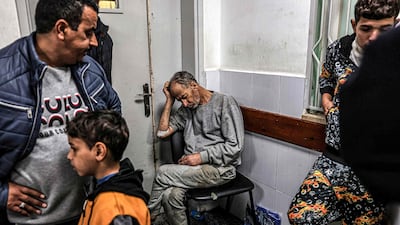
A Palestinian man detained by the Israeli military awaits treatment for his injuries in Rafah. AFP


Iran is, of course, a primary backer of Hamas, which launched the horrifying assault that started the escalating regional conflict, and the Houthis, whose attacks have choked Red Sea shipping, prompting a barrage of retaliatory US and UK strikes in Yemen. Yet here’s the longtime leader of Nato ally Turkey shaking hands with Mr Raisi and talking of opening new borders with Iran, improving ties and boosting trade.
One starts to wonder what a Turk has to do to incur western ire. Ankara’s top foreign policy objective has long been clearing Kurdish militants, specifically the Kurdistan Workers’ Party (PKK) and its affiliate Syrian Democratic Forces (SDF), from its borders with Syria and Iraq.
For nearly a decade, the main hurdle has been that the US, despite listing the PKK as a terrorist group, is partnered with the SDF in Syria while providing crucial support to Kurdish militants in Iraq. Turkey has launched several strikes on or near US positions in the past few years, and the only military response came last October when the US downed a Turkish drone it said had veered too close to American troops.
Last week, American and Iraqi officials began planning the withdrawal of the 2,500 US soldiers stationed in the country, a move that would boost Tehran’s already-considerable influence in Baghdad. Turkey and Iran both view Kurdish independence as a threat and a US exit from Iraq would enable them to co-ordinate containment policies.
Washington is reportedly also planning to start pulling its 900 troops out of Syria, which would be even better news for Turkey. Since mid-December, PKK attacks have killed more than 20 Turkish troops, prompting Ankara to launch a fresh campaign of domestic raids and air strikes on Kurdish militants in Syria and Iraq. Mr Erdogan has repeatedly hinted at another Turkish incursion into Syria, his fourth.
You may recall the last time the US talked of pulling out of Syria – chaos ensued. In October 2019, former US president Donald Trump said during a phone call with Mr Erdogan that he would withdraw from Syria to allow for a Turkish incursion. After observers expressed shock at this betrayal of the Kurds, Mr Trump threatened to “obliterate” Turkey’s economy if Ankara did anything “off limits” in northern Syria.

Turkey began its military operation a few days later, Mr Trump delivered a slap on the wrist, levying minor sanctions, and US forces never actually pulled out. If the US does leave this time, expect Turkish troops to move in seeking to dismantle the Syrian Kurds’ autonomous zone. With all attention on the Levant, Ankara might have a free hand to clear Kurdish groups from areas along the border.
I’ll admit that Ankara has not gone completely unpunished. Turkish firms are under sanctions for providing key military goods to Russia and involvement in Hamas’s financial network. Unlike Qatar and Egypt, Jordan and Saudi Arabia, Turkey has been left out of ongoing Israel-Hamas peace talks and hostage negotiations, despite its offer to mediate and its recent success brokering the Russia-Ukraine grain deal.
There’s also the distinct possibility that Israel is plotting to assassinate Hamas leaders in Turkey, which would be a sizable blow to its sovereignty. Finally, it is no accident that when the US State Department notified Congress of its approval of the F-16 sale to Turkey, it also approved the sale of F-35s to its neighbour and rival Greece.
Perhaps the harshest penalty Turkey has received from its western allies in recent years was in response to Ankara’s 2019 purchase of Russian missile defences: the US removed Turkey from its F-35 fighter jet programme, for which it had been providing hundreds of parts.
Because Ankara approved Sweden’s Nato entry shortly after the US threatened to go ahead with Greece’s F-35 sale while denying Turkey’s F-16s, some hailed Ankara’s approval as a US diplomatic win. But Turkey was always going to approve Sweden, it was just a matter of when. What’s more, Ankara initially requested the F-16s in response to being kicked out of the F-35 programme.
I’m not familiar with a disciplinary system in which the transgressor is owed a kindness to make up for their punishment. But Ankara seemed convinced its Nato ally was duty-bound to shore up the ageing Turkish air force after denying it the advanced fighter jets. Three years later, after mostly going against American wishes, Mr Erdogan has gotten his way yet again.

