


Next year, the first International Day of Clean Energy will take place on January 26. It will underscore the critical role of clean energy in limiting global warming to 1.5°C, achieving a net-zero economy by 2050 and accelerating the global energy transition.
Building on our track record as a first mover in climate action and clean energy, the UAE joined forces with Panama to sponsor the resolution for the International Day of Clean Energy at the UN General Assembly, and brought this day into existence. This international partnership is indicative of the increasing global influence and clout that we, the UAE, hold in driving international imperatives.
In November, we will rise to the challenge of setting the agenda again, when we host one of the most important climate negotiations since the Paris Climate Agreement was adopted in 2015.
Set against the context of the global stocktake, Cop28 will convene heads of state and high-level delegates to build a global consensus on keeping 1.5°C within reach.
Reaching such a consensus has proved challenging at past climate conferences. Governments from different regions, of developed and developing countries, have all come to the table with different priorities and concerns.
But on the back of the hottest summer on record, it’s clear that the time for reaching a global consensus on climate is long overdue. Cop28 represents an unmissable opportunity for climate diplomacy. We must act now to turn the tide and adjust our global trajectory.
The challenge is great. But we believe that this moment in time is a milestone opportunity to drive transformative change.
The key to the success of Cop28 will be galvanising governments to agree on concrete resolutions, agreements and actions. Fortunately, the UAE is the ideal platform from which to bring the full spectrum of ideas and concerns to the table. Having accumulated significant soft power in recent years, the UAE will leverage its position as a global mediator to create a conference capable of delivering tangible, practical, pragmatic outcomes.
The Cop28 presidency’s ambitions for the negotiations are underscored by a resolute commitment to the Paris Agreement goal of keeping 1.5°C within reach. Further, the four paradigm shifts outlined in the presidency’s vision – which include fast-tracking the energy transition, fixing climate finance, focusing on people, communities and livelihoods, and full inclusivity – will identify how the international community can collectively accelerate the urgent course correction we need.
This is where the UAE’s soft power credentials will be crucial. As a bridge between Global South and Global North, East and West, the Cop28 presidency is in the ideal position to find common ground and discover overlapping interests to build a binding consensus that is based on unity and togetherness in what is often seen as a deglobalising world.
As a young country, established in 1971 on a foundation of history and tradition, we have had to navigate a well-established international system to thrive. Our strategic geo-location has also enabled us to build partnerships around the world, as we sit at the intersection of three continents. We understand a diversity of needs. Almost all of the world’s nationalities are represented here in the UAE, with more than 200 nationalities living and working here.
Our journey to statehood, our rise to geo-economic prominence, our intuitive understanding of different cultures and our solutions-oriented approach to the climate challenge, has created a panoramic perspective of the world around us and a unique understanding of what various actors need to drive both economic and climate progress, at the same time.
We understand, intuitively, that there is more that unites us than divides us. We understand that it is necessary set aside our differences to reach mutual agreement, while remaining sensitive to the differences and needs of different peoples and nations.
The UAE also has the power of example. Despite our emergence as a hydrocarbon-based economy, we are absolutely determined to achieve net-zero emissions by 2050. Two decades of climate action, and a proactive diversification of our energy sources, make this point crystal clear.
-

Unit three of Abu Dhabi's Barakah Nuclear Energy Plant started commercial operations in February. Photo: Emirates Nuclear Energy Corporation -

The UAE has issued an operating licence for the fourth and final unit of its Barakah Nuclear Energy Plant. FANR -
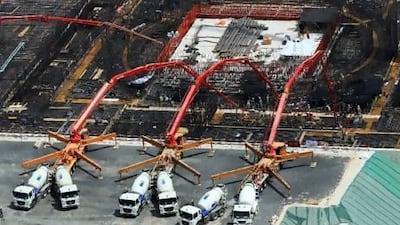
A view of the Barakah nuclear site under construction in 2012. -

Unit 1 being built in 2013 in the Western region of Abu Dhabi. -
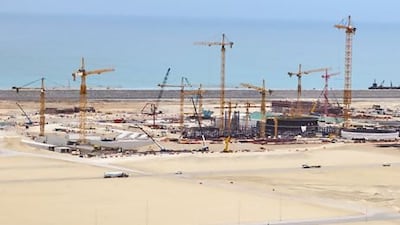
The Emirates Nuclear Energy Corporation selected a Korean consortium in 2013 to build four APR-1400 reactors. Photo: Enec -
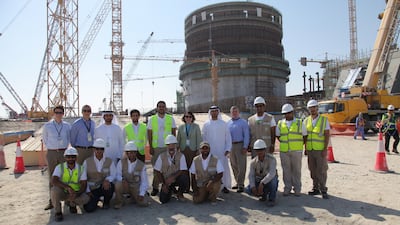
Kristine Svinicki, head of the US Nuclear Regulatory Commission, toured the Barakah site in November 2013. Photo: Enec -
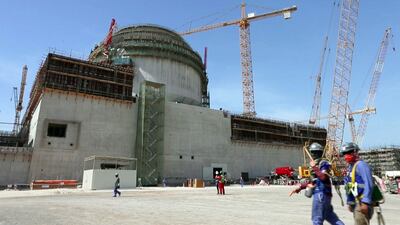
By August 2014, more than 55 per cent of construction at Unit 1 had been completed. Photo: Enec -
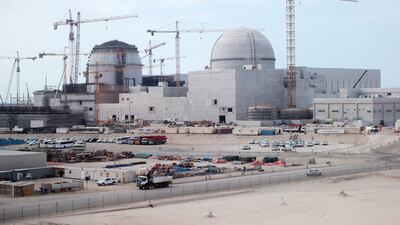
The first nuclear reactor at Barakah in 2016. Christopher Pike / The National -
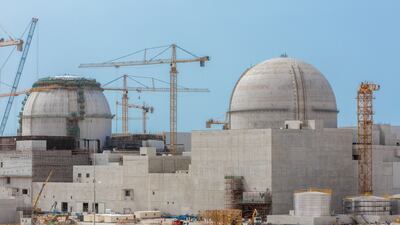
The UAE's nuclear energy programme is based in Barakah in the Western Region of Abu Dhabi. Photo: Enec -
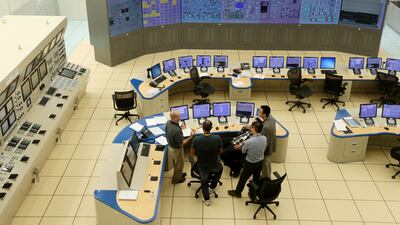
Trainees learn to deal with potentially catastrophic scenarios at this simulator in Barakah. Christopher Pike / The National -
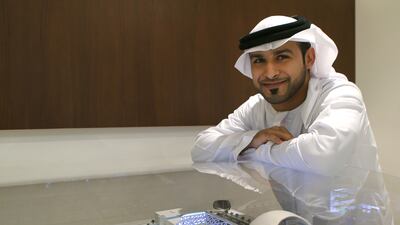
Khalid Naqbi was part of the first batch of resident inspectors sent to the construction site by the Federal Authority for Nuclear Regulation. Ravindranath K / The National


We have been engaged in the energy transition since our foundation as a nation. The oil and gas industry now contributes less than 28 per cent of our total gross domestic product. And the UAE has increased its renewable energy capacity more than any other country in the world over the past ten years, according to the Green Fuel Index. Today, we produce the cheapest commercial-scale solar power on the planet.
In 2009, we commissioned the Middle East’s first peaceful nuclear programme, and today the Barakah Nuclear Plant in Abu Dhabi is saving 5 million tonnes of carbon dioxide every year, while Adnoc, Masdar and Emirates Steel have deployed the world’s first industrial-scale carbon-capture and utilisation facility.
While we have made tremendous progress, we know that we cannot solve climate change on our own. We need to unlock the power of partnerships. This is why we continue to spread clean energy adoption and climate finance around the world.
This commitment to working with international partners to drive climate progress includes the $4.5 billion pledged by the UAE to help finance climate projects in Africa, announced in Nairobi at the Africa Climate Summit. It also includes the UAE-US Partnership for Accelerating Clean Energy, which will invest $100 billion to deploy 100 gigawatts of clean energy by 2035. And it includes the $1.25 billion Energy Transition Acceleration Financing platform, which the UAE launched with the International Renewable Energy Agency at Cop26 in Glasgow.
We understand the opportunities of energy transition and economic diversification – perhaps better than anyone else. We understand that every country has their challenges and circumstances. But we also know we must strike consensus to host a historic Cop that will deliver global transformational climate action for the benefit of all humanity.
The Cop28 presidency will use our ingrained knowledge, our learned diplomacy and our world-leading examples of successful climate action and energy diversification, to work collaboratively alongside all parties at Cop28 to secure agreements that work for everyone, and most importantly, work for the planet.

