


The October 1 suicide bombing outside Turkey’s parliament marked the first terrorist attack on Ankara in years. The Kurdistan Workers’ Party (PKK), which has led a decades-long insurgency in Turkey’s south-east and is labelled a terror group by Turkey, the US and the EU, claimed responsibility for the attack, prompting Ankara to strike PKK facilities in northern Iraq that same evening.
Days later, Turkey said the attackers had entered the country from Syria and that it would launch an extensive assault on the Syrian Democratic Forces (SDF), which is aligned with the PKK and has since 2015 been the key fighting force in the US-led coalition to combat ISIS.
As Ankara began bombing north-eastern Syria, Turkish Foreign Minister Hakan Fidan urged third parties to “stay away” – a not-so-subtle warning to the US. Some 24 hours later, an American fighter jet shot down a Turkish drone, marking the first-ever direct military engagement between Nato allies.
Then, as analysts wondered how Turkey and the US had come to the cusp of conflict in Syria, hundreds of Hamas militants launched an unprecedented assault on Israel, spurring a new war in the Middle East and underscoring, once again, Ankara’s complicated position on terror.
A little more than a year ago, I described Turkey and the West’s contrasting takes on terrorism as akin to an MC Escher drawing.
We might start with Muslim Brotherhood-inspired Hamas. It’s labelled a terrorist outfit by the US, EU and much of the West, but Turkey continues to host Hamas command centres in Istanbul, despite Israeli complaints.
In north-eastern Syria, western states valourise SDF successes against ISIS while Ankara persistently urges the US cut ties with its nemesis, the SDF/PKK. This same issue is holding up Sweden’s Nato membership: Stockholm views independence-minded Kurds in Sweden as activists while Ankara, again, sees terrorists and demands action.
-
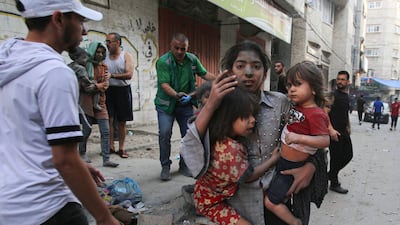
A Palestinian girl holds two children as she stands on a street in Gaza city as Israel continues to launch air strikes. AFP -
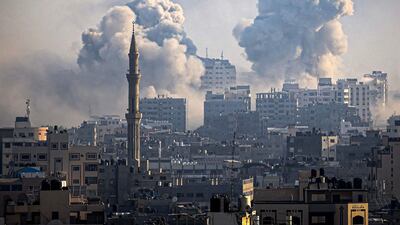
Smoke plumes billow during Israeli air strikes on Gaza city. AFP -
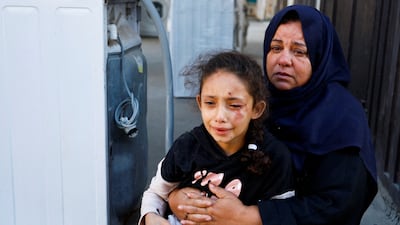
A Palestinian girl following an Israeli air strike in Khan Younis. Reuters -
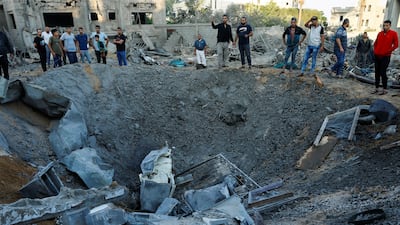
Palestinians survey the rubble of a house destroyed in Israeli strikes in Khan Younis, in the southern Gaza Strip. Reuters -
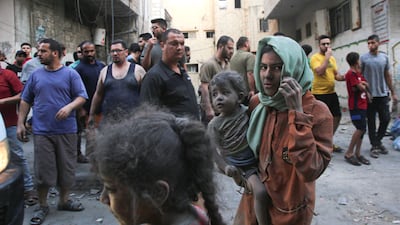
A Palestinian woman, covered in dust, carries a child in Gaza city. AFP -
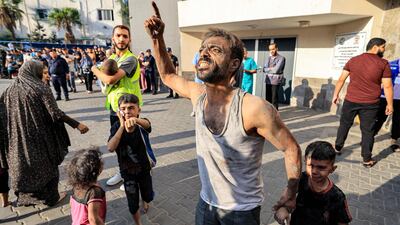
A Palestinian man with a child outside al-Shifa hospital in Gaza city. AFP -
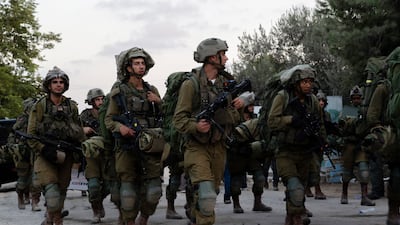
Israeli soldiers walk through Kibbutz Be'eri. Days earlier Hamas militants killed more than a hundred civilians near the border with Gaza. Getty Images -
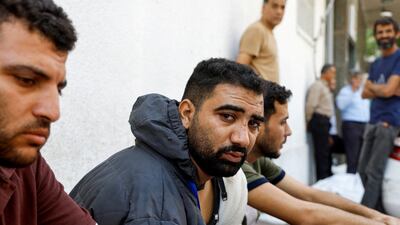
A wounded Palestinian man Ala Al-Kafarneh, who survived Israeli strikes, attends a hospital in Gaza city. Mr Al-Kafarneh lost his pregnant wife and several members of his family in air strikes after they fled Beit Hanoun. Reuters -
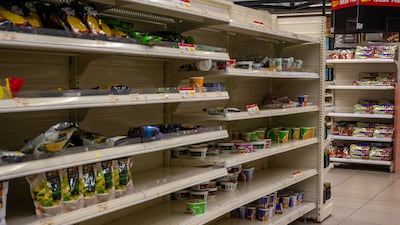
Supermarket shelves containing dry goods are left depleted in Tel Aviv. Getty Images -
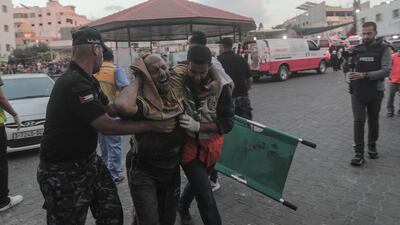
An injured Palestinian man arrives at Al-Shefa hospital in Gaza city. EPA -
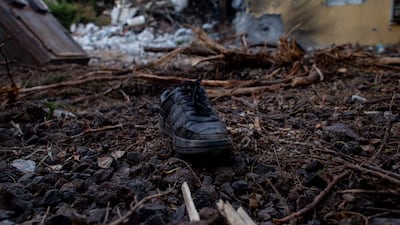
A boot lies on the ground outside a damaged house in Be'eri, Israel. EPA -
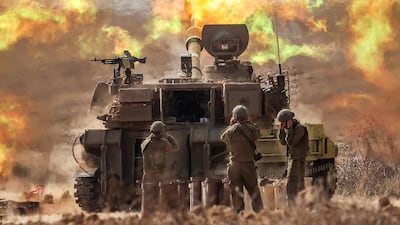
An Israeli army self-propelled howitzer near the border with Gaza in southern Israel. AFP -
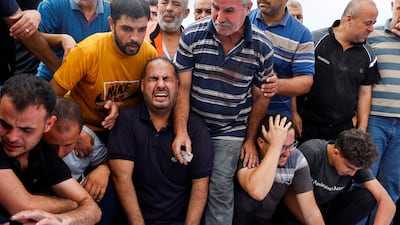
Palestinian mourners during the funerals of Al-Agha family members killed in Israeli strikes in Khan Younis in the southern Gaza Strip. Reuters -
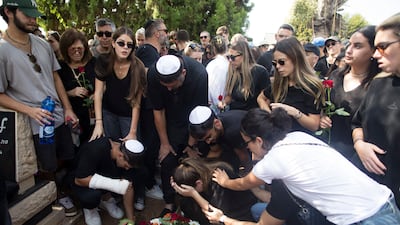
Family and friends of May Naim, 24, who was killed by Palestinians militants at a party near the Israeli border with the Gaza Strip, during her funeral in Gan Haim, Israel. Getty Images -
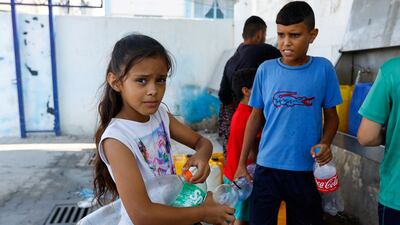
Palestinian children in Khan Younis fill bottles with water from public taps during the conflict with Israel. Reuters -
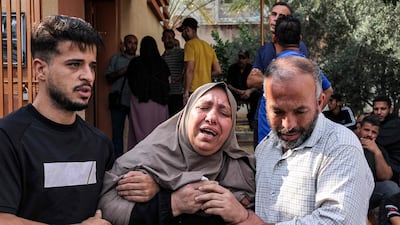
Men outside a morgue in Khan Yunis console a woman mourning loved ones killed in an Israeli air strike. AFP -

A Palestinian girl injured in Israeli strikes is taken to hospital in Gaza City. Reuters -
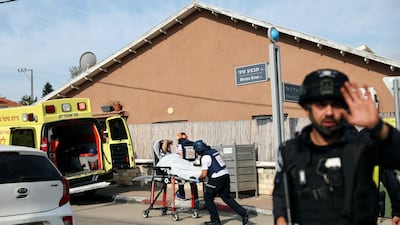
An Israeli woman is evacuated by paramedics following a rocket attack launched from the Gaza Strip into Israel, in Sderot. Reuters -
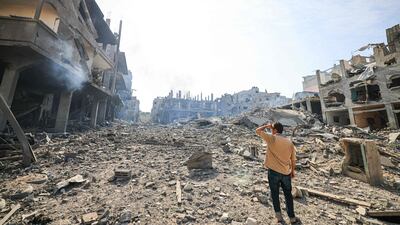
A man looks at the destruction in the ravaged Jabalia refugee camp, following overnight Israeli air strikes. AFP -
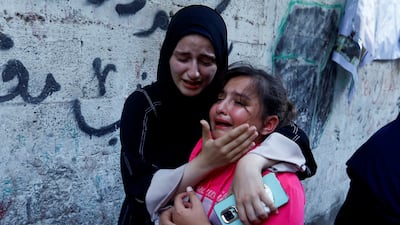
The daughter of Zakaria Abu Maamar, a member of Hamas's political office, at her father's funeral, after he was killed in an air strike in Khan Younis. Reuters -
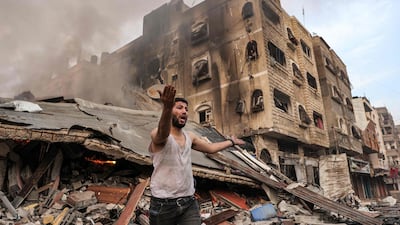
A collapsed building after an Israeli bombardment in Gaza City. AFP -
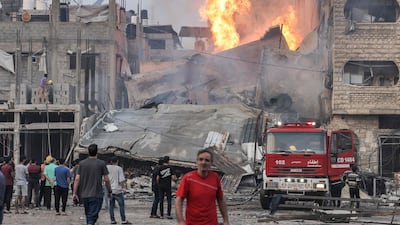
Firefighters attend a burning building after an Israeli bombardment in Gaza City. AFP -
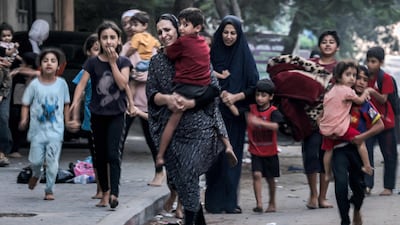
Women and children in Gaza City. AFP -
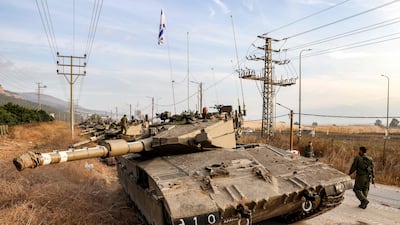
An Israeli army soldier passes a Merkava battle tank in northern Israel near the border with Lebanon. AFP -
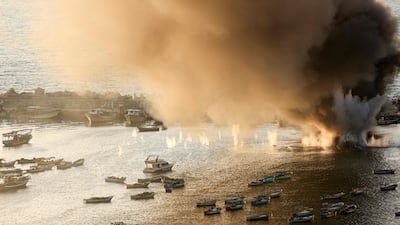
An Israeli strike on the port of Gaza City. AFP -
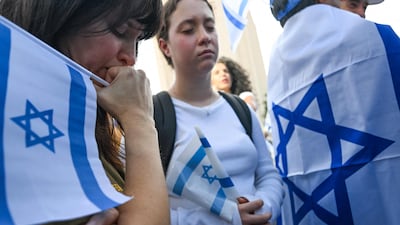
Demonstrators outside the West Los Angeles Federal Building in California during a rally in support of Israel. AFP -
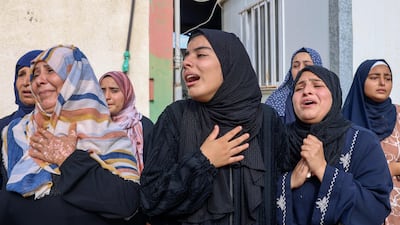
Mourners at the funeral of Palestinians killed in overnight Israeli shelling in Khan Younis in Gaza. AFP -
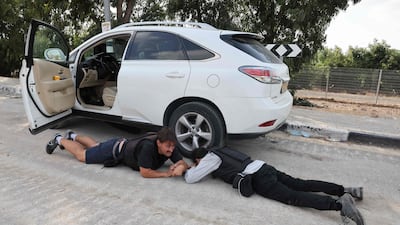
Israeli journalists take cover during a rocket attack from Gaza in the southern Israeli kibbutz of Kfar Aza near the border. AFP -

Palestinians rescue a young girl from the rubble of a destroyed residential building following an Israeli air strike. AP -

Mourners at the graveside of Eden Guez, who was killed as she attended a festival that was attacked by Hamas gunmen from Gaza. Reuters -
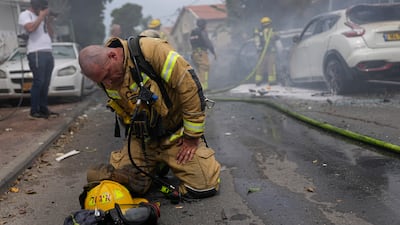
An Israeli fireman recovers after extinguishing cars set on fire by a rocket fired from Gaza. AP -
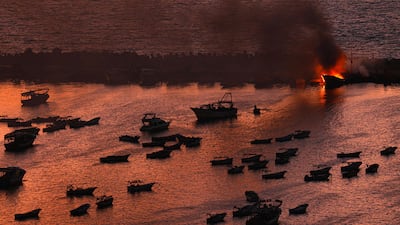
Smoke billows from a boat after a strike by Israel on the port of Gaza City. AFP -

Destroyed residential buildings in Gaza City. AP -

Rockets from Gaza launched towards Israel. Reuters -

A Palestinian woman sits among the rubble in the destroyed Al-Ramal neighborhood following an Israeli air strike in Gaza City. EPA -
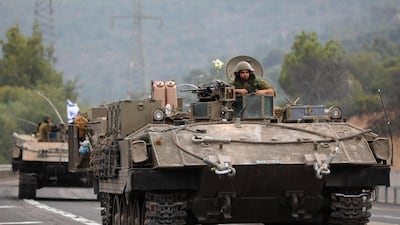
Israeli soldiers in armoured vehicles near the northern town of Kiryat Shmona close to the border with Lebanon. AFP -

Buildings destroyed by Israeli strikes in Gaza city. Reuters -
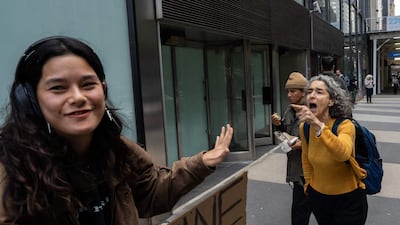
Nicole Izsak, right, confronts a Palestinian supporter near the Israeli consulate in New York, claiming her cousin is being held hostage in Gaza. AFP -
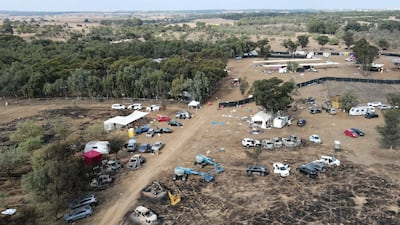
The abandoned site of the Supernova music festival, besieged by Hamas militants in southern Israel. AFP -
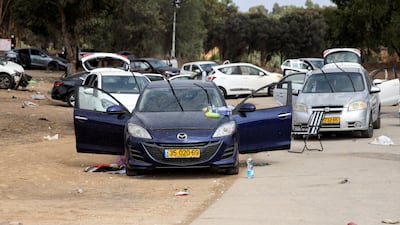
An attack on the site by Hamas gunmen from Gaza left at least 260 people dead. Reuters -
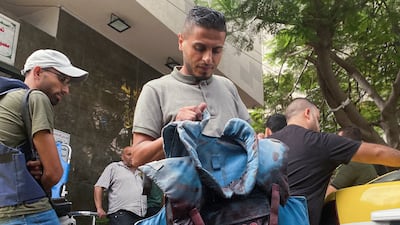
A man carries a blood-stained flak jacket belonging to a Palestinian journalist, who was killed with two colleagues when an Israeli missile hit a hospital building while they were outside reporting, in Gaza city. Reuters -
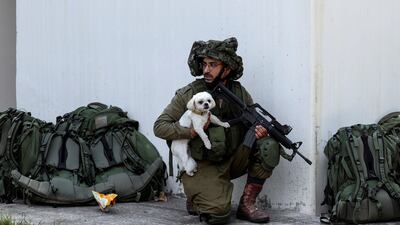
An Israeli soldier holds a rescued dog as he takes position near a bomb shelter in Kibbutz Kfar Aza, southern Israel. Reuters -

Protesters chant and wave the Palestinian flag at a rally in Melbourne, Australia. Getty Images -
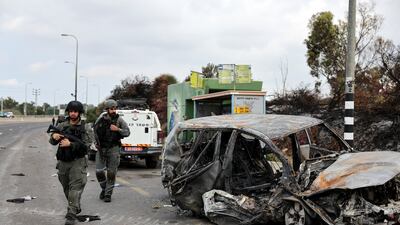
Israeli border police walk past a burnt-out car as rockets are launched from the Gaza Strip towards Israel, in Ashkelon, southern Israel. Reuters -

Palestinians amid the rubble following Israeli air strikes that razed a neighbourhood in Gaza city. AP -
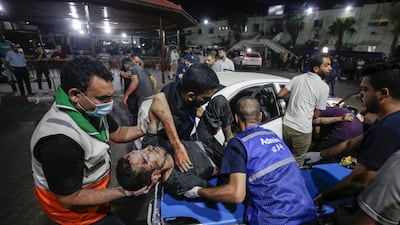
Palestinians carry a wounded man at Al Shifa Hospital in Gaza city. EPA -
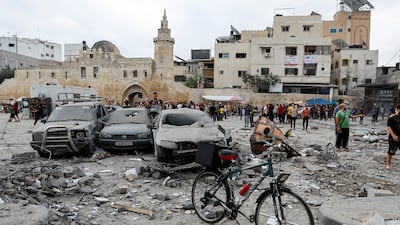
Palestinians inspect damage in the aftermath of Israeli strikes in Khan Younis, southern Gaza Strip. Reuters


Turkey has long been pushing the envelope with the 900-or-so US troops supporting the SDF. In April, a Turkish drone strike in northern Iraq targeted a convoy that included US troops and SDF leader Mazloum Abdi. And last November, a Turkish drone strike on SDF headquarters came within a few hundred metres of US forces.
The latest incident began much the same way. As Turkey bombed Hasakah province early last Thursday, several strikes fell near a US base, sending US troops scurrying into bunkers. US officials said they called the Turkish military to warn against attacks inside its restricted zone. When another Turkish drone buzzed past, a US commander ordered it to be shot down.
Tit-for-tat threats shot across social media as Turkey watchers tensed, fearing a long-expected escalation. “Those who dare test our resolve will meet the fate of those we have dealt with in the past,” Turkey’s communications chief Fahrettin Altun warned on X. But then, suddenly, the anger receded.
The US calmly reaffirmed its right to self-defence and the Pentagon described the shoot-down as “regrettable”. Turkey’s Foreign Affairs Ministry downplayed the strike, blaming “different technical assessments”. US Defence Secretary Lloyd Austin spoke with his Turkish counterpart, Yasar Guler, urging de-escalation. But Mr Fidan reportedly called his US counterpart, Secretary of State Anthony Blinken, to make clear that the US must cut ties with armed Syrian Kurds.
Now one wonders if the US and Israel will soon make a similar demand of Ankara on Hamas. Turkey has for years provided sanctuary to Hamas leaders hounded out of Palestinian territories – handing some of them Turkish passports and allowing them to set up command centres.
The scale and co-ordination of Hamas’s stunning attack on Saturday suggest the group has significantly expanded its capabilities in recent years.
Surely, the US and Israel are already poring over intel and questioning Turkish officials: did Hamas’s Istanbul operations play any role in the assault? Had any of the Hamas attackers recently spent time in Turkey? They will probably mention that Hamas leader Ismail Haniyeh visited Ankara not three months ago.
As for US troops in Syria, the White House has publicly ruled out a withdrawal. There had been whispers that the Biden administration was less than fully committed to its Kurdish partners, as it sought to renew the nuclear deal with Iran and feared further alienating Turkey.

But the past few days may have flipped that on its head. The appetite for any deal with Tehran probably evaporated, with one US official saying Iran was “complicit” in the Hamas attack. And Turkey's case that the US is allied with terrorists in Syria now seems considerably less persuasive than the expected US-Israeli argument that Ankara is effectively enabling Hamas's aggressions.
In a way, we’ve been here before. The US downing Turkey’s drone one-ups then-president Donald Trump’s vow, in October 2019, to “obliterate” Turkey’s economy if it went ahead with a planned Syria incursion. Undaunted, Turkish forces soon took control of Hasakah, Raqqa and Aleppo, displacing about 300,000 locals and spurring accusations of ethnic cleansing.
This time, rather than pause its bombing, Turkey seemed to double down – striking nearly 150 sites across north-eastern Syria, devastating the energy infrastructure and economic activity that supports the SDF. A similar Turkish response today, reiterating its commitment to Hamas rather than denouncing the assault and cutting ties, might spur a stern American-Israeli response.
Ankara seems to be hedging its bets. Turkish President Recep Tayyip Erdogan has urged Israelis and Palestinians to exercise restraint and vowed to do whatever is necessary to help de-escalate and broker peace. Yet the longtime Turkish leader also said his government is willing to help negotiate the release of Israeli prisoners, which suggests he hopes to maintain some semblance of support for Hamas.
As Turkey heads towards March elections, this stance might draw votes. Thousands of Istanbul residents rallied in support of Palestinians on the weekend, while several Turkish Islamist politicians, including the leaders of two parties in the governing Justice and Development Party’s parliamentary coalition, expressed support for the “just struggle” of Palestinian resistance.
Resolving the Kurdish dilemma can wait; another Turkish foreign policy position just took on greater urgency. State foes are known to change with the times.

