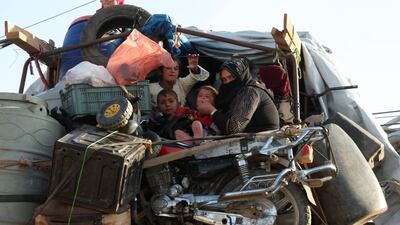
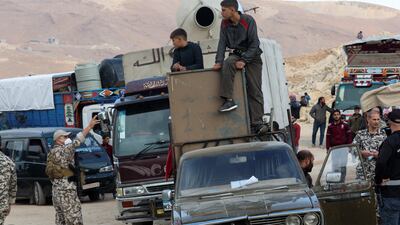
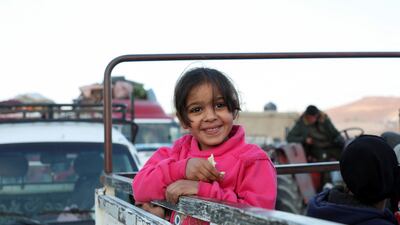
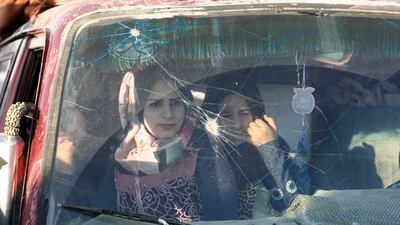
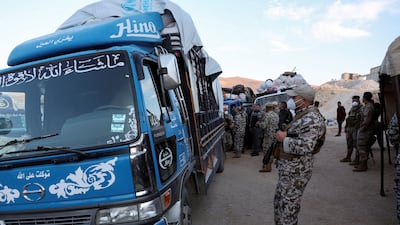
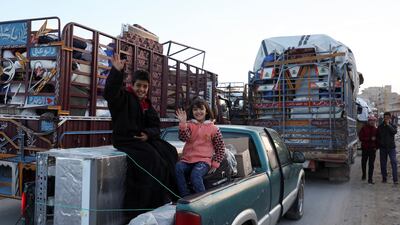
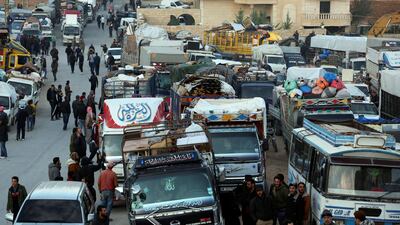
A Syrian refugee child stands outside tents at an informal camp in Deir Zenoun, in the Bekaa valley, Lebanon, in April 2022. Reuters


The Syrian refugee crisis is out of control – the world needs to act now


  • English
  • Arabic

October 08, 2023

During his address to the UN General Assembly last month, Jordan’s King Abdullah called on the international community to do more to support the Syrian refugees living in his country as well as Lebanon.

Also last month, Lebanese officials criticised the UNHCR, the UN Refugee Agency, for issuing residence certificates to Syrian refugees housed in their country.

It is becoming increasingly clear that it is time for the UNHCR and other NGOs operating in host countries for refugees, including Jordan, Lebanon and Turkey, to fundamentally reconsider their tasks and conduct and establish a new strategy that respects official positions and popular sentiments within the host countries vis-a-vis the refugee crisis.

Entire villages in Lebanon now have Syrian majorities. This, among other things, has led to popular resentment towards the UNHCR, in particular as it is seen to be delivering aid to refugees rather than to the host countries – even though the UNHCR helps support host communities too.

Jordan says it hosts 1.4 million Syrian refugees and close to two million are believed to be living in Lebanon. However, the Lebanese government does not have an accurate count because the UNHCR has yet to divulge the official figures.

It bears mention that the Lebanese government is partly responsible for the country’s ordeal. It refused to build proper camps, which led to the dispersal of refugees into villages and cities, including Beirut, and the mushrooming of informal camps that are outside the law. Regardless of the chaos and the mismanagement, however, the UNHCR has no right to classify who is a refugee or displaced to Lebanon, nor should it be the party that manages Beirut’s response.

Controlling the borders is essential, but even this most basic of principles is a victim to political and sectarian polarisation in a fragmented country

Further, government departments must develop a comprehensive strategy to then be executed by the armed forces and the General Directorate of General Security (GDGS) intelligence agency.

While we must view the issue as a humanitarian one, a fresh influx of refugees from Syria suggests there could be some form of co-ordination between Syrian authorities and Lebanese entities such as Hezbollah to facilitate their illegal crossing through the permeable borders. There are murmurs of rampant corruption that includes the enabling of smugglers.

It is also worth asking if the new displacement wave is triggered by economic factors, inadvertently encouraged by some NGOs, given the kind of assistance refugees receive in Lebanon – even as Lebanese citizens themselves suffer from shortages and increasing poverty.

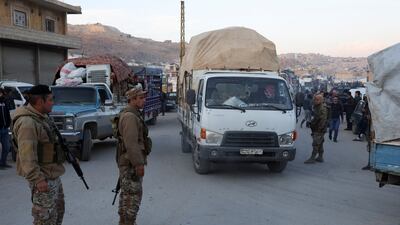
The almost 400-kilometre-long border with Syria is difficult to control, especially as Lebanon’s armed forces are involved in various challenges in different parts of the country. There is neither adequate funding for the technological development of border control nor a political agreement on the demarcation of the border.

The Syrian regime does not appear interested in the refugees’ return and is showing little intent in providing a secure environment for them.

Lebanese authorities have become tired of waiting for officials in the West, particularly in Europe, to act.

Gen Elias Baysari, who heads the GDGS, said in a recent media interview that his organisation has the “right” to “decide on the presence of foreigners in Lebanon”. This is a crucial statement that the UN, its agencies, and European countries and their representatives would do well to note.

Today, there is widespread anger, alarm and suspicion inside Lebanon of the European powers’ intentions. They are being accused of using the humanitarian issue as a pretext to impose the resettlement of Syrians in Lebanon. There are increasingly even calls to close UN offices for overstepping the powers of the state, with some urging the opening of the shores for Syrian refugees to cross into Europe. The continent’s powers, terrified by the influx of refugees, rely on the likes of Lebanon to host them.

What should be done?

Controlling the borders is essential, but even this most basic of principles is a victim to political and sectarian polarisation in a fragmented country.

Hezbollah, for instance, has succeeded in all but dismantling the state bit by bit, and has not expressed any desire to tackle the border issue. This suggests much-required demarcation is unlikely to happen soon.

It is, therefore, worthwhile and necessary to build on the dual approach of both the Jordanian and Lebanese tracks regarding the issue of Syrian refugees, as raised by King Abdullah at the UN.

It is time for Lebanon, Jordan and Turkey to collectively address the UN through diplomatic means. They should send delegations to meet UN officials, including Secretary General Antonio Guterres, pointing to the shortcomings of the UNHCR’s policies and demanding specific and precise measures be taken. These efforts need to be accompanied by smart media campaigns beyond simply airing grievances.

It would be beneficial for the three countries to also address the UN Security Council with carefully crafted draft resolutions, both in humanitarian and political terms. These resolutions should serve as a tool to pressure the Syrian regime into taking serious actions to ensure the safe return of displaced individuals.

The trio must also adopt a unified stance regarding the impact of refugees on their economies.

Ultimately, addressing the crisis requires a global partnership with the host countries to tackle the problem at its roots based on a security situation that allows the safe return of refugees, with shared responsibilities. This should be part of a resolution presented in the Security Council, accompanied by a financial mechanism enabling the relocation of refugees either back to their home country or to a third country.

There needs to be a concerted effort to make the international community act rationally, intelligently and with responsibility. Syria’s neighbours cannot alone bear the burden posed by the refugee crisis. This is also the responsibility of the UN and the EU.


The full list of 2020 Brit Award nominees (winners in bold):

British group

Coldplay

Foals

Bring me the Horizon

D-Block Europe

Bastille

British Female

Mabel

Freya Ridings

FKA Twigs

Charli xcx

Mahalia​

British male

Harry Styles

Lewis Capaldi

Dave

Michael Kiwanuka

Stormzy​

Best new artist

Aitch

Lewis Capaldi

Dave

Mabel

Sam Fender

Best song

Ed Sheeran and Justin Bieber - I Don’t Care

Mabel - Don’t Call Me Up

Calvin Harrison and Rag’n’Bone Man - Giant

Dave - Location

Mark Ronson feat. Miley Cyrus - Nothing Breaks Like A Heart

AJ Tracey - Ladbroke Grove

Lewis Capaldi - Someone you Loved

Tom Walker - Just You and I

Sam Smith and Normani - Dancing with a Stranger

Stormzy - Vossi Bop

International female

Ariana Grande

Billie Eilish

Camila Cabello

Lana Del Rey

Lizzo

International male

Bruce Springsteen

Burna Boy

Tyler, The Creator

Dermot Kennedy

Post Malone

Best album

Stormzy - Heavy is the Head

Michael Kiwanuka - Kiwanuka

Lewis Capaldi - Divinely Uninspired to a Hellish Extent

Dave - Psychodrama

Harry Styles - Fine Line

Rising star

Celeste

Joy Crookes

beabadoobee

The President's Cake

Director: Hasan Hadi

Starring: Baneen Ahmad Nayyef, Waheed Thabet Khreibat, Sajad Mohamad Qasem 

Rating: 4/5

The specs

Engine: Turbocharged four-cylinder 2.7-litre

Power: 325hp

Torque: 500Nm

Transmission: 10-speed automatic

Price: From Dh189,700

On sale: now

Timeline

2012-2015

The company offers payments/bribes to win key contracts in the Middle East

May 2017

The UK SFO officially opens investigation into Petrofac’s use of agents, corruption, and potential bribery to secure contracts

September 2021

Petrofac pleads guilty to seven counts of failing to prevent bribery under the UK Bribery Act

October 2021

Court fines Petrofac £77 million for bribery. Former executive receives a two-year suspended sentence 

December 2024

Petrofac enters into comprehensive restructuring to strengthen the financial position of the group

May 2025

The High Court of England and Wales approves the company’s restructuring plan

July 2025

The Court of Appeal issues a judgment challenging parts of the restructuring plan

August 2025

Petrofac issues a business update to execute the restructuring and confirms it will appeal the Court of Appeal decision

October 2025

Petrofac loses a major TenneT offshore wind contract worth €13 billion. Holding company files for administration in the UK. Petrofac delisted from the London Stock Exchange

November 2025

180 Petrofac employees laid off in the UAE

Silent Hill f

Publisher: Konami

Platforms: PlayStation 5, Xbox Series X/S, PC

Rating: 4.5/5

GIANT REVIEW

Starring: Amir El-Masry, Pierce Brosnan

Director: Athale

Rating: 4/5

Dhadak 2

Director: Shazia Iqbal

Starring: Siddhant Chaturvedi, Triptii Dimri 

Rating: 1/5

Real estate tokenisation project

Dubai launched the pilot phase of its real estate tokenisation project last month.

The initiative focuses on converting real estate assets into digital tokens recorded on blockchain technology and helps in streamlining the process of buying, selling and investing, the Dubai Land Department said.

Dubai’s real estate tokenisation market is projected to reach Dh60 billion ($16.33 billion) by 2033, representing 7 per cent of the emirate’s total property transactions, according to the DLD.

COMPANY%20PROFILE
%3Cp%3E%3Cstrong%3ECompany%3A%20%3C%2Fstrong%3EGrowdash%0D%3Cbr%3E%3Cstrong%3EStarted%3A%20%3C%2Fstrong%3EJuly%202022%0D%3Cbr%3E%3Cstrong%3EFounders%3A%20%3C%2Fstrong%3ESean%20Trevaskis%20and%20Enver%20Sorkun%0D%3Cbr%3E%3Cstrong%3EBased%3A%20%3C%2Fstrong%3EDubai%2C%20UAE%0D%3Cbr%3E%3Cstrong%3EIndustry%3A%20%3C%2Fstrong%3ERestaurant%20technology%0D%3Cbr%3E%3Cstrong%3EFunding%20so%20far%3A%3C%2Fstrong%3E%20%24750%2C000%0D%3Cbr%3E%3Cstrong%3EInvestors%3A%20%3C%2Fstrong%3EFlat6Labs%2C%20Plus%20VC%2C%20Judah%20VC%2C%20TPN%20Investments%20and%20angel%20investors%2C%20including%20former%20Talabat%20chief%20executive%20Abdulhamid%20Alomar%2C%20and%20entrepreneur%20Zeid%20Husban%3C%2Fp%3E%0A
Key recommendations
  • Fewer criminals put behind bars and more to serve sentences in the community, with short sentences scrapped and many inmates released earlier.
  • Greater use of curfews and exclusion zones to deliver tougher supervision than ever on criminals.
  • Explore wider powers for judges to punish offenders by blocking them from attending football matches, banning them from driving or travelling abroad through an expansion of ‘ancillary orders’.
  • More Intensive Supervision Courts to tackle the root causes of crime such as alcohol and drug abuse – forcing repeat offenders to take part in tough treatment programmes or face prison.
Our legal consultants

Name: Hassan Mohsen Elhais

Position: legal consultant with Al Rowaad Advocates and Legal Consultants.

SPEC%20SHEET%3A%20SAMSUNG%20GALAXY%20Z%20FOLD5
%3Cp%3E%3Cstrong%3EMain%20display%3A%3C%2Fstrong%3E%207.6%22%20QXGA%2B%20Dynamic%20Amoled%202X%2C%20Infinity%20Flex%2C%202176%20x%201812%2C%2021.6%3A18%2C%20374ppi%2C%20HDR10%2B%2C%20up%20to%20120Hz%3C%2Fp%3E%0A%3Cp%3E%3Cstrong%3ECover%20display%3A%3C%2Fstrong%3E%206.2%22%20HD%2B%20Dynamic%20Amoled%202X%2C%202316%20x%20904%2C%2023.1%3A9%2C%20402ppi%2C%20up%20to%20120Hz%3C%2Fp%3E%0A%3Cp%3E%3Cstrong%3EProcessor%3A%3C%2Fstrong%3E%20Qualcomm%20Snapdragon%208%20Gen%202%2C%204nm%2C%20octa-core%3B%20Adreno%20740%20GPU%3C%2Fp%3E%0A%3Cp%3E%3Cstrong%3EMemory%3A%3C%2Fstrong%3E%2012GB%3C%2Fp%3E%0A%3Cp%3E%3Cstrong%3ECapacity%3A%3C%2Fstrong%3E%20256%2F512GB%20%2F%201TB%20(online%20exclusive)%3C%2Fp%3E%0A%3Cp%3E%3Cstrong%3EPlatform%3A%3C%2Fstrong%3E%20Android%2013%2C%20One%20UI%205.1.1%3C%2Fp%3E%0A%3Cp%3E%3Cstrong%3EMain%20camera%3A%3C%2Fstrong%3E%20Triple%2012MP%20ultra-wide%20(f%2F2.2)%20%2B%2050MP%20wide%20(f%2F1.8)%20%2B%2010MP%20telephoto%20(f%2F2.4)%2C%20dual%20OIS%2C%203x%20optical%20zoom%2C%2030x%20Space%20Zoom%2C%20portrait%2C%20super%20slo-mo%3C%2Fp%3E%0A%3Cp%3E%3Cstrong%3EVideo%3A%3C%2Fstrong%3E%208K%4024fps%2C%204K%4060fps%2C%20full-HD%4060%2F240fps%2C%20HD%40960fps%3B%20slo-mo%4060%2F240%2F960fps%3B%20HDR10%2B%3C%2Fp%3E%0A%3Cp%3E%3Cstrong%3ECover%20camera%3A%3C%2Fstrong%3E%2010MP%20(f%2F2.2)%3C%2Fp%3E%0A%3Cp%3E%3Cstrong%3EInner%20front%20camera%3A%3C%2Fstrong%3E%20Under-display%204MP%20(f%2F1.8)%3C%2Fp%3E%0A%3Cp%3E%3Cstrong%3EBattery%3A%3C%2Fstrong%3E%204400mAh%2C%2025W%20fast%20charging%2C%2015W%20wireless%2C%204.5W%20reverse%20wireless%3C%2Fp%3E%0A%3Cp%3E%3Cstrong%3EConnectivity%3A%3C%2Fstrong%3E%205G%3B%20Wi-Fi%2C%20Bluetooth%205.3%2C%20NFC%20(Samsung%20Pay)%3C%2Fp%3E%0A%3Cp%3E%3Cstrong%3EI%2FO%3A%3C%2Fstrong%3E%20USB-C%3C%2Fp%3E%0A%3Cp%3E%3Cstrong%3ECards%3A%3C%2Fstrong%3E%20Nano-SIM%20%2B%20eSIM%3B%20dual%20nano-SIMs%20%2B%20eSIM%3C%2Fp%3E%0A%3Cp%3E%3Cstrong%3EColours%3A%3C%2Fstrong%3E%20Cream%2C%20icy%20blue%2C%20phantom%20black%3B%20online%20exclusives%20%E2%80%93%20blue%2C%20grey%3C%2Fp%3E%0A%3Cp%3E%3Cstrong%3EIn%20the%20box%3A%3C%2Fstrong%3E%20Fold5%2C%20USB-C-to-USB-C%20cable%3C%2Fp%3E%0A%3Cp%3E%3Cstrong%3EPrice%3A%3C%2Fstrong%3E%20Dh6%2C799%20%2F%20Dh7%2C249%20%2F%20Dh8%2C149%3C%2Fp%3E%0A

Mercer, the investment consulting arm of US services company Marsh & McLennan, expects its wealth division to at least double its assets under management (AUM) in the Middle East as wealth in the region continues to grow despite economic headwinds, a company official said.

Mercer Wealth, which globally has $160 billion in AUM, plans to boost its AUM in the region to $2-$3bn in the next 2-3 years from the present $1bn, said Yasir AbuShaban, a Dubai-based principal with Mercer Wealth.

Within the next two to three years, we are looking at reaching $2 to $3 billion as a conservative estimate and we do see an opportunity to do so,” said Mr AbuShaban.

Mercer does not directly make investments, but allocates clients’ money they have discretion to, to professional asset managers. They also provide advice to clients.

“We have buying power. We can negotiate on their (client’s) behalf with asset managers to provide them lower fees than they otherwise would have to get on their own,” he added.

Mercer Wealth’s clients include sovereign wealth funds, family offices, and insurance companies among others.

From its office in Dubai, Mercer also looks after Africa, India and Turkey, where they also see opportunity for growth.

Wealth creation in Middle East and Africa (MEA) grew 8.5 per cent to $8.1 trillion last year from $7.5tn in 2015, higher than last year’s global average of 6 per cent and the second-highest growth in a region after Asia-Pacific which grew 9.9 per cent, according to consultancy Boston Consulting Group (BCG). In the region, where wealth grew just 1.9 per cent in 2015 compared with 2014, a pickup in oil prices has helped in wealth generation.

BCG is forecasting MEA wealth will rise to $12tn by 2021, growing at an annual average of 8 per cent.

Drivers of wealth generation in the region will be split evenly between new wealth creation and growth of performance of existing assets, according to BCG.

Another general trend in the region is clients’ looking for a comprehensive approach to investing, according to Mr AbuShaban.

“Institutional investors or some of the families are seeing a slowdown in the available capital they have to invest and in that sense they are looking at optimizing the way they manage their portfolios and making sure they are not investing haphazardly and different parts of their investment are working together,” said Mr AbuShaban.

Some clients also have a higher appetite for risk, given the low interest-rate environment that does not provide enough yield for some institutional investors. These clients are keen to invest in illiquid assets, such as private equity and infrastructure.

“What we have seen is a desire for higher returns in what has been a low-return environment specifically in various fixed income or bonds,” he said.

“In this environment, we have seen a de facto increase in the risk that clients are taking in things like illiquid investments, private equity investments, infrastructure and private debt, those kind of investments were higher illiquidity results in incrementally higher returns.”

The Abu Dhabi Investment Authority, one of the largest sovereign wealth funds, said in its 2016 report that has gradually increased its exposure in direct private equity and private credit transactions, mainly in Asian markets and especially in China and India. The authority’s private equity department focused on structured equities owing to “their defensive characteristics.”

UAE currency: the story behind the money in your pockets
The specs: 2018 Jaguar E-Pace First Edition

Price, base / as tested: Dh186,480 / Dh252,735

Engine: 2.0-litre four-cylinder

Power: 246hp @ 5,500rpm

Torque: 365Nm @ 1,200rpm

Transmission: Nine-speed automatic

Fuel consumption, combined: 7.7L / 100km

Yemen's Bahais and the charges they often face

The Baha'i faith was made known in Yemen in the 19th century, first introduced by an Iranian man named Ali Muhammad Al Shirazi, considered the Herald of the Baha'i faith in 1844.

The Baha'i faith has had a growing number of followers in recent years despite persecution in Yemen and Iran. 

Today, some 2,000 Baha'is reside in Yemen, according to Insaf. 

"The 24 defendants represented by the House of Justice, which has intelligence outfits from the uS and the UK working to carry out an espionage scheme in Yemen under the guise of religion.. aimed to impant and found the Bahai sect on Yemeni soil by bringing foreign Bahais from abroad and homing them in Yemen," the charge sheet said. 

Baha'Ullah, the founder of the Bahai faith, was exiled by the Ottoman Empire in 1868 from Iran to what is now Israel. Now, the Bahai faith's highest governing body, known as the Universal House of Justice, is based in the Israeli city of Haifa, which the Bahais turn towards during prayer. 

The Houthis cite this as collective "evidence" of Bahai "links" to Israel - which the Houthis consider their enemy. 


EA Sports FC 24

Frankenstein in Baghdad
Ahmed Saadawi
​​​​​​​Penguin Press

The essentials

What: Emirates Airline Festival of Literature

When: Friday until March 9

Where: All main sessions are held in the InterContinental Dubai Festival City

Price: Sessions range from free entry to Dh125 tickets, with the exception of special events.

Hot Tip: If waiting for your book to be signed looks like it will be timeconsuming, ask the festival’s bookstore if they have pre-signed copies of the book you’re looking for. They should have a bunch from some of the festival’s biggest guest authors.

Information: www.emirateslitfest.com
 

Updated: October 08, 2023, 2:01 PM