


The global factors affecting the carbon transition will have their biggest impact in the developing world, which many policymakers, activists and business leaders say will bear the biggest burden in tackling the effects of climate change despite having had negligible role in creating it.
From Africa to South-East Asia, the rapidly growing need for energy to deliver basic services means the developing world will have a different set of considerations for the carbon transition to take hold.
In the rich world, renewables such as solar and wind are seen as a silver bullet for making emissions cuts, even as demand for natural gas is skyrocketing. For many, the reliability of electricity grids is a given, as is electrification of sectors reliant on hydrocarbons such as transport and manufacturing. Policymakers ultimately have to figure out how to reduce emissions while maintaining services and living standards.
The carbon transition in the developing world will differ in important ways. First, developing countries have rapidly growing power demand; second, they are less able to pay for the infrastructure changes; and third, their systems are generally less efficient.
-
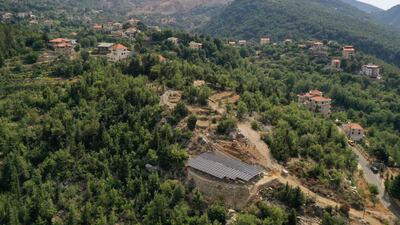
An aerial view of the solar panels installed in the village of Toula in northern Lebanon. All photos by AFP -
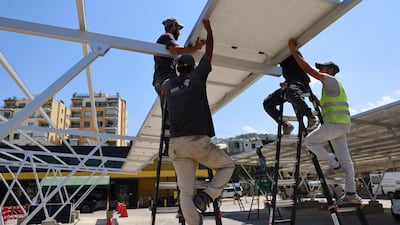
Workers instal solar panels as shades for vehicles in the car park of a shopping mall in the city of Byblos in northern Lebanon. -
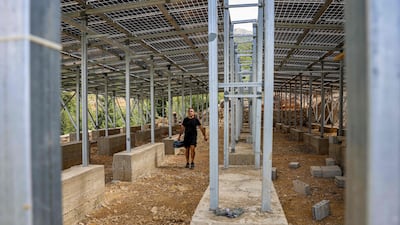
A technician works on the solar panel system installed for the village of Toula in northern Lebanon. -
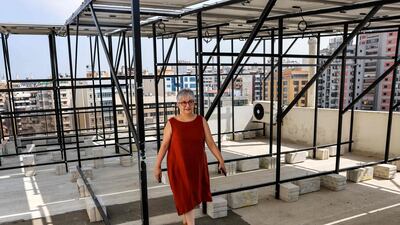
Lebanese homemaker Zeina Sayegh walks beneath the solar panels she installed atop her apartment building in Lebanon's capital Beirut. -
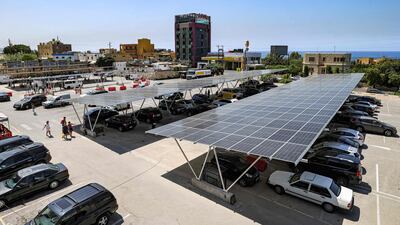
Solar panels cover a shopping mall's car park in the city of Byblos in northern Lebanon. -
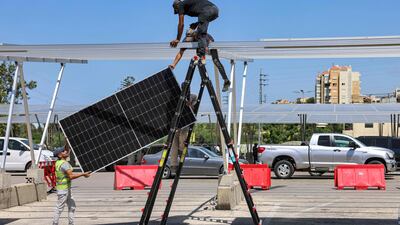
Workers instal solar panels over parking spaces at a shopping mall in Byblos, Lebanon. -
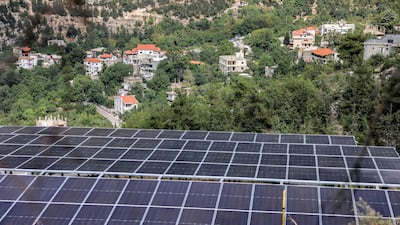
The solar panel system installed on a hillside above the village of Toula in northern Lebanon. -

Solar panels cover the roof of a shopping mall in Byblos, Lebanon.


In Africa, for example, energy is intricately linked to basic quality of life. A significant number of Africans still use charcoal or wood for cooking, causing indoor air pollution, carbon monoxide poisoning, and ultimately deforestation. Total electricity consumed on the continent is comparatively low: the power consumption of more than a billion people in all 48 Sahel countries is less than that consumed in Spain, population 47 million, the Economist notes.
From this low base, the developing world is witnessing the fastest rise in energy demand amid rapidly growing population, growing economies, and gradual improvement in standards of living.
A large proportion of its population have yet to go through this first transition to grid power, but they are rapidly advancing on the S-curve of demand. By 2040, more than 60 per cent of global energy demand is expected to come from the developing world.
The limited ability to pay for infrastructural changes will affect how the emissions cuts are reached. If new technologies such as solar or wind are expensive to implement, they will be unusable and ultimately rejected.
Policymakers have not helped in this case. Only about 10 per cent of financing for sustainable projects goes to developing countries other than China, according to the International Energy Agency.
Private-sector financiers have been slow to fill in the funding gaps. There is a clear case for private capital, yet developing countries attract only a quarter of global investment, more than 60 per cent of which is focused on just five countries.
The World Bank Global Infrastructure Hub notes that lower creditworthiness of many economies hampers this, as do the nascent state of many sectors, low implementation capacity, lack of bankable projects, and issues around affordability and debt sustainability.
The inefficiency of the energy systems themselves places further considerations on the transition. Current developing world systems are highly centralised and inefficient, and traditional regulation hasn’t kept up with modern standards, leading to considerable waste. In a number of regions, energy suppliers are loss-making, while many consumers are subsidised, leading to inefficient consumption patterns. Counter party risk is one of the biggest challenges facing energy providers looking to add modern capacity.
For these and other reasons it behooves policymakers and business leaders to enable the developing world to eschew novel solutions and encourage the move to lower carbon-emitting fuels such as natural gas, even as they embrace renewables and other forms in the long term. This would begin the process of cutting emissions today without burdening economies with major costs they cannot afford in the future. Indeed, it would emulate the transition in rich countries.
The most consequential consideration in this regard is how to give up coal, touching on power generation, coal mining, unions, and general energy security considerations. The IPCC’s warming targets highlight the key role of cutting coal-fired electricity, calling for a reduction from as high as 36 per cent of generation today to 9 per cent by 2030 to virtually 0 per cent by 2050, and to eventually replace this with renewables, according to the Davos Agenda.
This transition is well under way in the US and Europe – but in the developing world the gap between coal-fired electricity and renewables is barely closing as energy demand rises rapidly, particularly in South-East Asia. Policymakers must find a mechanism for compensating investors in coal and finding employment for all the workers displaced in the transition. The Just Energy Transition Partnership signed most recently with Indonesia, may prove a critical model for enabling this.
An equally important consideration is how to enable development of low-carbon energy sources such as gas for local consumption. While gas resources are plentiful in Africa, for example, most financing serves development of oil and gas for export to European markets; gas projects serving local power markets tend to receive less favourable terms. This reflects the higher risk in such projects as well as the general inefficiency of developing world power generation systems.
If the developing world is to give up coal, it must be able to develop its gas resources. Reform and streamlining of power generation systems will therefore be necessary to improve efficiencies and establish a sustainable energy system that can fund development of energy resources and modern generation capacity.
That would enable greater focus on adaptative solutions that tackle climate change. Adaptation is a short-term, local solution to climate change with a tangible impact; mitigation is a long-term solution that cannot overcome the near-term consequences of climate change. And for much of the developing world, climate change is happening now; there is simply no time to lose on adaptation.

Flood defences, wetland preservation, mangrove restoration, and efficient irrigation and water management will be central to building resilience as climate change makes a bigger impact.
Yet despite this imperative, there are simply more resources and technology made available for mitigation than for adaptive solutions. Take for example, the $100 billion fund pledged in 2019 and again in 2020 to support the developing world in the undergo the transition. Though barely funded as it is, only about 20 per cent of funding is targeted at adaptation.
There are plenty of examples in which adaptive and mitigative quick wins can be combined to yield long-term gains. One such example is changing the morphology and design of buildings to reduce energy waste by reducing cooling or heating needs, which is a nearly cost-free solution for new construction. There are many others.
If the carbon transition is to truly take hold in the developing world, countries must develop project pipelines supported by affordable private capital, the World Bank notes. Then their limited public funds can be leveraged in critical areas while private capital – with its inherent efficiencies – can spur economic growth.
Developing countries will inevitably play a bigger role in the carbon transition; it is crucial for that process to begin today. As the world looks to Cop28 in November in the UAE, policymakers must put the developing world at centre stage where it belongs, and embrace common sense policies to enable them.
Majid Jafar is the CEO of Crescent Petroleum

