


When Sergey Brin and Larry Page set up Google in 1998, they got one thing very badly wrong: they focused their hiring strategy on brilliant computer scientists from the world’s top universities.
Mr Brin and Mr Page, who both have PhDs in computer science from Stanford University, were unequivocal in their view that only experts in the Stem subjects could deliver the pioneering solutions their innovative company required.
In 2013, Google launched Project Oxygen, an algorithmic analysis of employee performance. The results found that Stem knowledge was the least important requirement for a successful Google employee. The recruitment strategy needed a bold change: Google not only removed the requirement for Stem, but it eliminated entirely the requirement for degrees altogether. Today, Google seeks recruits with problem-solving skills, high levels of cognitive ability and alignment with the company's values.
Google’s story is not unique. They are joined by Apple, IBM, Starbucks and several other multinationals in no longer requiring recruits to have a degree. A recent survey in the US, by the employment website Indeed, found that six out of 10 companies are considering eliminating a degree from their hiring requirements.
-
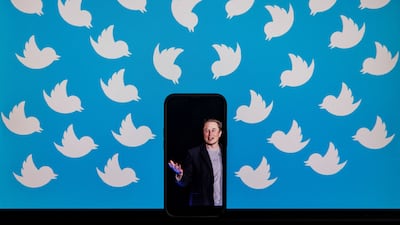
Twitter has cut more than 3,000 jobs since Elon Musk purchased the social media company, with some of the firings happening in the eye of the public. 'Regarding Twitter’s reduction in force, unfortunately there is no choice when the company is losing over $4M/day,' Mr Musk tweeted. AFP -
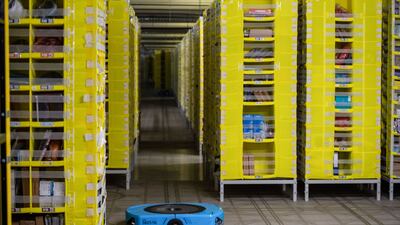
A robot retrieves a pallet of items for employees to sort at an Amazon warehouse. The e-commerce company plans to cut about 10,000 jobs and the lay-offs have started, chief executive Andy Jassy said. Bloomberg -
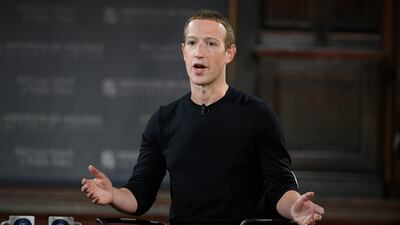
Facebook parent Meta is cutting 11,000 jobs, the first major round of layoffs in the social-media company’s history. 'I want to take accountability for these decisions and for how we got here,' said Meta chief Mark Zuckerberg, pictured. AP -
Hewlett-Packard expects to cut up to 6,000 jobs by the end of the 2025 fiscal year, or about 12 per cent of its global workforce, as computer sales slide amid consumer budget constraints. AFP -

Apple, the iPhone maker, has paused hiring for many jobs outside of research and development, an escalation of its plan to reduce budgets heading into next year. AFP -

Digital banking start-up Chime Financial is cutting 12 per cent of its staff, or 160 people. A representative of the company said Chime remains well-capitalised and the move will position it for 'sustained success'. Reuters -

Cisco Systems is beginning a restructuring plan that will affect about 5 per cent of employees. The company says it will incur pretax charges of about $600 million for severance, termination and other costs. The employees will be given a chance to move to other jobs within the company, chief financial officer Scott Herren said. AFP -

Dapper Labs founder and chief executive Roham Gharegozlou said in a letter to employees that the company had laid off 22 per cent of its staff. He cited macroeconomic conditions and operational challenges stemming from the company’s rapid growth. Dapper Labs created the NBA Top Shot marketplace for nonfungible tokens, a digital asset class that has suffered a steep drop in demand since the cryptocurrency market downturn. Reuters -
Intel is cutting jobs and slowing spending on new plants to save $3 billion next year, the chip maker said. The hope is to save as much as $10 billion by 2025. The headcount reduction could be in the thousands. Reuters -

Lyft's cost-saving efforts include divesting its vehicle service business. It is eliminating 13 per cent of staff, or about 683 people. The company had already said it would freeze hiring in the US until at least next year. Reuters -

Peloton laid off 500 employees globally, or about 12 per cent of the workforce, in October. It was the fourth time this year the company has cut staff. Along with other expense reduction measures, Peloton said the move will help it reach the break-even point on cash flow by the end of the 2023 fiscal year. Reuters -

Qualcomm has frozen hiring in response to a faster-than-feared decline in demand for phones, which use its chips. It now expects smartphone shipments to decline in the double-digit per cent range this year, worse than the outlook it gave earlier. Reuters -

Salesforce is focusing on margins as demand for its software products slows. The company has cut hundreds of workers from sales teams as it looks to improve profitability. Since 2017, Salesforce had almost tripled its workforce. AP -

Payments company Stripe, one of the world’s most valuable start-ups, is cutting more than 1,000 jobs. The 14 per cent staff reduction will return its headcount to about 7,000. Co-founders Patrick, pictured, and John Collison told staff that they needed to trim expenses more broadly to prepare for 'leaner times'. Bloomberg


How then did university degrees, the traditional benchmark of quality and rite of passage to a successful professional life, become only a secondary consideration for top-tier companies? One factor is that universities have remained stubbornly static while learner needs have evolved. Being able to understand Shakespeare; analysing the causes of the Cold War; and documenting the evolution of the universe are worthwhile endeavours but are graduates better prepared for the world as a result?
What employers such as Google and others have found is that knowledge of often narrow subjects, or unidimensional thinkers with specialist degrees, do not necessarily make the best employees. Google needs communicators, critical thinkers and problem solvers who can make multi-faceted decisions in a complex and fast-changing world.
If universities want to remain a major feeder for our workforce, they will need to change what they teach and how they operate.
What will benefit students is the development of so-called enduring skills: the ability to learn, an agility in thinking and curiosity for knowledge.
Instead of prioritising the teaching of facts, universities ought to help students develop habits. Degree programmes need to embed muscle memory in students’ brains and enable them to quickly integrate competing pieces of information and process complex data whatever the subject matter. This idea of encouraging generalists over specialists should not be provocative. This agility and adaptability is the very skillset that enabled Elon Musk to be a fintech entrepreneur one day, then the vanguard of private space exploration and electrical vehicles, the next.
The technological revolution, the explosion of data and the complexity of decision making mean that the challenges faced in the private sector are greater and faster moving than ever. This pace and complexity mean that often the disciplinary expertise students gain in their undergraduate programmes is soon obsolete or, at any rate, not enough. Learning how to code with Python today might seem important but it will almost certainly be usurped by a different programming language or even AI assistants in the not-too-distant future. “Hard” skills expire but enduring skills, by definition, endure.

For a thousand years, universities have been dominated by faculty who are rewarded for being disciplinary specialists, thinkers who value depth over breadth of learning.
What we need now is for specialists to think as generalists. The rise in interdisciplinary educational programmes – which focus on ways of thinking and teaching students the skills that enable them to learn how to learn – is therefore a welcome development. These programmes are already delivering better outcomes for students, and those who enrol in them now have the chance to be ahead of the curve. Interdisciplinary learning is the way we learn in the real world and will only become more commonplace.
When Google changed its hiring strategy it was already a $200 billion company, but Project Oxygen persuaded Mr Brin and Mr Page that their deeply held beliefs were wrong. They needed to adapt to thrive. In November last year, Google’s market cap topped $2 trillion for the first time.
The successful transformation of higher education to respond to its new reality is vital. We ask a lot of universities: being a training ground for the next generation of high-skilled workers is a heavy burden to carry. But their deeply held belief, gained over many centuries, that focusing on disciplines and niche knowledge is the way to deliver higher education, is outdated today. Just as Google faced a challenge, adapted and thrived, so must they.

