


Much ink has been spilled before and since the US midterm elections, with most of it missing the mark. Pundits who had unrealistic expectations regarding the outcome are now reacting in shock (or horror or delight, depending on their political persuasion) as their projections have been found wanting.
For example, those who forecast a “big red wave” are left to explain why it didn’t materialise. Never satisfied with simply being wrong, there are those who are now breathing a sigh of relief and incorrectly assuming that the closeness of this election means that the US electorate is moving away from the polarisation that has come to characterise our polity.
They are wrong. There never was going to be a “big wave,” and Americans remain as deeply divided as ever. As I wrote a few weeks back, this election was always going to be a “nail biter” – with the outcome never assured. Even before votes were cast, it should have been clear that the needle separating the gap between the two parties in Congress would move centimetres, not metres. Here’s why:
As a result of a decennial redistricting process favouring them, Republicans appeared certain to pick up a few new seats. They were counting on the public’s sour mood over inflation and high disapproval ratings for US President Joe Biden to give them an extra advantage in winning additional seats. But there were limits to how far they could grow their numbers because, of the 435 congressional seats that were being contested, only about 10 per cent were competitive. The remaining 90 per cent were solidly either Democratic or Republican. With Democrats holding a slim eight-seat majority in the House of Representatives, it was reasonable to assume that Republicans might take control of the Congress, but unreasonable to assume a landslide. Even now, a week after the election, with a handful of congressional seats remaining “too close to call”, the networks are projecting a slim 221-214 Republican majority. The Senate is no different. It now appears clear that in the next Congress, Democrats will at least maintain a 50-50 split or even, depending on the outcome of a run-off election in Georgia, expand their control of the Senate to 51-49.
-
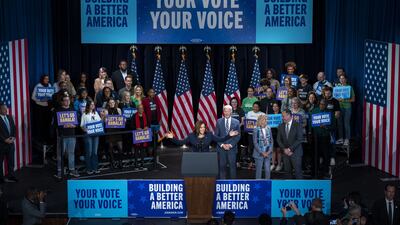
US Vice President Kamala Harris speaks at a Democrat rally in Washington, as President Joe Biden and their spouses Jill Biden and Doug Emhoff listen. Bloomberg -
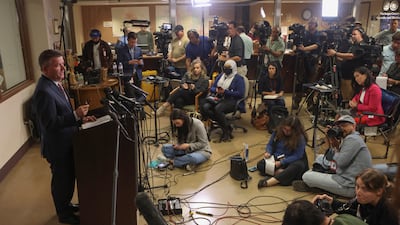
Bill Gates, chairman of the Maricopa County Board of Supervisors, speaks at the Maricopa County Tabulation and Election Centre in Phoenix, Arizona. Former astronaut and Democratic candidate Mark Kelly defeated his Republican rival in Arizona's senate race. Reuters -

Maricopa County recorder Stephen Richer, left, opens mail-in ballots at the Maricopa County Tabulation and Election Centre in Phoenix, Arizona. Ballots were being counted in Maricopa County three days after voters went to the polls for the midterm election in Arizona. AFP -
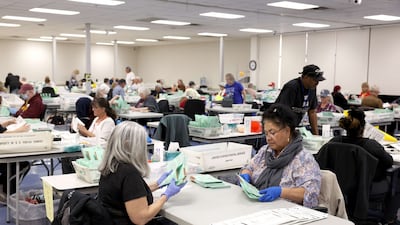
Election workers open mail-in ballots at the Maricopa County Tabulation and Election Centre in Phoenix, Arizona. AFP -
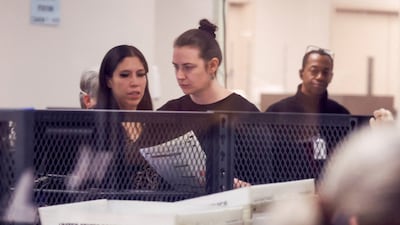
Staff scan ballots for the US midterm elections at the Maricopa County Tabulation and Election Centre in Phoenix, Arizona. Reuters -
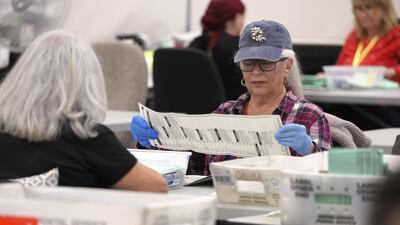
Election workers open mail-in ballots at the Maricopa County Tabulation and Election Centre in Phoenix, Arizona. AFP -
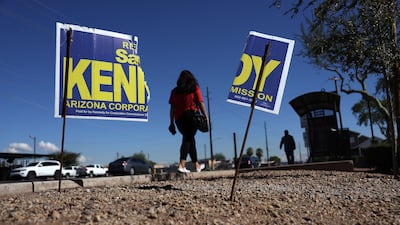
In a divided America, a political campaign sign sits abandoned at the roadside in Phoenix, Arizona, two days after the midterms. AFP -
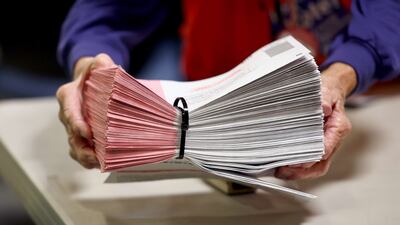
Ballots are processed in Las Vegas. Getty Images -
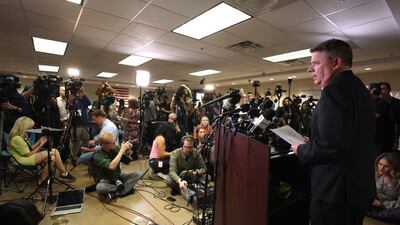
Election officials give a press conference in Maricopa County, Arizona, where ballots were still being counted two days after the midterms. AFP -
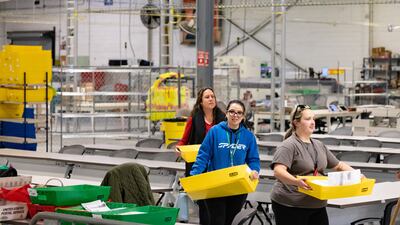
Ballots are carried to be scanned in Philadelphia. Reuters -
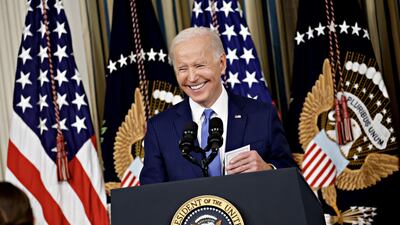
Mr Biden was all smiles during a news conference in the White House. Bloomberg -
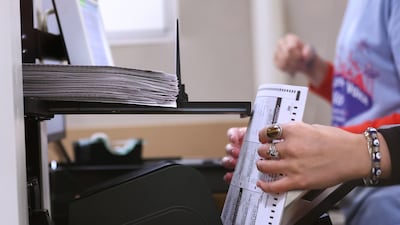
An election worker sorts ballots in Las Vegas. AFP -
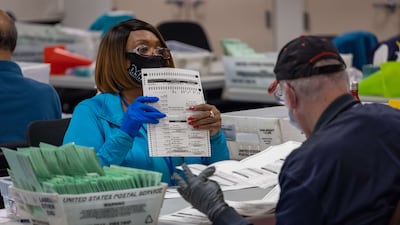
Election workers sort ballots at the Maricopa County Tabulation and Election Centre. AFP -
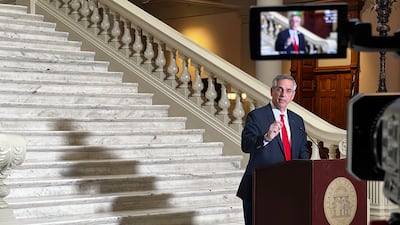
Georgia Secretary of State Brad Raffensperger holds a news conference in Atlanta. AP -
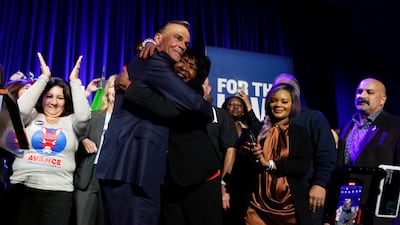
Los Angeles mayoral candidate Rick Caruso gets a hug on stage at his election night headquarters in Los Angeles. AP -
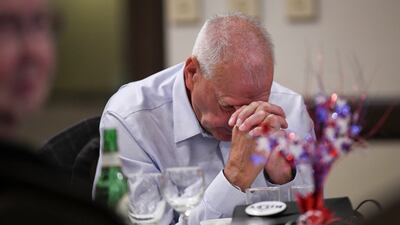
Paul Riley, father of Josh Riley, bows his head as election results come in at his son's election party in Binghamton, New York. Josh Riley, the Democratic candidate, ran against Republican Marc Molinaro. AP -
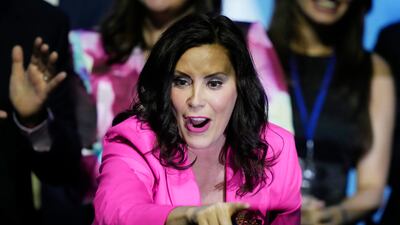
Michigan Democratic Governor Gretchen Whitmer speaks during election night in Detroit. AP -
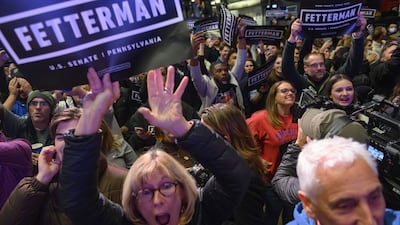
Supporters cheer during an election night event for Democratic Senate candidate John Fetterman in Pittsburgh, Pennsylvania. Mr Fetterman defeated Republican Senate candidate Dr Mehmet Oz. AFP -
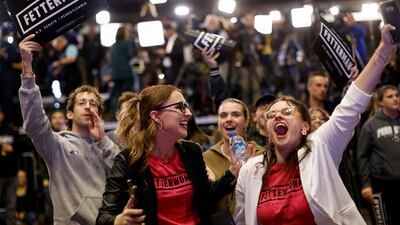
Supporters watch news of a projected victory for Democratic candidate for Pennsylvania governor, Josh Shapiro, in Pittsburgh, Pennsylvania. Reuters -
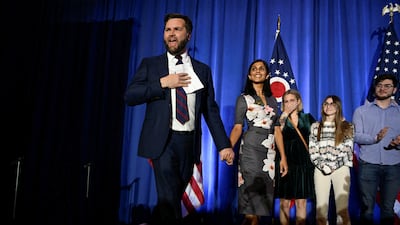
Republican J D Vance arrives with his wife Usha to declare victory in the Senatorial race in Columbus, Ohio. Reuters -
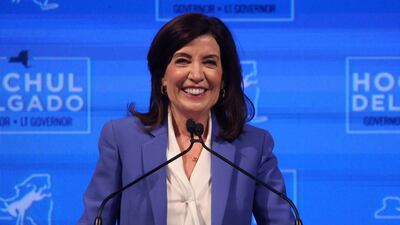
New York Governor Kathy Hochul attends an event to celebrate her victory in the US midterm elections. Reuters -
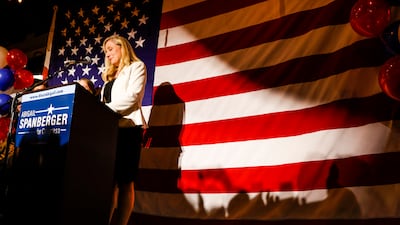
Representative Abigail Spanberger, of the Democratic party, speaks to supporters after her re-election, in Fredericksburg, Virginia. AP -
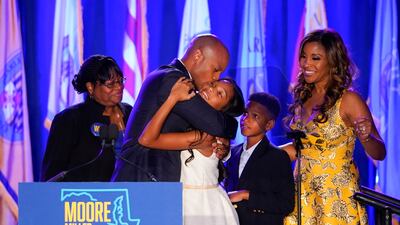
Democrat Wes Moore, second from left, hugs his daughter, Mia, centre, as his mother, Joy Thomas Moore, left, son, Jamie, second from right, and wife, Dawn, look on, after he was declared the winner of the Maryland race for governor. AP -
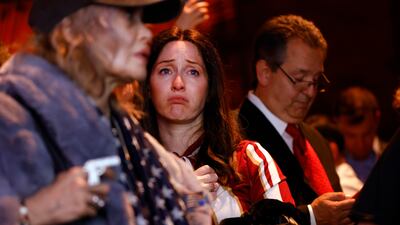
A supporter of Republican candidate Lee Zeldin reacts as media outlets predict results, in the race for governor, in favour of Democratic incumbent Kathy Hochul. AP -
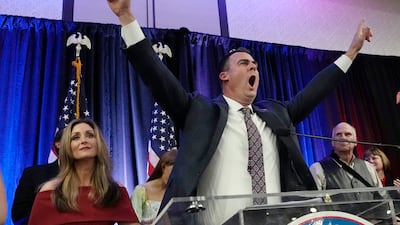
Oklahoma Governor Kevin Stitt celebrates his re-election, at a Republican Party watch party in Oklahoma City. AP -

Democratic candidate for governor of Georgia Stacey Abrams speaks during her 2022 US midterm elections night party in Atlanta, Georgia. Her rival Brian Kemp won. Reuters -
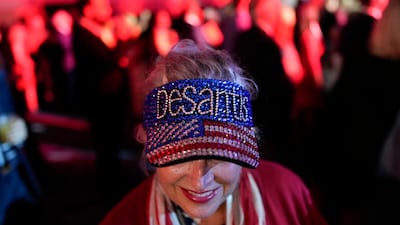
A woman arrives before Florida's Republican Governor Ron DeSantis speaks to supporters during an election night party in Tampa. AP -
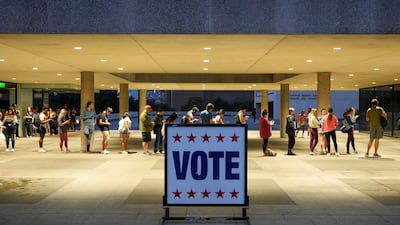
Voters wait in line at a polling station at the Lyndon B. Johnson School of Public Affairs in Austin, Texas. AP -
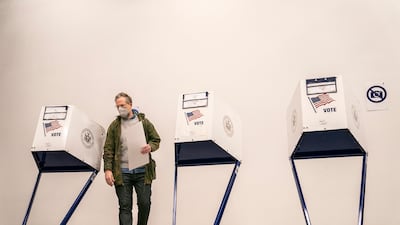
A voter goes to cast their vote after filling out their ballot at a polling station inside The Shed arts centre in Manhattan. AP -
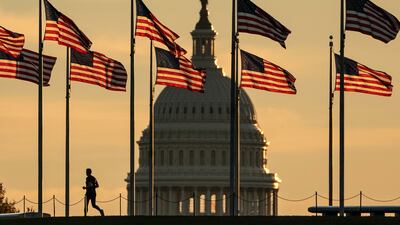
A jogger runs past the Capitol Building in Washington. The US midterm elections are held every four years at the midpoint of each presidential term. EPA -
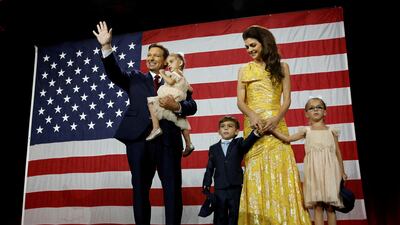
Florida's Republican Governor Ron DeSantis waves from the stage next to his wife Casey and children during his midterm elections party in Tampa. Reuters -
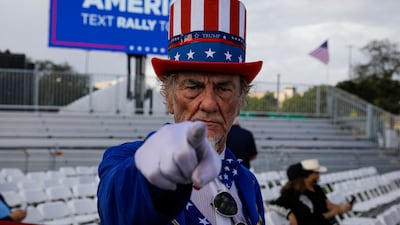
A man in costume arrives for a Republican party 'Save America' rally before the US midterm elections, in Miami, Florida. AFP -
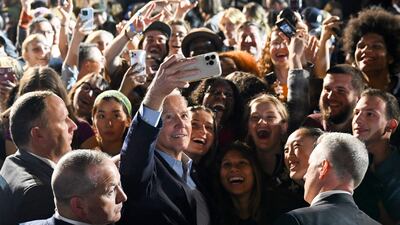
US President Joe Biden, centre, poses for a selfie with supporters during a rally for Democratic candidates, including New York Governor Kathy Hochul, at Sarah Lawrence College in Bronxville, New York. AFP -
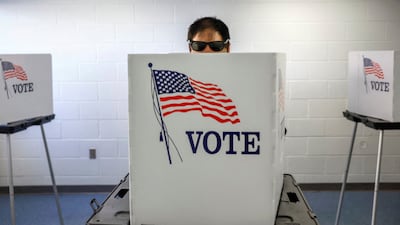
A man marks his ballot during early voting in Lansing, Michigan. Reuters -
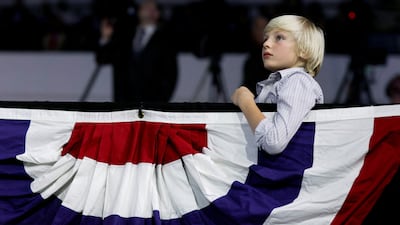
A child attends a rally held by US President Joe Biden with Democratic nominee for Maryland Governor Wes Moore, Senator Chris Van Hollen and other Maryland Democrats, at Bowie State University. Reuters -
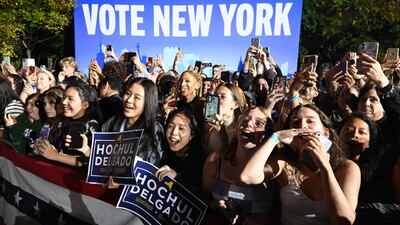
Supporters cheer during a rally for Democratic candidates at Sarah Lawrence College in Bronxville, New York. AFP -
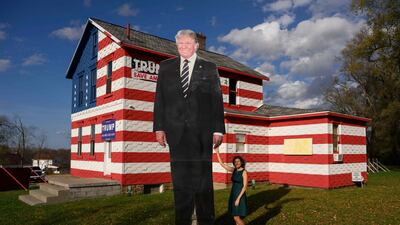
State Representative Leslie Rossi poses by a giant cutout of former US President Donald Trump in front of the "Trump House", which she owns and created in 2016, in Youngstown, Pennsylvania. AFP -

Republican candidate for US Senate for Arizona Blake Masters speaks at a rally in Queen Creek, Arizona. EPA -
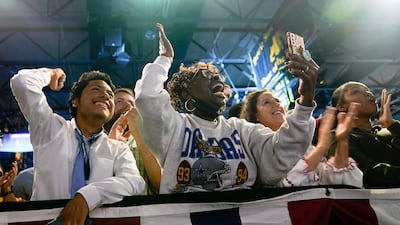
People in the crowd cheer during a campaign rally at Bowie State University in Maryland, which was attended President Joe Biden, the first lady, Jill Biden, Maryland Democratic gubernatorial candidate Wes Moore and Senator Chris Van Hollen. AP -
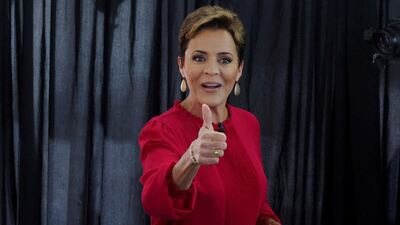
Republican candidate for Arizona governor Kari Lake arrives for a campaign stop, in Phoenix. Reuters -
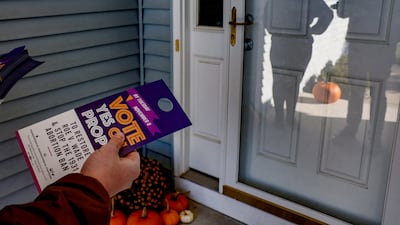
Morgan Koetje and Nickolas Lentz from Reproductive Freedom for All, canvass a neighborhood in support of Proposal 3, a ballot measure that would codify the right to an abortion, one day before the midterm election in Dewitt, Michigan. Reuters -
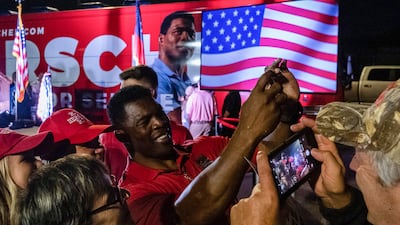
Republican candidate for US Senate Herschel Walker takes a picture with supporters in Kennesaw, Georgia during a "Unite Georgia Bus Stop" campaign rally on the eve of the midterm elections. AFP -

Republican Senate candidate Val Demings speaks to supporters in Wilton Manors, Florida. AP -
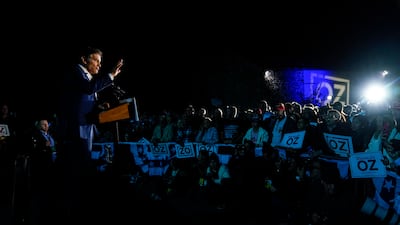
Senate hopeful Mehmet Oz addresses campaign rally in Pennsburg, Pennsylvania. AP -
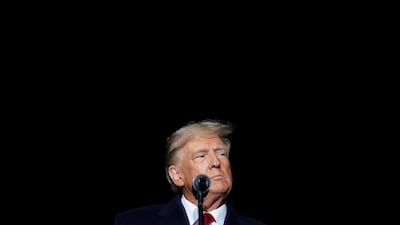
Former president Donald Trump speaks at a rally in support of the campaign of Ohio Senate candidate JD Vance, at Dayton International Airport. AP -
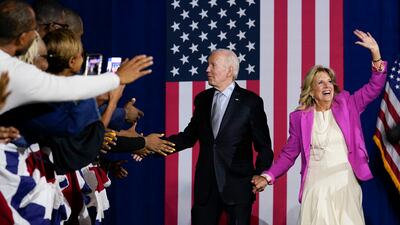
President Joe Biden and first lady Jill Biden arrive for the rally at Bowie State University, in Maryland. AP -
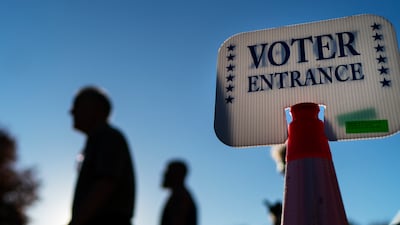
Voters pass by a sign outside a polling site in Warwick, Rhode Island after casting their ballots on the last day of early voting before the midterm election. AP -
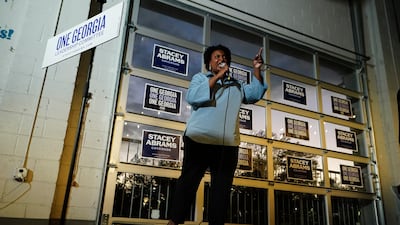
Democratic candidate for Georgia governor Stacey Abrams speaks to volunteers during an election eve phone and text bank party in Atlanta. AP -
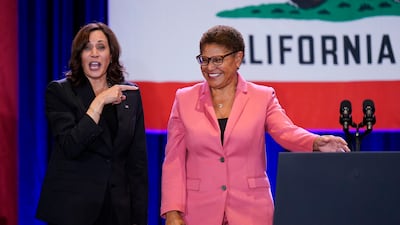
US Vice President Kamala Harris, left, points to Los Angeles mayoral candidate Representative Karen Bass, after speaking at a rally in Los Angeles. AP


Another area where the pundits are wrong is in their assessment of the fading power of former president Donald Trump. Before the election, commentators mistakenly framed it as a nationalised popularity contest between Mr Biden and Mr Trump. While it was true that Mr Trump had a hand in advancing some of his favoured Republican candidates, midterm elections are mostly localised contests. So, while some Trump acolytes lost against more popular Democrats, it’s a stretch to see the outcome as a definitive referendum on the former president.
In the wake of the election, there is a virtual media frenzy portraying Mr Trump as the big loser and a drag on his party. There are reports of other Republicans feeling emboldened to challenge the wounded leader in 2024. For some in the media, it’s a done deal – he is out, replaced by a new “flavour of the month”. Once again, caution is advised. It’s important to recall how many times Mr Trump was declared finished in the past. Each time there was a new scandal or an embarrassing debate performance, the press declared his candidacy dead. There were rumours as late as the Republican convention that the party leadership would try to end his candidacy. Although he is flawed, his hold over a substantial component of the Republican constituency remains strong. And now that Mr Trump has decided to run again, the party establishment will quietly gripe, fuss and fume, but they’ll avoid alienating Mr Trump’s fervent base.
One last observation about how some got this election so wrong: the defeat of some Trump loyalists and the closeness of the final results do not mean that Americans are coming together. In fact, as the exit polls make clear, the country remains as deeply polarised as ever – it’s just evenly divided between two warring camps.

Democrats voted for their party’s candidates, Republicans for theirs. Independent voters split down the middle. Democrats give Mr Biden high ratings, Republicans don’t. Republicans give high ratings to Mr Trump, Democrats don’t. Similarly, partisans on each side have deeply unfavourable views of the “other side”. And their views on issues like abortion, climate change, immigration, gun control and racism are mirror images of each other.
Not only did this election not ease the polarisation, it accelerated it. Both parties and their related interest group political committees spent an unprecedented $10 billion in TV and digital advertising during this campaign. There were no positive messages of healing and national unity. Many of the ads focused on attacks against the other party’s candidates and projections of negative doomsday scenarios if that other party should win. This incessant polluting of the political discourse has been corrosive. A few examples: 60 per cent of Republicans still believe that Mr Biden didn’t win the election and that he is an illegitimate president. And in just the first 10 months of 2022, there have already been 9,625 recorded threats against members of Congress.
Because we still don’t know what the final outcome of this election will be, it’s hard to make projections moving forward. If Republicans do win control of the House, they will be unable to restrain themselves. There will be investigations of the president and his family, maybe even a move toward impeachment, and government shutdowns owing to their refusal to pass budget extensions. All of this will only deepen the polarisation, making the next two years both difficult and divided.
Dr James Zogby is president of the Arab American Institute and a columnist for The National

