


The Biden administration has come to perceive the Opec+ decision to cut oil production by 2 million barrels a day as a proverbial slap in the face. It also considers it to be a lifeline for the Russian government as the latter grapples with a serious economic crisis while waging a war in Ukraine.
The administration, as well as members of the governing Democratic Party, have subsequently threatened to respond to Saudi Arabia, an important member of Opec+, with unprecedented measures. Several Democrats have labelled the kingdom’s actions as aggression and vowed to reconsider relations with it. Members of the US Congress have called to reduce arms sales to the kingdom, downgrade security co-operation with it, and lift immunity for it from US laws in certain cases.
But there is no consensus in the US on such positions, especially in the Republican Party, which is fighting the Democrats in next month's crucial mid-term election. The vote could prove fateful for Joe Biden's presidency, if the Republicans win a majority in the US House of Representatives and the Senate and cripple his administration’s agenda.
For its part, Saudi Arabia sees the crisis as an engineered one, rooted in the Biden administration's negative view of the kingdom. Riyadh sees American threats as naive and reckless. It believes that blaming Opec+ is little more than scapegoating it for US domestic oil production policies, while it is the right of Opec+ members to make economic and commercial decisions that advance their national interests.
The geopolitical dimensions of the Opec+ decision has not escaped anyone, from China to the US and Europe, where there are direct implications for the output cut. It is, therefore, necessary to deal with this decision with pragmatism and view it through a lens different from the one US politicians use when addressing Arab nations. It is also necessary for Opec+ members to be alert to the delicate nature of the West's strategy vis-a-vis Russia, to avoid making any risky moves. Indeed, US-Saudi relations are mutually beneficial, and need nurturing and a constructive approach to avoid falling victim to one-upmanship or short-sightedness.
-
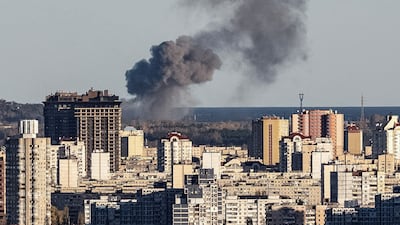
Smoke rises on the outskirts of the city during a Russian missile attack in Kyiv. Reuters -

Workers surround the Monument to the Heroes of the Heavenly Hundred with sandbags against damage from shelling in Mykolaiv. EPA -
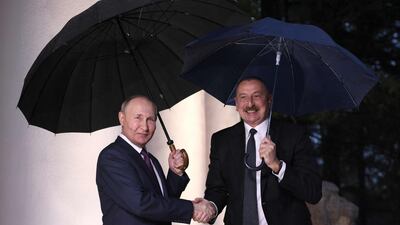
Russian President Vladimir Putin welcomes Azerbaijan President Ilham Aliyev for talks before a meeting between the Russian president and the leaders of Armenia and Azerbaijan in the Black Sea resort city of Sochi, Russia. AFP -
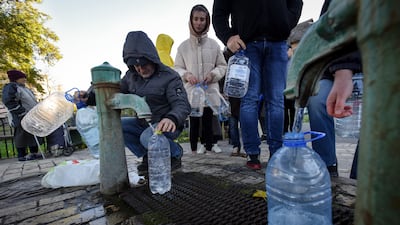
People take water from a water pump in Kyiv. EPA -
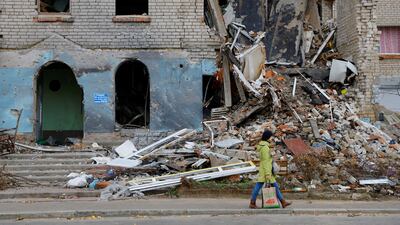
A woman walks past a damaged building in the town of Nova Kakhovka. Reuters -
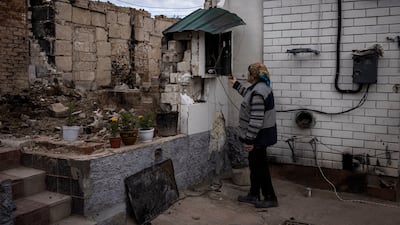
A woman outside her home, which was destroyed during battles at the start of the conflict, in Yahidne, Chernihiv. Getty Images -

People shelter inside a subway station during a Russian missile attack in Kyiv. Reuters -
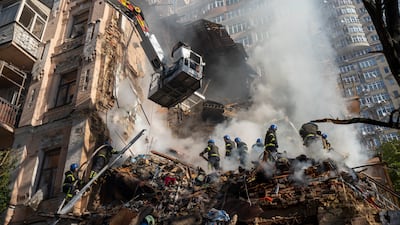
Firefighters at the site of a drone attack in Kyiv, Ukraine. AP -
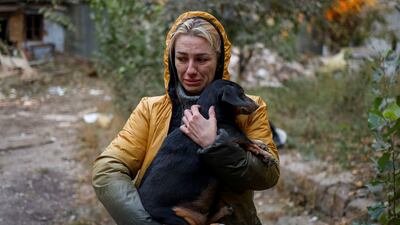
A woman walks past the site of a Russian missile strike in the southern Ukrainian city of Mykolaiv. Reuters -
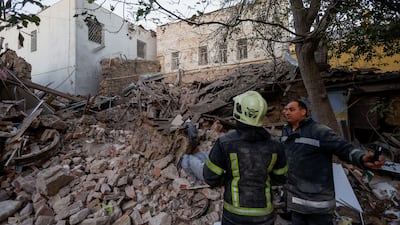
Rescuer workers at a building destroyed in an attack in Mykolaiv. Reuters -
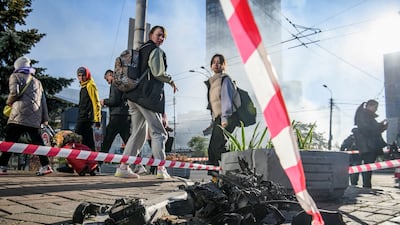
Parts of a drone lie on a street in Kyiv. Reuters -
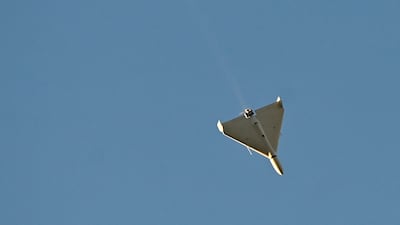
A drone flies over the Ukrainian capital during an attack. AFP -
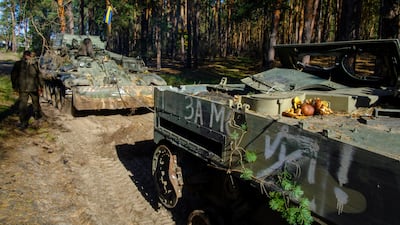
Ukrainian servicemen tow a captured Russian armoured vehicle in Rudneve village, Kharkiv. EPA -
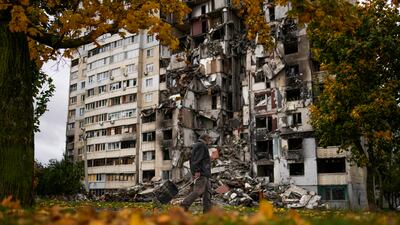
A partially destroyed residential building in Saltivka, in Kharkiv. AP -
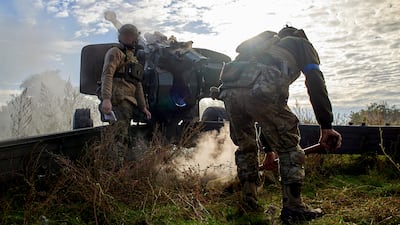
Ukrainian servicemen fire a captured Russian howitzer on a front line near Kupyansk city, Kharkiv. EPA -
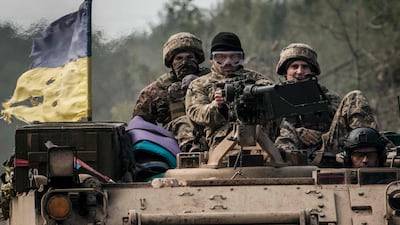
Ukrainian servicemen near the recently retaken town of Lyman in Donetsk region. AFP -
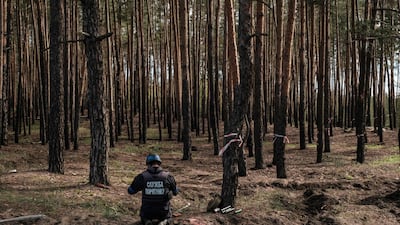
An officer from a Ukrainian national police emergency demining team prepares to detonate collected anti-tank mines and explosives near Lyman, in the Donetsk region. AFP -
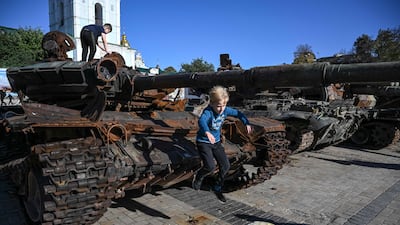
A boy playing on a destroyed Russian tank on display in Kyiv. AFP -

A young couple hiding underground during an air alert in Zaporizhzhia. AFP -
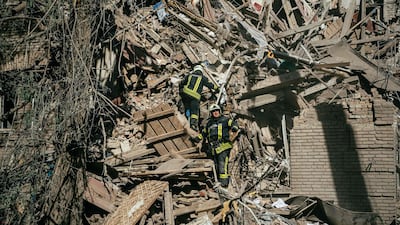
Ukrainian firefighters looking for survivors after a strike in Zaporizhzhia. AFP -
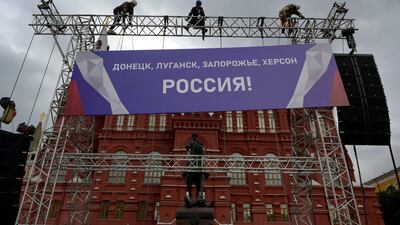
Workers fix a banner reading 'Donetsk, Luhansk, Zaporizhzhia, Kherson - Russia!' to the State Historical Museum near Red Square in Moscow. AFP -

Residents try to cross a destroyed bridge in the Kharkiv region of Ukraine. AFP -
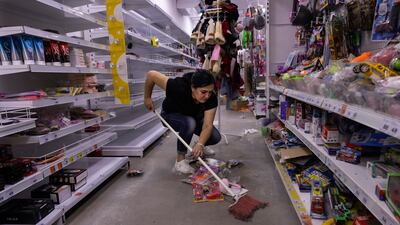
Alyona Kishinskaya helps to clean up a shop as it prepares to reopen in Balakiya, Ukraine, after a six-month Russian occupation. Getty Images -
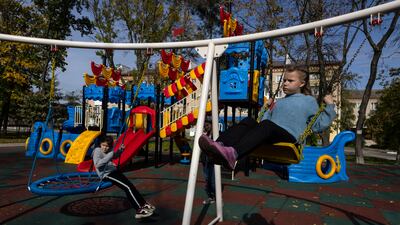
Alla, 12, has a swinging time in Balakiya, Ukraine, as life goes on despite the war. Getty Images -
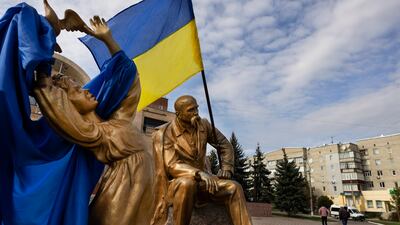
Ukrainian flags in the town square in Balakiya. Getty Images -
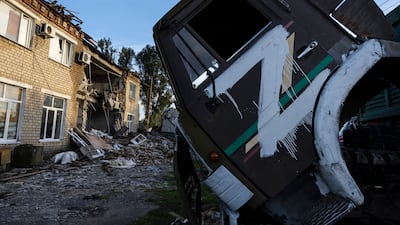
A destroyed Russian command centre in Izium, Ukraine. Getty Images -

In what may be a final farewell, young Russian recruits - escorted by their wives - walk to a train station in Volgograd before being sent to war in Ukraine. AP -
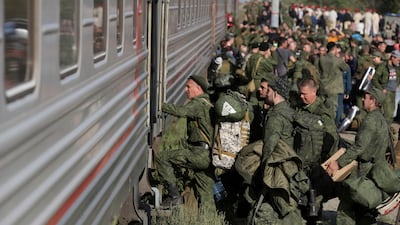
Russian recruits board the train to Ukraine in Volgograd. AP -
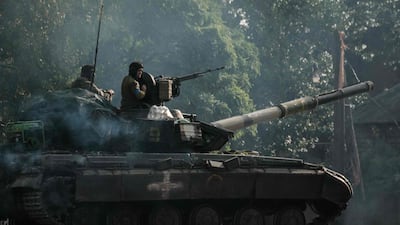
Ukrainian soliders drive a tank at the recently retaken eastern side of the Oskil River in Kharkiv region, Ukraine. AFP -
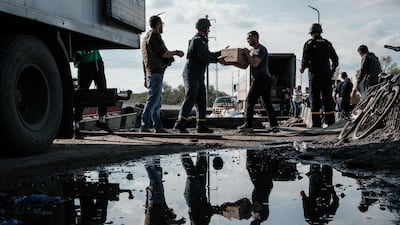
Volunteers pass boxes of food aid on a destroyed bridge over the Oskil River. AFP -
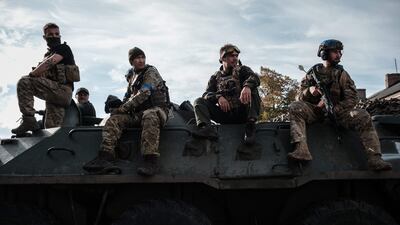
Ukrainian soliders rest on an armoured personnel carrier. AFP -
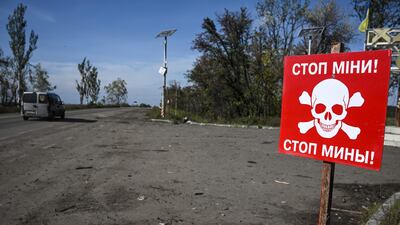
A sign warns of landmines in Izyum, eastern Ukraine. AFP -
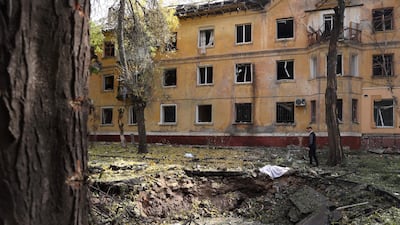
This crater was left after a missile strike in the Donetsk region of Ukraine. AFP


It is clear now that western leaders have resolved to destabilise the government in Moscow, believing this to be in their larger interests. The Americans assess that the leadership in Moscow has backed itself into a corner by fighting a war that it isn’t winning and from which it will struggle to recover. Even if Moscow continues attacking Ukrainian infrastructure, US-led Nato will not allow a Russian victory. Remarkably, there is very little fear among western leaders that Moscow will deploy tactical nuclear weapons in the war.
Part of why the Biden administration has been angered by the Opec+ announcement is Washington’s strategy to shape the fate of the Russian government. Mr Biden had personally made appeals that oil production not be reduced, as higher revenue from oil sales would help keep the powers that be in Moscow intact. But there is no doubt that economic and commercial interests – including a consensus among Opec+ member states, which include Russia, to stabilise oil prices and return them to normal levels for both producers and consumers – were central to the alliance’s decision.
Even if this decision favours Moscow, as the Americans suggest it does, the Russian government is not in a position to pay back to Opec+ members as long as it continues to be implicated in the Ukraine war. The influence Russian President Vladimir Putin has over allies such as Iran is important, but this influence is shaky. And so, getting Mr Putin’s help to address regional issues such as the Yemen conflict is far from guaranteed.
The Opec+ states are not expected to bow to US pressure and backtrack from their decision, or change their minds about not wanting to be used as bargaining chips in the larger West-Russia conflict. What could prompt these states to move away from Russia is if it uses nuclear weapons in Ukraine.

The G20 summit in Bali, Indonesia, on November 15 will test the policy of isolation and boycott adopted by the West against Moscow. Mr Biden will attend the summit, joined by Ukrainian President Volodymyr Zelenskyy, and is unlikely to meet Mr Putin on the sidelines. Western leaders are expected to boycott the Russian leader’s address. There is, meanwhile, a growing interest among Arab countries to mediate between Russia and Ukraine, both behind the scenes as well as in public forums. These countries believe that their interests are better served by not lumping themselves with the West over the Ukraine war. They also believe they can influence Moscow and dissuade it from adopting hardline positions.
However, the dynamic of the conflict itself could make such efforts to influence and contain impossible, because Moscow is unlikely to be able to sustain the war unless it steps up the brutality.
Nato doesn't want to get directly involved in the war, but some member states could become implicated, especially if the alliance decides on a "humanitarian intervention" similar to the one in Kosovo in 1998-99. If "protection forces" are sent to guard vital humanitarian infrastructure and nuclear sites in Ukraine, Russian forces could attack those troops. This would force Nato to retaliate, possibly even in the Russian-annexed territories, which could then prompt Moscow to deploy tactical nuclear weapons.
A few weeks separate us from the US mid-term election and the G20 summit, yet no one knows what will happen amid ongoing global tensions. But these tensions should not blind anyone from the need to be prudent in their reactions and expectations, especially in official US circles. The current situation requires not a haughty approach, imposition of will, threats and recriminations against countries that have made decisions in their national interest.
American oil policies also raise logical questions, including why it should expect others to sacrifice their own interests to serve Washington’s priorities.

