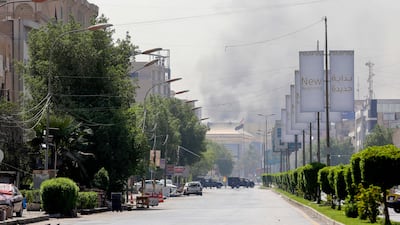
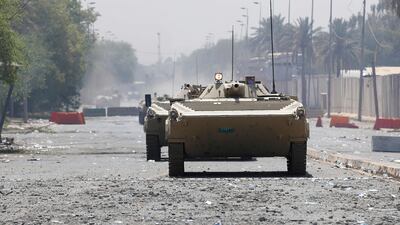
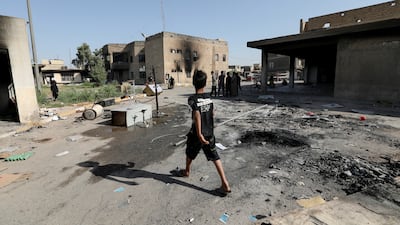
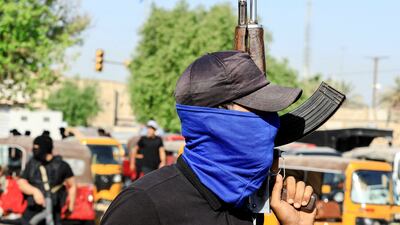
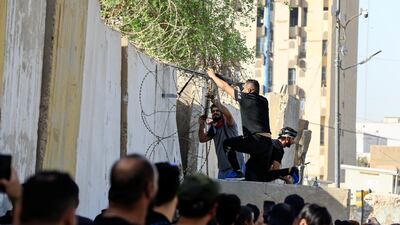
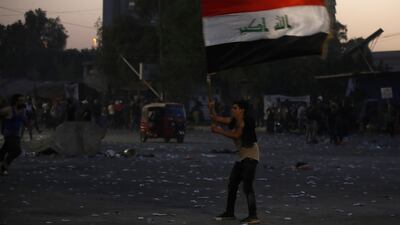
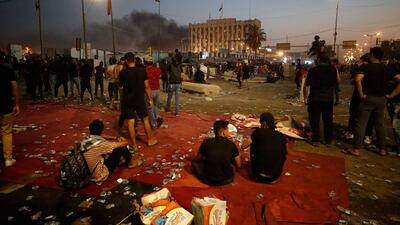
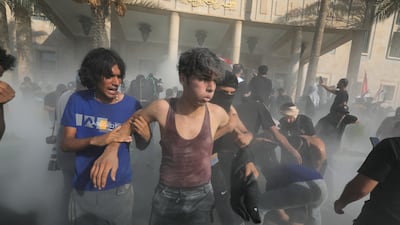
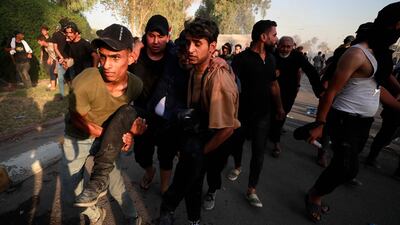
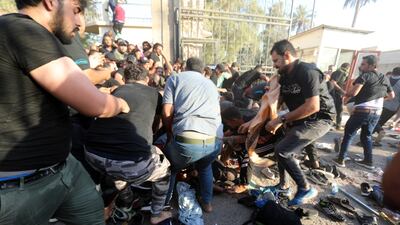
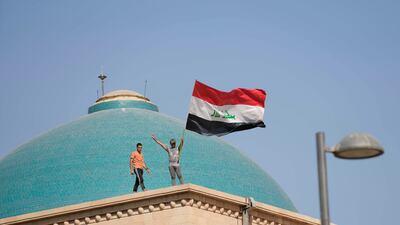
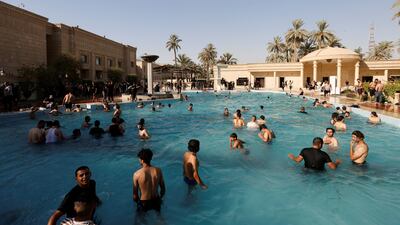
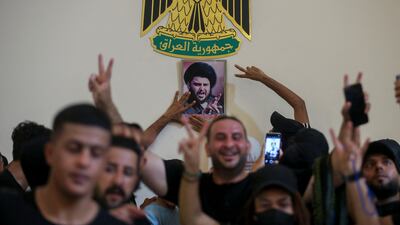
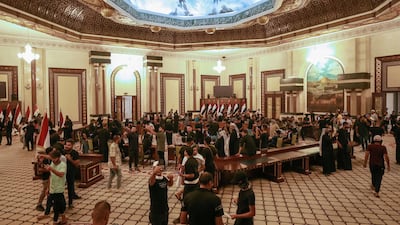
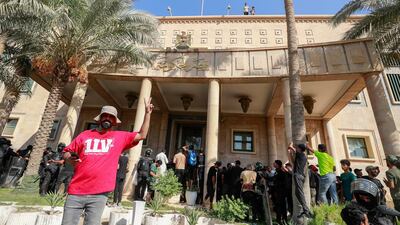
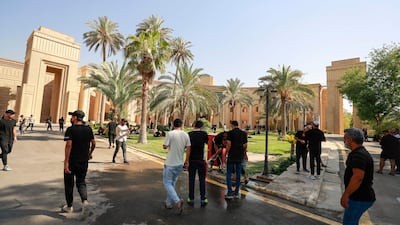
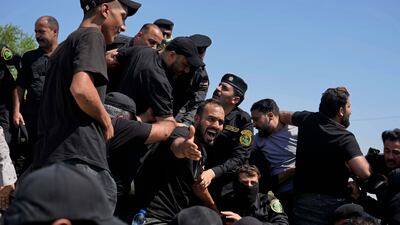
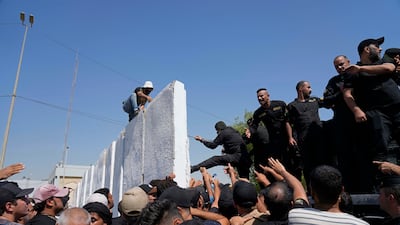
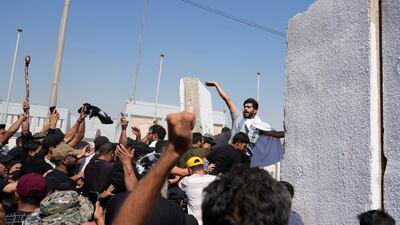
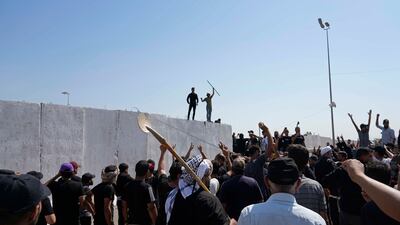
“The very survival of the state is at stake.” That is the warning the UN issued about developments in Iraq on Monday, and it is not wrong. As the walls of the government compound are breached and curfew orders ignored, the Iraqi state is further undermined and its survival under threat.
Iraq has entered a new phase of violence that further chips away at the foundations of the state. And yet, this is not an armed revolt or a popular uprising against the government or its institutions. It is an armed confrontation between opposing political sides over who dominates Iraq. The groups fighting one another are at once involved in the running of the country and undermining the ruling order. That contradiction is the real threat facing the Iraqi state.
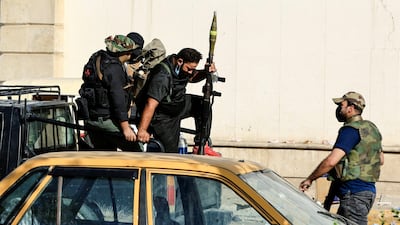
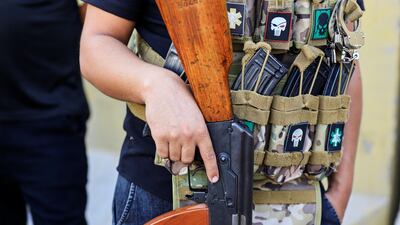
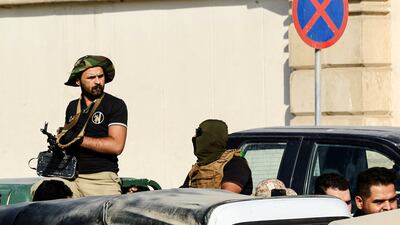
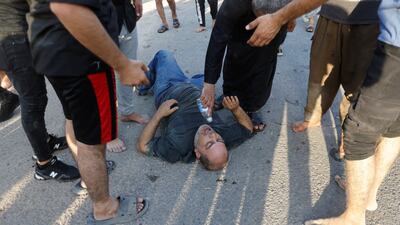
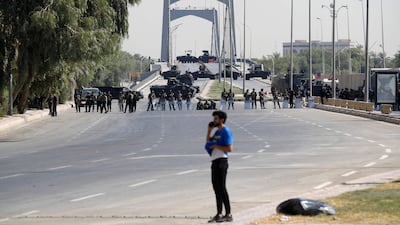
As members of armed groups attacked one another, members of Iraq’s army and police were primarily on the sidelines. Their task, for now, is to protect government buildings and residential areas but they have not actively sought to stop confrontations on the ground. Overnight, six members of the security forces were killed, while at least 15 others from the armed groups lost their lives. Iraqi Prime Minister Mustafa Al Kadhimi is facing a major dilemma: does he order the police and army to use force to implement his curfew and halt the attacks, risking an escalation that could lead to civil war, or does he tolerate the complete disregard for the law by armed groups? The latter option seems to be his current course of action but if the violence continues, he will have to reverse course. Taking a more robust approach would mean higher casualty count but that would also give more confidence in the government’s ability to carry out the most basic of its duties in maintaining law and order.
For most Iraqis, these are not battles they want to be involved in
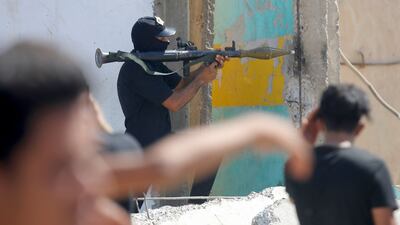
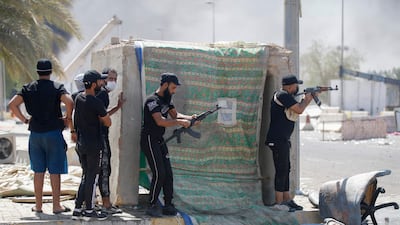
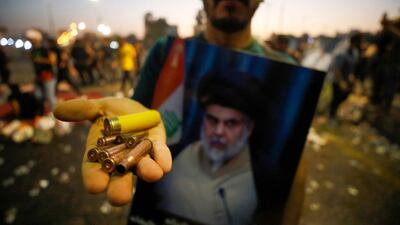
While the images of clashes in Baghdad and the sound of gunfire throughout the capital on Monday night were shocking, they were not surprising. A political impasse between armed groups would ultimately escalate to the use of force. After months of tensions and threats, the outbreak of clashes between supporters of Iraqi Shiite cleric Moqtada Al Sadr and members of militias reporting to the Co-ordination Framework (the grouping of Iranian-backed political parties) seemed inevitable. Tens of thousands of armed men have been given a signal that they can go on attack – and that is what they are doing. The escalation has included attacks on party headquarters in a number of provinces, including the offices of the Popular Mobilisation Unit’s media office in Baghdad and Saraya Al Salam offices (Mr Al Sadr’s armed group) in Basra. This is an armed confrontation between Shiite Islamist groupings. There are no undertones of sectarian and ethnic divisions, as witnessed in previous violent episodes.
The complexity of the developments in Baghdad require an understanding of the dynamics at play. Nearly 11 months after an election that illustrated the regression of Iranian-backed political groups, and the continued rise of Mr Al Sadr, Shiite Islamist parties are at loggerheads over who leads the country. Mr Al Sadr, securing 73 seats out of 329 in parliament, should have been able to form a government with his allies. However, the Federal Court decided that a two-thirds majority would be needed to name the president in order to form the government. This was a change intended to scupper government formation, with push from Iran and its main political operative in Iraq, former prime minister Nouri Al Maliki.
Unable to form a government, Mr Al Sadr has been warning that he will not be ignored for months, and incrementally built up to the moment of declaring his “retirement” from political life Monday morning. With that, he signalled that a political solution was not possible, moving to the street to force a solution. The day before, Ayatollah Kathem Al Haeri announced that he, too, would resign from public life and called on his followers to adhere to Iran’s supreme leader, Ayatollah Ali Khamenei, instead. But this is a problem for Mr Al Sadr, who has followed Al Haeri since the passing of his father and has been vehemently opposed to following Khamenei. With Al Haeri’s move, which many speculate came as a result of Iranian pressure, Mr Al Sadr is left in a precarious position – either follow Al Haeri’s directive or remain without a clear religious authority to follow. His decision is still unclear, but his “withdrawal from politics” is a further indication of the pressure he is under.
For most Iraqis, these are not battles they want to be involved in. The vast majority, the silent majority, are abiding by the curfew, sitting at home, doors closed and praying that the fighting does not reach their street. This is, sadly, a feeling and prayer that has been repeated all too many times over decades in Iraq. Waiting for this storm to pass, with minimal casualties is the best most hope for. Mr Al Sadr’s protests against corruption, a lack of respect for the law, and Iranian interference are generally supported by Iraqis, but a complete overhaul of the system would be needed to really tackle these ills.
The coming days will test Iraq’s ability to once again pull back from the brink of all-out war. The immediate concern and need will be to stop the violence. A de-escalation would be vital to avoid protracted street fights. However, that alone will not solve Iraq’s compounded problems. A long-term solution needs a reform of the political system, disarming militias and curbing the corruption that fuels their existence. A serious attempt to disarm the groups that took to the streets on Monday will be difficult, but the events of the last day could be a catalyst towards that end. For that, Mr Al Kadhimi and Iraq’s armed forces need all the support they can get, domestically and internationally.

Simran
Director Hansal Mehta
Stars: Kangana Ranaut, Soham Shah, Esha Tiwari Pandey
Three stars
SPEC%20SHEET%3A%20APPLE%20IPHONE%2014
%3Cp%3E%3Cstrong%3EDisplay%3A%3C%2Fstrong%3E%C2%A06.1%22%20Super%20Retina%20XDR%20OLED%2C%202532%20x%201170%2C%20460ppi%2C%20HDR%2C%20True%20Tone%2C%20P3%2C%201200%20nits%3C%2Fp%3E%0A%3Cp%3E%3Cstrong%3EProcessor%3A%3C%2Fstrong%3E%C2%A0A15%20Bionic%2C%206-core%20CPU%2C%205-core%20GPU%2C%2016-core%20Neural%20Engine%C2%A0%3C%2Fp%3E%0A%3Cp%3E%3Cstrong%3EMemory%3A%3C%2Fstrong%3E%C2%A06GB%3C%2Fp%3E%0A%3Cp%3E%3Cstrong%3ECapacity%3A%3C%2Fstrong%3E%C2%A0128%2F256%2F512GB%3C%2Fp%3E%0A%3Cp%3E%3Cstrong%3EPlatform%3A%3C%2Fstrong%3E%C2%A0iOS%2016%3C%2Fp%3E%0A%3Cp%3E%3Cstrong%3EMain%20camera%3A%3C%2Fstrong%3E%C2%A0Dual%2012MP%20main%20(f%2F1.5)%20%2B%2012MP%20ultra-wide%20(f%2F2.4)%3B%202x%20optical%2C%205x%20digital%3B%20Photonic%20Engine%2C%20Deep%20Fusion%2C%20Smart%20HDR%204%2C%20Portrait%20Lighting%3C%2Fp%3E%0A%3Cp%3E%3Cstrong%3EMain%20camera%20video%3A%3C%2Fstrong%3E%C2%A04K%20%40%2024%2F25%2F3060fps%2C%20full-HD%20%40%2025%2F30%2F60fps%2C%20HD%20%40%2030fps%3B%20HD%20slo-mo%20%40%20120%2F240fps%3B%20night%2C%20time%20lapse%2C%20cinematic%2C%20action%20modes%3B%20Dolby%20Vision%2C%204K%20HDR%3C%2Fp%3E%0A%3Cp%3E%3Cstrong%3EFront%20camera%3A%3C%2Fstrong%3E%C2%A012MP%20TrueDepth%20(f%2F1.9)%2C%20Photonic%20Engine%2C%20Deep%20Fusion%2C%20Smart%20HDR%204%3B%20Animoji%2C%20Memoji%3B%20Portrait%20Lighting%3C%2Fp%3E%0A%3Cp%3E%3Cstrong%3EFront%20camera%20video%3A%3C%2Fstrong%3E%204K%20%40%2024%2F25%2F3060fps%2C%20full-HD%20%40%2025%2F30%2F60fps%2C%20HD%20slo-mo%20%40%20120fps%3B%20night%2C%20time%20lapse%2C%20cinematic%2C%20action%20modes%3B%20Dolby%20Vision%2C%204K%20HDR%3C%2Fp%3E%0A%3Cp%3E%3Cstrong%3EBattery%3A%3C%2Fstrong%3E%C2%A03279%20mAh%2C%C2%A0up%20to%2020h%20video%2C%2016h%20streaming%20video%2C%2080h%20audio%3B%20fast%20charge%20to%2050%25%20in%2030m%3B%20MagSafe%2C%20Qi%20wireless%20charging%3C%2Fp%3E%0A%3Cp%3E%3Cstrong%3EConnectivity%3A%3C%2Fstrong%3E%C2%A0Wi-Fi%2C%20Bluetooth%205.3%2C%20NFC%20(Apple%20Pay)%3C%2Fp%3E%0A%3Cp%3E%3Cstrong%3EBiometrics%3A%3C%2Fstrong%3E%20Face%20ID%3C%2Fp%3E%0A%3Cp%3E%3Cstrong%3EI%2FO%3A%3C%2Fstrong%3E%C2%A0Lightning%3C%2Fp%3E%0A%3Cp%3E%3Cstrong%3ECards%3A%3C%2Fstrong%3E%C2%A0Dual%20eSIM%20%2F%20eSIM%20%2B%20SIM%20(US%20models%20use%20eSIMs%20only)%3C%2Fp%3E%0A%3Cp%3E%3Cstrong%3EColours%3A%3C%2Fstrong%3E%C2%A0Blue%2C%20midnight%2C%20purple%2C%20starlight%2C%20Product%20Red%3C%2Fp%3E%0A%3Cp%3E%3Cstrong%3EIn%20the%20box%3A%3C%2Fstrong%3E%C2%A0iPhone%2014%2C%20USB-C-to-Lightning%20cable%2C%20one%20Apple%20sticker%3C%2Fp%3E%0A%3Cp%3E%3Cstrong%3EPrice%3A%3C%2Fstrong%3E%C2%A0Dh3%2C399%20%2F%20Dh3%2C799%20%2F%20Dh4%2C649%3C%2Fp%3E%0A
Key facilities
- Olympic-size swimming pool with a split bulkhead for multi-use configurations, including water polo and 50m/25m training lanes
- Premier League-standard football pitch
- 400m Olympic running track
- NBA-spec basketball court with auditorium
- 600-seat auditorium
- Spaces for historical and cultural exploration
- An elevated football field that doubles as a helipad
- Specialist robotics and science laboratories
- AR and VR-enabled learning centres
- Disruption Lab and Research Centre for developing entrepreneurial skills
Mercer, the investment consulting arm of US services company Marsh & McLennan, expects its wealth division to at least double its assets under management (AUM) in the Middle East as wealth in the region continues to grow despite economic headwinds, a company official said.
Mercer Wealth, which globally has $160 billion in AUM, plans to boost its AUM in the region to $2-$3bn in the next 2-3 years from the present $1bn, said Yasir AbuShaban, a Dubai-based principal with Mercer Wealth.
“Within the next two to three years, we are looking at reaching $2 to $3 billion as a conservative estimate and we do see an opportunity to do so,” said Mr AbuShaban.
Mercer does not directly make investments, but allocates clients’ money they have discretion to, to professional asset managers. They also provide advice to clients.
“We have buying power. We can negotiate on their (client’s) behalf with asset managers to provide them lower fees than they otherwise would have to get on their own,” he added.
Mercer Wealth’s clients include sovereign wealth funds, family offices, and insurance companies among others.
From its office in Dubai, Mercer also looks after Africa, India and Turkey, where they also see opportunity for growth.
Wealth creation in Middle East and Africa (MEA) grew 8.5 per cent to $8.1 trillion last year from $7.5tn in 2015, higher than last year’s global average of 6 per cent and the second-highest growth in a region after Asia-Pacific which grew 9.9 per cent, according to consultancy Boston Consulting Group (BCG). In the region, where wealth grew just 1.9 per cent in 2015 compared with 2014, a pickup in oil prices has helped in wealth generation.
BCG is forecasting MEA wealth will rise to $12tn by 2021, growing at an annual average of 8 per cent.
Drivers of wealth generation in the region will be split evenly between new wealth creation and growth of performance of existing assets, according to BCG.
Another general trend in the region is clients’ looking for a comprehensive approach to investing, according to Mr AbuShaban.
“Institutional investors or some of the families are seeing a slowdown in the available capital they have to invest and in that sense they are looking at optimizing the way they manage their portfolios and making sure they are not investing haphazardly and different parts of their investment are working together,” said Mr AbuShaban.
Some clients also have a higher appetite for risk, given the low interest-rate environment that does not provide enough yield for some institutional investors. These clients are keen to invest in illiquid assets, such as private equity and infrastructure.
“What we have seen is a desire for higher returns in what has been a low-return environment specifically in various fixed income or bonds,” he said.
“In this environment, we have seen a de facto increase in the risk that clients are taking in things like illiquid investments, private equity investments, infrastructure and private debt, those kind of investments were higher illiquidity results in incrementally higher returns.”
The Abu Dhabi Investment Authority, one of the largest sovereign wealth funds, said in its 2016 report that has gradually increased its exposure in direct private equity and private credit transactions, mainly in Asian markets and especially in China and India. The authority’s private equity department focused on structured equities owing to “their defensive characteristics.”
GAC GS8 Specs
Engine: 2.0-litre 4cyl turbo
Power: 248hp at 5,200rpm
Torque: 400Nm at 1,750-4,000rpm
Transmission: 8-speed auto
Fuel consumption: 9.1L/100km
On sale: Now
Price: From Dh149,900
How to apply for a drone permit
- Individuals must register on UAE Drone app or website using their UAE Pass
- Add all their personal details, including name, nationality, passport number, Emiratis ID, email and phone number
- Upload the training certificate from a centre accredited by the GCAA
- Submit their request
What are the regulations?
- Fly it within visual line of sight
- Never over populated areas
- Ensure maximum flying height of 400 feet (122 metres) above ground level is not crossed
- Users must avoid flying over restricted areas listed on the UAE Drone app
- Only fly the drone during the day, and never at night
- Should have a live feed of the drone flight
- Drones must weigh 5 kg or less
UAE currency: the story behind the money in your pockets
Global Fungi Facts
• Scientists estimate there could be as many as 3 million fungal species globally
• Only about 160,000 have been officially described leaving around 90% undiscovered
• Fungi account for roughly 90% of Earth's unknown biodiversity
• Forest fungi help tackle climate change, absorbing up to 36% of global fossil fuel emissions annually and storing around 5 billion tonnes of carbon in the planet's topsoil
SERIES INFO
Afghanistan v Zimbabwe, Abu Dhabi Sunshine Series
All matches at the Zayed Cricket Stadium, Abu Dhabi
Test series
1st Test: Zimbabwe beat Afghanistan by 10 wickets
2nd Test: Wednesday, 10 March – Sunday, 14 March
Play starts at 9.30am
T20 series
1st T20I: Wednesday, 17 March
2nd T20I: Friday, 19 March
3rd T20I: Saturday, 20 March
TV
Supporters in the UAE can watch the matches on the Rabbithole channel on YouTube
MATCH INFO
Quarter-finals
Saturday (all times UAE)
England v Australia, 11.15am
New Zealand v Ireland, 2.15pm
Sunday
Wales v France, 11.15am
Japan v South Africa, 2.15pm
Important questions to consider
1. Where on the plane does my pet travel?
There are different types of travel available for pets:
- Manifest cargo
- Excess luggage in the hold
- Excess luggage in the cabin
Each option is safe. The feasibility of each option is based on the size and breed of your pet, the airline they are traveling on and country they are travelling to.
2. What is the difference between my pet traveling as manifest cargo or as excess luggage?
If traveling as manifest cargo, your pet is traveling in the front hold of the plane and can travel with or without you being on the same plane. The cost of your pets travel is based on volumetric weight, in other words, the size of their travel crate.
If traveling as excess luggage, your pet will be in the rear hold of the plane and must be traveling under the ticket of a human passenger. The cost of your pets travel is based on the actual (combined) weight of your pet in their crate.
3. What happens when my pet arrives in the country they are traveling to?
As soon as the flight arrives, your pet will be taken from the plane straight to the airport terminal.
If your pet is traveling as excess luggage, they will taken to the oversized luggage area in the arrival hall. Once you clear passport control, you will be able to collect them at the same time as your normal luggage. As you exit the airport via the ‘something to declare’ customs channel you will be asked to present your pets travel paperwork to the customs official and / or the vet on duty.
If your pet is traveling as manifest cargo, they will be taken to the Animal Reception Centre. There, their documentation will be reviewed by the staff of the ARC to ensure all is in order. At the same time, relevant customs formalities will be completed by staff based at the arriving airport.
4. How long does the travel paperwork and other travel preparations take?
This depends entirely on the location that your pet is traveling to. Your pet relocation compnay will provide you with an accurate timeline of how long the relevant preparations will take and at what point in the process the various steps must be taken.
In some cases they can get your pet ‘travel ready’ in a few days. In others it can be up to six months or more.
5. What vaccinations does my pet need to travel?
Regardless of where your pet is traveling, they will need certain vaccinations. The exact vaccinations they need are entirely dependent on the location they are traveling to. The one vaccination that is mandatory for every country your pet may travel to is a rabies vaccination.
Other vaccinations may also be necessary. These will be advised to you as relevant. In every situation, it is essential to keep your vaccinations current and to not miss a due date, even by one day. To do so could severely hinder your pets travel plans.
Source: Pawsome Pets UAE
ULTRA PROCESSED FOODS
- Carbonated drinks, sweet or savoury packaged snacks, confectionery, mass-produced packaged breads and buns
- Margarines and spreads; cookies, biscuits, pastries, cakes, and cake mixes, breakfast cereals, cereal and energy bars
- Energy drinks, milk drinks, fruit yoghurts and fruit drinks, cocoa drinks, meat and chicken extracts and instant sauces
- Infant formulas and follow-on milks, health and slimming products such as powdered or fortified meal and dish substitutes
- Many ready-to-heat products including pre-prepared pies and pasta and pizza dishes, poultry and fish nuggets and sticks, sausages, burgers, hot dogs, and other reconstituted meat products, powdered and packaged instant soups, noodles and desserts