Lina Sinjab is a Middle East correspondent based in Beirut and a columnist for The National
April 21, 2022
Ramadan for me is as much about food, family and customs as it is about fasting, worship and compassion. And having grown up in Damascus, I feel particularly nostalgic about the holy month.
I still remember, for instance, the shift in tempo in the moments before iftar every single day. People would rush home to end the fast or queue up in front of food stalls to pick up whatever they needed for dinner. The food was always great, too. Foul and fatteh, traditional Damascene dishes usually eaten for breakfast on weekends, were a must during iftar. I can never forget the taste of fresh lemon juice and jallab syrup (essentially made of grape molasses and rose water) filled with raw almonds from Abou Hassan's shop, or for that matter the crispiness of naem bread (fried bread like poppadom) covered in date syrup. The list of Ramadan sweets we relished is long.
Once the canon was fired and the call to prayer made, there would be complete silence across the city. All one could hear, if indoors, was the quiet clanking of dishes and utensils before families eventually gathered at the dinner table. Those were the days when people preferred ending their fast at home rather than going to a restaurant, as many do now.
We used to watch Fawazeer Ramadan, an Egyptian riddle show presented by prominent actors and entertainers such as the glamorous Nelly, followed by Sherihan, who occupied Arab screens and hearts for years. I vividly remember one season when we had to figure out the name of a country in each episode. As a child, it felt as if I was actually in the city or country that the programme showcased on that day.
The evening TV series, mostly produced by Egyptian producers, were hugely popular as well. Layali Al Helmiyeh or Al Helmeya Nights is an all-too-familiar example to every Arab household of a certain vintage. There were various adaptations of novels by the late Noble Prize winner Naguib Mahfouz, such as Between Two Palaces. Evidently we were greatly influenced by Egyptian dramas and movies, as generations of Arabs have. The storytelling and visual direction were of a different quality and reflected Egypt's largely liberal social norms prevalent at the time.
A still from Fawazeer Ramadan. YouTube
Ibrahim Al Hajjaj and Khaled Al Farrag in 'Minho Waladna?' Photo: MBC
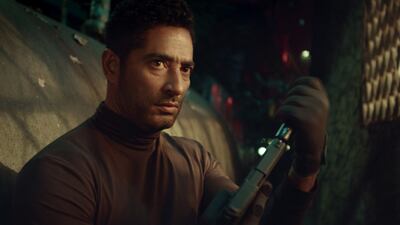
Amr Saad in 'Tooba', a psychological drama. Photo: MBC
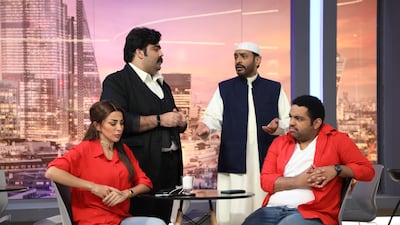
Saudi comedy 'Studio 22' is about the employees of a struggling television station. Photo: MBC
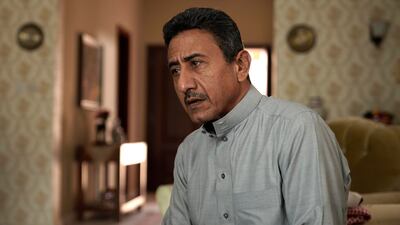
Nasser Al Qasabi in 'Al Asouf 3', about the family and social character of Saudi Arabia in the 1970s. Photo: MBC
Kuwaiti drama 'Min Share’ Al Haram Ela… ' is set in Cairo and features an ensemble cast. Photo: MBC
Then came Syrian dramas, which gradually took off in the 1980s before actually competing with Egyptian material by the late 1990s and early noughties. These dramas exposed a number of talented Syrian writers, directors and artists to a curious Arab audience as well as funders. Satellite channels and Gulf television stations deserve much credit for the distribution and broadcasting of this content.
It is hardly surprising that the Four Seasons series, featuring the lives of middle-class Syrian families, comes to mind because we could relate to the ups and downs that these characters faced in their daily lives. The series was written by Reem Hanna and directed by the late Hatem Ali who went on to direct popular TV series such as The Palestinian Rhythm, Rabee Qortoba and Al Zeer Salem.
These series created such an impression on their audiences, including myself, that we would begin anticipating the following season's content and even speculate about the star cast.
Things have changed drastically since those golden years.
There are so many Ramadan shows on the many television and web channels today, yet the quality can be found wanting. It seems to me that these channels are focussed more on mass-producing content than telling good stories well. There may be a lot of money riding on these programmes, but very little has caught my attention.
Censorship in parts of the region seems to be another problem, with fewer freedoms granted to filmmakers to produce content that the state in a particular country might deem too controversial or running counter to the narratives that state is trying to promote through its media channels.
There is still good content out there, and there are producers and filmmakers who care deeply about telling good stories that would stimulate audiences in positive ways. But to my mind, they are few and far between. And so, among the many things I miss about Ramadan from my childhood are those annual television series that I used to watch with my loved ones and anticipated watching the following year.

"They see their tomorrows slipping out of their reach. And though it seems to them that everything outside this reality is heaven, yet they do not want to go to that heaven. They stay, because they are afflicted with hope." - Mahmoud Darwish, to attendees of the Palestine Festival of Literature, 2008
His life in brief: Born in a village near Galilee, he lived in exile for most of his life and started writing poetry after high school. He was arrested several times by Israel for what were deemed to be inciteful poems. Most of his work focused on the love and yearning for his homeland, and he was regarded the Palestinian poet of resistance. Over the course of his life, he published more than 30 poetry collections and books of prose, with his work translated into more than 20 languages. Many of his poems were set to music by Arab composers, most significantly Marcel Khalife. Darwish died on August 9, 2008 after undergoing heart surgery in the United States. He was later buried in Ramallah where a shrine was erected in his honour.
Company: Instabug
Founded: 2013
Based: Egypt, Cairo
Sector: IT
Employees: 100
Stage: Series A
Investors: Flat6Labs, Accel, Y Combinator and angel investors
The insured employee may still file an ILOE claim even if a labour dispute is ongoing post termination, but the insurer may suspend or reject payment, until the courts resolve the dispute, especially if the reason for termination is contested. The outcome of the labour court proceedings can directly affect eligibility.
- Abdullah Ishnaneh, Partner, BSA Law
Specs
Engine: Electric motor generating 54.2kWh (Cooper SE and Aceman SE), 64.6kW (Countryman All4 SE)
Power: 218hp (Cooper and Aceman), 313hp (Countryman)
Torque: 330Nm (Cooper and Aceman), 494Nm (Countryman)
On sale: Now
Price: From Dh158,000 (Cooper), Dh168,000 (Aceman), Dh190,000 (Countryman)
Dubai Police has also issued a list of banned items at the ground on Sunday. These include:
Drones
Animals
Fireworks/ flares
Radios or power banks
Laser pointers
Glass
Selfie sticks/ umbrellas
Sharp objects
Political flags or banners
Bikes, skateboards or scooters
UAE tour of Zimbabwe
All matches in Bulawayo Friday, Sept 26 – UAE won by 36 runs Sunday, Sept 28 – Second ODI Tuesday, Sept 30 – Third ODI Thursday, Oct 2 – Fourth ODI Sunday, Oct 5 – First T20I Monday, Oct 6 – Second T20I
Avatar: Fire and Ash
Director: James Cameron
Starring: Sam Worthington, Sigourney Weaver, Zoe Saldana
Rating: 4.5/5
RESULT
RS Leipzig 3
Marcel Sabitzer 10', 21'
Emil Forsberg 87'
Tottenham 0
Infiniti QX80 specs
Engine: twin-turbocharged 3.5-liter V6
Power: 450hp
Torque: 700Nm
Price: From Dh450,000, Autograph model from Dh510,000
Available: Now
THE BIO
Favourite book: ‘Purpose Driven Life’ by Rick Warren
Favourite travel destination: Switzerland
Hobbies: Travelling and following motivational speeches and speakers
Favourite place in UAE: Dubai Museum
The specs
Engine: 2.2-litre, turbodiesel
Transmission: 6-speed auto
Power: 160hp
Torque: 385Nm
Price: Dh116,900
On sale: now
Living in...
This article is part of a guide on where to live in the UAE. Our reporters will profile some of the country’s most desirable districts, provide an estimate of rental prices and introduce you to some of the residents who call each area home.
Basquiat in Abu Dhabi
One of Basquiat’s paintings, the vibrant Cabra (1981–82), now hangs in Louvre Abu Dhabi temporarily, on loan from the Guggenheim Abu Dhabi.
The latter museum is not open physically, but has assembled a collection and puts together a series of events called Talking Art, such as this discussion, moderated by writer Chaedria LaBouvier.
It's something of a Basquiat season in Abu Dhabi at the moment. Last week, The Radiant Child, a documentary on Basquiat was shown at Manarat Al Saadiyat, and tonight (April 18) the Guggenheim Abu Dhabi is throwing the re-creation of a party tonight, of the legendary Canal Zone party thrown in 1979, which epitomised the collaborative scene of the time. It was at Canal Zone that Basquiat met prominent members of the art world and moved from unknown graffiti artist into someone in the spotlight.
“We’ve invited local resident arists, we’ll have spray cans at the ready,” says curator Maisa Al Qassemi of the Guggenheim Abu Dhabi.
Guggenheim Abu Dhabi's Canal Zone Remix is at Manarat Al Saadiyat, Thursday April 18, from 8pm. Free entry to all. Basquiat's Cabra is on view at Louvre Abu Dhabi until October
Email sent to Uber team from chief executive Dara Khosrowshahi
From: Dara
To: Team@
Date: March 25, 2019 at 11:45pm PT
Subj: Accelerating in the Middle East
Five years ago, Uber launched in the Middle East. It was the start of an incredible journey, with millions of riders and drivers finding new ways to move and work in a dynamic region that’s become so important to Uber. Now Pakistan is one of our fastest-growing markets in the world, women are driving with Uber across Saudi Arabia, and we chose Cairo to launch our first Uber Bus product late last year.
Today we are taking the next step in this journey—well, it’s more like a leap, and a big one: in a few minutes, we’ll announce that we’ve agreed to acquire Careem. Importantly, we intend to operate Careem independently, under the leadership of co-founder and current CEO Mudassir Sheikha. I’ve gotten to know both co-founders, Mudassir and Magnus Olsson, and what they have built is truly extraordinary. They are first-class entrepreneurs who share our platform vision and, like us, have launched a wide range of products—from digital payments to food delivery—to serve consumers.
I expect many of you will ask how we arrived at this structure, meaning allowing Careem to maintain an independent brand and operate separately. After careful consideration, we decided that this framework has the advantage of letting us build new products and try new ideas across not one, but two, strong brands, with strong operators within each. Over time, by integrating parts of our networks, we can operate more efficiently, achieve even lower wait times, expand new products like high-capacity vehicles and payments, and quicken the already remarkable pace of innovation in the region.
This acquisition is subject to regulatory approval in various countries, which we don’t expect before Q1 2020. Until then, nothing changes. And since both companies will continue to largely operate separately after the acquisition, very little will change in either teams’ day-to-day operations post-close. Today’s news is a testament to the incredible business our team has worked so hard to build.
It’s a great day for the Middle East, for the region’s thriving tech sector, for Careem, and for Uber.
Uber on,
Dara
NINE WINLESS GAMES
Arsenal 2-2 Crystal Palace (Oct 27, PL)
Liverpool 5-5 Arsenal (Oct 30, EFL)
Arsenal 1-1 Wolves (Nov 02, PL)
Vitoria Guimaraes 1-1 Arsenal (Nov 6, Europa)
Leicester 2-0 Arsenal (Nov 9, PL)
Arsenal 2-2 Southampton (Nov 23, PL)
Arsenal 1-2 Eintracht Frankfurt (Nov 28, Europa)
Norwich 2-2 Arsenal (Dec 01, PL)
Arsenal 1-2 Brighton (Dec 05, PL)
THE BIO
Born: Mukalla, Yemen, 1979
Education: UAE University, Al Ain
Family: Married with two daughters: Asayel, 7, and Sara, 6
Favourite piece of music: Horse Dance by Naseer Shamma
Favourite book: Science and geology
Favourite place to travel to: Washington DC
Best advice you’ve ever been given: If you have a dream, you have to believe it, then you will see it.