


For the UAE to launch a strategy aimed at achieving net-zero emissions by 2050 is a bold and necessary statement. It will have a ripple effect across geographies. As one of the largest economies in the Middle East, our example of pivoting to a future powered by clean energy will show that nothing is impossible – in the true spirit of the Emirates.
By becoming the first country in the region to adopt a net-zero by 2050 strategy, and investing heavily to get there, the UAE will play a pivotal role in building a greener, cleaner and more inclusive world for all.
And we will do so shoulder-by-shoulder with the international community. So far, the US, the EU, China, Japan, South Korea and the UK have committed to net-zero targets by 2050-2060. Collectively they comprise more than 50 per cent of global emissions.
By joining the international community, we add further momentum to global efforts to combat the impending, but avoidable, consequences of climate change. It will also define the future energy landscape, with the UAE’s established and pipeline of renewable energy solutions set to become critical enablers of the global energy transition.
The mid-century initiative announced by the UAE government on Thursday at Expo 2020 Dubai capped off the first week of the event which, under the theme of “Climate and Biodiversity”, has felt like a precursor to this UN Climate Change Conference, popularly known as Cop26.
From the range of sessions that I have attended as a speaker, moderator and audience member, we’ve heard from youth about their outrage and their optimism for the planet, we’ve heard from women leaders in government, the private sector and in conservation efforts around the world about the actions needed to forge more inclusive societies. And now we’ve heard from our leadership that decarbonisation is a top priority.
The net-zero announcement comes at a critical time for our nation, the region and the wider world. With the UAE’s population set to exceed 10.5 million by 2030, overcoming the perils of climate change is an urgent need, especially if we are to continue to provide an exceptional quality of life for the people that call the Emirates their home.
And beyond our borders, providing access to clean energy and electricity for the 750 million people who still do not have it is of utmost importance. To help us get there, as Sheikh Mohammed bin Rashid, Vice President and Ruler of Dubai, announced that the UAE will invest more than $160 billion in clean and renewable energy projects by 2050.
It is this continued pursuit of progress and developing solutions to global challenges that makes the UAE a regional and global leader for economic and human development both at home and abroad.
-
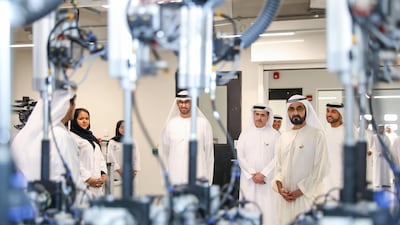
Sheikh Mohammed bin Rashid, Vice President and Ruler of Dubai, inaugurated Dubai Electricity and Water Authority’s Research and Development Centre at the Mohammed bin Rashid Al Maktoum Solar Park in March. Wam -
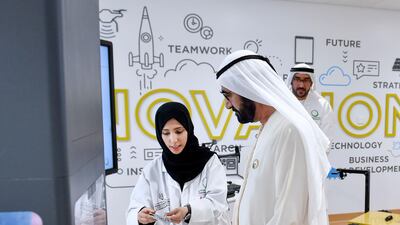
Sheikh Mohammed bin Rashid Al Maktoum, Vice President and Prime Minister of the UAE and Ruler of Dubai, has inaugurated Dubai Electricity and Water Authority’s (DEWA’s) Research and Development (R&D) Centre at the Mohammed bin Rashid Al Maktoum Solar Park. Wam -
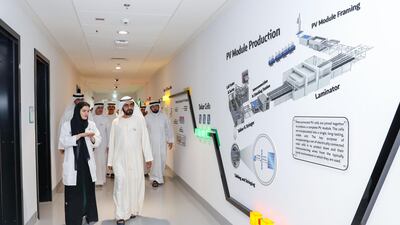
Sheikh Mohammed bin Rashid, Vice President and Ruler of Dubai, inaugurated Dubai Electricity and Water Authority’s Research and Development Centre at the Mohammed bin Rashid Al Maktoum Solar Park in March. Wam -
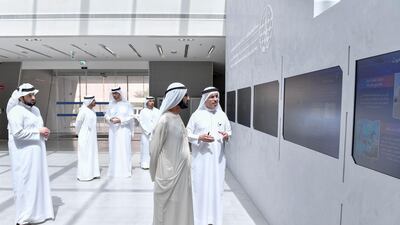
Sheikh Mohammed bin Rashid, Vice President and Ruler of Dubai, inaugurates Dubai Electricity and Water Authority’s Research and Development Centre at the Mohammed bin Rashid Al Maktoum Solar Park in March. Wam -
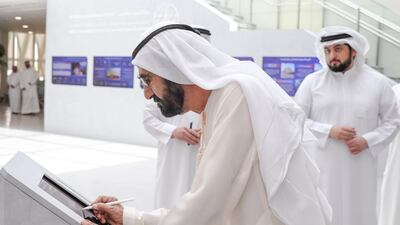
Sheikh Mohammed bin Rashid, Vice President and Ruler of Dubai, inaugurates Dubai Electricity and Water Authority’s Research and Development Centre at the Mohammed bin Rashid Al Maktoum Solar Park in March. Wam -
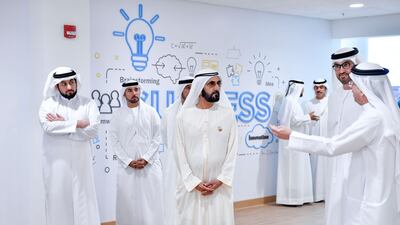
Sheikh Mohammed bin Rashid, Vice President and Ruler of Dubai, inaugurates Dubai Electricity and Water Authority’s Research and Development Centre at the Mohammed bin Rashid Al Maktoum Solar Park in March. Wam -
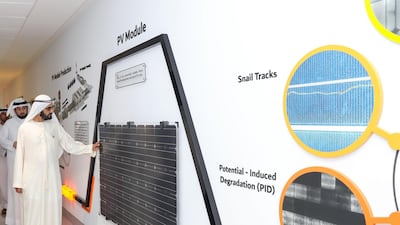
Sheikh Mohammed bin Rashid, Vice President and Ruler of Dubai, inaugurates Dubai Electricity and Water Authority’s Research and Development Centre at the Mohammed bin Rashid Al Maktoum Solar Park in Dubai. Wam -
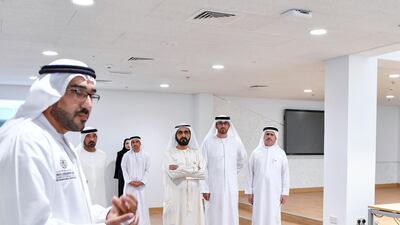
Sheikh Mohammed bin Rashid, Vice President and Ruler of Dubai, inaugurates Dubai Electricity and Water Authority’s Research and Development Centre at the Mohammed bin Rashid Al Maktoum Solar Park in Dubai. Wam -
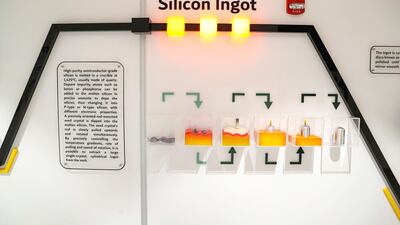
Sheikh Mohammed bin Rashid, Vice President and Ruler of Dubai, inaugurates Dubai Electricity and Water Authority’s Research and Development Centre at the Mohammed bin Rashid Al Maktoum Solar Park in Dubai. Wam -
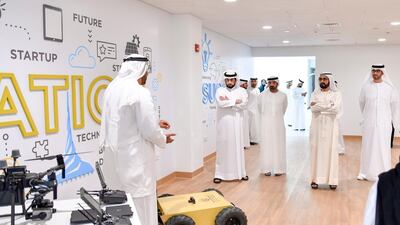
Sheikh Mohammed bin Rashid, Vice President and Ruler of Dubai, inaugurates Dubai Electricity and Water Authority’s Research and Development Centre at the Mohammed bin Rashid Al Maktoum Solar Park in Dubai. Wam -
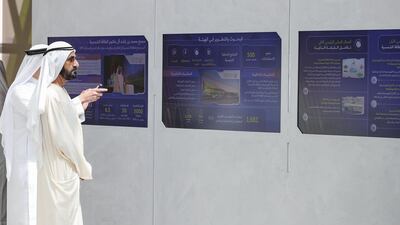
Sheikh Mohammed bin Rashid, Vice President and Ruler of Dubai, inaugurates Dubai Electricity and Water Authority’s Research and Development Centre at the Mohammed bin Rashid Al Maktoum Solar Park in Dubai. Wam


This latest in a long line of ambitious initiatives set by the UAE is nothing if not an act of encouragement: of ushering in a brighter, cleaner future, starting today.
It will encourage carbon-intense industries to innovate and adapt to cleaner methods of production, while benefitting from green growth opportunities. It will encourage the acceleration of research and development into carbon capture and clean energy technologies. It will encourage people to recycle and reconsider their water and energy consumption habits.
In short, it will encourage us to start planning for tomorrow, today. 2050 will not arrive unexpected. We will be ready for our date with our 21st century destiny. Indeed, we have been ready for some time.
The net-zero initiative builds on long-established, solid foundations, especially in our renewable energy sector. To date, the UAE has invested more than $40bn in domestic clean energy projects, and has been a major contributor to renewable energy projects in 70 countries worth a combined total of almost $20bn.
Our committed pursuit of renewable energy solutions has today seen us become home to the world’s largest solar energy parks, incuding the 77-square kilometre Mohammed bin Rashid Al Maktoum Solar Park, and Al Dhafra Solar photovoltaic park that is due to start operations in 2022, when it will become the world's largest single-site solar power plant, using four million solar panels to generate enough electricity for about 160,000 homes in the UAE.

The net-zero initiative will play a critical role in the broader national strategic framework being drawn-up by the UAE. For instance, in 2021 alone the UAE has set out plans to promote a cleaner and more globally competitive industrial sector, through Operation 300bn, which seeks to make industry cleaner, more efficient and productive through the increased adoption of Fourth Industrial Revolution solutions and advanced technologies.
Doing so will dramatically reduce the carbon footprint of national manufacturers and industrialists. Moreover, industries where the full force of these plans will be felt include so-called industries of the future, such as green hydrogen.
Further, the Circular Economy Policy was introduced to achieve sustainable governance, promote environmental health and support the private sector to adopt cleaner production methods. And plans have been introduced to increase nature reserves and natural spaces by 60 per cent in Dubai, through the Dubai 2040 Urban Master Plan.
On the global stage, the pathway for the country laid out by the leadership at Expo 2020 Dubai will resonate with world leaders, particularly amid times that are challenging all of us to rethink how we shape society in the years ahead. And it is this constant ability to shift with the times, adapt to new normal and thrive whatever the climate, that makes the UAE the perfect platform to host Cop28 in two years.

