

When we first arrived at our refugee camp – one of many set up in Cox’s Bazar, Bangladesh – I thought we would be back home in Myanmar after two or three months. Some of our neighbours were still there and my village was still untouched. Our camp was very close to the border between these two countries, and so going back was going to be easy.
That was four years ago. My house has since been long gone, burnt to ashes.
If someone told me to return now I would think they are mad – there is just no way. There is certainly no legal means to return, only illegal ones. We want a proper solution, a reasonable and a just one, because we are citizens of Myanmar. If we gave up our rights and decided to return, what would happen to our future?
Of course I do not mean that we do not want to go back home – we want to return as soon as possible. No one wants to be a refugee. Sometimes I feel as if I am not human. I feel as if I am living deep in a forest with wild animals, having nothing to call my own – no education, no safety, not even freedom. But we want to return while preserving our rights and in the knowledge that we will be safe.
-
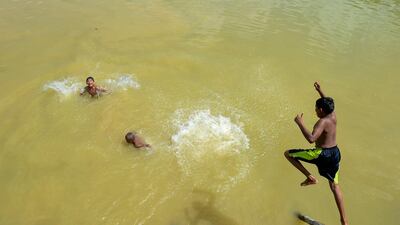
Rohingya refugee children cool off in a pond at Kutupalong refugee camp in Ukhia. AFP -
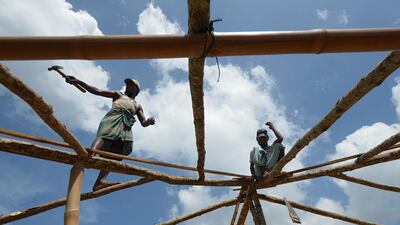
Rohingya refugees prepare to build a mosque in Kutupalong refugee camp. AFP -
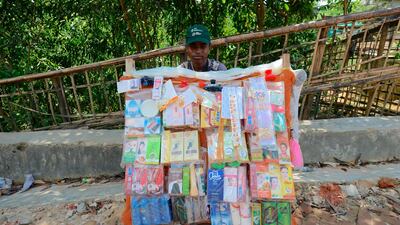
A Rohingya refugee selling cosmetic items waits for customers in Kutupalong refugee camp. AFP -
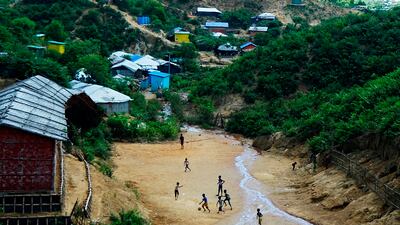
Rohingya refugee children play football in Kutupalong refugee camp. AFP -
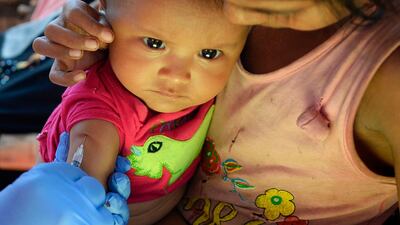
A health worker injects the child of a Rohingya refugee with a vaccine in Kutupalong refugee camp. AFP -
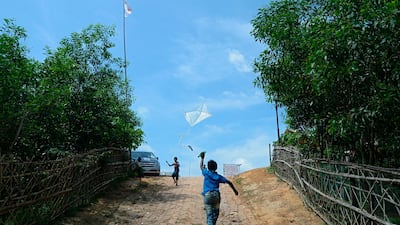
Rohingya refugee children fly kites. AFP -
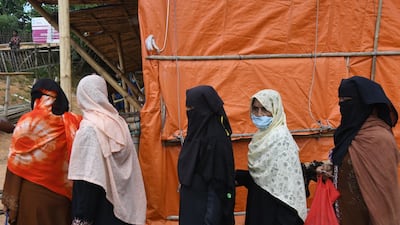
Rohingya refugees wait in a queue to collect relief supplies at Kutupalong refugee camp. AFP -
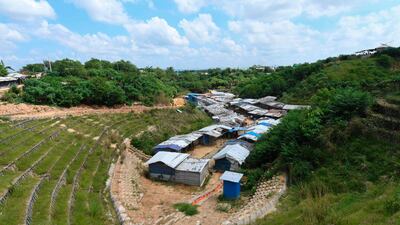
A general view of makeshift homes of Rohingya refugees at the Kutupalong camp. AFP -
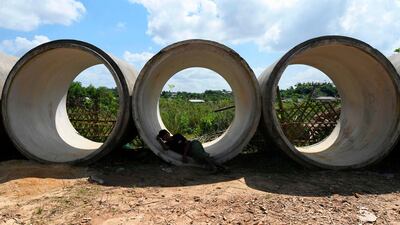
A Rohingya refugee boys sleeps inside a section of a sewer pipe at Kutupalong refugee camp. AFP


For this process to succeed, the Bangladeshi authorities need to talk to us and include us in discussions, much as they involve other relevant parties and countries. The longer we stay in Bangladesh, the more I am afraid that the Rohingya issue will progressively slip from the international agenda until we simply become invisible.
Here in the camps, our access to health care is very limited because medical facilities mostly just provide basic care. There is no available attention for more serious cases, while increasing restrictions supposedly linked to Covid-19 make it more and more difficult for us to seek options outside the camps. Patients requiring emergency surgery or advanced medical care sometimes face objections at the camps’ exit controls. It is the same for people suffering chronic diseases or mental health problems; sometimes they are not allowed to leave the camps on time and they miss their appointments or run out of medication.
There are few blood banks in the camps, and a lack of co-ordination between authorities and NGOs sometimes results in lives being lost. Members of the Rohingya Youth Association, which I set up to support my community, try to donate blood whenever it is needed. But that is far from enough. Just recently, we received an alert about a critical patient just 20 minutes before he passed away. We could not save him.

We understand, of course, that Covid-19 poses serious health concerns and, therefore, requires some movement restrictions. But there need to be exceptions, just as there are for people living outside the camps. Again, we sometimes feel as if we are not human beings living in dignity. Some families in the camps previously had very small but essential incomes from small businesses. They would perhaps earn between $20-30 per month, but all that is gone due to the Covid-19-related restrictions. These rules have made people totally dependent on the food that is being provided by humanitarian organisations but which is hardly enough to live on.
My dream is to one day become a lawyer and defend our cause in international courts. The government of Myanmar used the law to cut off our rights, so we need to be able to fight back with the help of the law. But our young people are not familiar with the words of the UN declaration of human rights, which state that we are all equal in front of the law. We are not even given basic training in the camps to empower our young people and to learn the basics about human rights.
If we end up not being able to continue our education, we are going to lose an entire generation. If we have to stay here for 10 years, what will happen to our children?
Despite these challenges, I hope not to lose my hope.
Khin Maung is a 26-year-old ethnic Rohingya, who has been living as a refugee since 2017, when his village in Myanmar came under attack from the army

