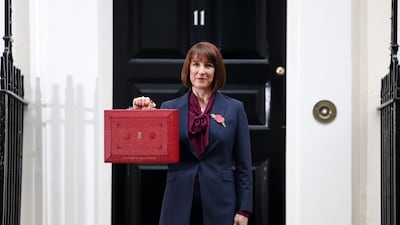
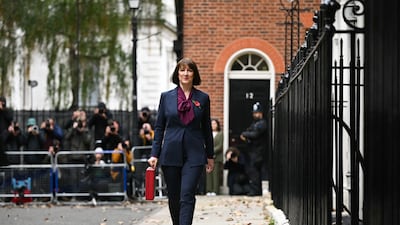
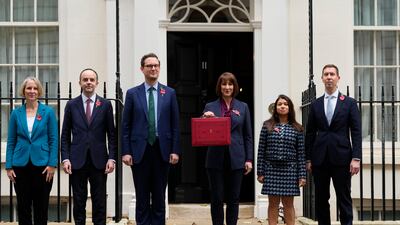
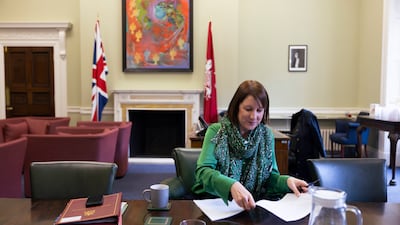
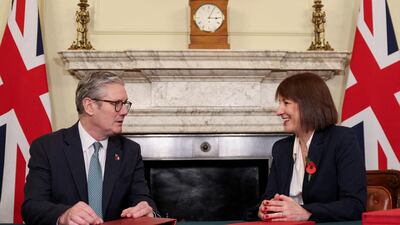
Oh dear. Rachel Reeves presumably believed she was being smart when announcing in her Budget that after 2026, heirs will pay tax when farms are passed on.
As far as the left is concerned the move to charge inheritance tax ticked their loathing boxes. Farmers are perceived as wealthy, they own land. Their farmhouses are often large and comfortable. They profit from supplying food. Theirs is a cosy existence in the fields, they don’t have to go out and look for work like the majority of folk. They can afford it.
It’s a similar set of criteria that saw the Chancellor target another privileged group when she imposed VAT on private school fees. Likewise the non-dom tax regime, which Reeves also scrapped in last week’s Budget.
But in going after farmers, she has made a huge mistake. Pursuing fee-paying parents and well-off foreigners has consequences: some pupils will transfer to the state system, adding to its burden; and non-doms are also employers and investors. However, they do not command popular, emotional support, they’re not able to galvanise the same and they don’t possess an already formidable lobbying organisation, not like the farmers.
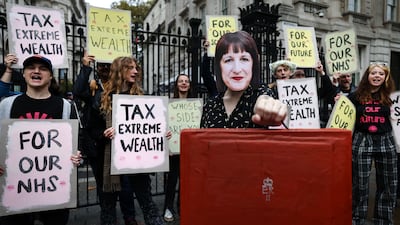
Suddenly, as if from nowhere, the countryside is in revolt. Let them, say Labour’s urbanite supporters. Whether they’re still saying that when tractors are blockading Parliament Square and central London, and motorways are reduced to a crawl behind flocks of sheep, is another matter.
A newly re-energised National Farmers’ Union is in full cry, labelling the policy "disastrous". Reeves said that, from April 2026, farms and other business property that has been passed on to heirs tax-free will be subject to inheritance tax. Inheritors will have to pay 20 per cent of their value above £1m, half the headline inheritance tax rate of 40 per cent.
According to the Treasury, about 2,000 farms will be affected by the measure. That’s a disputed figure – some say it will be larger. Even supposing it is 2,000, that is enough to cause economic and social disaster, not to mention to provoke nationwide mayhem.
That’s because the farmers have no cushion. The current farmer dies, and bang, their children, assuming it is them, must find what is by anyone’s standards a considerable sum of money. For example, one quoted farmer is Andrew Smith, 56, on Bodmin Moor, in Cornwall. For more than 100 years, his family have run a cattle farm.
Today, he works with his three sons. They produce on average 2,000 sheep and 30 to 40 cows a year. By his reckoning, they make "no profit" and "just pay the bills". He’s expecting his sons to take over when he dies. But based on the Reeves formula, if the land is worth £5m they will have to pay £800,000.
What that means in effect is that, to raise the levy, the sons must sell a sizeable chunk of the farm. That will mark the end of the Smith farm, as it will no longer be viable. The land could easily be bought by a corporate farm that has no interest in preserving the local ways or protecting the environment, and is not part of the deeply embedded surrounding community. Food production could cease altogether.
Britain's Labour party unveils its first Budget – in pictures
Repeat that exercise 2,000 times and it’s possible to see how Reeves, in her zeal, has miscalculated. The pages of newspapers and journals across the political spectrum and TV news bulletins are filling with tales of despair. Farmers always make for good copy and pictures. Jeremy Clarkson, the ex-Top Gear presenter turned Cotswolds farmer, is in his element.
It’s naïve economics that signals a void at the heart of this government.
What she and her colleagues display is a fundamental lack of appreciation or understanding of the rural economy. They look at barbed wire fences, locked gates and "Keep Off" signs and remember Karl Marx’s famous dictum that all property is theft and their political hackles rise.
They don’t realise that asset-rich can be accompanied by cash-poor. In their eyes, too, they see people who sit at the beginning of a supply line that ends up in Tesco or Marks & Spencer and assume the farmers must be enjoying similarly healthy profits – cash gained from providing consumers with their daily necessities, from selling milk, bread, vegetables and meat. They see what they view as exploitation and not fulfilling a national service.
It takes no account of the complex processes involved, and the costs and risks. It’s naive economics that signals a void at the heart of this government. Not only do the farmers rightly feel betrayed by Reeves’ boss, Keir Starmer, who previously declared his commitment to farmers, but it shows an absence of thought, of vision. This a step that smacks of pettiness, of point-scoring rather than serious revenue-raising.
As with VAT on school charges and the abolition of non-doms, it suggests Labour abhor those it believes to be wealthy. While independent schools and non-doms will come and go as issues, the targetting of farmers will run and run. It is a boon for the Conservative party and its historic shire county power base.
There were the Tories, on their knees. Now, they have a focal point to rally around, something that will engender widespread acclaim.
In putting numbers above human lives (already, one suicide is being claimed because of her farming crackdown) Reeves has misjudged. Labour has won a landslide but its hierarchy remains unpopular. Starmer and his team are seen as distant, out of touch, owing more to a fellow north London metropolitan elite than to working people.
Farmers are fiercely proud and independent, answering to nobody. They’re also employers. They will think nothing of marching on Westminster. It’s as if Starmer and Reeves have learnt nothing from the French, long used to having the roads of Paris and other major cities clogged by bales of hay and piles of manure.
It may seem trivial, in the context of a Budget that said so much. Reeves almost certainly thought that compared to other items, the financial well-being of the UK’s farmers was of little consequence. She should think again, before it is too late.

THE BIO
Mr Al Qassimi is 37 and lives in Dubai
He is a keen drummer and loves gardening
His favourite way to unwind is spending time with his two children and cooking
STAGE 4 RESULTS
1 Sam Bennett (IRL) Deceuninck-QuickStep - 4:51:51
2 David Dekker (NED) Team Jumbo-Visma
3 Caleb Ewan (AUS) Lotto Soudal
4 Elia Viviani (ITA) Cofidis
5 Matteo Moschetti (ITA) Trek-Segafredo
General Classification
1 Tadej Pogacar (SLO) UAE Team Emirates - 12:50:21
2 Adam Yates (GBR) Teamn Ineos Grenadiers - 0:00:43
3 Joao Almeida (POR) Deceuninck-QuickStep - 0:01:03
4 Chris Harper (AUS) Jumbo-Visma - 0:01:43
5 Neilson Powless (USA) EF Education-Nippo - 0:01:45
%3Cp%3E%3Cstrong%3ETHE%20SPECS%3C%2Fstrong%3E%0D%3Cbr%3EEngine%3A%203.5-litre%20V6%0D%3Cbr%3ETransmission%3A%209-speed%20automatc%0D%3Cbr%3EPower%3A%20279hp%0D%3Cbr%3ETorque%3A%20350Nm%0D%3Cbr%3EPrice%3A%20From%20Dh250%2C000%0D%3Cbr%3EOn%20sale%3A%20Now%3C%2Fp%3E%0A
COMPANY%20PROFILE
%3Cp%3E%3Cstrong%3EName%3A%20%3C%2Fstrong%3EKinetic%207%3Cbr%3E%3Cstrong%3EStarted%3A%3C%2Fstrong%3E%202018%3Cbr%3E%3Cstrong%3EFounder%3A%3C%2Fstrong%3E%20Rick%20Parish%3Cbr%3E%3Cstrong%3EBased%3A%3C%2Fstrong%3E%20Abu%20Dhabi%2C%20UAE%3Cbr%3E%3Cstrong%3EIndustry%3A%3C%2Fstrong%3E%20Clean%20cooking%3Cbr%3E%3Cstrong%3EFunding%3A%3C%2Fstrong%3E%20%2410%20million%3Cbr%3E%3Cstrong%3EInvestors%3A%3C%2Fstrong%3E%20Self-funded%3C%2Fp%3E%0A
What are the influencer academy modules?
- Mastery of audio-visual content creation.
- Cinematography, shots and movement.
- All aspects of post-production.
- Emerging technologies and VFX with AI and CGI.
- Understanding of marketing objectives and audience engagement.
- Tourism industry knowledge.
- Professional ethics.
More on animal trafficking
Mercer, the investment consulting arm of US services company Marsh & McLennan, expects its wealth division to at least double its assets under management (AUM) in the Middle East as wealth in the region continues to grow despite economic headwinds, a company official said.
Mercer Wealth, which globally has $160 billion in AUM, plans to boost its AUM in the region to $2-$3bn in the next 2-3 years from the present $1bn, said Yasir AbuShaban, a Dubai-based principal with Mercer Wealth.
“Within the next two to three years, we are looking at reaching $2 to $3 billion as a conservative estimate and we do see an opportunity to do so,” said Mr AbuShaban.
Mercer does not directly make investments, but allocates clients’ money they have discretion to, to professional asset managers. They also provide advice to clients.
“We have buying power. We can negotiate on their (client’s) behalf with asset managers to provide them lower fees than they otherwise would have to get on their own,” he added.
Mercer Wealth’s clients include sovereign wealth funds, family offices, and insurance companies among others.
From its office in Dubai, Mercer also looks after Africa, India and Turkey, where they also see opportunity for growth.
Wealth creation in Middle East and Africa (MEA) grew 8.5 per cent to $8.1 trillion last year from $7.5tn in 2015, higher than last year’s global average of 6 per cent and the second-highest growth in a region after Asia-Pacific which grew 9.9 per cent, according to consultancy Boston Consulting Group (BCG). In the region, where wealth grew just 1.9 per cent in 2015 compared with 2014, a pickup in oil prices has helped in wealth generation.
BCG is forecasting MEA wealth will rise to $12tn by 2021, growing at an annual average of 8 per cent.
Drivers of wealth generation in the region will be split evenly between new wealth creation and growth of performance of existing assets, according to BCG.
Another general trend in the region is clients’ looking for a comprehensive approach to investing, according to Mr AbuShaban.
“Institutional investors or some of the families are seeing a slowdown in the available capital they have to invest and in that sense they are looking at optimizing the way they manage their portfolios and making sure they are not investing haphazardly and different parts of their investment are working together,” said Mr AbuShaban.
Some clients also have a higher appetite for risk, given the low interest-rate environment that does not provide enough yield for some institutional investors. These clients are keen to invest in illiquid assets, such as private equity and infrastructure.
“What we have seen is a desire for higher returns in what has been a low-return environment specifically in various fixed income or bonds,” he said.
“In this environment, we have seen a de facto increase in the risk that clients are taking in things like illiquid investments, private equity investments, infrastructure and private debt, those kind of investments were higher illiquidity results in incrementally higher returns.”
The Abu Dhabi Investment Authority, one of the largest sovereign wealth funds, said in its 2016 report that has gradually increased its exposure in direct private equity and private credit transactions, mainly in Asian markets and especially in China and India. The authority’s private equity department focused on structured equities owing to “their defensive characteristics.”
The President's Cake
Director: Hasan Hadi
Starring: Baneen Ahmad Nayyef, Waheed Thabet Khreibat, Sajad Mohamad Qasem
Rating: 4/5
Tips on buying property during a pandemic
Islay Robinson, group chief executive of mortgage broker Enness Global, offers his advice on buying property in today's market.
While many have been quick to call a market collapse, this simply isn’t what we’re seeing on the ground. Many pockets of the global property market, including London and the UAE, continue to be compelling locations to invest in real estate.
While an air of uncertainty remains, the outlook is far better than anyone could have predicted. However, it is still important to consider the wider threat posed by Covid-19 when buying bricks and mortar.
Anything with outside space, gardens and private entrances is a must and these property features will see your investment keep its value should the pandemic drag on. In contrast, flats and particularly high-rise developments are falling in popularity and investors should avoid them at all costs.
Attractive investment property can be hard to find amid strong demand and heightened buyer activity. When you do find one, be prepared to move hard and fast to secure it. If you have your finances in order, this shouldn’t be an issue.
Lenders continue to lend and rates remain at an all-time low, so utilise this. There is no point in tying up cash when you can keep this liquidity to maximise other opportunities.
Keep your head and, as always when investing, take the long-term view. External factors such as coronavirus or Brexit will present challenges in the short-term, but the long-term outlook remains strong.
Finally, keep an eye on your currency. Whenever currency fluctuations favour foreign buyers, you can bet that demand will increase, as they act to secure what is essentially a discounted property.
MATCH INFO
Liverpool v Manchester City, Sunday, 8.30pm UAE
Avatar: Fire and Ash
Director: James Cameron
Starring: Sam Worthington, Sigourney Weaver, Zoe Saldana
Rating: 4.5/5
Key facilities
- Olympic-size swimming pool with a split bulkhead for multi-use configurations, including water polo and 50m/25m training lanes
- Premier League-standard football pitch
- 400m Olympic running track
- NBA-spec basketball court with auditorium
- 600-seat auditorium
- Spaces for historical and cultural exploration
- An elevated football field that doubles as a helipad
- Specialist robotics and science laboratories
- AR and VR-enabled learning centres
- Disruption Lab and Research Centre for developing entrepreneurial skills
Kandahar%20
%3Cp%3E%3Cstrong%3EDirector%3A%3C%2Fstrong%3E%20Ric%20Roman%20Waugh%3C%2Fp%3E%0A%3Cp%3E%3Cstrong%3EStars%3A%C2%A0%3C%2Fstrong%3EGerard%20Butler%2C%20Navid%20Negahban%2C%20Ali%20Fazal%3C%2Fp%3E%0A%3Cp%3E%3Cstrong%3ERating%3A%3C%2Fstrong%3E%202.5%2F5%3C%2Fp%3E%0A
Sustainable Development Goals
1. End poverty in all its forms everywhere
2. End hunger, achieve food security and improved nutrition and promote sustainable agriculture
3. Ensure healthy lives and promote well-being for all at all ages
4. Ensure inclusive and equitable quality education and promote lifelong learning opportunities for all
5. Achieve gender equality and empower all women and girls
6. Ensure availability and sustainable management of water and sanitation for all
7. Ensure access to affordable, reliable, sustainable and modern energy for all
8. Promote sustained, inclusive and sustainable economic growth, full and productive employment and decent work for all
9. Build resilient infrastructure, promote inclusive and sustainable industrialisation and foster innovation
10. Reduce inequality within and among countries
11. Make cities and human settlements inclusive, safe, resilient and sustainable
12. Ensure sustainable consumption and production patterns
13. Take urgent action to combat climate change and its effects
14. Conserve and sustainably use the oceans, seas and marine resources for sustainable development
15. Protect, restore and promote sustainable use of terrestrial ecosystems, sustainably manage forests, combat desertification, and halt and reverse land degradation and halt biodiversity loss
16. Promote peaceful and inclusive societies for sustainable development, provide access to justice for all and build effective, accountable and inclusive institutions at all levels
17. Strengthen the means of implementation and revitalise the global partnership for sustainable development
Heather, the Totality
Matthew Weiner,
Canongate
About Tenderd
Started: May 2018
Founder: Arjun Mohan
Based: Dubai
Size: 23 employees
Funding: Raised $5.8m in a seed fund round in December 2018. Backers include Y Combinator, Beco Capital, Venturesouq, Paul Graham, Peter Thiel, Paul Buchheit, Justin Mateen, Matt Mickiewicz, SOMA, Dynamo and Global Founders Capital