


A few years ago, even before the Covid-19 pandemic, a report released by the Intergovernmental Science-Policy Platform on Biodiversity and Ecosystem Services (IPBES) showed that all is not well with the nature.
The Global Assessment Report for Biodiversity and Ecosystem Services 2019 highlighted that land use changes, accelerated mainly by agriculture, forestry and urban development, have adversely affected species and ecosystems. This has pushed more than 25 per cent of all species towards extinction. Additionally, with nearly 75 per cent of the land and 60 per cent of the marine environment degraded, affecting nearly one third of the global population, the world seemed to be headed in a dangerous direction.
Alarmed by this, the UN Environment Programme declared 2021-2030 as the UN “decade on ecosystem restoration”. A declaration to not just protect but prevent. To halt and reverse the loss of nature through active conservation and restoration initiatives.
-

Australian researcher Ronald Loughland moved to Abu Dhabi in 1993 as a PhD student who went on to study the mangroves along the Arabian coast. All photos: Dr Ronald Loughland -
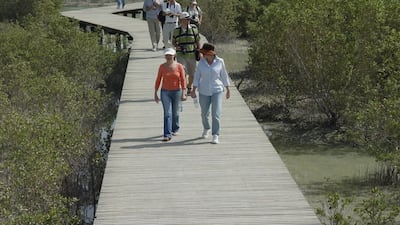
Dr Loughland, 60, has worked as an environmental consultant for 30 years and claims to have planted millions of mangroves in Abu Dhabi in the 1990s -
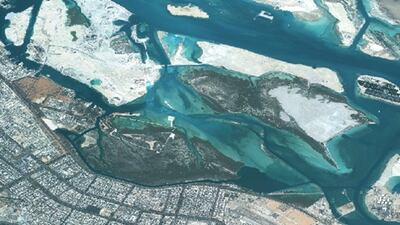
Dr Loughland was one of a handful of start-up staff at the Environment Agency Abu Dhabi who did the initial surveys on the flora and fauna of Abu Dhabi -

Mangrove forest areas in Abu Dhabi were increasing in the 1990s at a time when the tropical wetland plants were being destroyed globally, Dr Loughland said -
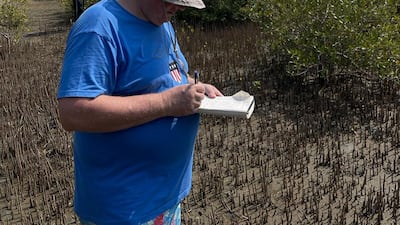
Dr Loughland said he witnessed first hand the keen interest in ecological conservation taken by the UAE's Founding Father, the late Sheikh Zayed bin Sultan Al Nahyan -
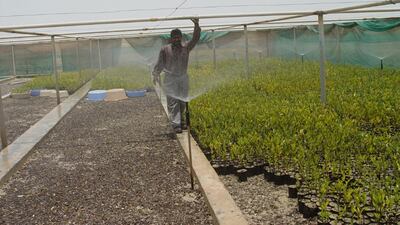
Part of Dr Loughland's research involved the study of satellite imagery and understanding changes in mangrove vegetation -

Dr Loughland was also involved in training local students in planting techniques and studying mangrove species and characteristics -

Dr Loughland says he believes Abu Dhabi is on track with its plans to plant 100 million mangroves by 2030


Mangroves, along with other blue carbon ecosystems such as seagrass and saltmarshes, due to their ability to sequester and store carbon, are vital links in the fight against climate change. According to the Intergovernmental Panel on Climate Change (IPCC), mangroves are estimated to sequester carbon at a rate of approximately 140 to 1,000 grammes per square metre per year, with an average estimate of about 300 grammes of carbon sequestered per square metre per year.
Carbon sequestration rates of the UAE’s mangroves are relatively higher compared to other reported rates around the Arabian Peninsula. Abu Dhabi’s mangroves store carbon at a rate of 0.5 tonnes per hectare annually, which is equivalent to 8,750 tonnes at the emirate level, and to the energy consumption of 1,000 homes per year.
Unfortunately, the outlook for mangroves isn’t very positive. A survey conducted by the International Union for Conservation of Nature using its Red List of Ecosystems – an internationally recognised standard for assessing ecosystem health – found that nearly 50 per cent of the mangrove ecosystems assessed are at risk.
Fortunately, Abu Dhabi has been ahead of the curve when it comes to restoration, dating back to the early 1970s, when UAE Founding Father, the late Sheikh Zayed bin Sultan Al Nahyan, initiated the first mangrove plantations along the coast of Abu Dhabi Emirate. This pioneering initiative was both visionary as well as futuristic. It didn’t just plant mangrove seeds, but also the seeds of conservation legacy and commitment, which continue to be as deep rooted as the mangroves.
Abu Dhabi has an estimated 176 sq km of mangroves, according to the 2020 habitat map developed by the Environment Agency Abu Dhabi, consisting of a single species: the grey mangrove (Avicennia marina). The dense and complex structure of old stands provides a rich environment for fish and other species, and is our natural defence for coastal protection and climate change mitigation.
However, to fight climate change we need to do more to protect and restore mangroves. Since 2020, the Agency and its partners have planted nearly 50 million mangroves using innovative solutions, such as drones. The work done to date is in line with the UAE’s aim of planting 100 million mangroves by 2030 to help achieve the Net-zero target by 2050.
It is important that restoration is done appropriately and only in areas that could be potentially restored. To support our ongoing efforts we recently developed "Technical Guidelines for Mangrove Restoration in the UAE". Developed in collaboration with the UAE Ministry of Climate Change and Environment, and Emirates Nature WWF, the publication is the first of its kind in the UAE and the region. It's designed to promote best practice in mangrove restoration and includes specific guidance for restoring mangroves in the UAE.
Our guidelines are based on extensive local knowledge and expertise on mangrove restoration in the UAE benchmarked against international best practices. We intend to update these guidelines in future, as and when additional data from on-the-ground restoration projects become available.
For example, no mangrove restoration should be undertaken in ecologically important mudflats, which are critical feeding and stopover habitats for migratory shorebirds and must be preserved. By following EAD’s guidelines and co-ordinating with the Agency, we can help future mangrove restoration programmes avoid such areas.
The guidelines are critical for effective restoration of Abu Dhabi’s degraded areas, and by scaling them, we will help maintain ecological connectivity and ecosystem functioning, besides providing food security and other societal benefits.
Mangrove restoration remains at the core of our ecosystem restoration efforts. These are long-term programmes and require sustained support and commitment. The Abu Dhabi Mangrove Initiative (ADMI), jointly launched in 2022 by Prince William, the Prince of Wales, and Sheikh Khaled bin Mohamed, the Crown Prince of Abu Dhabi, was an affirmation of that.
The ADMI is an umbrella programme for all local mangrove and blue carbon conservation and restoration projects, and provides a platform for international collaboration on mangrove research and conservation. It further supports Abu Dhabi’s and the UAE’s goals for nature conservation and Abu Dhabi’s Climate Change Strategy.
A key mission of ADMI is to ensure science-based implementation of all mangrove research and restoration projects, and to enhance the emirate's position as a global centre of excellence. We will do this by developing capacity building tools and establishing a state-of-the-art research and innovation centre in partnership with local communities, international and private sector organisations.
Protecting and restoring mangroves and other key marine ecosystems provide nature-based solutions (NBS) to reduce both greenhouse gas emissions and rising global temperatures. As NBS, they also play a crucial role in maintaining food security by serving as sanctuaries and nurseries for commercially important fish species. Which is vital, especially for coastal communities that rely heavily on these ecosystems for their diet.
Public-private partnerships are key to restoration initiatives. ADMI’s corporate partnership programme provides an ideal opportunity for businesses and government entities to contribute to mangrove restoration, and I invite them to join.
Our intentions are clear: we want businesses to factor nature into their decision making and finance activities. The "Global Biodiversity Framework Target 15" outlines actions for organisations in the the business and finance sectors to regularly monitor, assess, and transparently disclose their dependencies, risks and impacts on biodiversity. Launched at New York Climate Week in 2023, the Taskforce on Nature-related Financial Disclosures provides a pathway to achieve this goal.
Restoration and other conservation initiatives require funding to the tune of over several billion dollars. The current gap can only be bridged with generous funding from businesses and philanthropic contributions.
The Global Mangrove Alliance (GMA) aims to raise $4 billion to reach 80 per cent of mangrove protection targets by 2030. The Mangrove Breakthrough, part of the UAE Consensus reached at Cop28, and supported by over 50 governments, including the UAE, provides an opportunity to bridge the current financial deficit.
Our efforts must be based on credible science, research, and innovative technologies and in developing enduring partnerships. We are enthused by the increasing participation from key stakeholders in restoration projects, and as a government entity, will empower and guide them.
Restoration, and particularly mangrove restoration, is a complex, long-term, and resource-intensive undertaking. Given our extensive restoration experience, we understand the nuances of mangrove restoration and are willing to share our expertise with the rest of the world.
To further scale Abu Dhabi’s mangrove restoration efforts, this December, we will be hosting an International Mangrove Conservation and Restoration Conference. Organised in partnership with the UN Decade on Ecosystem Restoration, the UN Environment Programme, the Zoological Society of London, the University of St Andrews, Wetlands International, the Mangrove Alliance, and Emirates Nature-WWF, the conference will aim to bridge the gap between the cutting-edge science and implementation of mangrove conservation and restoration best practices.
Our restoration programmes, both terrestrial and marine, have achieved remarkable success. The declaration of our coastal and marine restoration as one of the “10 global flagship projects” by the UN Decade on Ecosystem Restoration 2020-2030 was a stamp of approval for our efforts. We take lot of pride in this.
We will continue to build on that and undertake other restoration initiatives for priority species and ecosystems. The restoration of mangroves and other ecosystems, and species re-wilding, are not a choice anymore, but a necessity.
Nature and natural ecosystems are close to tipping points. We cannot afford any more lethargy, and need to act – swiftly, decisively and in unison.

