

This year is set to be the warmest on record. Land and ocean surface temperatures have broken records in what has been described as “uncharted territory”.
Extreme weather conditions and ecological degradation have affected people, livelihoods, biodiversity and economies globally.
With Cop28 around the corner, there is an obvious need to position nature as a central pillar for both climate mitigation and adaptation.
Approximately 30 per cent of human-caused carbon dioxide (CO2) emissions are absorbed by land ecosystems and another 30 per cent is absorbed by oceans. The remaining portion stays in the atmosphere, contributing to global warming and climate change.
Nature plays a dual role: it mitigates climate extremes and helps communities adapt to them. For instance, preserving nature could provide for a third of the required climate mitigation by 2030, supporting the stabilisation of global warming.
Climate change is affecting nature in multiple ways.
The world’s soils store more carbon than vegetation and the atmosphere combined. When land is degraded, from deforestation and droughts to accelerated soil erosion, the carbon in the soil can be released into the atmosphere. This has made land degradation one of the largest contributors to climate change.
Forests act as both a cause and a solution for greenhouse gas emissions. Around 25 per cent of global emissions come from the land sector, the second largest source of greenhouse gas emissions after the energy sector.
About half of these emissions come from deforestation and forest degradation. Forests also regulate ecosystems, protect biodiversity and mitigate emissions. Every year, forests soak 2.6 billion tonnes of carbon dioxide. This accounts for one-third of CO2 emissions that result from the combustion of fossil fuels.
It is essential to recognise that Indigenous Peoples and local communities manage or have tenure rights over a substantial portion of the world’s forests. Forests under their stewardship are often more sustainably managed and effectively conserved, thereby acting as robust carbon sinks.
Ninety percent of global warming occurs in the ocean, leading to temperature changes, altered ocean currents and deoxygenation. Carbon emissions are increasing the acidity of the ocean, affecting marine life and ecosystems. Current levels are already too high for coral reefs to thrive, which directly affects food provision and flood protection.
Meanwhile, coastal ecosystems such as mangroves also play a crucial role in carbon storage and sequestration. Mangroves forests cover about 0.1 per cent of the planet’s surface but can store up to 10 times more carbon per hectare than terrestrial forests. Mangrove ecosystems also prevent more than $65 billion in property damages, and reduce flood risks for around 15 million people every year.
This is why the UAE is endorsing the Mangrove Breakthrough, as well as hosting the first ever Mangrove Ministerial at Cop28 – in support of the goal to secure the future of 15 million hectares of mangroves by 2030.
Climate change mitigation involves a diverse set of strategies and solutions. I strongly believe in the need to harness the power of nature through biological mitigation. Biological mitigation, a climate strategy, involves preserving and enhancing natural environments such as forests and wetlands, which are crucial carbon sinks.
-

A night sky and a forest illuminated with fireflies at Anamalai Tiger Reserve, Tamil Nadu, India. PA -

A woman looks through debris in the aftermath of a military strike on a camp for displaced people near Laiza, Myanmar. AFP -

Nobel Peace Prize awarded journalist Dmitry Muratov speaks to journalists at a courtroom in Moscow, Russia. AP -

Buddhist monks play drums during morning prayers at Gyuto Monastery in Dharamsala. AFP -

Russian armed forces take part in military drills at the Edelweiss training area in Balykchy. AFP -

Fans of Bollywood actor Amitabh Bachchan offer prayers at a temple on his 81st birthday in Kolkata. AFP -
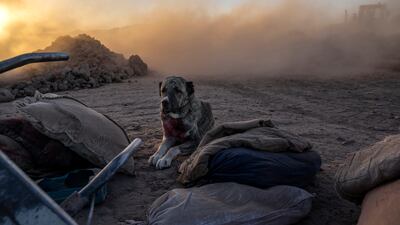
A dog sits near a house that was destroyed by an earthquake in Zenda Jan district, Herat province, Afghanistan. AP -

Activists, some wearing traditional Sami costumes, protest along Karl Johans gate street, in Oslo. AP -

Riot police officers stand guard as demonstrators block an avenue in Guatemala City, Guatemala. Reuters -

UAE energy company Adnoc plants mangrove seedlings using drones in Abu Dhabi. Reuters


Nature-based solutions offer sustainable methods to combat climate change. Sustainable forest management not only keeps forests healthy for CO2 absorption but also safeguards overall biodiversity, including that of plants, fungi and trees.
In essence, this is about protecting living forests. Restoration is another key approach, but it's vital that it goes beyond mere tree planting. True restoration aims to enhance degraded forests and adheres to the framework of the International Union for Conservation of Nature called the Global Standard for Nature-based Solutions. This creates benefits such as revitalising wildlife habitats, capturing CO2, enhancing water quality and preventing soil erosion.
Such solutions empower local communities to adapt and mitigate to climate change. Coastal habitat protection, for example, provides natural flood barriers. Healthy wetlands and forests can bolster groundwater supplies, proving invaluable during droughts. Urban forests, meanwhile, can reduce city temperatures, countering the urban heat island effect. And coastal ecosystems, such as mangroves and coral reefs, help dissipate wave energy, thus reducing coastal flooding risks.
One of the key pillars of the Cop28 action plan is focusing on people, nature, lives and livelihoods. It calls for people and the planet to be at the heart of the climate process.
At Cop28, we will promote and platform initiatives that not only protect biodiversity and vital natural carbon sinks, but also champion those who are on the frontlines of conservation, adaptation, and resilience efforts. We want to bring attention to and tie in the implementation of the Kunming-Montreal Global Biodiversity Framework’s 30x30 goal to conserve 30 per cent of lands and seas by 2030 as a critical tool for climate action.
As we gear up for Cop28, it is crucial to recognise the invaluable role of nature from forest and soils to oceans and wetlands. We must align on both nature and climate action because failure to do so would be a missed opportunity and one we cannot afford.

