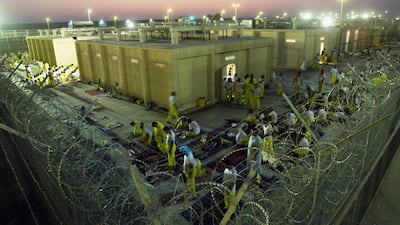

An Iraqi businessman believes he was refused entry to Britain to visit his son because he was detained by US forces in 2007, a court has heard.
The 72-year-old, who cannot be named for legal reasons and is referred to by the initials DNM, applied for a visa but it was refused in March 2025 on the grounds that his presence in the UK would not be “conducive to the public good”.
He is described as owning a business and property in Iraq and has three grown-up children, one of whom is married with children in the UK.
DNM applied to the Special Immigration Appeals Commission and was represented by his son, who the court praised for “his clear and well directed representations”, although it is not clear whether he is a lawyer.
The commission has now sent the case back to Home Secretary Shabana Mahmood to be reconsidered after it found that her officials did not follow their own guidance when making the decision.
In its written decision, SIAC says that Ms Mahmood did not set out the reasons for deciding DNM's presence would not be “conducive to the public good” and is not required by law to do so.
But DNM’s “conclusion could only rest on the fact” that the decision was based on his having been detained by US forces in April 2007 and then held for 11 months.

His detention was during the time the administration of president George W Bush embarked on its “surge” policy that saw the number of US combat troops in Iraq increase in a bid to tackle violence within the country.
DNM's son told the SIAC that the questioning of his father by the US military was “short-lived and superficial” and he was “not subject to extended interrogation”. After being released, he did not face charges in Iraqi courts.
The businessman was one of “thousands of Iraqis” who were held by the US and its allies in the multinational force during what was a chaotic period of sectarian conflict as the country approached a state of civil war, his son said.
Sometimes people were detained on the “basis of false accusations made by people who wanted to settle scores or who might think there was some advantage to be gained from a person's absence”.
DNM’s detention had been “traumatic for the whole family and that it was further distressing for that now to be a reason why DNM could not visit the United Kingdom”, his son told SIAC.
His father had never had connections to any terrorists or terrorist group and his uncle, DNM’s brother, was a policeman who was killed in a terrorist bombing, he said.
SIAC said the substantive reasons given for the refusal of the Iraqi’s visa were contained in evidence that could not be revealed for national security reasons.
But the commission highlighted that the guidance for refusal includes a provision on assessing whether the person poses a threat to the UK public.

This includes consideration of the nature and seriousness of the behaviour, the level of difficulty that the UK might encounter as a result of admitting a person, and the frequency of the behaviour.
SIAC said “the decision to refuse the visa application was not reached consistently with the requirements in the guidance”.
“That guidance requires a thorough and methodical approach. Our conclusion is that the material available to the Secretary of State in this case was not considered in the way the guidance requires.”
SIAC sent the decision back to Ms Mahmood for her officials to reconsider whether to grant DNM a visa and was scathing about the lack of rigour in the initial refusal.
“This decision, like decisions on many visa applications, was a difficult decision to take. The evidence we have of this decision does not suggest that the difficulties were faced head on,” it said.