
Thousands of Afghans are being relocated to the UK under a secret £850 million scheme set up following the leak of personal data about people who supported British forces, it can be reported after a court injunction was lifted.
A dataset containing personal information about nearly 19,000 people who applied for the Afghan Relocations and Assistance Policy (Arap) was released “in error” in February 2022 by a defence official.
The breach resulted in the creation of a secret Afghan relocation scheme – the Afghanistan Response Route – in April 2024.
The scheme is understood to have cost around £400 million so far, with a projected cost once completed of around £850 million. Millions more is expected to be paid in legal costs and compensation.
Defence Secretary John Healey offered a “sincere apology on behalf of the British government” for the data breach.
The Ministry of Defence (MoD) only became aware of the breach in August 2023, over a year after the release, when excerpts of the dataset were anonymously posted onto a Facebook group.
Details in the dataset include the names and contact details of the Arap applicants and names of their family members.
Arap was responsible for relocating Afghan nationals who had worked for, or with, the UK Government and were therefore at risk of reprisals once the Taliban returned to power in Kabul in 2021.
Between 80,000 and 100,000 people, including the estimated number of relatives of the Arap applicants, were affected by the breach and could be at risk of harassment, torture or death if the Taliban obtained their data, judges said in June 2024.
However an independent review, commissioned by the government in January, concluded in June that the dataset is “unlikely to significantly shift Taliban understanding of individuals who may be of interest to them”.
Around 4,500 people – made up of 900 Arap applicants and approximately 3,600 family members have been brought to the UK or are in transit through the Afghanistan Response Route.
A further estimated 600 people, plus their relatives, are expected to be relocated before the scheme closes, bringing the total to around 6,900 people.
The projected cost of the scheme may include relocation, transitional accommodation, legal fees and local authority tariffs.
It is understood that an unnamed official had emailed the dataset outside a secure government system while attempting to verify information, believing the dataset to only have around 150 rows.
However, there were more than 33,000 rows of information, which were inadvertently sent.

An unprecedented superinjunction was made at the High Court in September 2023 to reduce the risk of alerting the Taliban to the existence of the data. The decision to apply for an order was made by then-defence secretary Ben Wallace.
The superinjunction, lifted on Tuesday, is thought to have been the longest order of its kind and the first time the government has sought such a restrictive measure against the media.
At multiple hearings, lawyers for the MoD said in written submissions that there was a “very real risk that people who would otherwise live will die” if the Taliban gained access to the data.
However, a recent report by retired civil servant Paul Rimmer said: “Given the data they already have access to as the de facto government, we believe it is unlikely the dataset would be the single, or definitive, piece of information enabling or prompting the Taliban to act.”
Mr Healey told MPs the superinjunction had left him feeling “deeply uncomfortable to be constrained from reporting to this House” about the breach and the secret relocation scheme set up in its wake.
Under plans set out last October, the Afghanistan Response Route was expected to allow up to 25,000 people – most of whom were ineligible for Arap but deemed to be at the highest risk from Taliban reprisals – to be relocated.
One internal government document from February this year said: “This will mean relocating more Afghans to the UK than have been relocated under the Arap scheme, at a time when the UK’s immigration and asylum system is under significant strain. This will extend the scheme for another five years at a cost of [circa] £7 billion.”
-
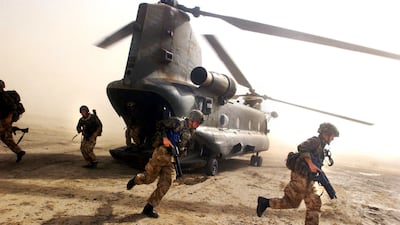
British Royal Marines scramble out of a Chinook helicopter in south-eastern Afghanistan in 2002. All photos: Getty Images -

Royal Marines from Arbroath, Scotland patrol south-eastern Afghanistan in 2002 -
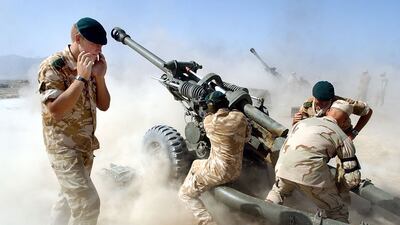
British and US forces fire 105mm artillery rounds at Bagram Airbase in 2002 -

British Royal Marine Commandos at Bagram Airbase in 2002 -
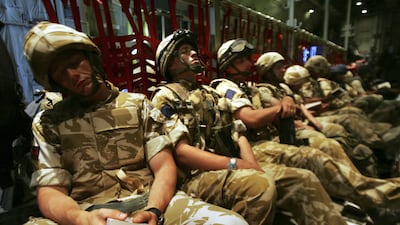
British soldiers rest while arriving for their deployment to Camp Bastion in Helmand province in 2006 -
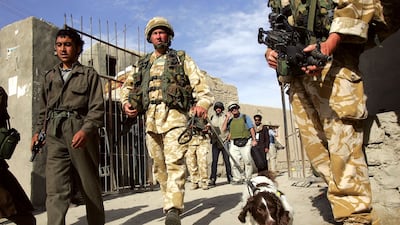
British troops look for explosives with a sniffer dog in Musa Qala in the southern Afghan province of Helmand in 2006 -

Cpt Alex Corbet Burcher patrols with Afghan National Army soldiers in 2007 in Sangin Valley, Helmand -
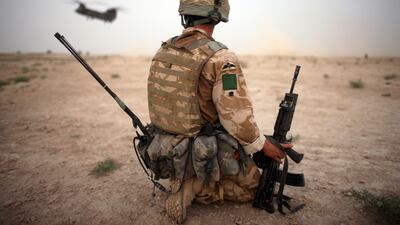
A British Army soldier secures a helicopter landing strip during operation Southern Beast in Maywand District in Kandahar in 2008 -

British soldiers and the Afghan National Police secure the site of a suicide bomb blast in 2009 in Kabul -

A sea of crosses bearing pictures of soldiers killed in Afghanistan is placed in the Royal British Legion Field of Remembrance at Westminster Abbey, London in 2012 -
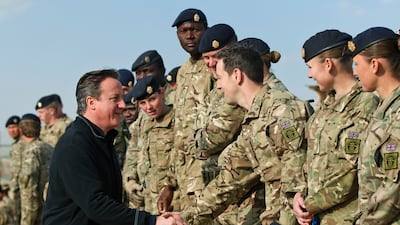
Then-prime minister David Cameron talks to British soldiers during a visit to Camp Bastion in 2013 -
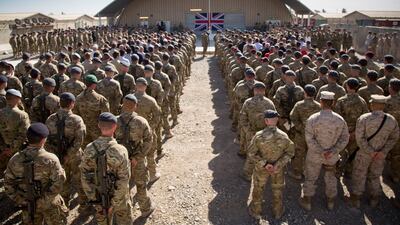
The UK national flag is displayed as British troops gather for a Remembrance Sunday service at Kandahar airfield in 2014 -
British troops attend a sunset flag-lowering and end-of-mission ceremony at Kandahar airfield in 2014


This figure is understood to be a previous estimate of the cost of all Afghan relocations, with projected costs now between £5.5 billion and £6 billion.
As of March 2025, around 36,000 people had been relocated to the UK under Arap and other resettlement schemes.
The breach can now be reported after a High Court judge lifted the superinjunction – which prohibited making any reference to the existence of the court proceedings.
Reading a summary of his judgment in court on Tuesday, Mr Justice Chamberlain noted that the granting of the superinjunction had “given rise to serious free speech concerns”.
He added: “The superinjunction had the effect of completely shutting down the ordinary mechanisms of accountability which operate in a democracy. This led to what I describe as a ‘scrutiny vacuum’.”

