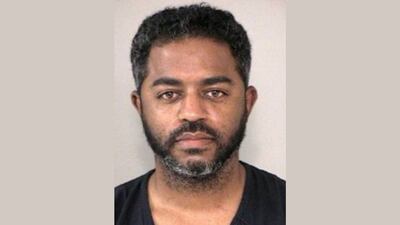
Edward Pettifer, 31, was killed in the attack in Bourbon Street, New Orleans, on New Year's Day. PA

British victim of New Orleans attack was stepson of Prince William and Prince Harry's former nanny


Gillian Duncan
  • English
  • Arabic

The stepson of Prince William and Prince Harry’s former nanny has been confirmed among those killed in the ramming attack in New Orleans on New Year’s Day.

Edward Pettifer and 13 others died after Shamsud-Din Bahar Jabbar sped into a crowd in the city’s Bourbon Street in the early hours of January 1 as revellers celebrated.

London's Metropolitan Police confirmed they were supporting the family of the 31-year-old. His father Charles Pettifer, 59, is married to Tiggy Legge-Bourke, 59, who worked as a nanny to the princes from 1993 until 1999. The couple live in Wales, but the 31-year-old reportedly stayed with his mother in Chelsea, London.

Prince William said he was “shocked and saddened” by Mr Pettifer’s death. “Our thoughts and prayers remain with the Pettifer family and all those innocent people who have been tragically impacted by this horrific attack. W,” he wrote on the Prince and Princess of Wales's X account, signing off with his initial.

Alexandra Pettifer, better known as Tiggy Legge-Bourke, a former nanny to the Prince of Wales. PA

King Charles is also said to be “deeply saddened” by the death and has been in touch with Mr Pettifer's family to share his condolences.

“The entire family are devastated at the tragic news of Ed's death in New Orleans. He was a wonderful son, brother, grandson, nephew and a friend to so many,” said Mr Pettifer’s family in a statement. “We will all miss him terribly. Our thoughts are with the other families who have lost their family members due to this terrible attack.”

The New Orleans coroner gave Mr Pettifer's preliminary cause of death as “blunt force injuries”. The Met Police said family liaison officers are helping Mr Pettifer's family through the process of returning his body to the UK.

The Foreign Office also said it was supporting the victim's family and was in contact with US authorities. New Orleans Mayor LaToya Cantrell said at a press conference the victims and their families “matter” to the entire city. “Our hearts and prayers continue to go out to the victim's families,” she said.

Driver ploughs into New Year's crowd in New Orleans – in pictures

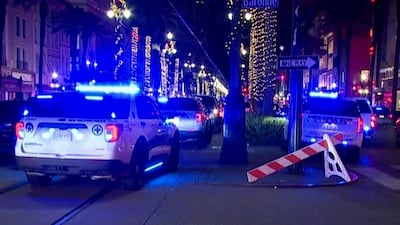
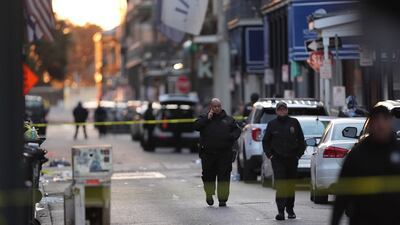
The attack took place in the city's French Quarter at around 3.15am local time on New Year's Day. The New Orleans coroner said one of those killed remains unidentified with the others coming from the US, the youngest aged 18 and the oldest 63. It is believed the suspect acted alone.

The FBI said an ISIS flag was found inside the vehicle and explosive devices were found nearby. The agency said Jabbar had posted five videos on his Facebook account in the hours before the attack, in which he aligned himself with ISIS and said he had joined the militant group last summer.

Earlier this week, US President Joe Biden said the attacker posted a video which indicated he was inspired by the group. UK Foreign Secretary David Lammy said consular officials in the US would be on hand to help any British nationals affected.

A passport photo provided by the FBI shows Shamsud-Din Bahar Jabbar. AP

Jabbar, 42, was fatally shot in a firefight with police at the scene of the deadly crash in New Orleans' historic French Quarter. Authorities found crude bombs that had been planted in the neighbourhood. Two improvised explosive devices left in coolers several blocks apart were made safe at the scene, officials said. Other devices were determined to be non-functional.

Investigators recovered a transmitter intended to trigger the two bombs from Jabbar's rental vehicle, the FBI said in a statement on Friday. It also said authorities found bomb-making materials at the New Orleans home he rented before the attack. Jabbar tried to burn the house down by setting a small fire in a hallway and placing accelerants to help spread it, the FBI said. The flames burnt out before firefighters arrived.

Authorities on Friday were still investigating Jabbar's motives and how he carried out the attack. They say he exited the crashed pick-up truck wearing a bulletproof vest and helmet and fired at police, wounding at least two officers before he was fatally shot by officers returning fire.


Farage on Muslim Brotherhood

Nigel Farage told Reform's annual conference that the party will proscribe the Muslim Brotherhood if he becomes Prime Minister.
"We will stop dangerous organisations with links to terrorism operating in our country," he said. "Quite why we've been so gutless about this – both Labour and Conservative – I don't know.
“All across the Middle East, countries have banned and proscribed the Muslim Brotherhood as a dangerous organisation. We will do the very same.”
It is 10 years since a ground-breaking report into the Muslim Brotherhood by Sir John Jenkins.
Among the former diplomat's findings was an assessment that “the use of extreme violence in the pursuit of the perfect Islamic society” has “never been institutionally disowned” by the movement.
The prime minister at the time, David Cameron, who commissioned the report, said membership or association with the Muslim Brotherhood was a "possible indicator of extremism" but it would not be banned.

A Cat, A Man, and Two Women
Junichiro
Tamizaki
Translated by Paul McCarthy
Daunt Books 

Who's who in Yemen conflict

Houthis: Iran-backed rebels who occupy Sanaa and run unrecognised government

Yemeni government: Exiled government in Aden led by eight-member Presidential Leadership Council

Southern Transitional Council: Faction in Yemeni government that seeks autonomy for the south

Habrish 'rebels': Tribal-backed forces feuding with STC over control of oil in government territory

The National Archives, Abu Dhabi

Founded over 50 years ago, the National Archives collects valuable historical material relating to the UAE, and is the oldest and richest archive relating to the Arabian Gulf.

Much of the material can be viewed on line at the Arabian Gulf Digital Archive - https://www.agda.ae/en

Kandahar%20
%3Cp%3E%3Cstrong%3EDirector%3A%3C%2Fstrong%3E%20Ric%20Roman%20Waugh%3C%2Fp%3E%0A%3Cp%3E%3Cstrong%3EStars%3A%C2%A0%3C%2Fstrong%3EGerard%20Butler%2C%20Navid%20Negahban%2C%20Ali%20Fazal%3C%2Fp%3E%0A%3Cp%3E%3Cstrong%3ERating%3A%3C%2Fstrong%3E%202.5%2F5%3C%2Fp%3E%0A
UAE currency: the story behind the money in your pockets
The alternatives

• Founded in 2014, Telr is a payment aggregator and gateway with an office in Silicon Oasis. It’s e-commerce entry plan costs Dh349 monthly (plus VAT). QR codes direct customers to an online payment page and merchants can generate payments through messaging apps.

• Business Bay’s Pallapay claims 40,000-plus active merchants who can invoice customers and receive payment by card. Fees range from 1.99 per cent plus Dh1 per transaction depending on payment method and location, such as online or via UAE mobile.

• Tap started in May 2013 in Kuwait, allowing Middle East businesses to bill, accept, receive and make payments online “easier, faster and smoother” via goSell and goCollect. It supports more than 10,000 merchants. Monthly fees range from US$65-100, plus card charges of 2.75-3.75 per cent and Dh1.2 per sale.

2checkout’s “all-in-one payment gateway and merchant account” accepts payments in 200-plus markets for 2.4-3.9 per cent, plus a Dh1.2-Dh1.8 currency conversion charge. The US provider processes online shop and mobile transactions and has 17,000-plus active digital commerce users.

• PayPal is probably the best-known online goods payment method - usually used for eBay purchases -  but can be used to receive funds, providing everyone’s signed up. Costs from 2.9 per cent plus Dh1.2 per transaction.

Mercer, the investment consulting arm of US services company Marsh & McLennan, expects its wealth division to at least double its assets under management (AUM) in the Middle East as wealth in the region continues to grow despite economic headwinds, a company official said.

Mercer Wealth, which globally has $160 billion in AUM, plans to boost its AUM in the region to $2-$3bn in the next 2-3 years from the present $1bn, said Yasir AbuShaban, a Dubai-based principal with Mercer Wealth.

Within the next two to three years, we are looking at reaching $2 to $3 billion as a conservative estimate and we do see an opportunity to do so,” said Mr AbuShaban.

Mercer does not directly make investments, but allocates clients’ money they have discretion to, to professional asset managers. They also provide advice to clients.

“We have buying power. We can negotiate on their (client’s) behalf with asset managers to provide them lower fees than they otherwise would have to get on their own,” he added.

Mercer Wealth’s clients include sovereign wealth funds, family offices, and insurance companies among others.

From its office in Dubai, Mercer also looks after Africa, India and Turkey, where they also see opportunity for growth.

Wealth creation in Middle East and Africa (MEA) grew 8.5 per cent to $8.1 trillion last year from $7.5tn in 2015, higher than last year’s global average of 6 per cent and the second-highest growth in a region after Asia-Pacific which grew 9.9 per cent, according to consultancy Boston Consulting Group (BCG). In the region, where wealth grew just 1.9 per cent in 2015 compared with 2014, a pickup in oil prices has helped in wealth generation.

BCG is forecasting MEA wealth will rise to $12tn by 2021, growing at an annual average of 8 per cent.

Drivers of wealth generation in the region will be split evenly between new wealth creation and growth of performance of existing assets, according to BCG.

Another general trend in the region is clients’ looking for a comprehensive approach to investing, according to Mr AbuShaban.

“Institutional investors or some of the families are seeing a slowdown in the available capital they have to invest and in that sense they are looking at optimizing the way they manage their portfolios and making sure they are not investing haphazardly and different parts of their investment are working together,” said Mr AbuShaban.

Some clients also have a higher appetite for risk, given the low interest-rate environment that does not provide enough yield for some institutional investors. These clients are keen to invest in illiquid assets, such as private equity and infrastructure.

“What we have seen is a desire for higher returns in what has been a low-return environment specifically in various fixed income or bonds,” he said.

“In this environment, we have seen a de facto increase in the risk that clients are taking in things like illiquid investments, private equity investments, infrastructure and private debt, those kind of investments were higher illiquidity results in incrementally higher returns.”

The Abu Dhabi Investment Authority, one of the largest sovereign wealth funds, said in its 2016 report that has gradually increased its exposure in direct private equity and private credit transactions, mainly in Asian markets and especially in China and India. The authority’s private equity department focused on structured equities owing to “their defensive characteristics.”

Results:

Women:

1. Rhiannan Iffland (AUS) 322.95 points
2. Lysanne Richard (CAN) 285.75
3. Ellie Smart (USA) 277.70

Men:

1. Gary Hunt (GBR) 431.55
2. Constantin Popovici (ROU) 424.65
3. Oleksiy Prygorov (UKR) 392.30

Updated: January 04, 2025, 3:51 PM