

A British auction house has withdrawn a 19th century human skull from sale after a “decolonisation” row was triggered when Indian community activists demanded its return.
The skull, from the Naga people of India and Myanmar, was part of a wider collection of skulls and shrunken heads from around the world that were expected to go under the hammer at The Swan auction house in Oxfordshire, England, on Wednesday.
Besides the skull, other remains listed were from Africa, Asia and South America, with a total list price of $180,000. The Naga skull, attached to animal horns, had been offered with a starting bid of £2,100 ($2,746).
The auction was cancelled when activists from India attacked it in an open letter, claiming that the sale was an “act of dehumanisation” and “continued colonial violence”.

“The news of the proposed auction of Naga human remains in the UK has been received by all sections in a negative manner as it is a highly emotional and sacred issue for our people,” said Neiphiu Rio, chief minister of the Indian state of Nagaland. “It has been a traditional custom of our people to give the highest respect and honour for the remains of the demised.”
Some groups in the Nagaland territory, nestled in the hills of north-east India on the border with Myanmar, had a tradition of decapitating members of enemy tribes and displaying their heads. The practice died out during the last century, but members of the Konyak community remain highly protective of traditions from their past.
Dolly Kikon, a Naga anthropologist and professor at the University of California Santa Cruz, said the sale of any such item was unacceptable. “Auctioning Indigenous human remains in the 21st century shows how descendants of colonisers enjoy impunity to perpetuate racism and colonial violence on communities,” Ms Kikon told AFP on Wednesday.
“If we have laws to stop the traffic of animals and birds, why don't governments stop the auction of Indigenous human remains that were stolen from the people? The Naga people believe [the auctioneers] will do the right thing and return our ancestral remains,” she added.
Wati Aier, a Baptist priest and leader of the Forum for Naga Reconciliation peace group, appealed for Britain to return all the skulls to their ancestral lands.
“Throughout the period of British rule, the Naga people were defined as 'savages' and 'headhunters', which are insulting tropes that continue to be perpetuated today,” he said. “These human remains symbolise the violence that the British colonial power unleashed on the Nagas.”
Konyak tribe – in pictures
-
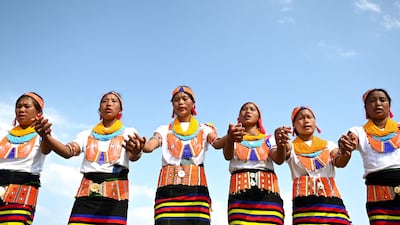
The Konyak tribe's women dance in Longwa village, in the north-east Indian state of Nagaland. All photos: AFP -
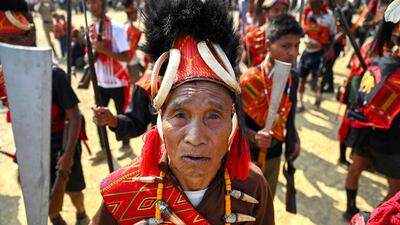
The Konyak tribe's men with guns and sickles dance at their community gathering -
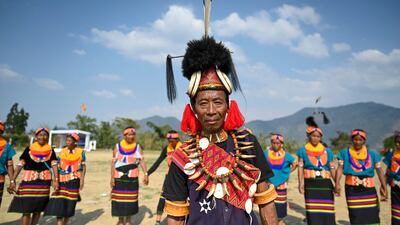
The Konyaks are settled in about a hundred villages in the Mon district of Nagaland -
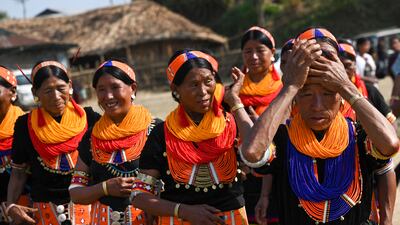
The Konyaks are traditional hunters and warriors of Nagaland but now their main occupation is agriculture -
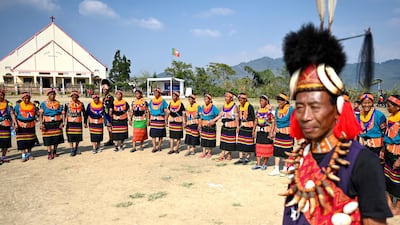
The Konyaks perform their tribal dance -
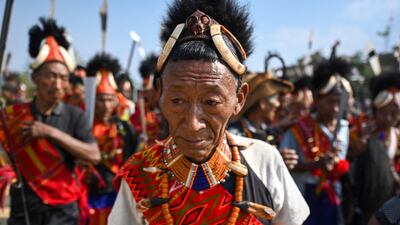
A distinct group of Konyaks are easily recognised by their tattooed faces -
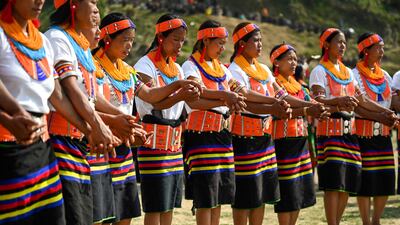
In the past the Konyaks were renowned headhunters, and would often carry back the heads of their rivals as war trophys -
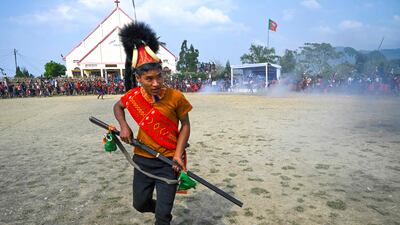
A Konyak tribesman with a gun dances at a community gathering in Longwa village -
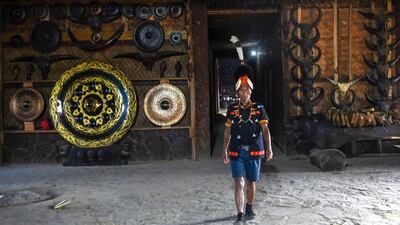
A Konyak tribesman at the king's residence in Longwa village -
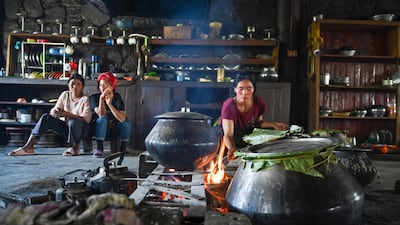
The Konyak tribe's women cook in the kitchen of their king's residence -
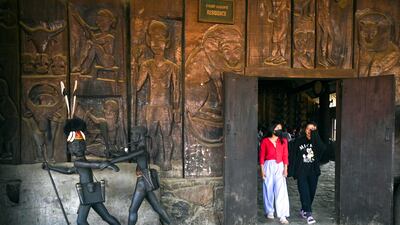
Tourists visit the Konyak king's residence -
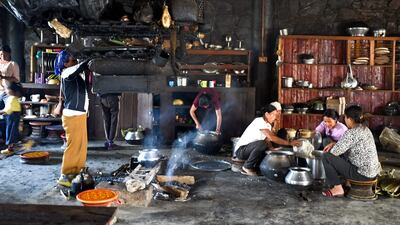
The Konyak tribe's women cook in the king's kitchen -
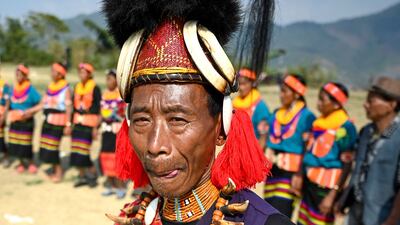
They are skilled artisans and expert at making firearms and handicrafts such as basket making, bamboo works and weaving


Laura Van Broekhoven, director of Oxford's Pitt Rivers Museum, home to the largest Naga collection in the world, said the sale of such items was “completely unethical”.
Other skulls listed in the Swan Fine Art auction were from Papua New Guinea, Borneo and Solomon Islands. Items from Africa originated from Benin, Congo-Brazzaville, Democratic Republic of Congo and Nigeria. The two skulls from Congo were balanced on top of each other, which the auctioneers said were “purported to be mother and son”.

