Speed limits were reduced in Abu Dhabi on Tuesday as dense fog caused disruption on the roads for early-morning commuters.
Abu Dhabi Police imposed temporary speed limits of 80kph on a number of key routes, including Sweihan Road, Al Ain Road and Sheikh Mohammed bin Rashid Road, in response to the challenging conditions.
The fog was particularly heavy from the Deerfields Mall area towards Abu Dhabi, becoming worse near Yas Island and the airport. It was largely clear on the Dubai side.

The National Centre of Meteorology issued a weather warning over poor visibility in some internal areas owing to the low-lying fog, which is in place until 10am.
In its latest five-day bulletin, the NCM said the foggy weather was expected to persist until at least Saturday.
It is the latest bout of thick fog to shroud UAE skies. Last week, dozens of flights were cancelled in Dubai and drivers faced long delays, with visibility reduced to only a few metres in some cases.
Tuesday's fog was less severe than that recorded last week and appeared to be largely isolated to Abu Dhabi, with clear skies on the morning commute in Dubai.
How to drive safely in the fog
-
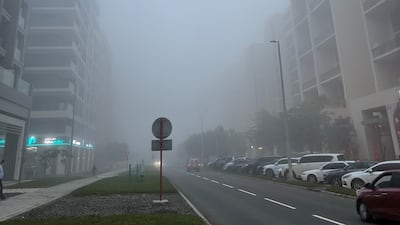
Al Zeina, Abu Dhabi. Reena Ratan / The National -
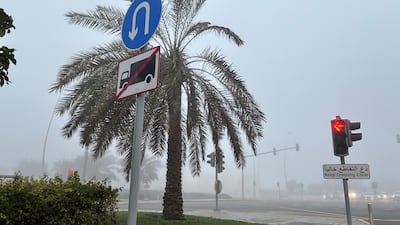
Fog blanketed the UAE on Wednesday, seen here in Abu Dhabi. Reena Ratan / The National -
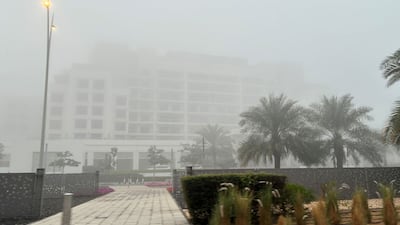
Hilton Abu Dhabi Yas Island hotel. Reena Ratan / The National -

Remraam, Dubai. Chris Whiteoak / The National -

The E11 motorway at Al Raha Beach, Abu Dhabi. Victor Besa / The National -
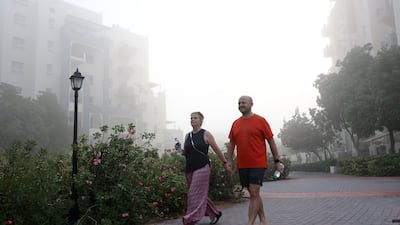
Out for a walk in Remraam, Dubai. Chris Whiteoak / The National -
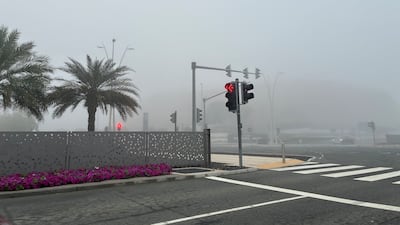
Yas Island. Reena Ratan / The National -
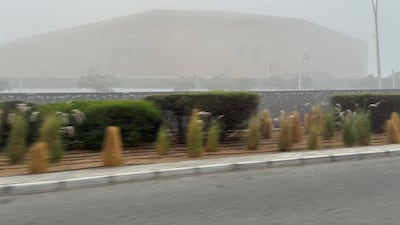
Etihad Arena. Reena Ratan / The National -
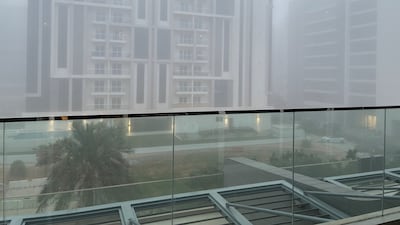
Al Zeina. Reena Ratan / The National -
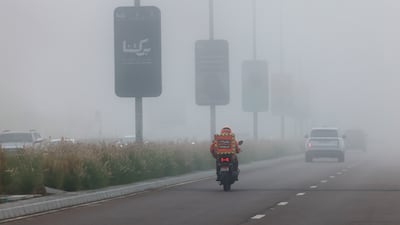
Khalifa City, Abu Dhabi. Victor Besa / The National -
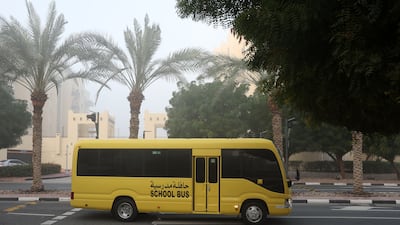
Off to school in Remraam, Dubai. Chris Whiteoak / The National -
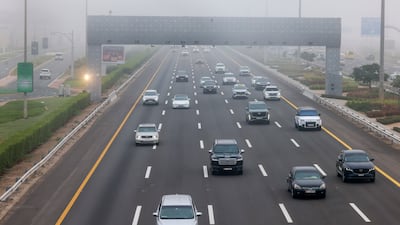
Commuters negotiate the tricky conditions on the E11 motorway in Abu Dhabi. Victor Besa / The National


Thomas Edelmann, managing director of Road Safety UAE, told The National last week that people drive too fast when it is foggy. The organisation recommends that drivers slow down in poor visibility and Mr Edelmann said drivers should allow longer for their journey.
“Maybe they're going too fast because their initial planning is not good. It's all about being extra careful, about the time considerations,” he said. “When we know it will take longer, normally we have to start earlier. We have to plan our trip better. Maybe we try to stay off the roads altogether, we wait until the forecast [for fog has] disappeared, or we ask our boss if we can work from home.
"People have a tendency to run late and they try to catch up on lost time on the roads, and this is especially dangerous in foggy conditions.”
He said that when visibility is good, the safe time from the vehicle in front is two seconds, but when it is poor, drivers should leave at least five seconds. “It goes without saying, no hazard lights. Hazard lights are only for stationary vehicles, not for vehicles that are moving,” Mr Edelmann said.
In bad weather, Road Safety UAE recommends drivers use low-beam headlights and front and rear fog lights.