

Private-sector companies have been urged to develop long-term strategies to attract and retain top local talent and guard against seeking to merely “fulfil a quota” to hit strict Emiratisation targets.
A leading recruiter said it was vital employers established clear career paths for citizens to successfully integrate them into a sector primarily occupied by expatriate staff.
The UAE has embarked on a major push in recent years to encourage more Emiratis to join the private sector, which remains a driving force behind the nation's economic development.
The Nafis programme was introduced in September 2021 with a mission to ensure 10 per cent of all skilled jobs in private companies are taken up by citizens by the end of 2026.
Businesses with 50 or more employees were mandated to have 5 per cent of skilled roles filled by Emiratis by June 30, with fines imposed from July 1 for those who fail to do so.
“To truly embrace Emiratisation, we encourage private employers to have a strategic approach to Emiratisation which goes beyond deadlines and regulations,” said Christopher Cornwall, chief executive and managing partner of Dubai-based Mark Williams Recruitment Agency, a specialist in Emiratisation.
“The focus should ideally revolve around strategies to develop and retain talent, rather than just hiring to fulfil a quota.
“Incorporating clear career paths, mentorship programmes and fostering a culture that embraces Emirati values are crucial to better facilitate successful Emiratisation programmes.”
Planning for the future
Mr Cornwall said private-sector companies were now hiring citizens in senior positions who were able to mentor fellow Emiratis joining in entry-level positions, a move which has proven successful.
He said Emiratis – who have typically chosen to work in the public sector – have proven their ability to succeed when given an opportunity in private companies.
“From our experience, we have witnessed Emirati employees thrive and succeed across corporate head office functions such as HR, marketing, technology, finance and operations.” he said.
“Over the past few years, we have started to see a development of Emirati talent in technical areas like data science, machine learning, investments, engineering and sustainability.
“It is important the private sector is aware of job families in which UAE national talent have succeeded and are capable to steer their organisation towards growth.”
Overcoming challenges
Alia Al Nuaimi, a human resources co-ordinator for Dubai Refreshment, a bottling and distribution company for Pepsi, said larger companies can face difficulties in reaching Emiratisation targets.
“Being an Emiratisation specialist who is responsible for all Emiratisation processes from start to end of service is not an easy thing. Reaching the target is more challenging and there are several aspects that prevent us from reaching it” said Ms Al Nuaimi.
She explained how high staff turnover can prove an issue when meeting the Emiratisation goals, which will increase by 1 per cent every six months until the end of 2026.
Dalia Benhida, an HR and Emiratisation manager at Jumeirah English Speaking School, a private school in Dubai, said it was important to have more Emiratis working in education to help instil local values.
“We are seeing more and more qualified Emiratis within the private sector as a direct result of the numerous government initiatives. These include access to higher-quality educational programmes, training and internship initiatives, and language training,” she said.
“Having Emiratis as a part of the education process and present in the delivery of the curriculum permits children to directly engage with and immerse themselves in the local culture.”
Public-sector roles have been typically higher paid than those in the private sector, leading the government to offer incentives to encourage more Emiratis to make the switch.
Emiratis who work in the private sector are eligible to receive a Dh7,000 ($1,905) monthly salary top-up, as per rules announced by government leaders in November 2022.
Sheikh Mohammed bin Rashid, Prime Minister and Ruler of Dubai, said in May the number of Emiratis working in the private sector had exceeded 100,000 for the first time.
Emirati jobseekers told The National they were happy to explore opportunities in both sectors, with career development their priority.
Career growth is key

Abdullah Aljunaibi, a Zayed University graduate, is eager to cut his teeth in the private sector but said getting a foot in the door can be tough.
He told of being among 60 people applying for one role who went through a series of interviews and tests, only for none of the candidates to be hired.
“I really don't mind working in the public or private sector but I've had a few experiences in the private sector, especially in interviews,” he said.
“I'd pass interviews and then get called to do an assessment and there were instances where I got called to do the same assessment twice.”
Another Emirati hopeful, who asked not to be named, said he felt isolated at the private company he worked for as most colleagues were of the same nationality and spoke neither Arabic or English.
He said a lack of Emiratis in senior and manager positions when he began to work in the private sector was discouraging.
But he remains keen to find the right role within the sector, having undertaken a master's degree in cyber security to boost his employability.
Amna Almheiri worked for four years at an insurance service provider and would be happy to return to a private company.
“I'd still prefer to work in the private sector, especially in a big international company, over the public sector.
“At this stage, I still feel like there is a lot I could learn and I know that I could learn more in the private sector.
“I see that the Emiratis who work in the big private companies before they join the public sector become truly qualified.”
Emiratisation drive – in pictures
-
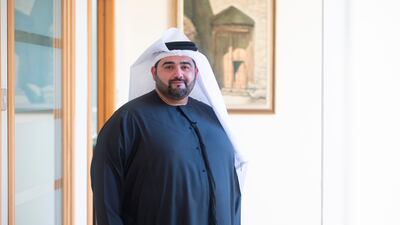
Abdulla Galadari, an Emirati lawyer and senior partner at Galadari Advocates & Legal Consultants in Dubai. Ruel Pableo for The National -
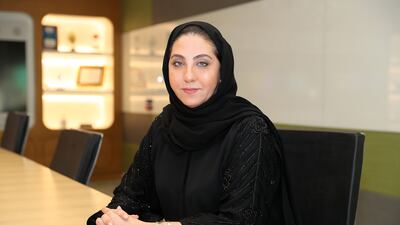
Abir Araki, Emiratisation and nationalisation manager at Cigna Insurance Middle East in Dubai. Pawan Singh / The National -

UAE National Career Fair, World Trade Centre, Downtown, Dubai. Chris Whiteoak / The National -
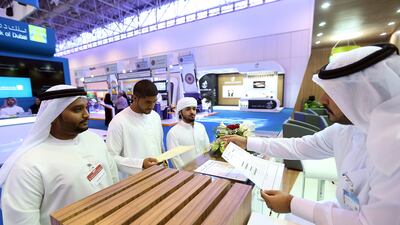
Young men at the Dubai Islamic Bank stand during the National Career Exhibition in Sharjah. Satish Kumar / The National -
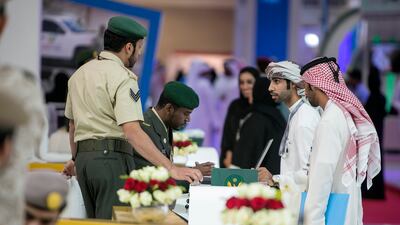
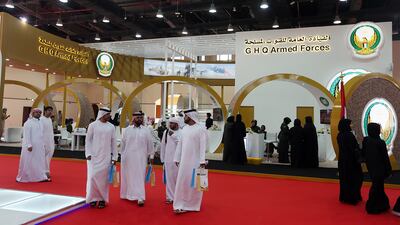
Emiratis at the Armed Services stand at a job fair at Adnec. Silvia Razgova / The National -
Emirati job seekers and students at the RAK Career Fair in Ras Al Khaimah. Satish Kumar / The National -
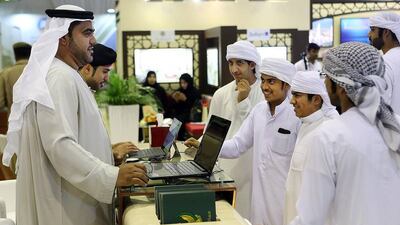
Young Emiratis at a jobs fair in Fujairah trying to get a foot on the career ladder. Satish Kumar / The National



