

A health chief involved in the nationwide effort to crack the genetic code of one million Emiratis and advance treatments for rare and chronic diseases says he wants to see the UAE on top in the field of genomics.
The Emirati Genome Programme – launched in Abu Dhabi in 2019 before being expanded across the Emirates – has collected blood samples and DNA swabs from more than 600,000 citizens.
The mission to map the genetic makeup of the Emirati population was created to foster a better understanding of diseases, pave the way for tailored health care and ensure more preventive medicine is brought to the market.
Mohamed Al Ameri, head of studies and special projects at Abu Dhabi's Department of Health, said the initiative would provide insight into the genetic profile of Arab patients, with previous studies largely focusing on people of European heritage.
-
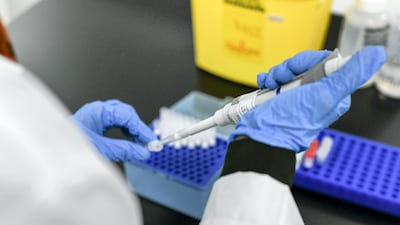
Emiratis in the UAE have been urged to voluntarily give an anonymous blood sample to help expand the data collection for the Emirati Genome Project. All photos by Khushnum Bhandari / The National -

The programme, which officially launched two years ago, has so far collected blood samples and buccal swabs from tens of thousands of people. -
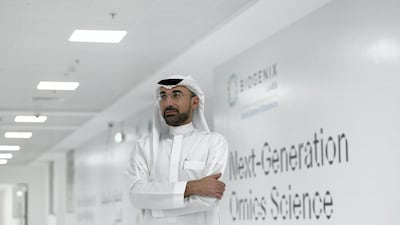
Dr Walid Zaher is the chief research officer for G42 Healthcare and one of the lead researchers for the Emirati Genome Programme -
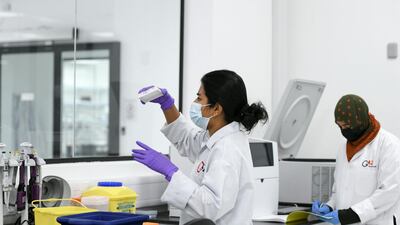
Using the data, experts say they can predict, and in some cases prevent, diseases before they happen -
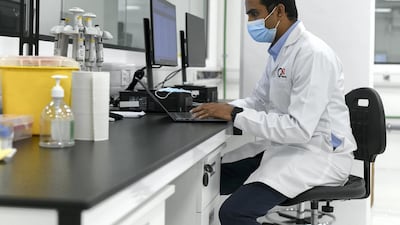
Researchers for the Emirati Genome Programme analyse sample data in the Omics laboratory -
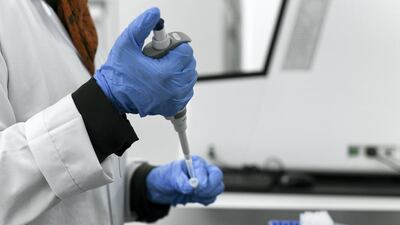
Researchers said the end goal is to collect samples from 100 per cent of the population -
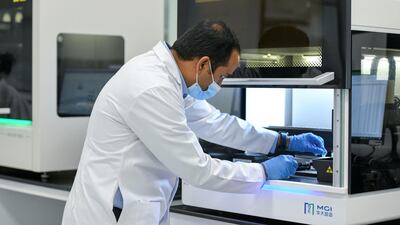
The risk of inheriting a gene mutation increases sharply when closely related individuals marry -
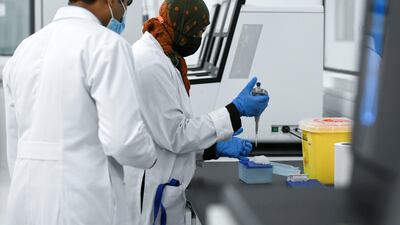
Teams working as part of the programme have already created the first reference genome from more than 1,000 volunteers -
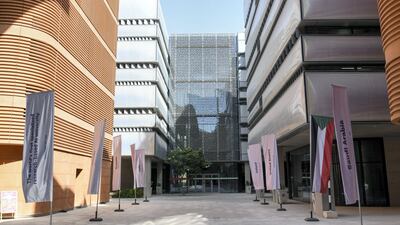
The Omics Centre of Excellence run by G42 Healthcare in Masdar City, Abu Dhabi -
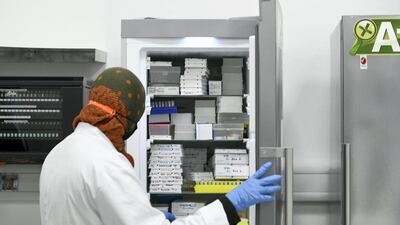
Using biotechnology and Artificial Intelligence, researchers can characterise things like genetic variation and understand how they relate to different diseases -
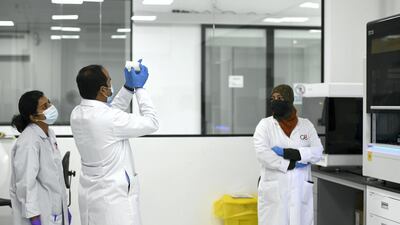
Volunteers can now submit DNA samples at a number of centres across Abu Dhabi including NMC Royal Hospital in Khalifa City, Bareen International Hospital, and NMC Specialty Hospital, Al Ain


“I want to see the UAE on top when it comes to genomics,” said Dr Al Ameri. “But the main goal of this project is to benefit humanity.
“There is a limited representation of the Arab genome reference. The programme will enrich current data by producing a reference genome specific to UAE citizens and drive large-scale scientific discovery.
“The Emirati Genome Programme will equip healthcare practitioners with quality information that will enable them to provide advanced diagnosis, treatment options and personalised and preventive programmes,” he said.
“It will also help to predict and prevent present and future genetic diseases better and implement new therapies for rare and chronic diseases.”
Assessing the root cause of disease
Genome sequencing can help diagnose conditions caused by changes in the DNA.
It is hoped that cancers and other inherited diseases like sickle-cell anaemia could be controlled thanks to such medical advances.
Hereditary cancer accounts for about 10 per cent of cases of the disease worldwide.
Hereditary breast and ovarian cancers originate from specific gene mutations called BRCA1 and/or BRCA2. A simple test can show if a woman carries these genes.
The risk of inheriting a gene mutation increases in the case of consanguineous marriages, which is where second cousins, or closer, marry.
The Emirates Genome Council – established in 2021 – studied 50,000 genetic samples from Emiratis and found more than five million novel gene variants.
The council, headed by Sheikh Khaled bin Mohamed, Crown Prince of Abu Dhabi, is training more than 1,000 medical professionals to support the programme.
“These findings significantly enhance understanding of the local population and have the potential to reshape knowledge of genetic associations with disorders, unlock new insights into pharmacogenomics, and pave the way for transformative advancements in various research areas,” said Dr Al Ameri.
This month, Sheikh Mohammed bin Rashid, Prime Minister and Ruler of Dubai, set out the importance of the initiative at a UAE Cabinet meeting.
“The contribution of more than 600,000 citizens ensures the development of a clear map of genetic and hereditary diseases in the country … and helps in developing medicines specific to these diseases,” said Sheikh Mohammed, who is also Vice President.
“We call on everyone to co-operate with this comprehensive national medical programme in a way that makes our society healthier and our generations healthier.”
A pilot programme for premarital screening will also begin, which will include all genetic and hereditary diseases, Sheikh Mohammed said.
The road to one million
Dr Al Ameri is eager for all Emiratis to take part. Samples can be given voluntarily at many healthcare centres and some malls.
The information provided is strictly confidential and cannot be accessed without the consent of the participant.
In March, an agreement was made to allow Emiratis to provide samples at Saudi German Hospital sites in Dubai, Ajman and Sharjah.
A list of centres where people can give samples is available on the genome programme website.
The Department of Health in Abu Dhabi has already incorporated optional genetic checks into its premarital screening programme, to test for more than 840 medical conditions.

A partnership was announced in October between the Department of Health and health technology company M42 – which operates Abu Dhabi Health Data Services – to allow a broader exchange of health information of participants in the Emirati Genome Programme.
Dr Ahmad Al Awadhi, senior vice president for community outreach at M42, which is playing a key role in shaping the programme, said: "The main slogan is – creating a healthier Emirati society and providing innovative healthcare solutions for our future and generations to come.
“Future generations will thank us for this programme, for offering the best medical care and a healthier society. We ask every Emirati to support this programme.”
He said the UAE was the only country that had gathered more than 600,000 samples in such a short period.

