


Dubai has set out plans to protect beaches against the impact of climate change as part of a Dh355 million ($96.7 million) project.
The emirate will seek to turn the tide against the threat of extreme weather by using more than half a million cubic metres of sand to strengthen natural defences at Al Mamzar and Jumeirah 1 beaches.
This will help to guard against rising sea levels caused by climate change, which are expected to affect coastal cities around the world.
The sustainable development drive is central to a wider programme for both beaches, under the directives of Sheikh Mohammed bin Rashid, Vice President and Ruler of Dubai.
a professor of coastal geomorphology at the University of Plymouth
The move, scheduled for completion in 18 months, comes after experts assessed how best to safeguard the coastline
Nature the first line of defence
Gerd Masselink, a professor of coastal geomorphology at the University of Plymouth in the UK, said there were two ways to deal with coastline challenges posed by changing weather patterns.
One is to use “hard engineering” structures such as sea walls, rock revetments (blocks linked together) or groynes which prevent beach material from moving along the coast.
The other, which is the approach being taken by the Dubai government, is to take a “soft-engineering” approach, of which “beach nourishment”, in this case adding sand, is a leading method.
“It's increasingly used because it's in the forefront of soft-engineering or nature-based solutions,” Prof Masselink said.
“You're trying to mimic nature by recreating a sandy beach rather than putting concrete on it.”
He said in the Netherlands, for example, this was the preferred approach, with sand being dredged from the North Sea and added to the coastline. The Maldives is another part of the world where this happens, with islands raised so they are more resilient.
“[It is] very widely used to combat coastal erosion, particularly in the face of climate change and sea level rise,” he said.
He said this method often had knock-on benefits because, over time, a proportion of the sand would be moved away from the area where it had been deposited and would strengthen neighbouring locations.
Soft-engineering strategies are now “more important and relevant”, in line with thinking around coastal protection becoming “a lot more joined-up”.
“It's not just solving a small local problem, but you have in mind neighbouring areas that may be affected,” Prof Masselink said.
“You're taking a much longer term view rather than solving a problem for the next 10 to 20 years with, at the back of your mind, the rise in sea levels for the next 50 years.”
The plan will be co-ordinated by Sheikh Hamdan bin Mohammed, Crown Prince of Dubai, and Sheikh Maktoum bin Mohammed, Deputy Prime Minister, Minister of Finance and First Deputy Ruler of Dubai.
Revamping public beaches
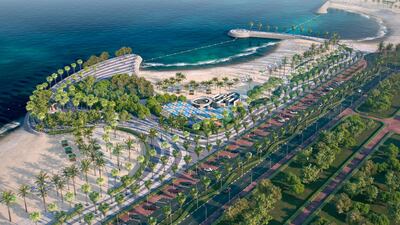
Al Mamzar and Jumeirah 1 beaches will be developed in a project that spans 5.7km (4.3km at Al Mamzar and 1.4km at Jumeirah 1).
The scheme aims to boost tourism and cater to the influx of beachgoers, sports enthusiasts and night swimmers. Dubai’s first beach dedicated to 24/7 night swimming, spanning 300 metres, will be established in Deira.
It will be carried out while keeping the beaches partially open to the public.
Additional features include a 5km pedestrian path, connecting 11km of cycling and running tracks surrounded by trees, and a 200-metre floating bridge connecting both sides of Al Mamzar Beach.
There will be 1,400 parking spaces for cars and buses, including charging stations for eco-friendly vehicles in addition to integrated networks for drinking water stations, irrigation systems and sewage drainage systems spanning 5km.
Beach rescue services will use the latest AI-assisted technology, with enhanced surveillance through more than 100 modern cameras linked to the central control rooms of Dubai Municipality and Dubai Police.
More than 50 investment opportunities will be offered, including water activity rentals, commercial outlets and kiosks, restaurants, self-service food and beverage machines, and advertising spaces.
The plan aims to develop all beaches by 100 per cent, enhance public beach services by 400 per cent, and increase night swimming beach lengths by 56 per cent, the equivalent of 450 metres.
The length of cycling tracks will increase by 285 per cent, equivalent to 15.15km, and running tracks by 125 per cent, equivalent to 11km.
Facilities for disabled people will be provided in line with international best practices.
It aligns with the objectives of the Dubai Economic Agenda D33, Dubai Urban Plan 2040 and the Dubai Quality of Life Strategy 2033.
It comes after the completion of a number of public beach projects in Dubai last year. These included Al Mamzar Corniche, Jumeirah Corniche, Jumeirah 1, Jumeirah 3 and Umm Suqeim 1.
In May 2023, Dubai unveiled a major plan to develop 54km of beaches around Palm Jebel Ali, The Palm Jumeirah and Al Mamzar, and a new beach at Jebel Ali.
The new projects, launched by the Ruler of Dubai, included the development of enclosed beach areas, walkways, cafes and dining areas.
Dubai beach project - in pictures
-
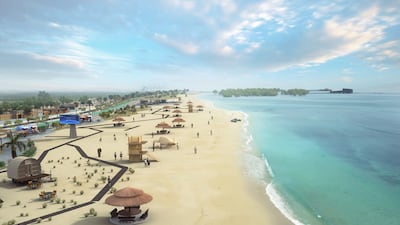
Dubai has unveiled plans to develop 54km of beaches around Palm Jebel Ali and Palm Jumeirah and a new 8km beach at Jebel Ali. Photos: @DXBMediaOffice / twitter -
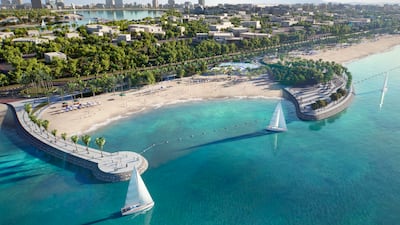
The plans include the development of enclosed beach areas -
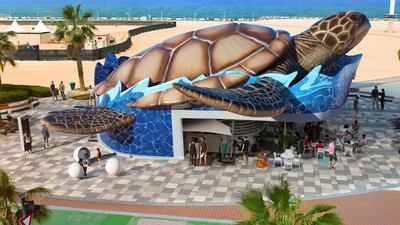
There will be cafes and dining areas -
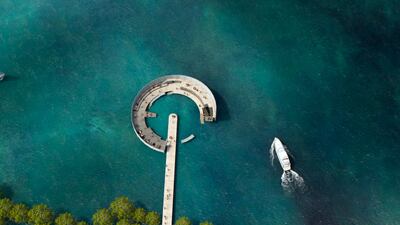
Walkways are included in the project -
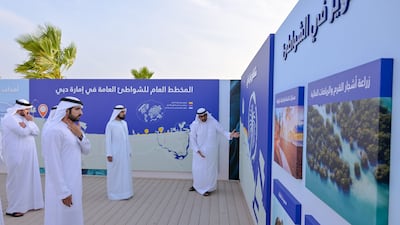
Sheikh Mohammed bin Rashid, Vice President and Ruler of Dubai, and Sheikh Hamdan, Dubai's Crown Prince, viewed the overall plans on Thursday -
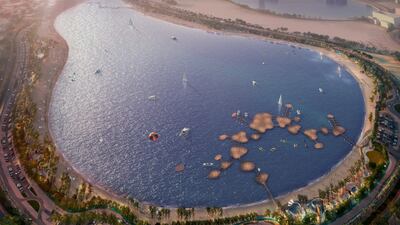
The new beach developments will include new attractions and recreational facilities. -
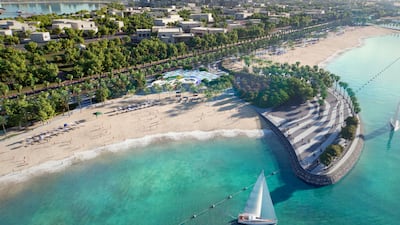
The new beach facilities will increase demand for waterfront properties and resorts as well as attract more tourism. -
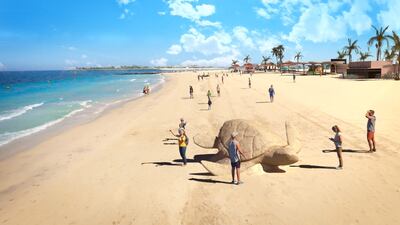
The Jebel Ali beach, developed in collaboration with Nakheel, will include aqua sports facilities, cycling and pedestrian tracks, rest and recreation amenities and a turtle enclosure. -
There will be new pedestrian and cycling tracks, along with the planting of mangrove trees.



