Growing resistance to antibiotics and other medications is a major global health emergency that drug providers and governments need to take more seriously, the head of pharmaceutical giant GlaxoSmithKline has warned.
Antimicrobial resistance (AMR) claims the lives of almost 1.2 million people a year as a result of drug-resistant infections.
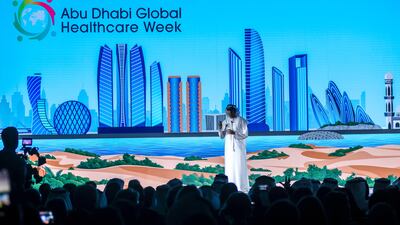
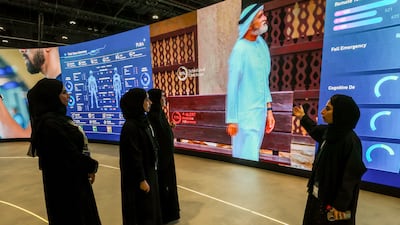
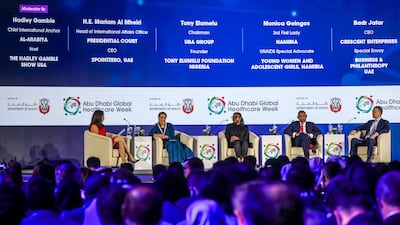
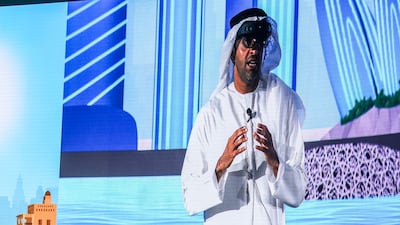
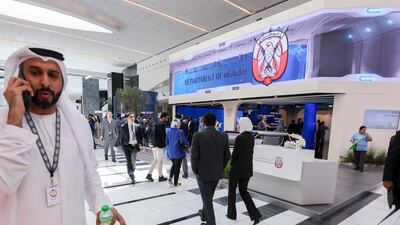
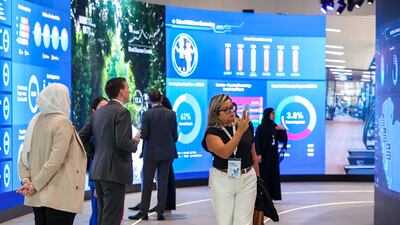
Speaking on the sidelines of Abu Dhabi Global Health Week, Sir Jonathan Symonds, global chairman of GSK, called for a unified approach against the threat.
This is one of the biggest health emergencies the world has
Sir Jonathan Symonds,
global chairman of GSK
“AMR is a central part of infectious disease, it’s not just about preventative vaccines,” Sir Jonathan told The National.
“Millions of people are dying a year through uncontrolled flu infections, partly because there's not enough investment in antibiotics or anti-infective medicines.
“The world needs to embrace AMR more seriously than it does, with much greater education and understanding of the threat of antimicrobial resistance.
“The industry as a whole has got to take it more seriously, as this is one of the biggest health emergencies the world has.”
AMR occurs when drugs used to treat infections caused by bacteria, parasites and viruses are no longer effective.
When these bugs are exposed to drugs over a period of time, they develop resistance, limiting the number of medications at the disposal of doctors to fight infection.
Antibiotic abuse
Over-use of antibiotics worldwide has contributed to the problem, and could make some aspects of modern medicine, such as organ transplants or caesarean sections, too risky in the future.
“Getting ahead of disease and prevention is where we want to become distinctive,” said Sir Jonathan.
“Our view is that health systems around the world cannot continue treating sick people.
“When you look at especially sick people that are ageing with an increasing incidence of chronic disease, the economic cost burden becomes unsustainable.
“We have to allocate more and more of our resources to understand where the optimal point of intervention is by early detection of cancer, or prevention through therapeutics and vaccines, which actually deals with that early stage of disease.
“It is an important moment for both health systems and the industry to find that point of intervention.”
GSK’s global chairman was speaking after the launch of a partnership between the drug manufacturer and the Department of Health, Abu Dhabi, to develop a vaccines distribution hub in the capital.
The collaboration will establish a regional centre, and explore new opportunities to exchange knowledge in Abu Dhabi’s life sciences division to address key public health challenges.
New partnership
The partnership builds on the foundation developed during the Covid-19 pandemic.
In June 2021, Abu Dhabi became the first city to receive Sotrovimab, a GSK-developed drug that eased the symptoms of the most critically ill Covid patients.
More than 23,000 people benefited from the drug, and the partnership opened new doors for research collaboration.
A new GSK vaccine hub is expected to have a similar regional impact, distributing vital immunisation around the world.
“Thanks to Abu Dhabi’s close-knit community, diverse population, and continued investments in healthcare infrastructure, the city is ideally equipped to help make access to quality, responsible innovative healthcare a reality for all,” said Dr Noura Khamis Al Ghaithi, undersecretary of the Department of Health – Abu Dhabi.
“Reinforcing Abu Dhabi’s position as a leading destination for health life science, the department’s collaboration with GSK enhances healthcare services, ensuring drug and vaccine security.
“By cultivating partnerships on the global stage, Abu Dhabi has earned a catalyst role in strategically mapping the future trajectory of the healthcare industry, focusing on improving patient outcomes, strengthening healthcare systems, and promoting equitable access to essential medicines and vaccines.”
Abu Dhabi Global Healthcare Week – in pictures
Dengue%20fever%20symptoms
%3Cp%3EHigh%20fever%20(40%C2%B0C%2F104%C2%B0F)%3Cbr%3ESevere%20headache%3Cbr%3EPain%20behind%20the%20eyes%3Cbr%3EMuscle%20and%20joint%20pains%3Cbr%3ENausea%3Cbr%3EVomiting%3Cbr%3ESwollen%20glands%3Cbr%3ERash%26nbsp%3B%3C%2Fp%3E%0A
Who was Alfred Nobel?
The Nobel Prize was created by wealthy Swedish chemist and entrepreneur Alfred Nobel.
- In his will he dictated that the bulk of his estate should be used to fund "prizes to those who, during the preceding year, have conferred the greatest benefit to humankind".
- Nobel is best known as the inventor of dynamite, but also wrote poetry and drama and could speak Russian, French, English and German by the age of 17. The five original prize categories reflect the interests closest to his heart.
- Nobel died in 1896 but it took until 1901, following a legal battle over his will, before the first prizes were awarded.
Qosty Byogaani
Starring: Hani Razmzi, Maya Nasir and Hassan Hosny
Four stars
The years Ramadan fell in May
Who's who in Yemen conflict
Houthis: Iran-backed rebels who occupy Sanaa and run unrecognised government
Yemeni government: Exiled government in Aden led by eight-member Presidential Leadership Council
Southern Transitional Council: Faction in Yemeni government that seeks autonomy for the south
Habrish 'rebels': Tribal-backed forces feuding with STC over control of oil in government territory
The specs: 2019 Subaru Forester
Price, base: Dh105,900 (Premium); Dh115,900 (Sport)
Engine: 2.5-litre four-cylinder
Transmission: Continuously variable transmission
Power: 182hp @ 5,800rpm
Torque: 239Nm @ 4,400rpm
Fuel economy, combined: 8.1L / 100km (estimated)
Army of the Dead
Director: Zack Snyder
Stars: Dave Bautista, Ella Purnell, Omari Hardwick, Ana de la Reguera
Three stars
The five pillars of Islam
Timeline
2012-2015
The company offers payments/bribes to win key contracts in the Middle East
May 2017
The UK SFO officially opens investigation into Petrofac’s use of agents, corruption, and potential bribery to secure contracts
September 2021
Petrofac pleads guilty to seven counts of failing to prevent bribery under the UK Bribery Act
October 2021
Court fines Petrofac £77 million for bribery. Former executive receives a two-year suspended sentence
December 2024
Petrofac enters into comprehensive restructuring to strengthen the financial position of the group
May 2025
The High Court of England and Wales approves the company’s restructuring plan
July 2025
The Court of Appeal issues a judgment challenging parts of the restructuring plan
August 2025
Petrofac issues a business update to execute the restructuring and confirms it will appeal the Court of Appeal decision
October 2025
Petrofac loses a major TenneT offshore wind contract worth €13 billion. Holding company files for administration in the UK. Petrofac delisted from the London Stock Exchange
November 2025
180 Petrofac employees laid off in the UAE
Mercer, the investment consulting arm of US services company Marsh & McLennan, expects its wealth division to at least double its assets under management (AUM) in the Middle East as wealth in the region continues to grow despite economic headwinds, a company official said.
Mercer Wealth, which globally has $160 billion in AUM, plans to boost its AUM in the region to $2-$3bn in the next 2-3 years from the present $1bn, said Yasir AbuShaban, a Dubai-based principal with Mercer Wealth.
“Within the next two to three years, we are looking at reaching $2 to $3 billion as a conservative estimate and we do see an opportunity to do so,” said Mr AbuShaban.
Mercer does not directly make investments, but allocates clients’ money they have discretion to, to professional asset managers. They also provide advice to clients.
“We have buying power. We can negotiate on their (client’s) behalf with asset managers to provide them lower fees than they otherwise would have to get on their own,” he added.
Mercer Wealth’s clients include sovereign wealth funds, family offices, and insurance companies among others.
From its office in Dubai, Mercer also looks after Africa, India and Turkey, where they also see opportunity for growth.
Wealth creation in Middle East and Africa (MEA) grew 8.5 per cent to $8.1 trillion last year from $7.5tn in 2015, higher than last year’s global average of 6 per cent and the second-highest growth in a region after Asia-Pacific which grew 9.9 per cent, according to consultancy Boston Consulting Group (BCG). In the region, where wealth grew just 1.9 per cent in 2015 compared with 2014, a pickup in oil prices has helped in wealth generation.
BCG is forecasting MEA wealth will rise to $12tn by 2021, growing at an annual average of 8 per cent.
Drivers of wealth generation in the region will be split evenly between new wealth creation and growth of performance of existing assets, according to BCG.
Another general trend in the region is clients’ looking for a comprehensive approach to investing, according to Mr AbuShaban.
“Institutional investors or some of the families are seeing a slowdown in the available capital they have to invest and in that sense they are looking at optimizing the way they manage their portfolios and making sure they are not investing haphazardly and different parts of their investment are working together,” said Mr AbuShaban.
Some clients also have a higher appetite for risk, given the low interest-rate environment that does not provide enough yield for some institutional investors. These clients are keen to invest in illiquid assets, such as private equity and infrastructure.
“What we have seen is a desire for higher returns in what has been a low-return environment specifically in various fixed income or bonds,” he said.
“In this environment, we have seen a de facto increase in the risk that clients are taking in things like illiquid investments, private equity investments, infrastructure and private debt, those kind of investments were higher illiquidity results in incrementally higher returns.”
The Abu Dhabi Investment Authority, one of the largest sovereign wealth funds, said in its 2016 report that has gradually increased its exposure in direct private equity and private credit transactions, mainly in Asian markets and especially in China and India. The authority’s private equity department focused on structured equities owing to “their defensive characteristics.”
Company profile
Company: Verity
Date started: May 2021
Founders: Kamal Al-Samarrai, Dina Shoman and Omar Al Sharif
Based: Dubai
Sector: FinTech
Size: four team members
Stage: Intially bootstrapped but recently closed its first pre-seed round of $800,000
Investors: Wamda, VentureSouq, Beyond Capital and regional angel investors
Jetour T1 specs
Engine: 2-litre turbocharged
Power: 254hp
Torque: 390Nm
Price: From Dh126,000
Available: Now
Specs%3A%202024%20McLaren%20Artura%20Spider
%3Cp%3E%3Cstrong%3EEngine%3A%3C%2Fstrong%3E%203.0-litre%20twin-turbo%20V6%20and%20electric%20motor%3Cbr%3E%3Cstrong%3EMax%20power%3A%3C%2Fstrong%3E%20700hp%20at%207%2C500rpm%3Cbr%3E%3Cstrong%3EMax%20torque%3A%3C%2Fstrong%3E%20720Nm%20at%202%2C250rpm%3Cbr%3E%3Cstrong%3ETransmission%3A%3C%2Fstrong%3E%20Eight-speed%20dual-clutch%20auto%3Cbr%3E%3Cstrong%3E0-100km%2Fh%3A%3C%2Fstrong%3E%203.0sec%3Cbr%3E%3Cstrong%3ETop%20speed%3A%20%3C%2Fstrong%3E330kph%3Cbr%3E%3Cstrong%3EPrice%3A%3C%2Fstrong%3E%20From%20Dh1.14%20million%20(%24311%2C000)%3Cbr%3E%3Cstrong%3EOn%20sale%3A%3C%2Fstrong%3E%20Now%3C%2Fp%3E%0A
CABINET%20OF%20CURIOSITIES%20EPISODE%201%3A%20LOT%2036
%3Cp%3E%3Cstrong%3EDirector%3A%20%3C%2Fstrong%3EGuillermo%20del%20Toro%3Cbr%3E%3Cstrong%3EStars%3A%3C%2Fstrong%3E%20Tim%20Blake%20Nelson%2C%20Sebastian%20Roche%2C%20Elpidia%20Carrillo%3Cbr%3ERating%3A%204%2F5%3C%2Fp%3E%0A