


Concerns have been raised over the cancellation of a series of UN regional climate events viewed as crucial to efforts to cut emissions and protect nations most at risk from the pressing global crisis.
The UNFCCC, organiser of the global Cop climate change summits, said it was unable to deliver the forums this year “due to a lack of funding”.
Four “regional climate weeks” were held around the world last year attracting tens of thousands of people and bringing together policymakers, scientists and, crucially, those on the front lines of climate change, to galvanise the world to act before the annual Cop meeting.
Additionally, they serve as vital listening posts for everyone at the forefront of the climate fight.
Experts warned it could lead to “vital conversations” being lost as the international community seeks to come together to protect the planet.
“Due to lack of funding, UN Climate Change is unable to deliver the regional climate weeks in 2024 and has put them on pause until further notice,” the UNFCCC report said.
Climate experts have reacted with concern to the development with some hoping the decision can be reversed.
Blow for climate co-operation
“Without these events taking place we’re missing vital conversations about how regions in the Global South can reduce emissions and prepare for climate impacts – a big dent for climate co-operation at a time when it’s needed most,” said Tom Evans, policy adviser on climate diplomacy at British think tank E3G.
The lack of funding is worrying and governments need to step up, he added.
Moustafa Bayoumi, research fellow at the Anwar Gargash Diplomatic Academy in Abu Dhabi, said putting the events on pause would represent a “setback” to climate awareness and capacity building.
“It would also come at the expense of inclusion as this limits the participation of a wider audience who might not be able to attend Cops,” he said.

Funding fears
The development comes as UNFCCC chief, Simon Stiell, made an urgent plea at the Copenhagen Climate Ministerial meeting last month to address the body’s funding gap, stating that it is facing “severe financial challenges” that could leave it struggling to help governments tackle global warming.
“Our budget is currently less than half funded,” said Mr Stiell, stating it needed contributions totalling more than €150m over the next two years. Funds typically come from a mix of government and voluntary contributions.
“This is me once again ringing that alarm bell,” said Mr Stiell. “I urge you to respond as soon as possible, to ensure you get the support you need and have requested from us.”
Anne Rasmussen, lead negotiator for the Alliance of Small Island States also expressed concern about the news, saying the climate weeks are an important avenue for the convention process to reach the local level, which is where our people are, while climate campaigner Harjeet Singh, said the revelation was not just disappointing but “a damning indictment of the world's skewed priorities in the fight against climate change”.
“Wealthier nations, whose prosperity has been fuelled by the very practices endangering our planet, have a moral obligation to ensure that these vital dialogues are not only sustained but amplified,” said Mr Singh.
Last year saw four regional climate weeks staged by the UNFCCC and its partners: Africa Climate Week in Kenya; Middle East and North Africa Climate Week in Saudi Arabia; Latin America and the Caribbean Climate Week in Panama; and Asia-Pacific Climate Week in Malaysia.
In Riyadh for example, the event heard important stories of how drought and heat-tolerant crops were giving hope to water-stressed countries, while in Africa the “Nairobi declaration” cemented African states’ unified position on climate issues ahead of the historic Cop28 that saw countries agree to transition away from fossil fuels.
“Progress like this wouldn’t have been possible without key players across the continent coming together for the regional climate week,” said Dulce Marrumbe, head of partnerships and advocacy at WaterAid’s regional office for Southern Africa.
“This was an historic instrument for us as African citizens to hold the global community responsible to delivering the climate financing needed to address the the damage done to our communities through climate change, as well as hold our own governments accountable to our national climate plans."
She also pointed to the African event’s importance in bolstering the participation of communities on the front line of the crisis at last year’s Cop28.
"This included representatives from African Youth organisations, women’s groups, African Civil Society organisations, among others to discuss and bring a collective African voice on climate action," she said.
"Regional platforms provide unique opportunities for communities most affected by climate change from Asia Pacific, Africa, Latin America and the Middle East to come together and discuss climate issues on the global stage."
It is not clear yet if the UNFCCC will decide to stage the events if funding was secured but Ms Marrumbe said the issue should not be allowed to slip through down the ranks.
She urged the African Union and regional bodies across different continents to lead the charge in re-establishing regional climate weeks.
"If the world’s most vulnerable are not at the table, then UN climate talks are no longer fit for purpose.”
Nations at risk due to climate change – in pictures
-

Internally displaced children Ali and Osman Abdulahi stand near carcasses of their family's livestock, killed by severe drought near Dollow, Somalia. Reuters -
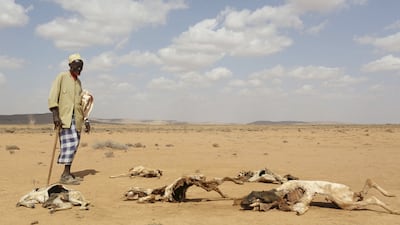
Quick distribution of climate funds agreed at Cop28 will help devastated populations get back on their feet, Somalia’s Deputy Prime Minister Salah Jama has said. Reuters -

Commuters ride on rickshaws on a flooded road after heavy rains in Dhaka, Bangladesh. Reuters -
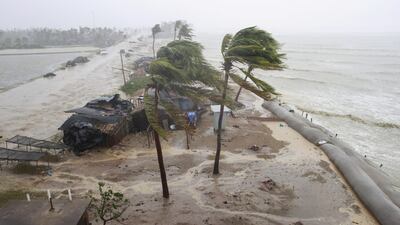
Cyclone Mocha makes landfall near Cox's Bazar, Bangladesh. A rise in extreme weather events around the world has been blamed on global warming caused by man-made greenhouse gases. EPA -
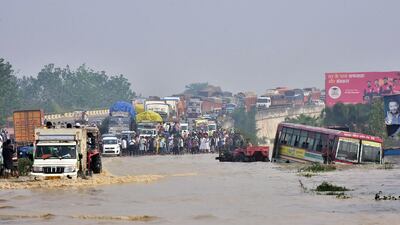
Commuters stand on a flyover, on a flooded motorway near Rampur, in India's Uttar Pradesh state, in 2021. AFP -
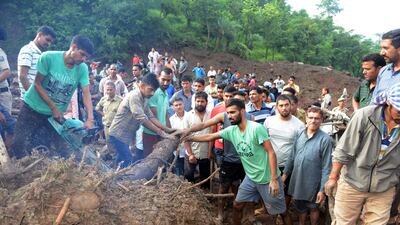
Monsoon floods and landslides killed about 100 people in Nepal and India earlier this year. AFP -
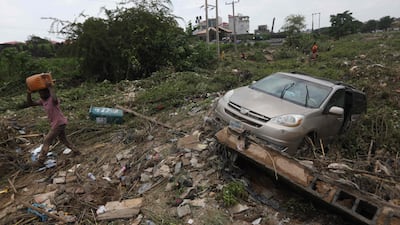
A man walks past a car swept by floodwaters in Abuja, Nigeria, in 2021. AFP -
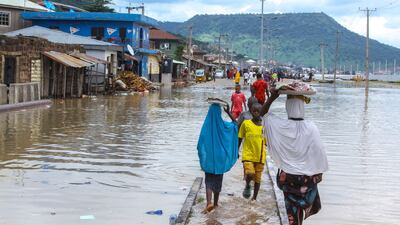
Flooding in Kogi, Nigeria, in October 2022. AP -
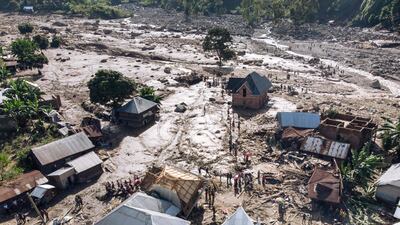
A landslide engulfs Nyamukubi village, eastern Democratic Republic of Congo. AFP -

A landslide in the Mont Ngafula district of Kinshasa, the capital of the Democratic Republic of Congo. AFP -
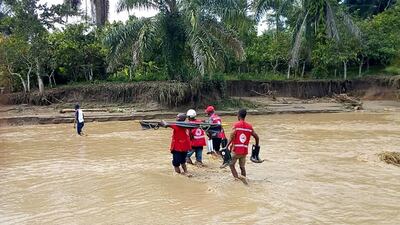
Aid workers crossing flooded areas in Bundibugyo, Uganda. Twitter/UgandaRedCross -
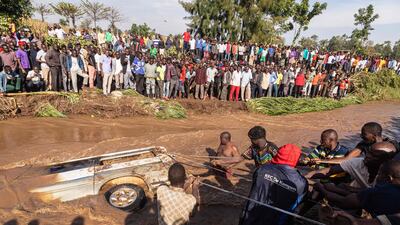
Villagers try to pull up a minibus in which 14 bodies were retrieved, in the river Nabuyonga in eastern Uganda, after flash floods. AFP



