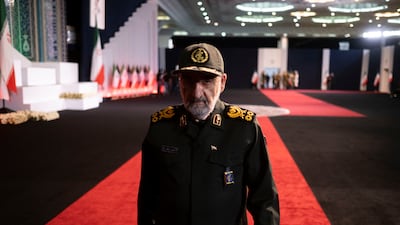
Iran sent seven conditions to the US for reopening the Strait of Hormuz but the American response has been "insufficient", the head of the Supreme National Security Council told state media.
Mohsen Rezaei said Washington had approached Tehran through three channels over the past two months – Pakistan, Qatar and Iraq – asking Iran to present its proposals for reopening the strategic waterway.
“About two weeks ago, we communicated seven conditions to the Americans, stating explicitly that until these conditions are met, the Strait of Hormuz will not be opened to them and no negotiations will take place,” Mr Rezaei said.
“The Americans have now responded. While they have accepted some of our conditions, others remain unresolved.
“We are no longer in the process of responding to the Americans. They have given their reply, and we consider it insufficient. They must clarify the issues that remain ambiguous to us.”
Tehran effectively blocked the strait by attacking ships and laying mines after being attacked by Israel and the US in February at the start of the Iran war. The US has retaliated by imposing a blockade of Iranian ports.
Iran and the US exchanged proposals to end the conflict through mediators during the UN General Assembly at the end of September. Sources close to the Iranian delegation and western diplomats told The National at the time that Tehran offered no concessions from its publicly stated position and was waiting for Washington to respond to demands presented at the talks.
Mr Rezaei said Iran could derive economic benefits from controlling the strait, describing it as a major national asset.
“The Gulf cannot be secure without Iran’s management of the Strait of Hormuz,” he said. “We do not merely mean closing the passage or collecting transit tolls; our interests extend far beyond that. Of course, we can certainly generate economic benefits from the Strait of Hormuz."
The US has rejected Tehran's proposal that Iran and Oman, which sits on the southern side of the strait, should jointly manage the waterway, saying ships should have free passage under international law.