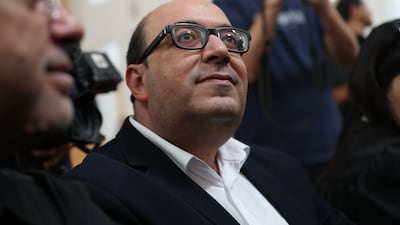

The Supreme Court of Israel has ruled to allow the Joint Arab List and United Arab List to run in this month's general election, overturning a decision by the Central Elections Committee.
The Joint List is a coalition consisting of three parties: the leftist Jewish-Arab Hadash, the left-wing Arab nationalist party Balad and the Arab nationalist Ta'al party.
The Supreme Court also allowed Knesset member and member of the Hadash party, Ofer Cassif, to run but had earlier advised Balad's leader Sami Abu Shehadeh individually to withdraw, indicating that it would uphold his ban if the vote went ahead.
Subsequently, Mr Abu Shehadeh pulled his candidacy. In a video statement on his Facebook page, Mr Abu Shehadeh said the actions taken against him fall under the wider targeting of Arabs in an attempt to exclude them from the political scene. He called his withdrawal from candidacy “the most difficult” decision of his political career.
Only two of the Supreme Court's nine judges had opposed Mr Cassif's candidacy.
“It's a geopolitical persecution. It's not a coincidence that the committee disqualified all representatives of the Palestinian minority and democratic forces,” he told The National. “They want to silence, persecute and terrorise us, and anyone who wants to raise a voice to the hegemonic genocidal one.”
Critics say the Central Elections Committee's push to ban Arab parties from running has demonstrated how unstoppable Israel’s far right has become. Coalition party leaders regularly call for the destruction and resettlement of Gaza but have been still been allowed to run in the elections.
The committee had accused the Arab parties of rejecting Israel as a Jewish and democratic state, supporting armed struggle against Israel and inciting racism. All of the parties reject the grounds for their disqualification.
Mr Cassif called those accusations a “sheer lie” but saw no cause to celebrate the court's decision. “We shouldn't be happy about being allowed to participate in the elections, that should be a natural thing,” he said. “We should be furious at the fact that the Palestinian representative cannot participate, that's the issue.”
The general election scheduled for October 27 will test Prime Minister Benjamin Netanyahu's popularity and the strength of the opposition. The four Arab parties ran together in the 2015 and 2020 elections.

