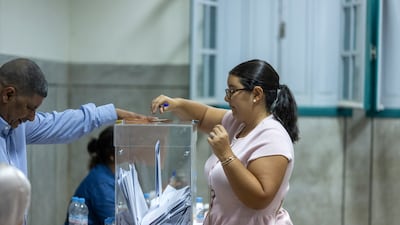
Morocco’s Authenticity and Modernity Party (PAM) has won the most seats in parliamentary elections, putting it at the centre of negotiations to form the next government as the country faces pressure to address youth unemployment and prepare for the 2030 World Cup.
Liberal-centrist PAM won 97 of the 395 seats in the House of Representatives, according to preliminary results announced on Thursday by Interior Minister Abdelouafi Laftit. The National Rally of Independents, or RNI, led by current premier Aziz Akhannouch, took 66 seats, while the right-wing Istiqlal Party won 65 in Wednesday's elections.
The North African kingdom’s election was the first since Gen Z protests a year ago highlighted simmering discontent over job opportunities and public services. It also comes weeks after tens of thousands of Moroccans crossed into the Spanish enclave of Ceuta, sparking panic in the EU.
The result means PAM will need coalition partners to form a government. Under Morocco’s constitution, King Mohammed VI appoints the head of government from the party that wins the most seats.
A possible candidate for prime minister is PAM’s Fatima Ezzahra El Mansouri. If appointed, she would become the second woman to hold such a position in the Arab region, after Tunisia’s Najla Bouden.

The party was boosted by the recruitment of Fouzi Lekjaa, budget minister and football federation chief, who joined the party weeks before the vote and contributed to its campaign.
Mr Lekjaa's profile has grown on the back of his role in making Morocco’s national team a serious contender on the international stage, and he is seen by some observers as another candidate for prime minister. There has been no confirmation that he would accept the role.
PAM, RNI and Istiqlal have governed together since 2021, but relations between PAM and RNI have become increasingly strained. PAM leaders have ruled out renewing their partnership with RNI, potentially complicating coalition talks.
The election also marked a strong recovery for the Islamist Justice and Development Party (PJD), which won 54 seats, up from just 13 in 2021. Former prime minister Abdelilah Benkirane returned to lead the party's campaign.
Outgoing Prime Minister Aziz Akhannouch, a billionaire businessman who has led the government coalition since 2021, is not standing again after stepping down as RNI leader this year.

The vote was marked by low participation. Turnout was about 38 per cent, down from about 50 per cent in 2021 and the lowest level since 2007, when the figure was 36.8 per cent, according to official figures. About 15.8 million of Morocco’s roughly 27 million voting-age citizens were registered.
The next government will also oversee the final stages of a roughly $20 billion infrastructure drive linked to Morocco’s preparations to co-host the 2030 World Cup with Spain and Portugal.
PAM campaigned on plans to create 1 million jobs and expand investment in health care, social protection and wages. The party's victory now leaves it with the task of assembling a governing coalition while responding to a low-turnout election that highlighted widespread political disengagement.

