Fourteen people were killed in the collapse of two residential buildings in Lebanon’s northern city of Tripoli on Sunday that Prime Minister Nawaf Salam blamed on “years of accumulated neglect”.
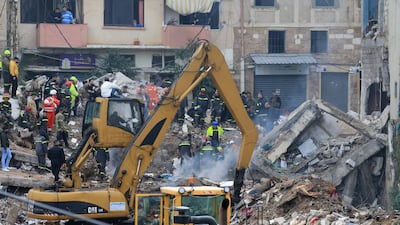
Rescue teams recovered 14 bodies and rescued eight people from the rubble of the buildings in Tripoli’s Bab Al Tabbaneh neighbourhood, civil defence director general Imad Khreiss said on Monday.
The two adjoining buildings neighbourhood comprised six apartments and were home to 22 residents, he said.
The deaths prompted anger across Lebanon but particularly in Tripoli, which has seen protests against what demonstrators say is extensive neglect by housing authorities.
Ashraf Rifi, a prominent Tripoli MP and former commander of Lebanon’s Internal Security Forces, warned of anger in the city after Sunday’s tragedy.
"If an immediate rescue project is not provided for the city of Tripoli, we will not remain silent witnesses to the death of our people under the rubble," he said.
Some businesses stayed closed on Monday in a show of solidarity with the victims, including gold and jewellery traders.
A statement by public sector worker representatives called for "an immediate and transparent investigation" to understand the causes of the collapse.
Tripoli mayor Abdel Hamid Karimeh offered his resignation to the Ministry of Interior after saying earlier that “the situation is beyond the capabilities of the Tripoli municipality”.
-
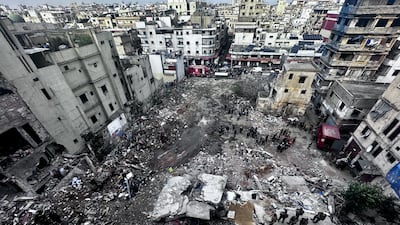
Rescuers work at the site of the collapsed residential building in Tripoli, Lebanon. According to Lebanon's civil defence, 14 people died and eight people were rescued from the rubble of the collapsed building. EPA -
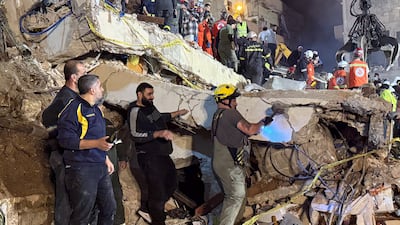
Rescue teams search for survivors. Two adjoining buildings collapsed on Sunday. Each had six apartments, and were home to 22 residents. Reuters -
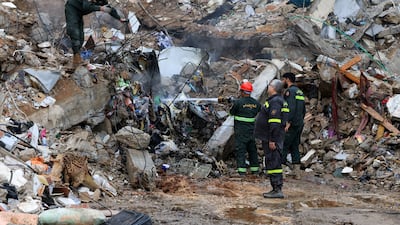
Rescue workers in Bab Al Tabbaneh which is said to be the poorest city in Lebanon where many residents live in unsafe housing. Reuters -
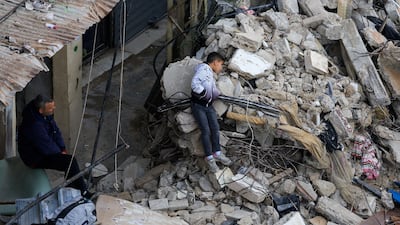
A boy stands amid rubble at the site in the northern city's Bab Al Tabbaneh neighbourhood. Reuters -
Rescue workers at the scene. Prime Minister Nawaf Salam expressed his condolences. Reuters -
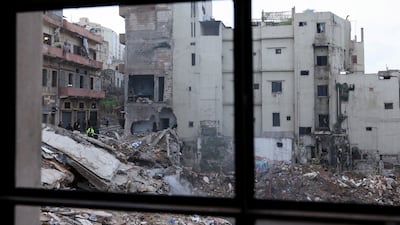
Rescue workers at the site. Mr Salam said the “humanitarian disaster” was the result of "years of accumulated neglect”. Reuters -

Rescue teams search for survivors. Many buildings in the country have been built illegally or without the necessary permits. Reuters -
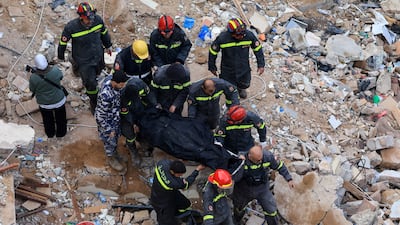
Rescue workers remove a body from under the rubble. Reuters -
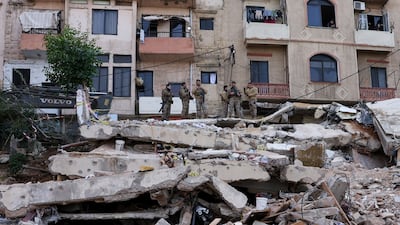
Members of the army at the site. Reuters


Bab Al Tabbaneh is the poorest area of a city said to be Lebanon's most impoverished, in which many live in unsafe housing. Residents have warned for years of impending disaster if the situation was not addressed. In 2023, after a deadly earthquake struck Turkey and neighbouring Syria, residents said many buildings were in danger of imminent collapse because of poor maintenance.
Last month, Bassam Nabulsi, the head of the higher relief authority, said 105 buildings in Tripoli required warning notices for residents to be evacuated.
Many buildings have been constructed illegally or without the necessary permits, while some owners have added new floors to existing blocks.
Prime Minister Nawaf Salam expressed his condolences over “humanitarian disaster” and said the government was ready to provide housing allowances to the surviving residents, as well funds to strengthen old buildings.
Since taking office in January last year, Mr Salam has sought to introduce government reform and accountability. Top Lebanese officials for years have been regarded as effectively outside of the law. Judicial investigations into some of the country's most deadly disasters, such as the 2020 Beirut port blast, have repeatedly faced obstruction.
Lebanon has been mired in economic, political and social crises for years. The recent war between Iran-backed Hezbollah and Israel compounded the country's problems, although Tripoli itself was largely spared from the fighting.

