

After years of anticipation, the Grand Egyptian Museum, only 2km from the Great Pyramids of Giza, is set to formally open its doors to the world on November 1.
After years of delays, the opening ceremony, touted by Egypt's Minister of Tourism and Antiquities Sherif Fathy to be "a night to remember", is expected to mark a turning point for the country's tourism sector, boosting its global appeal and its position as a cultural powerhouse.
In an exclusive interview with The National, Mr Fathy shared insights into the museum’s long-awaited opening, the challenges faced and the government’s ambitious plans for the future of Egypt’s tourism industry.
“We are definitely opening on November 1,” Mr Fathy said. "The inauguration ceremony is coming along nicely and we are currently working on the many details that will go into it. We hope that it will be a great night and are very confident we will host an event everybody will remember."

The Grand Egyptian Museum has been a monumental project in every sense of the word. Under construction for more than two decades, the $1 billion complex is the largest archaeological museum in the world, housing more than 50,000 artefacts, including the complete collection of treasures from the tomb of King Tutankhamun.
Yet the journey has been fraught with delays. November 1 is the fourth opening date the government has set since 2020, when the museum was initially supposed to open but could not because of the Covid-19 pandemic.
An opening scheduled for 2022 was postponed to the following year because of the Russia-Ukraine war and an ensuing economic crisis.
After the war in Gaza broke out in October 2023, the government moved the opening to July of this year, but delayed it again in light of Israel’s attack on Iran the previous month.
“The museum’s opening was delayed for very obvious reasons related to what was happening at home and around us in the region,” Mr Fathy said. He is keeping most details of the grand opening under wraps.
He said several world leaders had already committed to attending the inauguration events, with some expected on the first day and others scheduled to join on the second and third days.
“The main event will be held on November 1, and after that there is a series of smaller special events and receptions planned for the following two days. We will keep the museum closed to the public for three days until November 4."
On November 2 and 3, the museum will be visited by dignitaries and others with special invitations who are unable to attend on the first day.
“We are receiving many guests from different parts of the world and we are extremely eager to receive them here alongside our President [Abdel Fattah El Sisi]," he said. "We are confident that the event will speak for itself.”
Many Egyptians are expecting a lavish event similar to the grand parade held in 2021 to transfer 22 royal mummies from Cairo's Egyptian Museum to the National Egyptian Museum of Civilisation, but Mr Fathy said the Grand Egyptian Museum's opening would take a different approach.
-
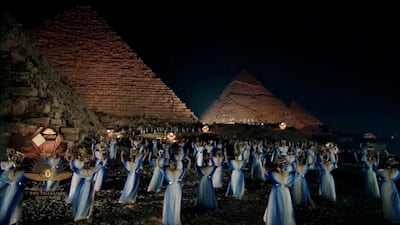
Artists perform near pyramids in a video screened at a ceremony of a transfer of royal mummies from the Egyptian Museum in Tahrir to the National Museum of Egyptian Civilization in Fustat. Reuters -
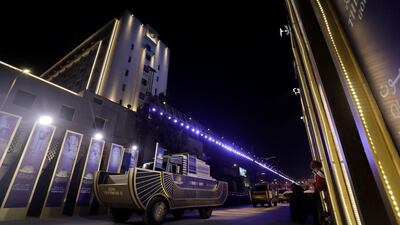
Royal mummies are transported in a convoy from the Egyptian Museum in Tahrir to the National Museum of Egyptian Civilization in Fustat. Reuters -
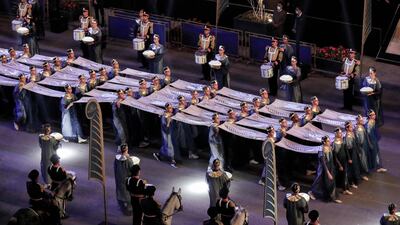
Performers dressed in ancient Egyptian costume march at the start of the parade of 22 ancient Egyptian royal mummies departing from the Egyptian Museum in Cairo's Tahrir Square. AFP -
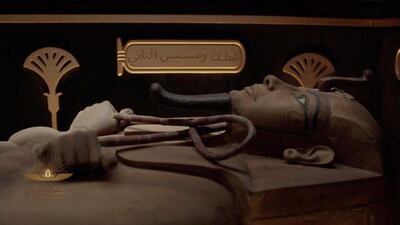
A mummy is seen in a video screened during a ceremony of a transfer of Royal mummies from the Egyptian Museum in Tahrir to the National Museum of Egyptian Civilization in Fustat. Reuters -
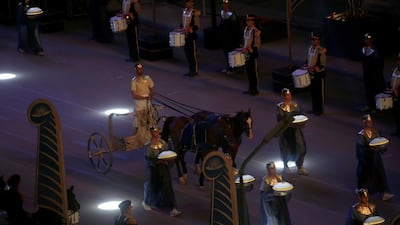
Artists perform during a transfer of royal mummies from the Egyptian Museum in Tahrir to the National Museum of Egyptian Civilization in Fustat. Reuters -
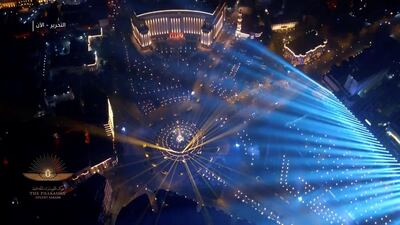
General view of a parade at a ceremony of a transfer of royal mummies from the Egyptian Museum in Tahrir to the National Museum of Egyptian Civilization in Fustat. Reuters -
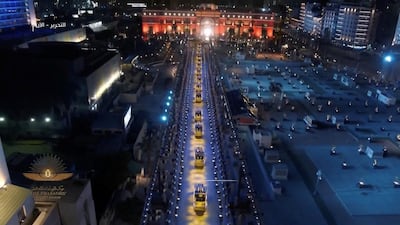
Vehicles are seen during a parade at a ceremony of a transfer of royal mummies from the Egyptian Museum in Tahrir to the National Museum of Egyptian Civilization in Fustat. Reuters -
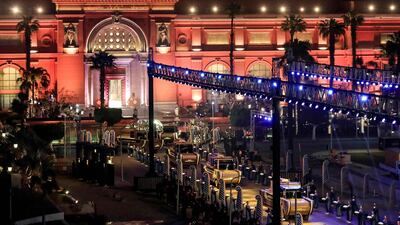
The carriages carrying 22 ancient Egyptian royal mummies depart from the Egyptian Museum in Cairo's Tahrir Square. AFP -
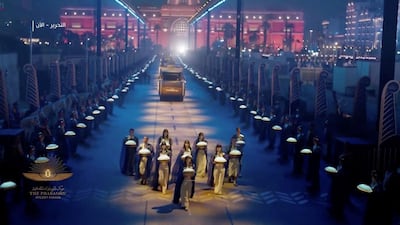
General view of a parade at a ceremony of a transfer of Royal mummies from the Egyptian Museum in Tahrir to the National Museum of Egyptian Civilization in Fustat. Reuters -
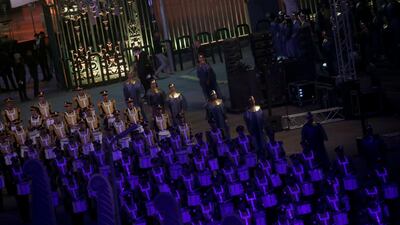
Egyptian police orchestra waits ahead of a transfer of royal mummies from the Egyptian Museum in Tahrir to the National Museum of Egyptian Civilization in Fustat, in Cairo. Reuters -
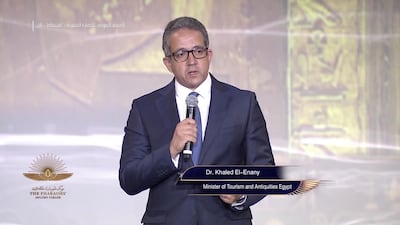
Egypt's Minister of Tourism and Antiquities Khaled El-Enany speaks during a ceremony of a transfer of Royal mummies from the Egyptian Museum in Tahrir to the National Museum of Egyptian Civilization in Fustat. Reuters -
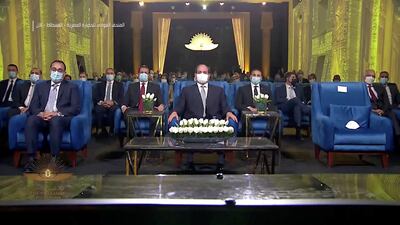
Egypt's President Abdel Fattah El Sisi attends a ceremony of a transfer of royal mummies from the Egyptian Museum in Tahrir to the National Museum of Egyptian Civilization in Fustat, in Cairo. Reuters -
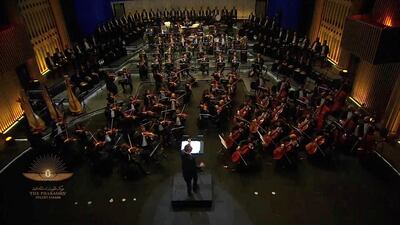
Musicians perform during a ceremony of a transfer of royal mummies from the Egyptian Museum in Tahrir to the National Museum of Egyptian Civilization in Fustat. Reuters -
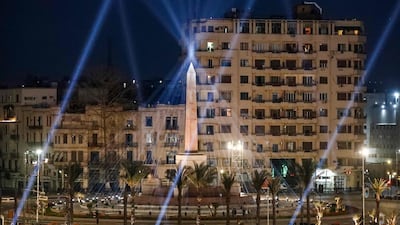
A view of the Obelisk of Ramses II, surrounded by the recently-unveiled and restored four ancient sandstone sphinxes extracted from the Avenue of the Sphinxes in Luxor, in the centre of the main roundabout of Tahrir Square in Egypt's capital Cairo. AFP


“This time, the focus is solely on the museum and the opening ceremony. It’s not about the transfer of artefacts but rather about unveiling the museum itself to the world. There will be performances but I cannot discuss the details,” he said.
The government is optimistic about the museum’s potential to reinvigorate the tourism sector. While some sections have been open to the public since 2024, several new galleries and features will be unveiled at the official opening.
“Currently, we are receiving between 5,000 and 6,000 daily visitors," Mr Fathy said. "We project that number will triple, if not more, after the opening."
This surge is expected to translate into significant economic gains. Tourism, which contributes 8.5 per cent of Egypt’s GDP and provides 2.7 million jobs, is a cornerstone of the country’s economy.
Egypt expects to welcome 18 million tourists this year, up from 15.7 million in 2024.
“It will definitely generate more revenue. But, more importantly, the museum will showcase Egypt’s history in a way the world has never seen before,” Mr Fathy added. “The display and variety of exhibits here are truly unique. I have never seen anything like this collection before.”
He highlighted the King Tutankhamun exhibit as the most exciting addition. The collection, spanning several galleries, includes famous items such as the boy king’s golden mask, throne and chariots.
The state-of-the-art restoration centre will also open its doors to visitors. Specialists will have access to the facilities where they can gain insight into the preservation processes used at the museum, from stabilising ancient papyrus to restoring colossal statues. “Regular visitors can also explore the centre, though it has primarily attracted interest from specialists so far,” Mr Fathy said.

The opening comes as the Ministry of Tourism and Antiquities is under scrutiny after the theft of two ancient artefacts in recent weeks.
A 4,000-year-old limestone painting from Saqqara and a gold bracelet from the Egyptian Museum in Cairo were reported stolen and subsequently melted down, raising questions about the security of Egypt’s archaeological treasures.
Mr Fathy dismissed concerns about the new museum’s security measures. “There is no relation between those incidents and this museum; one incident was a matter of not following procedure and the other was historical,” he said. “The security system here is top-notch, with every measure in place, from cameras to strict procedures. We are confident that this museum is completely secure.”
Designed by Dublin-based Heneghan Peng Architects, the structure draws inspiration from Pharaonic styles, with chamfered pyramid shapes and walls aligned with the Great Pyramid of Khufu and the Pyramid of Menkaure.
Highlights include the hanging obelisk of King Ramesses II, the towering 11-metre statue of the same king, and the Journey to Eternity staircase, adorned with statues of deities and pharaohs.
As the countdown to November 1 continues, excitement is building domestically and internationally. Egyptologists, cultural enthusiasts and global leaders have lauded the museum as a ground-breaking achievement.
For Mr Fathy, it is more than just a museum – it is a symbol of Egypt’s enduring legacy and its vision for the future.
“This is a place that will show the world that Egyptian history is much more than what they have seen before,” he said. “It is a gift from Egypt to the world and we are proud to finally share it.”

