



Afghanistan's women and girls have been forced into increasingly diminishing roles in society since the Taliban's takeover in August 2021, two decades after they were toppled from power.
In the three years since, women's appearance in public, their ability to travel, and opportunities for jobs and education have become highly restricted and policed.
The UN has even said the Taliban's female policies could constitute crimes against humanity and should be investigated.
But the Taliban have also placed restrictions on men's clothing, the length of their beards and the content of radio broadcasts.
Here, The National looks at five of the most repressive measures introduced by the hardline group since they seized power from the internationally recognised government.
Curbs on education
In 2022, girls were forbidden from continuing their education beyond sixth grade. They were also barred from enrolling in universities.
According to the UN, 1.4 million girls have been denied secondary education in Afghanistan since the Taliban takeover.
Many parents have stopped sending their daughters for primary education, even though it is still allowed, because of the diminished prospects of them finding jobs when they are older.
Last year, 63 Afghan women were stopped from travelling to the UAE where they were planning to continue their education after being granted scholarships and visas to study in Dubai.
Limiting jobs for women
Only 200,000 women have been granted permission to work by the Taliban, with the majority prohibited from employment in government offices, curtailing many dreams of becoming doctors, engineers and lawyers, careers widely accessible to women in the 20 years the Taliban were not in power.
-
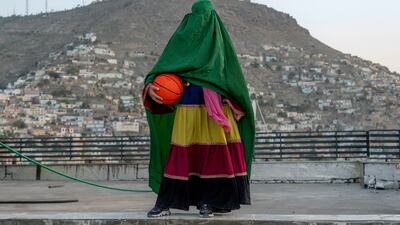
Girls and women in Afghanistan have been barred from playing sports by the Taliban, but some refuse to give up the games they love. All photos: AP -
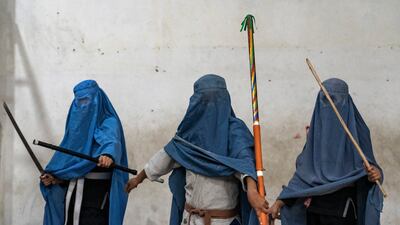
Women took part in sports including the Chinese martial art of wushu before the Taliban returned to power in 2021. Some continue to practise their sports in secret. -
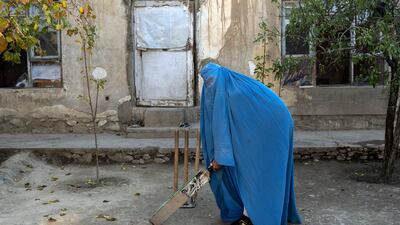
An Afghan woman with her cricket bat in Kabul. The Taliban have issued bans on girls' education and barred women from many types of work. -
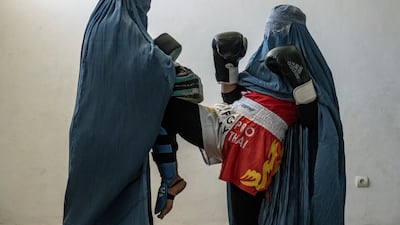
Female Muay Thai enthusiasts in Kabul. Afghanistan's former government introduced national sports programmes and school clubs for women and girls. -
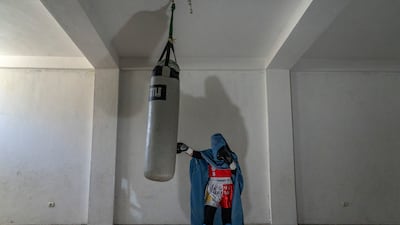
A Muay Thai competitor with a punching bag used for training. -
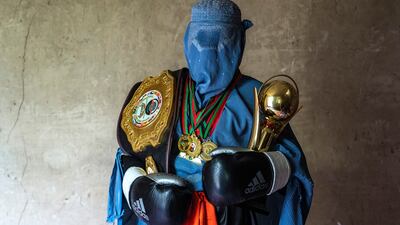
A mixed martial artist with her trophies in Kabul. A female competitor has said she was forced to flee a tournament in the Afghan capital as the Taliban advanced in 2021. -
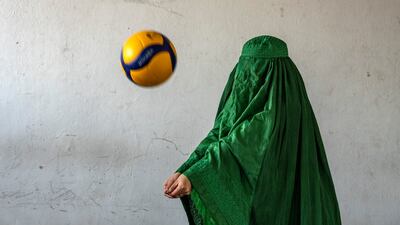
An Afghan woman plays volleyball. The Taliban’s Sports Organisation and National Olympic Committee has said the authorities are looking for ways to restart sports for women. -
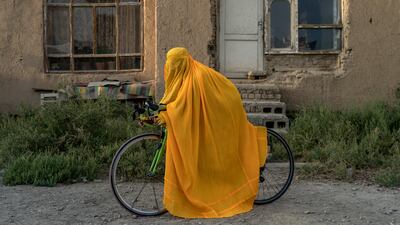
The Taliban have enforced a dress code for women, as well as barring them from education. -
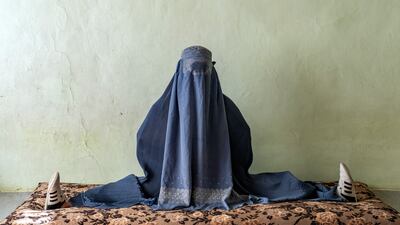
An Afghan girl who once took part in taekwondo. Several women in the country used to practise martial arts. -
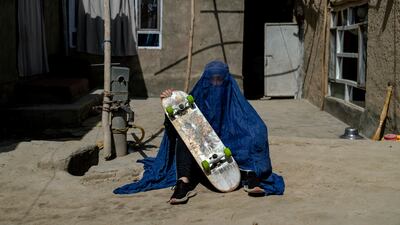
An Afghan girl with her skateboard. Women in once enjoyed sports have faced threats from the Taliban. -
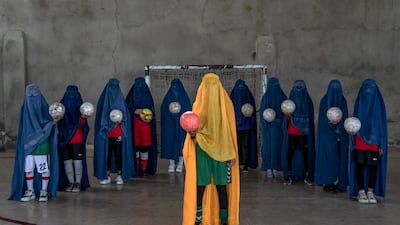
Noura, a female footballer, says she was beaten by her mother when she was 13 after gaining national recognition as the best player in her age category. "That was the beginning of worse days," she says. -
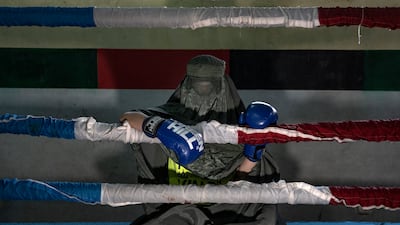
Noura later turned to boxing. She says she cut her wrists and required hospital treatment after the Taliban swept into Kabul. -
A woman with the equipment she used to build strength while practising ju-jitsu.


Women are now required to be accompanied by a legal male guardian, or mahram, on trips exceeding 75km, making it nearly impossible for women who are neither related to nor married to a man to move around.
The Taliban have also placed limitations on where women can go, with sports clubs, parks and public baths off limits.
Such restrictions have led to a massive brain drain from the country, with one think tank estimating that at least 124,000 specialists and highly skilled people left Afghanistan in the first few weeks after the group took over, with "tens of thousands" more leaving subsequently.
Mandatory covering
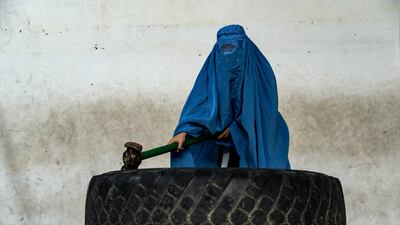
In May 2022, the Taliban mandated that women wear a "proper hijab" in public, widely interpreted to mean the traditional chadari that covers the body and face. Those who do not comply can be detained and denied legal representation.
The UN reported that some women have faced "physical violence, threats and intimidation" in detention.
The law also punishes male guardians of women who had failed to follow the rules. Such men are often forced to sign a letter guaranteeing the women will ensure compliance in future, or face reprisals.
Silencing media and music
Music and other forms of entertainment and artistic expression were banned upon the Taliban's takeover.
The media in Afghanistan is tightly controlled, with limits on what can be broadcast on radio and TV, or published in newspapers.
Reporters Without Borders says 43 per cent of the media industry disappeared within three months of the Taliban's takeover.
"More than two thirds of the 12,000 journalists in the country in 2021 have left the profession. Eight out of 10 women journalists have had to stop working," the group said.
New laws issued by the Taliban's Ministry for Vice and Virtue on Wednesday include the prohibition of content that would be offensive to Muslims, or containing "images of living beings".
Women not seen and not heard
The new laws, ratified by Taliban supreme leader Hibatullah Akhundzada, also ban women from displaying their bare faces in public "for fear of causing temptation", in effect making the wearing of the chadari compulsory.
The law says women's voices are deemed intimate so they should not be heard singing, reciting or reading aloud in public, and they should lower their voices as a form of "modesty".

