
Russia and Ukraine are embarking on their first direct peace talks since February, with neither able to achieve a decisive breakthrough on the battlefield.
US-hosted talks begin in Abu Dhabi on Tuesday, involving Russian and Ukrainian officials with the war approaching its fifth year, and leaked reports suggesting Russia has a toll of more than 440,000 dead since 2022.
US, Russian and Ukrainian representatives have gathered in the city, along with European officials including Jonathan Powell, the experienced UK National Security Adviser who was involved in the Northern Ireland peace negotiations, and two senior EU envoys.

Kyiv suffers daily missiles barrages and returns strikes deep into Russia’s oil refineries. But is the stalemate so entrenched that more fighting is futile and a settlement realistic?

Jared Kushner, US President Donald Trump's chief negotiator, wrote in a post on X that the President was "determined to bring an end to this horrible war, which has caused enormous loss of life, destruction and suffering".
"We are working hard to find a negotiated solution that can deliver lasting peace and create the conditions for a sovereign, secure and prosperous Ukraine within a more stable European security environment," Mr Kushner wrote.

Winter bombing
Despite its overwhelming population advantage – Russia has 144 million people compared to Ukraine’s 33 million – there has been no decisive breakthrough since almost the opening weeks of the war.
That has led President Vladimir Putin to embark on a campaign of bombing Ukraine’s energy sites before winter, something that is proving increasingly successful with Kyiv running out of interceptors, mostly supplied by the US, which has had many stocks depleted by the war against Iran.
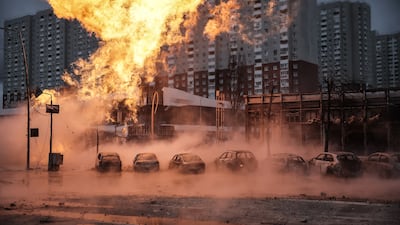
That led to only four of 36 ballistic missiles being intercepted on Saturday night, and the failure to stop many of the about 200 kamikaze drones that Moscow launches daily. The attacks are battering homes and infrastructure to create freezing conditions, devastate morale and force concessions.
Ukraine is striking back using an arsenal largely developed within its borders, causing significant damage to Russia’s oil industry, a major source of state revenue.
Both sides are weathering these blows despite the harm being done to each other.

Peace process hopes
Sitting down to talk for the first time since February could at least herald the first steps towards a peace process, said Alexander Lord, head of European security at the Sibylline intelligence firm.
“It is underscoring the slowly maturing nature of the peace process that more and more are involved in some capacity with the talks,” he said.
Mr Lord cautioned against expectations of any immediate success. “It is unlikely to deliver a strategic breakthrough which will end the war any time soon. It's more part of that slowly building peace process, which will set conditions for the eventual serious negotiations, which are much more likely to come in 2027."
The immediate focus was on agreeing to talks with the two sides still far apart on territory and post-war security arrangements. But it was encouraging, he said, that Mr Zelenskyy had acknowledged Russia would also require security guarantees.

Oleshky example
Experts have also highlighted the temporary ceasefire around the Russian-occupied city of Oleshky – helped by Melania Trump – as evidence that limited agreements can be reached
But Layla Guest, a Russia-Ukraine specialist also at Sibylline, was more sceptical about prospects of progress.
“Dialogue is always good and I think it's important that the two sides sit down, no matter how far apart their stances are on different things,” she said. “But I'm not expecting a major breakthrough, either a ceasefire or a definitive end to the war.”
Moscow is probably paying “lip service” by entering negotiations, preferring to continue its bombardment in the hope that might make Kyiv more inclined to concessions in early 2027.

Midterms impact
Bob Seely, a Russia specialist and author of The New Total War, offered a stronger view of Ukraine's military position, with Russian forces “slightly going backwards”.
The former Conservative MP also believes that the aftermath of the US midterm elections will influence negotiations, suggesting that a Democratic Congress would constrain the influence of pro-Russian elements in Mr Trump’s team.
Mr Lord also said that the third country venue would prove a useful setting for further talks.
For now, neither party appears ready to abandon its central demands. For Mr Zelenskyy, the priority will be securing Nato Article 5-type security guarantees, under which an attack on one ally is treated as an attack on all.
For Mr Putin, it will be how much Ukrainian territory he can gain before bringing Russia’s bloodiest period in almost a century to an end.

