


The UN's Afghanistan rapporteur will tell the Human Rights Council on Monday that the international community's efforts to engage with the Taliban and supply humanitarian aid have emboldened Afghanistan's hard-line rulers.
UN human rights envoy to the country Richard Bennett has said more pressure was needed on Kabul as the rights of women and girls in Afghanistan had continued to deteriorate “incrementally”.
Weeks after a third round of UN-led peace talks with the Taliban in Doha, the UN's special rapporteur to Afghanistan described a hardening of rhetoric leading to tougher conditions in Kabul.
“It's step by step, tightening the grip,” he told a meeting of South Asians for Human Rights, a Colombo-based network. “When it first started, we thought that their rhetoric, that there was a gap between their words and their actions. There's not so much of a gap now, actually, and that's not a positive thing.
Their words have become more harsh, more exclusive, more based around national sovereignty. This is probably in line with the trend internationally, but particularly noticeable in Afghanistan” he said.

When Mr Bennett presents his findings at the UN Human Rights Council meeting, he said he will also call for more international pressure on the Taliban in a three-step plan. “I am in favour of dialogue with the Taliban, but not without a real plan and unity,” he said.
The group who had been fighting a US-led coalition for over 20 years took over the country in 2021, banning girls from attending secondary schools, and women from universities.
Though the Taliban had promised in the early days of its rule not to close schools and issue a general amnesty towards those who were fighting against them, these promises had been overturned. Their attempts to erase women and girls from public arenas have been described as a “gender apartheid”, which activists say should be considered a war crime.
Yet lack of “unity” or “cohesive plan” in the international community meant the Taliban's hardline positions could become further entrenched, Mr Bennett warned.
“The (Taliban's) strengths are the international community's weaknesses. They have an ideology. They have been successful in implementing it. They believe in themselves,” he said.

“The international community has none of those things. It doesn't have a plan, it doesn't have coherence, and it has no confidence in what it's doing either.”
The Security Council Resolution 2721 to appoint a Special envoy in Afghanistan had been a step in the right direction. But the meetings in Doha, from which Afghan civil society was excluded, sent the wrong message.
“A message was sent to the Taliban that they can continue to crack down on human rights and the rights of women and girls especially, and there will be no consequences,” he said.
Humanitarian aid, which many say has been misused by the Taliban, could be restricted as a form of pressure. “I'm not against providing humanitarian support to the people of Afghanistan, but at the moment, we are also emboldening the Taliban with it,” he said.
Afghan women living under Taliban rule – in pictures
-
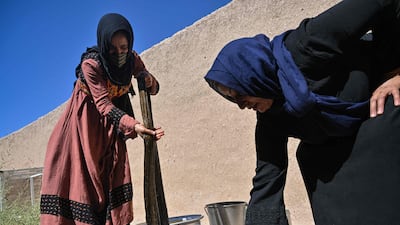
Women wash freshly dyed silk in a factory in Herat province. Whether Afghan girls receive an education under the Taliban is turning into an issue of wealth, young women living under the regime say. AFP -
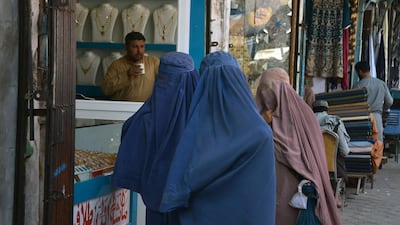
Afghan women walk in a Kandahar market. Even if Afghan girls can receive an education, the likelihood they will be able to put it to any use is low. AFP -
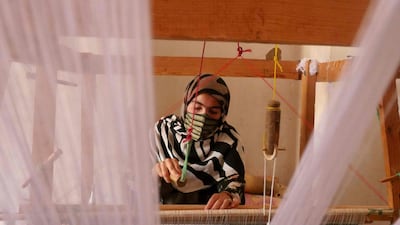
An Afghan women weaves silk to make scarfs and other products inside a workshop in the Zandajan district of Herat province. Many Afghan girls fear the longer they stay away from school, the more pressure will build to conform to patriarchal standards and marry. AFP -
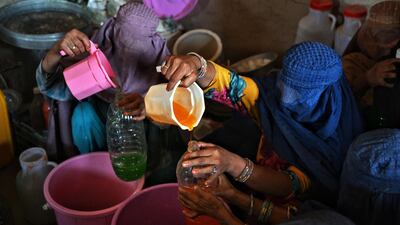
Burqa-clad women work in a shampoo factory in Kandahar. AFP -
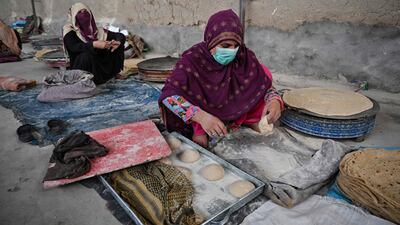
Women make flatbread in a factory in Kandahar. AFP -
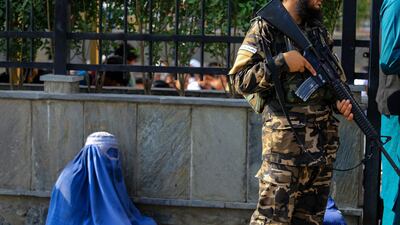
An Afghan woman begs as Taliban fighters stand guard in Kabul. Amnesty International says the Taliban have breached women's and girls' rights to education, work and free movement since they took control of the government. EPA -
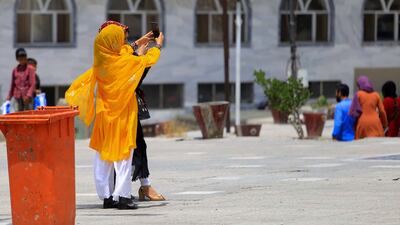
Afghan women take a selfie at a park in Kabul. The rates of child, early and forced marriage in Afghanistan are increasing under Taliban rule, Amnesty International has said. EPA -
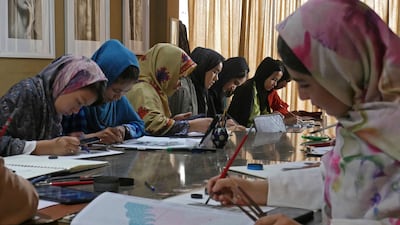
Afghan girls paint at a workshop class in Herat. The World Bank estimates that for each year of secondary education, the likelihood of marrying before the age of 18 decreases by five percentage points or more. AFP -
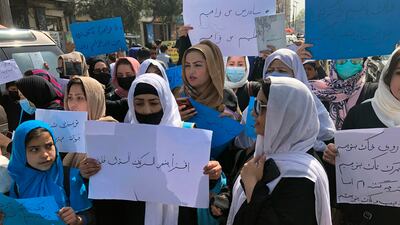
Afghan women protest in Kabul. The lives of Afghan women and girls are being destroyed by the Taliban’s crackdown on their human rights, Amnesty has said. AP -
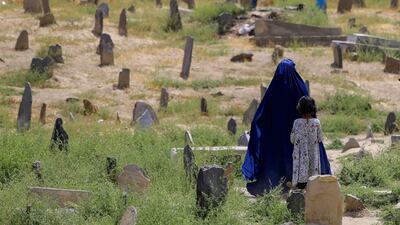
An Afghan woman walks in a graveyard in Kabul. EPA -

Shgofe, an Afghan newscaster, presents a programme on private channel 1TV in Kabul. Female TV presenters and reporters in Afghanistan continue to appear with their faces covered to comply with a mandate issued by the Taliban. EPA -
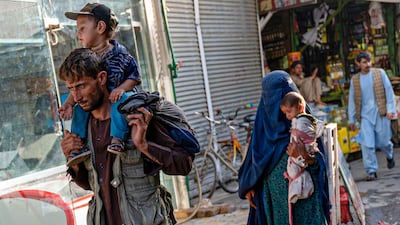
An Afghan family walk past a market near the Pul-e Khishti Mosque in Kabul. AFP -
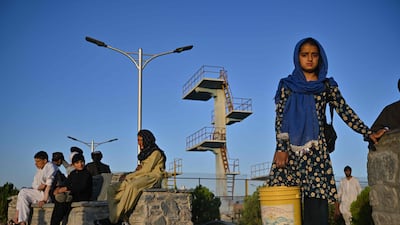
People at Wazir Akbar Khan Hill in Kabul. Whether Afghan girls receive an education under the Taliban is turning into an issue of wealth, young women living under the regime say. AFP -
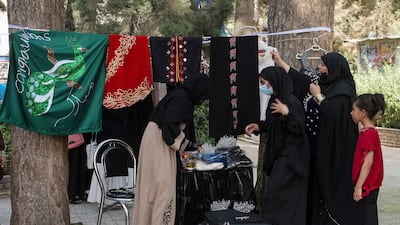
Women browse through garments and fabrics for sale in a stall at a women's handicraft market in Herat. AFP -
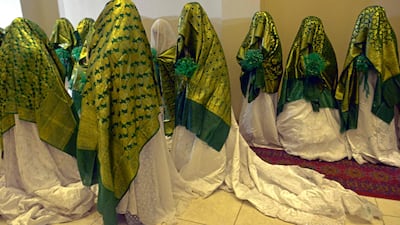
Brides wait for the start of a mass wedding in Kabul. Dozens of Afghan women, concealed in thick green shawls, were married off in an austere ceremony attended by hundreds of guests and gun-toting Taliban fighters. AFP


The US-led coalition in Afghanistan also needed to acknowledge its detrimental role in Afghanistan, with the UN introducing accountability processes that pre-date the Taliban's takeover in 2021.
“There is little or no admission of the by the international community of the its responsibility for the situation that Afghans find themselves in,” he said.
The Taliban needed to be pressured to improve the human rights situation in Afghanistan. “Any normalisation of engagement with the de facto authorities must be based on demonstrable, measurable and independently verifiable, verified improvements and human rights,” he said.
An “all tools” approach to assess the human rights situation in Afghanistan would include the international courts, and an assessment of whether “gender apartheid” was being committed against women and girls.
Transitional justice and accountability shouldn’t start from August 2021, but look at the “root causes”. The International Criminal Court's case on Afghanistan was rightly focused on the Taliban, Mr Bennett said, but did not look at crimes committed by the US-led coalition.
“Afghanistan, suffered four and a half decades of conflict. Some people would say that is not over yet. There have been human rights violations committed by all parties to the conflict over decades. That should be addressed,” he said.

