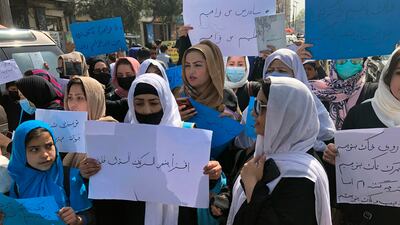
A file photo of Afghan women hold placards reading in Dari 'A Muslim can't go against women's education and work', during a protest as they demand their right to education and work in Mazar-e-Sharif, Afghanistan. EPA / STR
A file photo of Afghan women hold placards reading in Dari 'A Muslim can't go against women's education and work', during a protest as they demand their right to education and work in Mazar-e-Sharif,

Anger as Afghan women kept out of UN-led Doha talks with Taliban


  • English
  • Arabic

The UN-led meeting with the Taliban scheduled to take place in Qatar on June 30 has met with strong criticism from Afghan and international activists for excluding women.

The two-day conference will see the participation of special envoys from 25 countries hoping to engage the Taliban on issues including the economy, aid, narcotics and security.

The absence of women, however, will undermine any meaningful discussion, Afghan women activists have said.

“I don’t have words to express my frustration,” said Fawzia Koofi, a former Afghan parliamentarian and women’s rights activist. “Because the same institution that is supposed to protect world order, justice and dignity of human beings is betraying us this time.”

Since taking over Afghanistan in 2021, the Taliban have severely restricted women’s rights and freedoms including a ban on higher education, employment, public and political participation and even imposed control on movement.

“Yet again, they [the UN] are going along the same rhetoric that the Taliban have maintained and affirming the Taliban’s actions of excluding women as correct,” Ms Koofi added.

Her concerns were echoed by several Afghan women activists inside and outside the country.

“It’s terrifying,” said Fereshta Abbasi, a researcher at Human Rights Watch. “It's a clear violation of the UN’s Resolution 1325.”

She referred to the UN resolution that requires “women’s equal participation and full involvement in all efforts for the maintenance and promotion of peace and security”.

“For three years, Afghan women have had their every right violated,” she said. “The women need to be part of this.”

Afghan women living under Taliban rule – in pictures

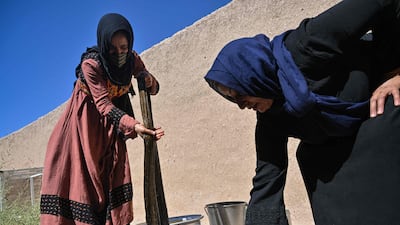
  • Women wash freshly dyed silk in a factory in Herat province. Whether Afghan girls receive an education under the Taliban is turning into an issue of wealth, young women living under the regime say. AFP
    Women wash freshly dyed silk in a factory in Herat province. Whether Afghan girls receive an education under the Taliban is turning into an issue of wealth, young women living under the regime say. AFP
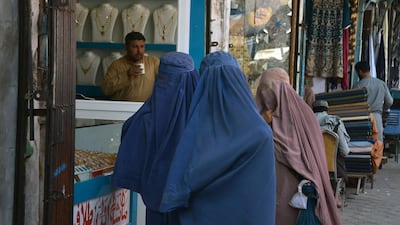
  • Afghan women walk in a Kandahar market. Even if Afghan girls can receive an education, the likelihood they will be able to put it to any use is low. AFP
    Afghan women walk in a Kandahar market. Even if Afghan girls can receive an education, the likelihood they will be able to put it to any use is low. AFP
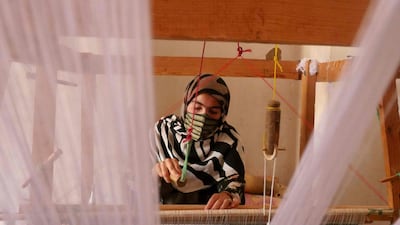
  • An Afghan women weaves silk to make scarfs and other products inside a workshop in the Zandajan district of Herat province. Many Afghan girls fear the longer they stay away from school, the more pressure will build to conform to patriarchal standards and marry. AFP
    An Afghan women weaves silk to make scarfs and other products inside a workshop in the Zandajan district of Herat province. Many Afghan girls fear the longer they stay away from school, the more pressure will build to conform to patriarchal standards and marry. AFP
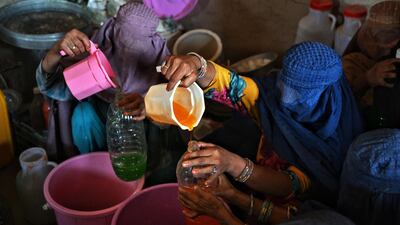
  • Burqa-clad women work in a shampoo factory in Kandahar. AFP
    Burqa-clad women work in a shampoo factory in Kandahar. AFP
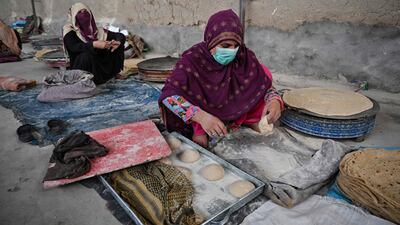
  • Women make flatbread in a factory in Kandahar. AFP
    Women make flatbread in a factory in Kandahar. AFP
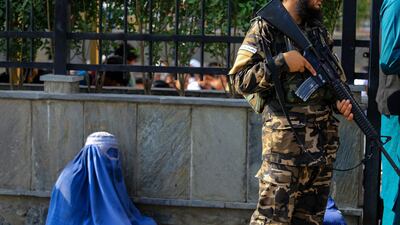
  • An Afghan woman begs as Taliban fighters stand guard in Kabul. Amnesty International says the Taliban have breached women's and girls' rights to education, work and free movement since they took control of the government. EPA
    An Afghan woman begs as Taliban fighters stand guard in Kabul. Amnesty International says the Taliban have breached women's and girls' rights to education, work and free movement since they took control of the government. EPA
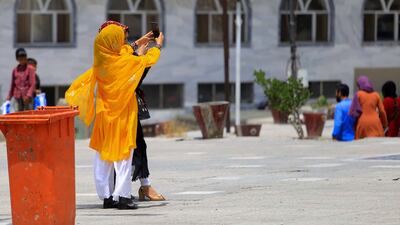
  • Afghan women take a selfie at a park in Kabul. The rates of child, early and forced marriage in Afghanistan are increasing under Taliban rule, Amnesty International has said. EPA
    Afghan women take a selfie at a park in Kabul. The rates of child, early and forced marriage in Afghanistan are increasing under Taliban rule, Amnesty International has said. EPA
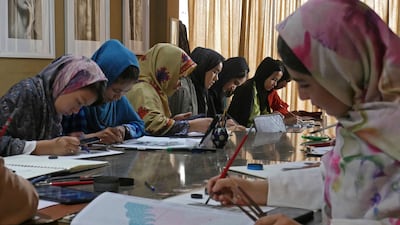
  • Afghan girls paint at a workshop class in Herat. The World Bank estimates that for each year of secondary education, the likelihood of marrying before the age of 18 decreases by five percentage points or more. AFP
    Afghan girls paint at a workshop class in Herat. The World Bank estimates that for each year of secondary education, the likelihood of marrying before the age of 18 decreases by five percentage points or more. AFP
  • Afghan women protest in Kabul. The lives of Afghan women and girls are being destroyed by the Taliban’s crackdown on their human rights, Amnesty has said. AP
    Afghan women protest in Kabul. The lives of Afghan women and girls are being destroyed by the Taliban’s crackdown on their human rights, Amnesty has said. AP
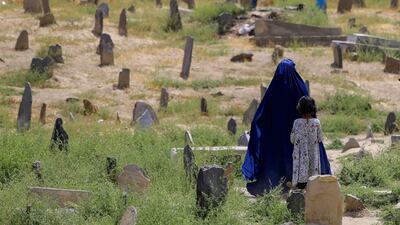
  • An Afghan woman walks in a graveyard in Kabul. EPA
    An Afghan woman walks in a graveyard in Kabul. EPA
  • Shgofe, an Afghan newscaster, presents a programme on private channel 1TV in Kabul. Female TV presenters and reporters in Afghanistan continue to appear with their faces covered to comply with a mandate issued by the Taliban. EPA
    Shgofe, an Afghan newscaster, presents a programme on private channel 1TV in Kabul. Female TV presenters and reporters in Afghanistan continue to appear with their faces covered to comply with a mandate issued by the Taliban. EPA
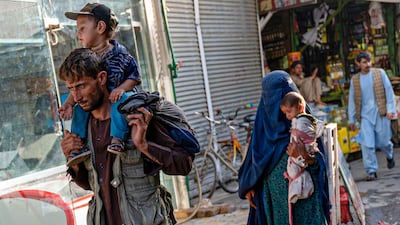
  • An Afghan family walk past a market near the Pul-e Khishti Mosque in Kabul. AFP
    An Afghan family walk past a market near the Pul-e Khishti Mosque in Kabul. AFP
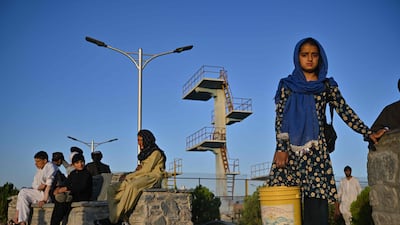
  • People at Wazir Akbar Khan Hill in Kabul. Whether Afghan girls receive an education under the Taliban is turning into an issue of wealth, young women living under the regime say. AFP
    People at Wazir Akbar Khan Hill in Kabul. Whether Afghan girls receive an education under the Taliban is turning into an issue of wealth, young women living under the regime say. AFP
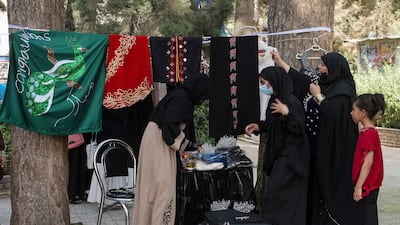
  • Women browse through garments and fabrics for sale in a stall at a women's handicraft market in Herat. AFP
    Women browse through garments and fabrics for sale in a stall at a women's handicraft market in Herat. AFP
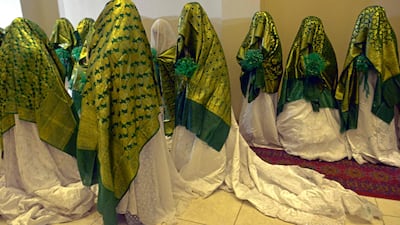
  • Brides wait for the start of a mass wedding in Kabul. Dozens of Afghan women, concealed in thick green shawls, were married off in an austere ceremony attended by hundreds of guests and gun-toting Taliban fighters. AFP
    Brides wait for the start of a mass wedding in Kabul. Dozens of Afghan women, concealed in thick green shawls, were married off in an austere ceremony attended by hundreds of guests and gun-toting Taliban fighters. AFP

The absence of Afghan women from the conference had not gone unnoticed, with outrage from prominent leaders around the globe.

Nobel Peace Prize laureate Malala Yousafzai, who the Taliban shot as she travelled home from school at the age of 15, called the UN’s decision to exclude Afghan women “unacceptable”, in a statement issued on Wednesday.

“It sends all the wrong signals that the world leaders are willing to accommodate the Taliban’s demands and that the girls’ and women’s rights in Afghanistan are not a top priority,” she said.

“There can be no legitimate discussion about Afghanistan's future without women's full participation and leadership,” she said. The Taliban’s “systematic erasure of rights, dignity and livelihoods … amounts to gender apartheid”, she added.

An open letter by the 2024 Global Women Leaders Summit, signed by prominent female political leaders including Hillary Clinton, Julia Gillard and Sanna Marin, among others, called for “Afghan women’s active and direct inclusion” in the talks.

“The international community’s exclusion of Afghan women is outrageous; it will marginalise their voices and undermine their rights,” the letter read. “We must not open a pathway for the Taliban to gain broader legitimacy.”

Allowing the Taliban to dictate the terms of the Doha dialogue “legitimises their draconian abuses, which amount to gender apartheid”, the letter said.

Sanna Marin was among the signatories of an open letter calling for the 'direct inclusion' of women in the upcoming talks. AFP

It is the first such meeting that will include the participation of the Taliban, who refused to attend meetings in March this year and in May 2023.

It was reported that the Taliban set conditions for taking part in the Doha 3 conference, including no discussion of human rights issues.

While the Taliban did not confirm this, a statement on their website defended their demands for “conditional participation” in international meetings.

No Bennet

Afghan women activists have pointed out the UN’s own Special Rapporteur on Human Rights in Afghanistan, Richard Bennett, will not be at the Doha meeting.

Mr Bennett recently presented his report to the UN’s Human Rights Council detailing “systematic violations of women’s and girls’ fundamental rights” in Afghanistan.

“The irony is that the UN is comfortable to engage with this notorious group, the Taliban, whose gender persecution and gender apartheid is confirmed by UN’s own special rapporteur,” said Samira Hamidi, an Afghan women’s rights activist.

The UN has not only ignored the voices of Afghan women and girls but has breached it is own principles, she said, adding this is not the first time that Afghan women have been sidelined in discussions concerning them.

“It is important to note that before the collapse [of the Afghan government], the situation was the same,” she said, urging international envoys and other participants to boycott the meeting.

United Nations Special Rapporteur on Human Rights in Afghanistan Richard Bennett will not be at the Doha meeting. AP

A call for a boycott of the Doha meeting was issued on Monday by the Organisation for Policy Research and Development Studies (DROPS) a women-led research organisation from Afghanistan featuring voices from more than 100 Afghan women inside and outside the country.

“This UN concession to secure the participation of Taliban de facto authorities is a stark betrayal of Afghan women and of our shared values,” said Mariam Safi, executive director of DROPS, explaining the BoycottDoha3.

The campaign calls for women’s rights to be on the Doha agenda and for women and civil society to be at the table during the Doha meetings.

When women are excluded, “those processes become unsustainable and ultimately fail as we saw with the US-Taliban Doha talks and the Intra-Afghan peace negotiations,” she said, referring to the talks that led to the withdrawal of US forces and the eventual collapse of the Afghan government.

Little support

Though the Intra-Afghan talks had four Afghan women, their representation was inadequate and they received little support from the stakeholders involved and were constantly subjected to discrimination and criticism, Ms Safi said.

Ms Koofi, among the four women who were part of the pre-Taliban peace negotiations, also emphasised the need for women’s participation.

“We [the international community] fail to recognise the relevance between women's participation and how it impacts peace and security, let alone that this is a matter of fundamental human rights enshrined in the UN charter that they need to protect,” she said.

And even if it wasn’t part of the UN charter, Ms Koofi added, “women’s inclusion is crucial to security, economy and other issues” that the stakeholders at the Doha conference hope to achieve.

“Doha meetings will not be considered legitimate or credible by Afghan women’s groups and civil society organisations if women are not on the agenda, women are not at the table,” Ms Safi agreed.


World record transfers

1. Kylian Mbappe - to Real Madrid in 2017/18 - €180 million (Dh770.4m - if a deal goes through)
2. Paul Pogba - to Manchester United in 2016/17 - €105m
3. Gareth Bale - to Real Madrid in 2013/14 - €101m
4. Cristiano Ronaldo - to Real Madrid in 2009/10 - €94m
5. Gonzalo Higuain - to Juventus in 2016/17 - €90m
6. Neymar - to Barcelona in 2013/14 - €88.2m
7. Romelu Lukaku - to Manchester United in 2017/18 - €84.7m
8. Luis Suarez - to Barcelona in 2014/15 - €81.72m
9. Angel di Maria - to Manchester United in 2014/15 - €75m
10. James Rodriguez - to Real Madrid in 2014/15 - €75m

How to book

Call DHA on 800342

Once you are registered, you will receive a confirmation text message

Present the SMS and your Emirates ID at the centre
DHA medical personnel will take a nasal swab

Check results within 48 hours on the DHA app under ‘Lab Results’ and then ‘Patient Services’

Origin
Dan Brown
Doubleday

Company%20profile
%3Cp%3E%3Cstrong%3ECompany%3A%20%3C%2Fstrong%3EWafeq%3Cbr%3E%3Cstrong%3EStarted%3A%20%3C%2Fstrong%3EJanuary%202019%3Cbr%3E%3Cstrong%3EFounder%3A%20%3C%2Fstrong%3ENadim%20Alameddine%3Cbr%3E%3Cstrong%3EBased%3A%20%3C%2Fstrong%3EDubai%2C%20UAE%3Cstrong%3E%3Cbr%3EIndustry%3A%20%3C%2Fstrong%3Esoftware%20as%20a%20service%3Cbr%3E%3Cstrong%3EFunds%20raised%3A%20%3C%2Fstrong%3E%243%20million%3Cbr%3E%3Cstrong%3EInvestors%3A%20%3C%2Fstrong%3ERaed%20Ventures%20and%20Wamda%2C%20among%20others%3C%2Fp%3E%0A

Mercer, the investment consulting arm of US services company Marsh & McLennan, expects its wealth division to at least double its assets under management (AUM) in the Middle East as wealth in the region continues to grow despite economic headwinds, a company official said.

Mercer Wealth, which globally has $160 billion in AUM, plans to boost its AUM in the region to $2-$3bn in the next 2-3 years from the present $1bn, said Yasir AbuShaban, a Dubai-based principal with Mercer Wealth.

Within the next two to three years, we are looking at reaching $2 to $3 billion as a conservative estimate and we do see an opportunity to do so,” said Mr AbuShaban.

Mercer does not directly make investments, but allocates clients’ money they have discretion to, to professional asset managers. They also provide advice to clients.

“We have buying power. We can negotiate on their (client’s) behalf with asset managers to provide them lower fees than they otherwise would have to get on their own,” he added.

Mercer Wealth’s clients include sovereign wealth funds, family offices, and insurance companies among others.

From its office in Dubai, Mercer also looks after Africa, India and Turkey, where they also see opportunity for growth.

Wealth creation in Middle East and Africa (MEA) grew 8.5 per cent to $8.1 trillion last year from $7.5tn in 2015, higher than last year’s global average of 6 per cent and the second-highest growth in a region after Asia-Pacific which grew 9.9 per cent, according to consultancy Boston Consulting Group (BCG). In the region, where wealth grew just 1.9 per cent in 2015 compared with 2014, a pickup in oil prices has helped in wealth generation.

BCG is forecasting MEA wealth will rise to $12tn by 2021, growing at an annual average of 8 per cent.

Drivers of wealth generation in the region will be split evenly between new wealth creation and growth of performance of existing assets, according to BCG.

Another general trend in the region is clients’ looking for a comprehensive approach to investing, according to Mr AbuShaban.

“Institutional investors or some of the families are seeing a slowdown in the available capital they have to invest and in that sense they are looking at optimizing the way they manage their portfolios and making sure they are not investing haphazardly and different parts of their investment are working together,” said Mr AbuShaban.

Some clients also have a higher appetite for risk, given the low interest-rate environment that does not provide enough yield for some institutional investors. These clients are keen to invest in illiquid assets, such as private equity and infrastructure.

“What we have seen is a desire for higher returns in what has been a low-return environment specifically in various fixed income or bonds,” he said.

“In this environment, we have seen a de facto increase in the risk that clients are taking in things like illiquid investments, private equity investments, infrastructure and private debt, those kind of investments were higher illiquidity results in incrementally higher returns.”

The Abu Dhabi Investment Authority, one of the largest sovereign wealth funds, said in its 2016 report that has gradually increased its exposure in direct private equity and private credit transactions, mainly in Asian markets and especially in China and India. The authority’s private equity department focused on structured equities owing to “their defensive characteristics.”

The specs

Engine: 1.5-litre 4-cylinder petrol

Power: 154bhp

Torque: 250Nm

Transmission: 7-speed automatic with 8-speed sports option 

Price: From Dh79,600

On sale: Now

Updated: June 28, 2024, 4:54 AM