
Attacks involving vessels in the Black Sea and the Mediterranean have increased sharply, according to the latest data from war monitor Acled, rising from 11 in the first half of 2026 to 52 since the start of July.
The conflict has also extended beyond the immediate war zone, with drone and missile incidents in neighbouring countries nearly doubling.
Recent incidents illustrate how far this is spreading. Ukrainian drones struck the Russian-flagged cargo ship Sparta II, suspected of transporting military equipment, in the Gulf of Finland, setting it on fire and forcing its crew to evacuate.
This week a Russian corvette, the Merkury, and a dry cargo vessel allegedly carrying weapons were struck near the coast of Libya.
Attacks at sea have increasingly focused on vessels suspected of supporting military operations, including ships used to transport weapons, military equipment and fuel. Drones are becoming the weapon of choice, whether from air or sea.
The Baltic Sea has also become an increasingly important area of tension. Russia has a relatively narrow stretch of coastline there, bordered by Nato members Finland and Estonia.
Even before the reported incident involving the Sparta II, Ukraine had carried out a number of strikes in the region, targeting Russian oil infrastructure around St Petersburg, including the terminals at UST-Luga and Primorsk.
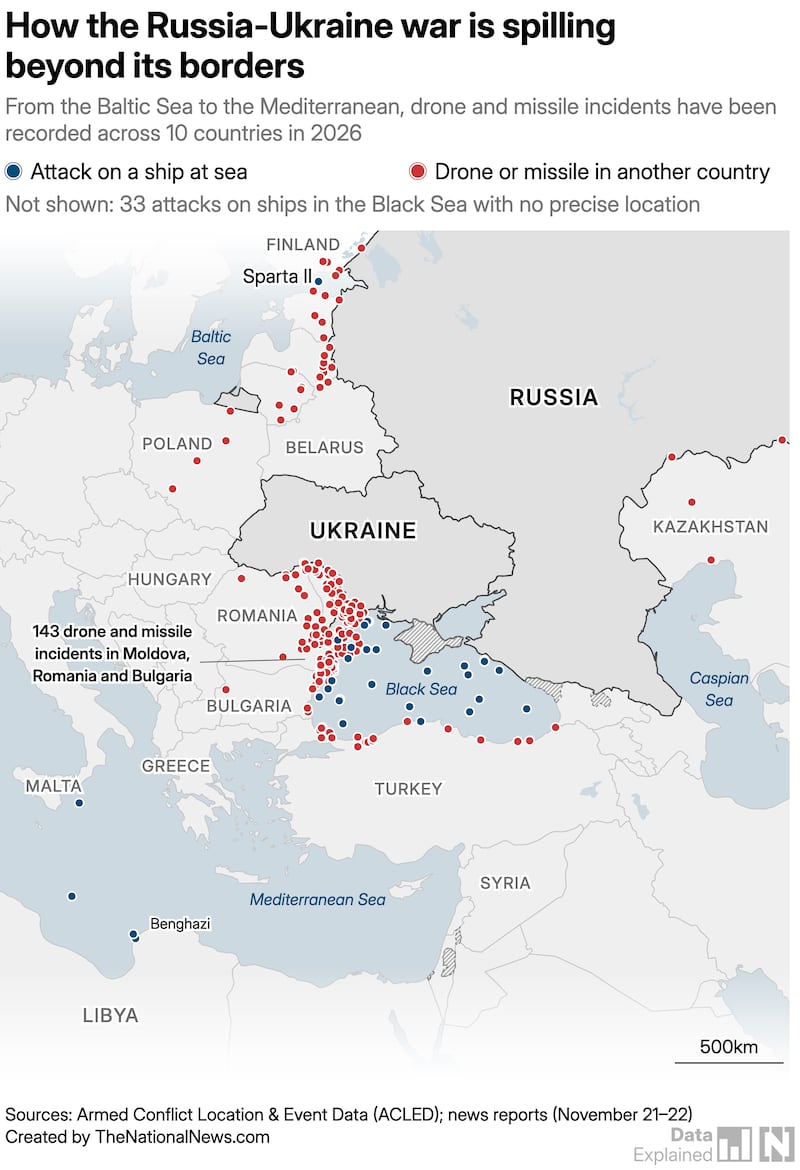
The Black Sea remains another major flashpoint. On Thursday, Ukrainian Prime Minister Sergiy Koretskyi said Russia had attacked two foreign cargo ships carrying more than 100,000 tonnes of grain overnight near the Ukrainian port of Odesa.
Together, these incidents indicate an increasingly complex maritime dimension to the war, with commercial shipping, energy infrastructure and vessels suspected of carrying military supplies all becoming potential targets.

