

The interior of Mar Elias Church in Dweila, a poor Christian neighbourhood of Damascus, lies in ruins. Religious icons have been knocked to the ground, a mix of blood and ash covers the floor, and prayer benches are shattered.
At the entrance, a small but deep crater marks the site of a powerful explosion.
Moments earlier, about 6.40pm, a suicide bomber detonated an explosive vest during Sunday Mass, after opening fire on worshippers gathered outside in the first major terrorist attack since the removal of Bashar Al Assad in December.
The terrorist attack killed at least 20 people and wounded 52.
Blood is everywhere, on the walls, on survivors’ shirts, pooled on the ground, seeping down the steps leading to the church. Even the air is thick with its overwhelming smell.
Chaos and panic gripped the area for hours after the attack, as ambulances rushed to the scene and civil defence teams searched for human remains inside the church.
church bombing survivor
Doctors at Mujtahed Hospital, Damascus’s largest medical centre, told The National that ambulances brought in two bags of unidentified remains.
Witnesses told The National at the scene of the blast that at least one suicide bomber opened fire outside the church before detonating an explosive vest inside, and that there was a second gunman who did not blow himself up.
“One of them ran away, the other didn’t. There were two gunmen,” Nicolas Tadros, a survivor, said a few moments after the attack at the scene.
“We brought five people to the hospital. They were burnt, completely burnt. The explosion was strong. It opened a crater in the church. The explosion … it wasn’t normal. But may God be with us,” he added.
Malatios Shtayeh, a priest who was at the Mass, said he first heard gunfire outside the church and had a different version of events.
-
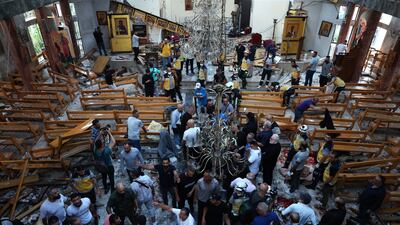
The scene after a deadly blast at the Mat Elias church in Damascus. Getty Images -
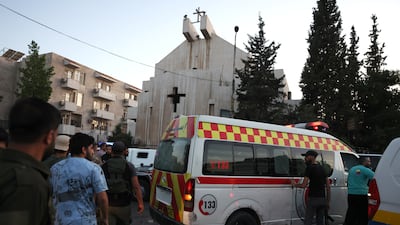
An ambulance outside the church. Getty Images -
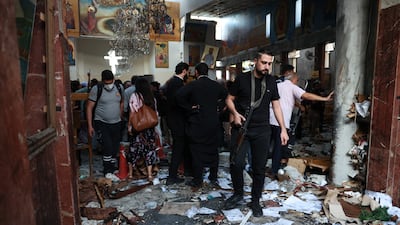
A suicide bomber detonated an explosive vest during Sunday Mass, after opening fire on worshippers gathered outside. Getty Images) -
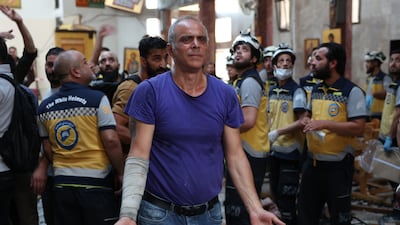
It was the first major terrorist attack since the removal of Bashar Al Assad in December. Getty Images -
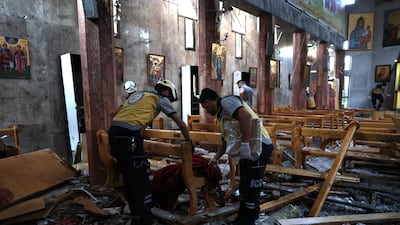
Emergency responders work inside the church. Getty Images -
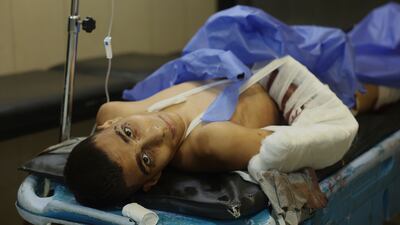
A man injured in the incident. AP -
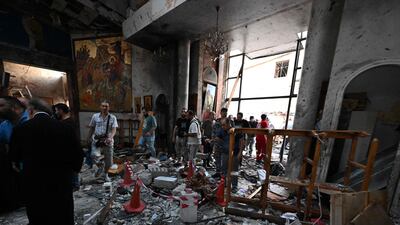
Chaos and panic gripped the area for hours after the attack. AFP -
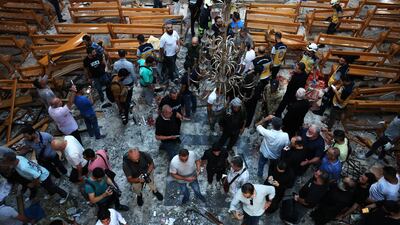
People survey the damage after a deadly blast. Getty Images -
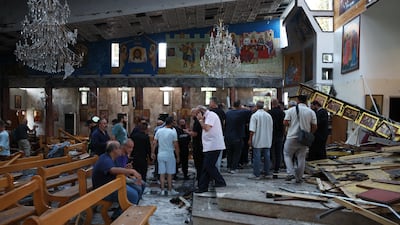
The UAE's Ministry of Foreign Affairs offered condolences and expressed 'strong condemnation of these criminal acts'. Getty Images -
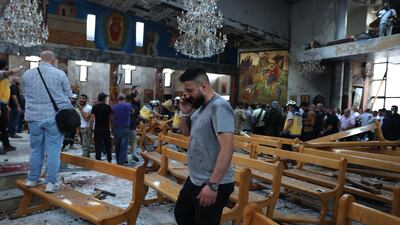
The attack was the first of its kind in Syria in years and comes as Damascus is trying to win the support of minorities. Getty Images -
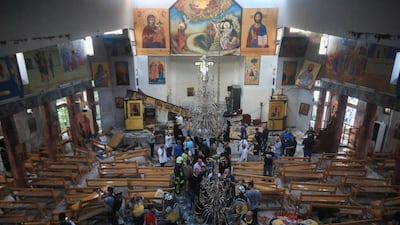
People and rescuers inspect the damage after the attack. AFP -
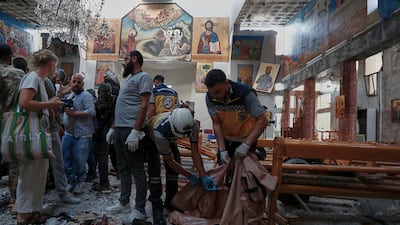
Syrian civil defence workers remove debris inside the church. AP -
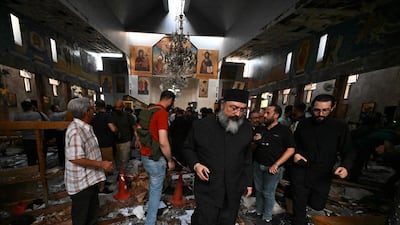
It was the first suicide bombing in Syria in years. AFP -
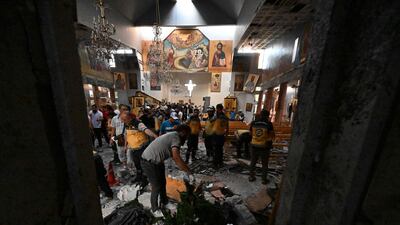
At least one suicide bomber opened fire outside the church before detonating an explosive vest inside. AFP -
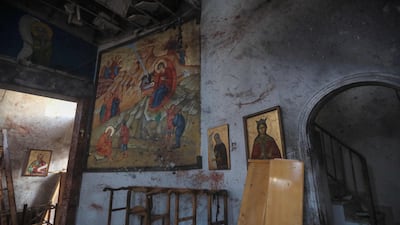
The Ministry of Health has said more than 50 people were wounded in the attack. AFP -
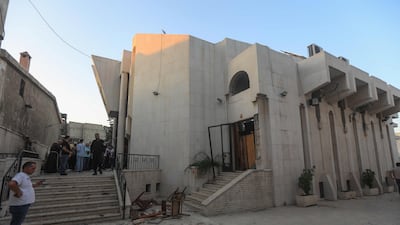
People gather near the church after the attack. AFP -
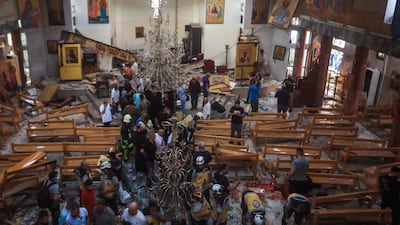
People and rescuers inspect the damage at the church. AFP -
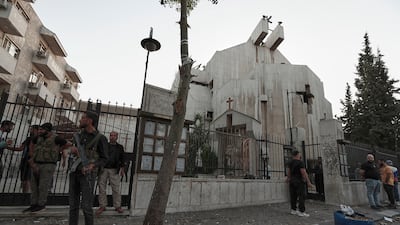
Syrian security forces stand guard outside the church. State media says the suicide bomber was affiliated with ISIS. AP -
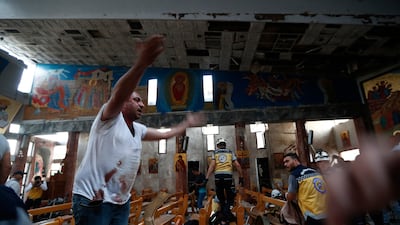
There were about 400 people inside the church at the time of the attack. AP -

The attack comes as Damascus is trying to win the support of minorities. AP


“After the gunfire outside stopped, we started hearing gunfire inside the church about two minutes later,” he told The National.
“Then two people entered with explosive vests strapped to their chests, and blew themselves up.”
Death toll rises
The Ministry of Health told state media that at least 20 people were killed and 52 wounded in an updated toll.
“A suicide bomber affiliated with the terrorist group ISIS entered Mar Elias Church in the Dweila neighbourhood of the capital, Damascus, where he opened fire before detonating himself with an explosive vest,” state media reported.
There was swift condemnation from outside Syria. The UAE's Ministry of Foreign Affairs offered condolences and expressed “strong condemnation of these criminal acts”, state news agency Wam reported.
The UN's special envoy for Syria, Geir Pedersen, expressed outrage at what he called a “heinous crime”.
Tom Barrack, a Syria envoy for US President Donald Trump, said “these terrible acts of cowardice have no place in the new tapestry of integrated tolerance and inclusion that Syrians are weaving.
The attack was the first of its kind in Syria in years and comes as Damascus is trying to win the support of minorities.
As President Ahmad Al Shara tries to exert authority, his government has been carrying out anti-ISIS raids throughout the country since taking power.
Still, many among minority groups have expressed distrust towards the new Syrian government, led by former members of the Islamist rebel group Hayat Tahrir Al Sham, due to its extremist roots.
In a country fractured by 14 years of civil war and haunted by simmering sectarian tension, the church attack has ignited fear and anger in the Christian community.
'Our state didn't protect us'
“We’ve never been used to asking for protection from anyone. We’ve always lived under the protection of God. But we are citizens of this country, and it is the duty of the state to protect us. This is not a privilege the state grants us: it is its responsibility,” Father Shtayeh said.
“But unfortunately, in the face of these so-called individual acts, our state didn’t protect us. It didn’t protect our country,” he added.
The anger was further fuelled as some suggestions at the scene that the attack may have been carried out by remnants of the Assad regime, who launched an insurgency in March.
Damascus Governor Maher Marwan, speaking at the site of the blast, denounced “remnants of the regime” and their “destructive hand in the region”.
“It's an attack against Christian," said Bassem, an employee at the church. "You see it with your own eyes, it's an suicide attack, it's clear. Since the beginning we were afraid that this might happen."
Many say they no longer feel safe. But they cannot afford to go anywhere else. Dweila is a marginalised neighbourhood in Damascus.
“I was born here in Dweila, I will never feel safe again, but where could I go?” asked Hanna Naqoula, waiting at the hospital for his 15-year-old son who was badly injured in the attack.

