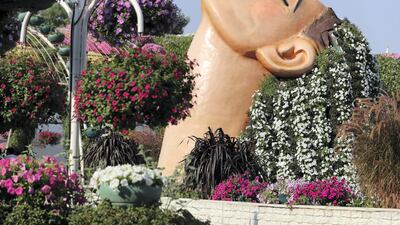

As Dubai prepares to become a green haven under the new urban plan announced by Sheikh Mohammed bin Rashid, Prime Minister and Ruler of Dubai, here are some of the Middle East's most distinctive urban parks.
Majorelle Gardens, Marrakesh, Morocco
-
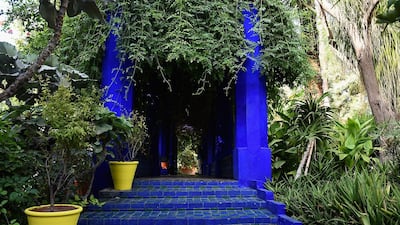
Iconic blue-tiled staircase at the Jardin Majorelle on September 12, 2014 in Marrakech, Morocco. Getty Images -
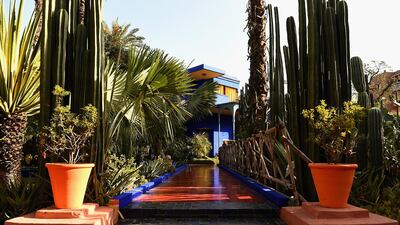
Cacti, banana and coconut trees decorate the Jardin Majorelle in Marrakech, Morocco. Getty Images -
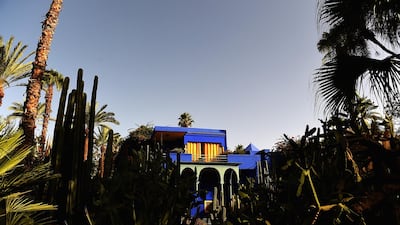
Dense shrubbery is home to many creatures living with the Jardin Majorelle in Marrakech, Morocco. Getty Images -
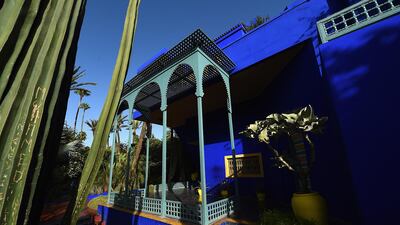
The colour known as Majorelle-blue exemplifies the the Jardin Majorelle built in the 1920s in Marrakech, Morocco. Getty Images -
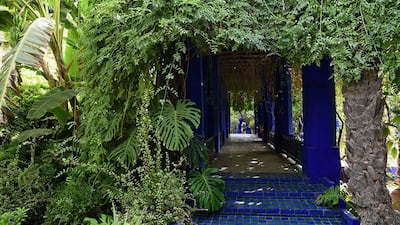
Thousands of tourists usually walk within the Jardin Majorelle in Marrakech, Morocco every day. Getty Images -

The Jardin Majorelle was saved by Yves Saint Laurent in the 1980s. Getty Images


Four decades in the making, this five-hectare garden resonates with birdsong as bulbuls, grey wagtails and turtle doves make their way around the foliage they call home.
Created by French artist Jacques Majorelle in the 1920s, this refuge in the heart of Marrakesh was restored in the 1980s by Algeria-born fashion designer Yves Saint Laurent.
As well as banana trees, bamboo, cacti and water lilies, the Majorelle home has marble pools and channels, feeding the life that thrives there.
The Persian Garden, Iran
-

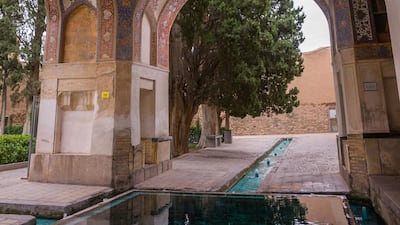
Detail of a painted ceiling in Bagh-e Tarikhi-ye Fin Garden, Isfahan Province, Kashan, Iran. Reuters -
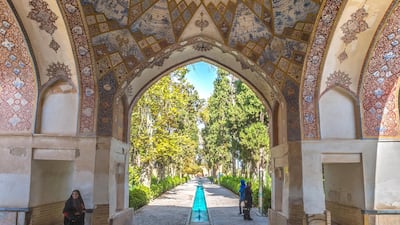
Fin Garden in Kashan city, Iran. Getty Images -
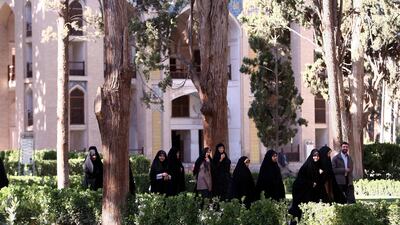
Tourists visit the UNESCO world heritage site of Fin Garden in the city of Kashan, in Isfahan province central Iran. EPA -

A general view of the UNESCO world heritage site of Fin Garden in the city of Kashan, in Isfahan province, central Iran. EPA -
Shotor Galou-e-shah Abbasi in Fin Garden, Isfahan Province, Kashan, Iran. Reuters -
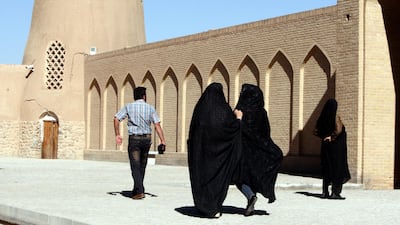
Iranian tourists visit the UNESCO world heritage site of Fin Garden in the city of Kashan, in Isfahan province central Iran. EPA


These nine parks, each in a different province, were recognised collectively by Unesco as epitomising Persian garden design.
Divided into four sections representing the Zoroastrian elements of sky, earth, water and nature, they date back to the sixth century and are thought to have influenced garden design in west Asia and beyond.
“The perfect design of the Persian Garden, along with its ability to respond to extreme climatic conditions, is the original result of an inspired and intelligent application of different fields of knowledge, ie technology, water management and engineering, architecture, botany and agriculture,” Unesco says on its World Heritage website.
The Bahai Gardens, Haifa, Israel
-
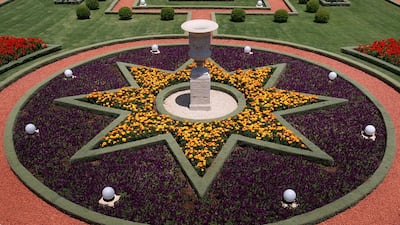
A star-shaped flower-bed honours one of the symbols of Bahaism outside the Shrine of the Bab of the Bahai faith July 14, 2008 in the northern Israeli city of Haifa. Getty Images -

Terraced gardens surround the golden-domed Shrine of the Bab July 14, 2008 in Haifa, Israel. The world spiritual centre of the Bahai faith and resting place for the remains of their founder Bab, whose devotees number less than six million worldwide, was declared a World Heritage Site by UNESCO. Getty Images -
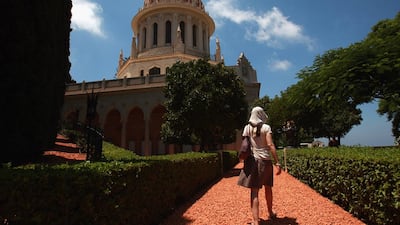
A visitor approaches the golden-domed Shrine of the Bab July 14, 2008 in Haifa, Israel. The world spiritual centre of the Bahai faith and resting place for the remains of their founder Bab, whose devotees number less than six million worldwide, was declared a World Heritage Site by UNESCO. Getty Images -

The golden-domed Shrine of the Bab sits amongst terraced gardens July 14, 2008 in Haifa, Israel. The world spiritual centre of the Bahai faith and resting place for the remains of their founder Bab, whose devotees number less than six million worldwide, was declared a World Heritage Site by UNESCO. Getty Images -

Terraced gardens surround the golden-domed Shrine of the Bab July 14, 2008 in Haifa, Israel. The world spiritual centre of the Bahai faith and resting place for the remains of their founder Bab, whose devotees number less than six million worldwide, was declared a World Heritage Site by UNESCO. Getty Images -

Gardeners tend to one of the 18 terraced gardens that flank the golden-domed Shrine of the Bab July 14, 2008 in Haifa, Israel. The world spiritual centre of the Bahai faith and resting place for the remains of their founder Bab, whose devotees number less than six million worldwide, was declared a World Heritage Site by UNESCO. Getty Images -
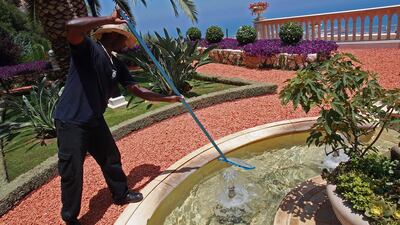
A gardener cleans an ornamental pond in one of the 18 terraced gardens that flank the golden-domed Shrine of the Bab July 14, 2008 in Haifa, Israel. The world spiritual centre of the Bahai faith and resting place for the remains of their founder Bab, whose devotees number less than six million worldwide, was declared a World Heritage Site by UNESCO. Getty Images


Embracing symmetry and the interplay of light and shade, this meticulously designed space includes resting areas in which trees and shrubbery offer respite from the heat.
The variety of plants growing there is intended to celebrate diversity, and it surrounds one of the Bahai faith’s most sacred shrines, the Bab, where the founder of the religion was laid to rest.
Although work on the terrace began in the 1980s, it opened officially in 2001. Seventeen years later, it was declared a Unesco World Heritage Site.
Miracle Garden, Dubai, UAE
-
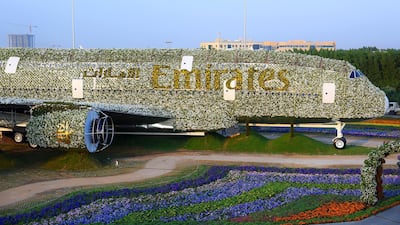
Emirates Airline has teamed up with Dubai Miracle Garden to construct the world’s largest floral installation through a life-size version of the Emirates A380, covered in more than 500,000 fresh flowers and living plants. Courtesy Emirates -
Courtesy Dubai Miracle Garden -
Courtesy Dubai Miracle Garden -
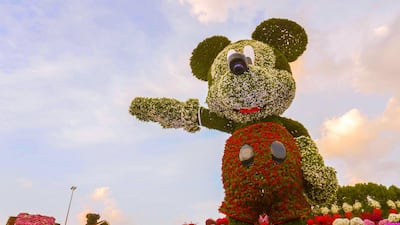
The 18-metre floral Mickey Mouse in Dubai Miracle Garden won the world record for the tallest topiary sculpture. Guinness World Records -

Opening of the new season at the Dubai Miracle Garden. Sunday, November 1st, 2020. Dubai. Chris Whiteoak / The National -
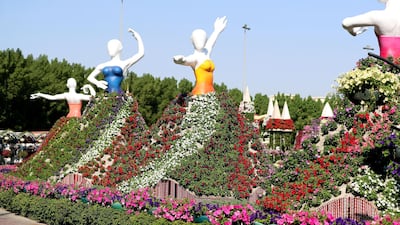
Opening of the new season at the Dubai Miracle Garden. Sunday, November 1st, 2020. Dubai. Chris Whiteoak / The National -
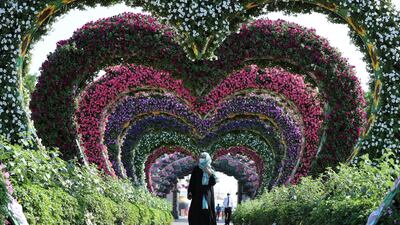
Dubai Miracle Garden is welcoming visitors again subject to strict safety measures. Chris Whiteoak / The National -
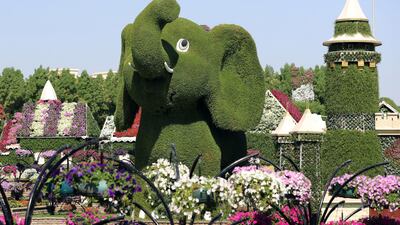
Opening of the new season at the Dubai Miracle Garden. Sunday, November 1st, 2020. Dubai. Chris Whiteoak / The National -

Opening of the new season at the Dubai Miracle Garden. Sunday, November 1st, 2020. Dubai. Chris Whiteoak / The National -
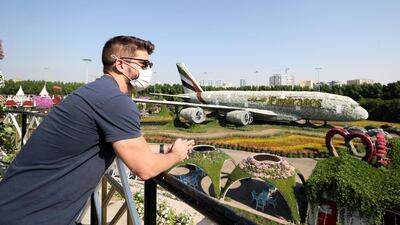
Opening of the new season at the Dubai Miracle Garden. Sunday, November 1st, 2020. Dubai. Chris Whiteoak / The National -
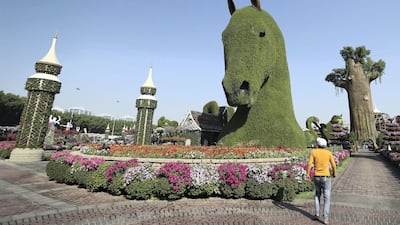
Opening of the new season at the Dubai Miracle Garden. Sunday, November 1st, 2020. Dubai. Chris Whiteoak / The National -
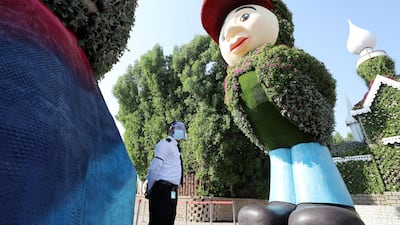
Opening of the new season at the Dubai Miracle Garden. Sunday, November 1st, 2020. Dubai. Chris Whiteoak / The National -

Opening of the new season at the Dubai Miracle Garden. Sunday, November 1st, 2020. Dubai. Chris Whiteoak / The National -
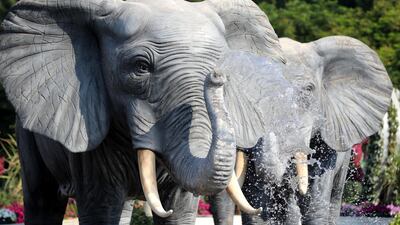
Opening of the new season at the Dubai Miracle Garden. Sunday, November 1st, 2020. Dubai. Chris Whiteoak / The National


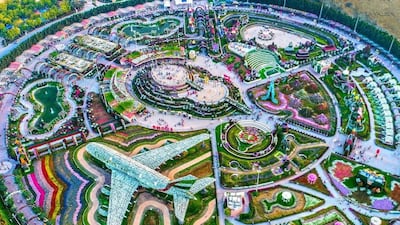
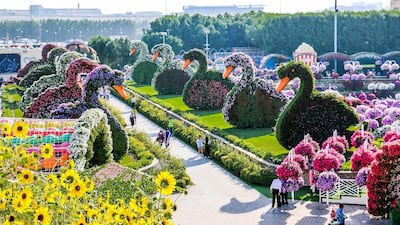
In the Emirati desert, more than 150 million flowers can be seen in full bloom.
The haven opened nine years ago and is alive with vibrant colours and shapes occupying 72,000 square metres.
Not short of superlatives, the world’s largest natural flower garden houses the shell of an Emirates Airbus A380 adorned with half a million plants.
To truly take in every attraction in the Miracle Garden would be near impossible, but it’s certainly worth a try.
Riyadh Green Project
-

Riyadh Green project -

Riyadh Green project -

Riyadh Green project -

Riyadh Green project -

Riyadh Green project -

Riyadh Green project -

Riyadh Green project -

Riyadh Green project -

Riyadh Green project


Launched in 2019, the Riyadh Green Project relies heavily on afforestation, the process of planting trees – 7.5 million, to be precise.
Once complete, parks, mosques, schools, universities and clinics will be filled with lush greenery, as will King Khalid International Airport.
Irrigation networks relying on recycled water will also be built to nurture the trees, some species of which will be selected and sited to offer shade.
Horsh Beirut
-

A general view shows Horsh Beirut in Beirut, Lebanon May 6, 2016. REUTERS/Mohamed Azakir -

P3DFX0 Beirut Public Park (Horsh Beirut) - Lebanon -

epa06962794 Children play at the popular amusement park 'Horsh Beirut' to celebrate Eid Al-Adha in Beirut, Lebanon, 21 August 2018. Eid al-Adha is the holiest of the two Muslims holidays celebrated each year, it marks the yearly Muslim pilgrimage (Hajj) to visit Mecca, the holiest place in Islam. Muslims slaughter a sacrificial animal and split the meat into three parts, one for the family, one for friends and relatives, and one for the poor and needy. EPA-EFE/NABIL MOUNZER -
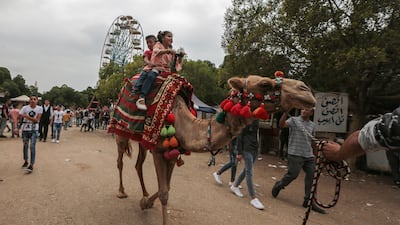
epa06962790 Children ride a camel at the popular amusement park 'Horsh Beirut' to celebrate Eid Al-Adha in Beirut, Lebanon, 21 August 2018. Eid al-Adha is the holiest of the two Muslims holidays celebrated each year, it marks the yearly Muslim pilgrimage (Hajj) to visit Mecca, the holiest place in Islam. Muslims slaughter a sacrificial animal and split the meat into three parts, one for the family, one for friends and relatives, and one for the poor and needy. EPA-EFE/NABIL MOUNZER -
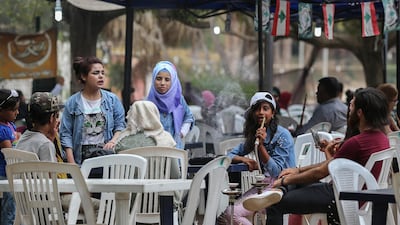
epa06962796 People sit at popular amusement park 'Horsh Beirut' to celebrate Eid Al-Adha in Beirut, Lebanon, 21 August 2018. Eid al-Adha is the holiest of the two Muslims holidays celebrated each year, it marks the yearly Muslim pilgrimage (Hajj) to visit Mecca, the holiest place in Islam. Muslims slaughter a sacrificial animal and split the meat into three parts, one for the family, one for friends and relatives, and one for the poor and needy. EPA-EFE/NABIL MOUNZER


This ancient park was a pine forest in medieval times and has a history as turbulent and fascinating as the city around it. The site of a racecourse in the 1920s, it later hosted Palestinian refugees and was bombed by Israeli jets during the 1982 civil war.
For five years, until Covid-19, it was one of Beirut’s most popular picnic destinations.
Why only five years? Sadly, the government closed the park for restoration after the Lebanese civil war in 1990, and the site remained closed for 25 years.
Public access was later allowed, but remained highly restricted. Hopefully, Lebanon’s Covid-19 and political crises might abate this year, meaning its people can once again enjoy this peaceful retreat.
Zawraa and Qushla parks, Baghdad
-
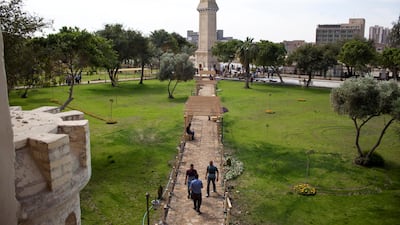
A general view of Qushla park outside the Baghdad Cultural Centre. Getty Images -
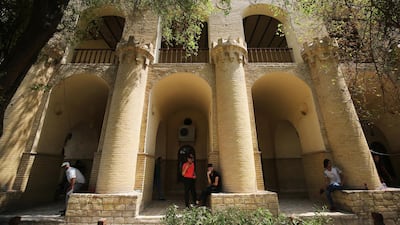
Iraqis visit the park of the al-Qishla clock tower near al-Mutanabi Street in Baghdad. AFP -

Iraqis film a man playing the saxophone in the park near al-Mutanabi Street in Baghdad. AFP -
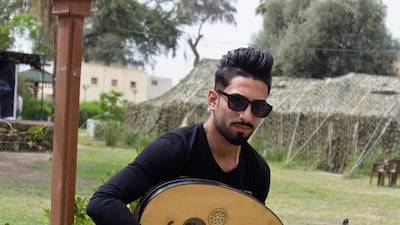
A lute player in Qushla park. Charlotte Mayhew/ The National -
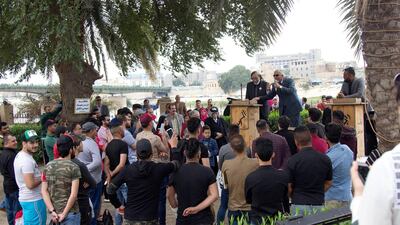
A public poetry reading in Qushla park. Charlotte Mayhew/ The National -

Iraqi families are seen during the International Flowers Festival at al-Zawra park in Baghdad. Reuters -

People visit 9th Flower Festival named "Flower, Culture and Vixtory" at al-Zawra Park in Baghdad. Getty Images -
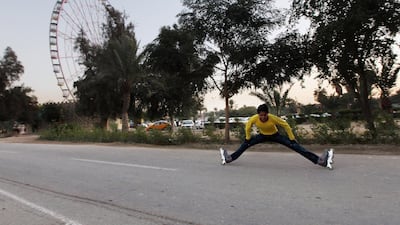
A teenager rollerblades in front of the Ferris wheel at Zawraa Park in Baghdad. Getty Images


Last but by no means least, Baghdad is home to some delightful parks.
Zawraa, which used to be a military base, now contains an amusement park and a zoo, and it hosts a fantastic flower festival each April.
Although the park has closed intermittently owing to the pandemic, members of the public can sometimes visit, after walking through a cloud of disinfectant mist.
Travelling to the park from as far afield as Fallujah, families can take a welcome break from the bustle of Baghdad and perhaps, for a few joyful hours, forget Iraq’s many troubles.
Qushla Park, on the banks of the River Tigris, hosts a 19th century Ottoman clock tower.
Small and scenic, the park is at the end of the capital’s Al Mutanabi Street, home to one of the oldest known book markets in the world.
It often hosts art exhibitions and poetry recitals, such as the one pictured below.

