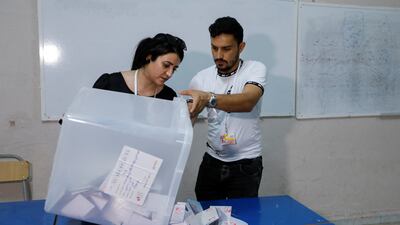
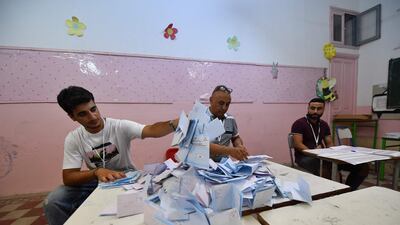
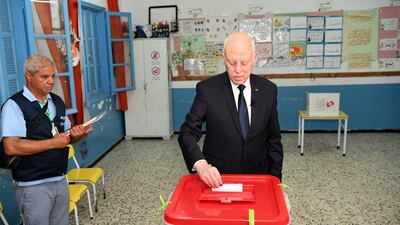
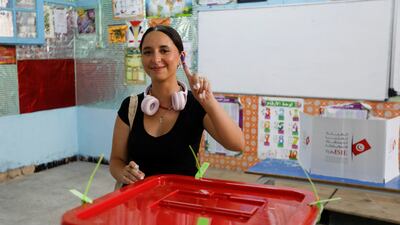
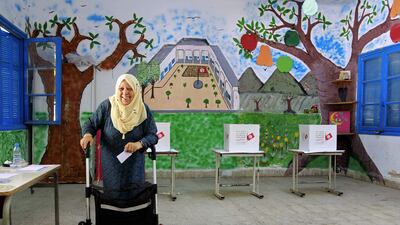
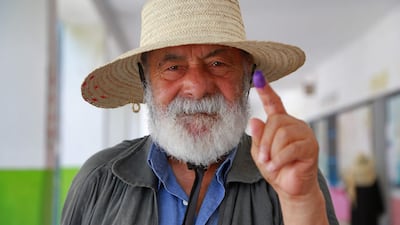
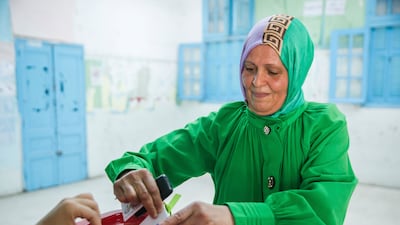
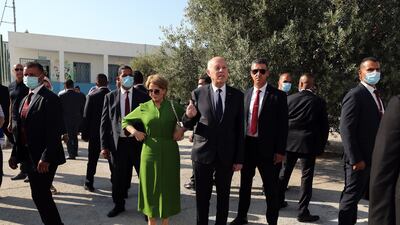
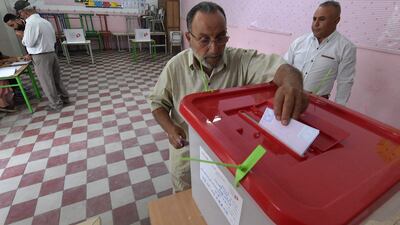
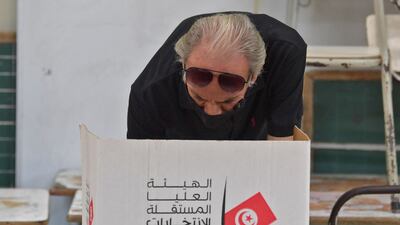
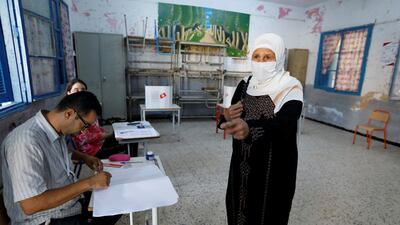
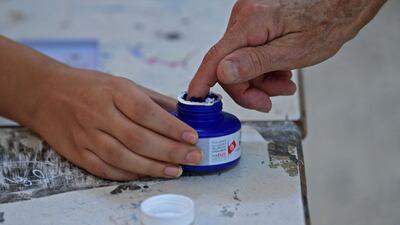
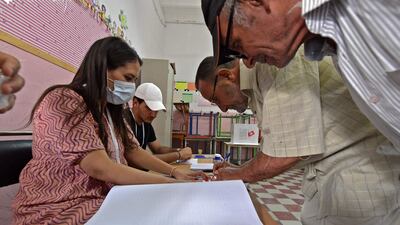
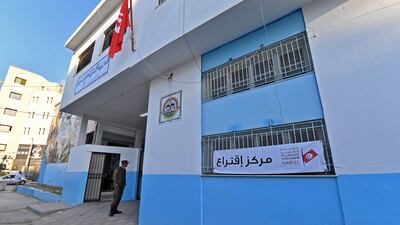
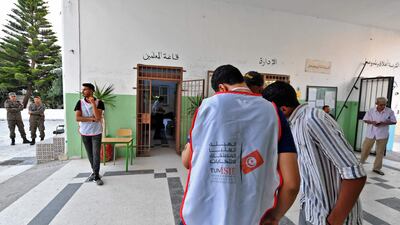
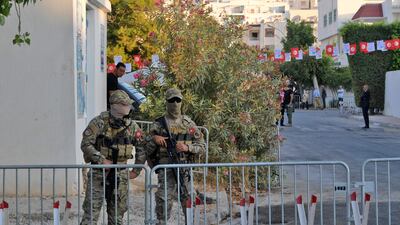
A voter casts his ballot in Kasserine, Tunisia, in December, in elections that drew a poor turnout. AFP

Tunisians prepare to vote for new parliament in second round of elections


Ghaya Ben Mbarek
  • English
  • Arabic

Tunisia’s second round of elections for the Parliament’s House of Representatives is set to take place on Sunday, after inconclusive first-round results last month.

Tunisians in 133 constituencies will be voting in Sunday’s runoffs for representatives in the newly established two-chamber parliamentary system set up under the new constitution. The vote will be for members of the House of Representatives while a date for elections to the second chamber, the National Council of Regions and Districts, has yet to be set.

Since the suspension — and later dissolution — of the previous parliament, Tunisian President Kais Saied has ruled the country through executive decrees as part of what he calls a state of exceptional measures.

After a meeting between Mr Saied and the Minister of Interior, Taoufik Charfeddine, the Tunisian Presidency released a statement on its Facebook page.

“The president of the republic emphasised the need for all concerned parties to adhere to the principle of complete neutrality so that voters could freely express their will,” it said.

Many of Tunisia’s established parties have called for a boycott of the election, saying the political system, which was established under a constitution passed in a referendum with only 30 per cent turnout, was undemocratic.

But despite his previous boycott of the constitutional referendum and his partial disapproval of the new Tunisian constitution, final round candidate Malik Kammoun, 26, said he shared Mr Saied’s vision for the country’s political system.

“After my initial boycott of the referendum, I realised that my ‘No’ would not change anything,” Mr Kammoun, candidate for the Sakiet Zit constituency of Sfax governorate, told The National.

The political science researcher believes Tunisia’s former ‘hybrid’ [semi-presidential, semi-parliamentary] political system is what led the country into political crisis — hence a system that focuses on people instead of parties is something that resonates with him.

“We need the parliament to retrieve its power and to reassume its role as a tool that enshrines local decision-making,” he said.

Tunisians vote in referendum on constitution - in pictures

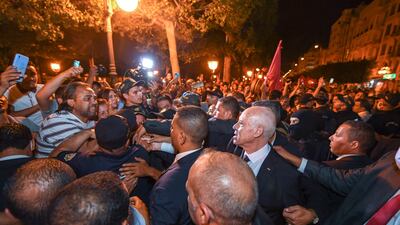
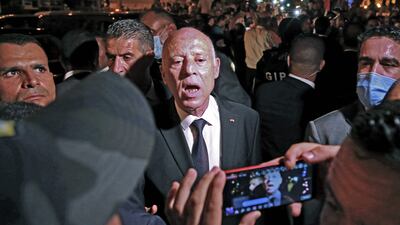
  • Tunisian President Kais Saied (2-R) celebrating with his supporters the almost certain victory of the 'yes' vote in a referendum on a new constitution, after the projected outcome was announced in Tunis. EPA
    Tunisian President Kais Saied (2-R) celebrating with his supporters the almost certain victory of the 'yes' vote in a referendum on a new constitution, after the projected outcome was announced in Tunis. EPA
  • President Kais Saied celebrates with his supporters on Habib Bourguiba Avenue, Tunis. The referendum was on a new constitution that strengthens the powers of the head of state. AFP
    President Kais Saied celebrates with his supporters on Habib Bourguiba Avenue, Tunis. The referendum was on a new constitution that strengthens the powers of the head of state. AFP
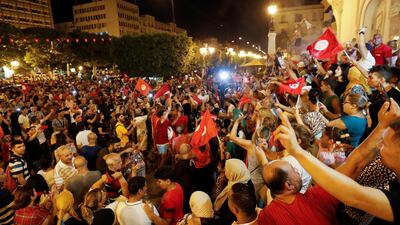
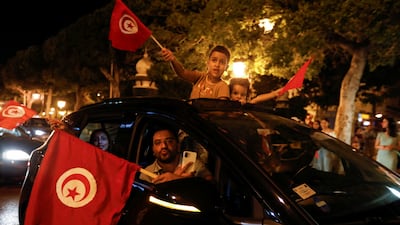
  • President Kais Saied supporters celebrate. Reuters
    President Kais Saied supporters celebrate. Reuters
  • President Kais Saied supporters celebrate in Tunis after the exit poll indicates voters backed Tunisia's new constitution. Reuters
    President Kais Saied supporters celebrate in Tunis after the exit poll indicates voters backed Tunisia's new constitution. Reuters
  • Farouk Bouasker, president of the Independent Higher Authority for Elections, in Tunis. AFP
    Farouk Bouasker, president of the Independent Higher Authority for Elections, in Tunis. AFP
  • Members of the election committee open the ballot box at a polling station in Tunis. Reuters
    Members of the election committee open the ballot box at a polling station in Tunis. Reuters
  • Employees of the Independent Higher Authority for Elections begin counting the ballots. AFP
    Employees of the Independent Higher Authority for Elections begin counting the ballots. AFP
  • Tunisia's President Kais Saied casts his ballot at a polling station in Tunis in the country's referendum on a new constitution. Reuters
    Tunisia's President Kais Saied casts his ballot at a polling station in Tunis in the country's referendum on a new constitution. Reuters
  • A woman shows her ink-stained finger at a polling station during a referendum on a new constitution in Tunis, Tunisia. Reuters
    A woman shows her ink-stained finger at a polling station during a referendum on a new constitution in Tunis, Tunisia. Reuters
  • A Tunisian woman votes during a referendum on the draft constitution put forward by the country's president at a polling station in the Ben Arous region near Tunis. AFP
    A Tunisian woman votes during a referendum on the draft constitution put forward by the country's president at a polling station in the Ben Arous region near Tunis. AFP
  • A woman shows her ink-stained finger as she holds the Tunisian flag at a polling station in Tunis. Reuters
    A woman shows her ink-stained finger as she holds the Tunisian flag at a polling station in Tunis. Reuters
  • A Tunisian woman votes during the referendum in the Ben Arous region near Tunis. AFP
    A Tunisian woman votes during the referendum in the Ben Arous region near Tunis. AFP
  • A Tunisian man votes during the referendum at a polling station in the Ben Arous region near Tunis. AFP
    A Tunisian man votes during the referendum at a polling station in the Ben Arous region near Tunis. AFP
  • A woman casts her vote at a polling station in Tunis. AP
    A woman casts her vote at a polling station in Tunis. AP
  • Mr Saied leaves the polling station with his wife. Tunisia is holding a referendum on a new draft constitution proposed by the president to replace the 2014 constitution. EPA
    Mr Saied leaves the polling station with his wife. Tunisia is holding a referendum on a new draft constitution proposed by the president to replace the 2014 constitution. EPA
  • Tunisians go to the polls on Monday to vote on a draft constitution proposed by President Kais Saied. Here, a vote is cast at a polling station in the capital, Tunis. AFP
    Tunisians go to the polls on Monday to vote on a draft constitution proposed by President Kais Saied. Here, a vote is cast at a polling station in the capital, Tunis. AFP
  • Some Tunisians see the constitutional referendum as a vote for or against President Kais Saied, whose powers would increase if the new charter is approved. AFP
    Some Tunisians see the constitutional referendum as a vote for or against President Kais Saied, whose powers would increase if the new charter is approved. AFP
  • People cast their ballots at a polling station in Tunis on a referendum on a new constitution for Tunisia. Reuters
    People cast their ballots at a polling station in Tunis on a referendum on a new constitution for Tunisia. Reuters
  • In a polling station in the Ariana district of Tunis, a citizen dips his finger in ink after taking part in a referendum on a draft constitution. AFP
    In a polling station in the Ariana district of Tunis, a citizen dips his finger in ink after taking part in a referendum on a draft constitution. AFP
  • Tunisians vote in a referendum on a draft constitution put forward by the country's President Kais Saied. The text has proved to be controversial and citizens have their say on Monday. AFP
    Tunisians vote in a referendum on a draft constitution put forward by the country's President Kais Saied. The text has proved to be controversial and citizens have their say on Monday. AFP
  • A member of Tunisian security forces stands guard outside a polling station in Ariana district of Tunis. AFP
    A member of Tunisian security forces stands guard outside a polling station in Ariana district of Tunis. AFP
  • Tunisian election staff assist voters at a polling station in the Ariana district as citizens vote on a new constitution. AFP
    Tunisian election staff assist voters at a polling station in the Ariana district as citizens vote on a new constitution. AFP
  • Members of Tunisian security forces stand guard outside a polling station in Ariana district of Tunis. AFP
    Members of Tunisian security forces stand guard outside a polling station in Ariana district of Tunis. AFP

Tunisia’s electoral law was changed through a decree issued by Mr Saied in September, with one major change being that voters now cast ballots for individual candidates instead of party lists.

The system has been the target of criticism in the past few months, with several political parties accusing the legislature of excluding them.

“The law did not exclude parties, some of them decided to boycott and that’s different,” Mr Kammoun said.

“All political parties today need to subject themselves to auto-critique instead of insisting on failure and playing the role of heroes."

For the young candidate, his mission is as difficult as it gets with Tunisians losing faith and trust in the nation's politicians.

“My constituency has over 140,000 residents, if I only manage to restore faith in political action in my region, I believe that the general status quo would change,” Mr Kammoun told The National.

“Our country needs reconstruction, not only reform. If the president chose to walk that way, I would walk with him. However, if he does not and continues to be as dogmatic as he is now, I will not think twice about standing up to him.”

With an economic crisis affecting the daily lives of citizens, critics doubt the election of a new parliament will bring the solutions the people hope for and the country needs.


Iftar programme at the Sheikh Mohammed Centre for Cultural Understanding

Established in 1998, the Sheikh Mohammed Centre for Cultural Understanding was created with a vision to teach residents about the traditions and customs of the UAE. Its motto is ‘open doors, open minds’. All year-round, visitors can sign up for a traditional Emirati breakfast, lunch or dinner meal, as well as a range of walking tours, including ones to sites such as the Jumeirah Mosque or Al Fahidi Historical Neighbourhood.

Every year during Ramadan, an iftar programme is rolled out. This allows guests to break their fast with the centre’s presenters, visit a nearby mosque and observe their guides while they pray. These events last for about two hours and are open to the public, or can be booked for a private event.

Until the end of Ramadan, the iftar events take place from 7pm until 9pm, from Saturday to Thursday. Advanced booking is required.

For more details, email openminds@cultures.ae or visit www.cultures.ae


How Apple's credit card works

The Apple Card looks different from a traditional credit card — there's no number on the front and the users' name is etched in metal. The card expands the company's digital Apple Pay services, marrying the physical card to a virtual one and integrating both with the iPhone. Its attributes include quick sign-up, elimination of most fees, strong security protections and cash back.

What does it cost?

Apple says there are no fees associated with the card. That means no late fee, no annual fee, no international fee and no over-the-limit fees. It also said it aims to have among the lowest interest rates in the industry. Users must have an iPhone to use the card, which comes at a cost. But they will earn cash back on their purchases — 3 per cent on Apple purchases, 2 per cent on those with the virtual card and 1 per cent with the physical card. Apple says it is the only card to provide those rewards in real time, so that cash earned can be used immediately.

What will the interest rate be?

The card doesn't come out until summer but Apple has said that as of March, the variable annual percentage rate on the card could be anywhere from 13.24 per cent to 24.24 per cent based on creditworthiness. That's in line with the rest of the market, according to analysts

What about security? 

The physical card has no numbers so purchases are made with the embedded chip and the digital version lives in your Apple Wallet on your phone, where it's protected by fingerprints or facial recognition. That means that even if someone steals your phone, they won't be able to use the card to buy things.

Is it easy to use?

Apple says users will be able to sign up for the card in the Wallet app on their iPhone and begin using it almost immediately. It also tracks spending on the phone in a more user-friendly format, eliminating some of the gibberish that fills a traditional credit card statement. Plus it includes some budgeting tools, such as tracking spending and providing estimates of how much interest could be charged on a purchase to help people make an informed decision. 

* Associated Press 

Updated: January 27, 2023, 6:00 PM