


The Tunisian navy has rescued 163 would-be migrants, including women and children, off the country's east coast, the defence ministry said on Sunday.
"As part of a joint operation with the coastguard, a naval unit on Saturday rescued 163 illegal migrants," the ministry said.
It said 162 were Tunisians and one was Moroccan.
The ministry said nine women and 16 children were aboard the boat 12 kilometres off the coast of Sfax, which is a key departure area for migrants seeking to make their way to Europe, usually Italy.
The passengers were aged between 8 and 48, the ministry said, and set off overnight on Friday "with the aim of surreptitiously crossing the maritime borders".
The migrants were taken to the Sfax fishing port, where they were handed over to the coastguard.
About 200km from the Italian island of Sicily, Tunisia has had its economy ravaged by the coronavirus pandemic and was plunged into a deep political crisis after President Kais Saied seized power last July.
Tunisia and neighbouring Libya have served as starting points for migrants making desperate bids to reach Europe.
-

Migrants aboard a rubber boat end up in the water before being rescued by 'Sea Watch-3' crew members, approximately 35 miles from Libya. All photos: AP -
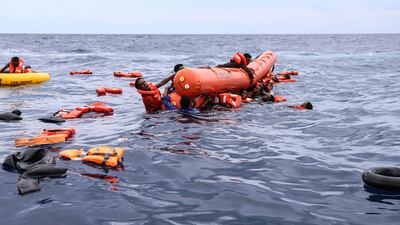
Migrants hold on to the rubber vessel and wait to be rescued. -
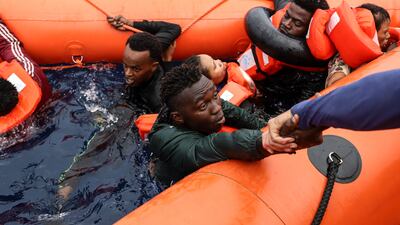
'Sea-Watch 3' is used for rescue operations in the Mediterranean. -
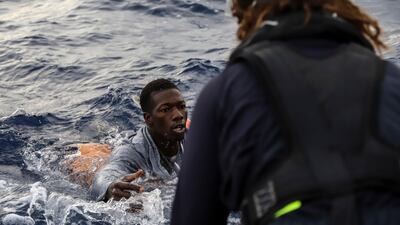
A migrant is rescued from the water. -
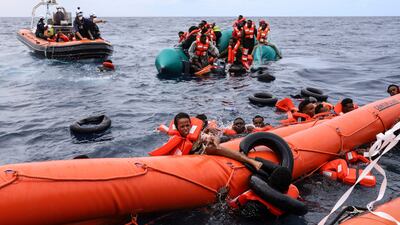
Migrants hold onto a centifloat. -

Migrants wait to board the rescue boat. -

Help is on the way: the migrants spot the 'Sea Watch-3' rescue boat. -

Migrants scramble to get to safety. -
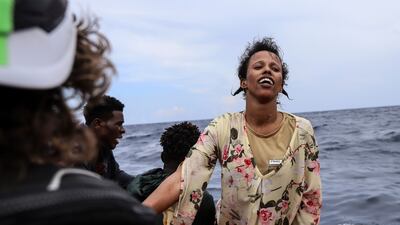
A woman smiles with relief as she sees the rescue team approaching. -
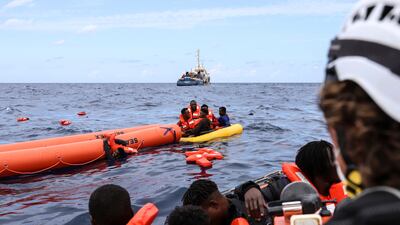
The 'Sea Watch-3' approaches the migrants. -
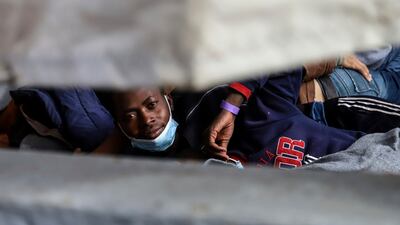
A migrant rests with others on the deck of the 'Sea Watch-3'. -
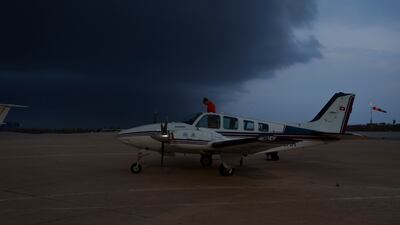
Eike Bretschneider disembarks the 'Seabird' after flying over the Mediterranean Sea, north of Libya. The aircraft documents any breach of human rights against migrants at sea and relays distress cases to nearby ships and authorities. -
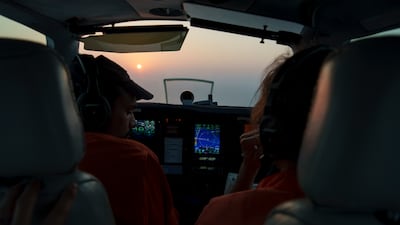
French volunteer pilot Augustin Clot, left, and tactical co-ordinator Jakob Fruehmann of Austria sit in the cockpit of 'Seabird', owned and operated by the German NGO Sea-Watch. -

Migrants who were intercepted crossing the Mediterranean by boat line up behind a fence in Lampedusa, Italy, as they wait to board a ferry to Sicily. -
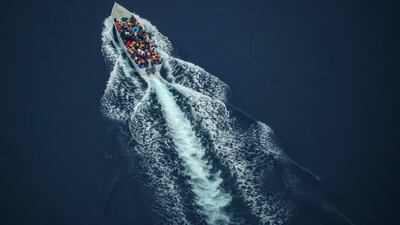
Migrants are crammed in an overcrowded wooden boat, as seen from ‘Seabird’. Despite the risks, many migrants say they would rather die trying to reach Europe than return to Libya. -
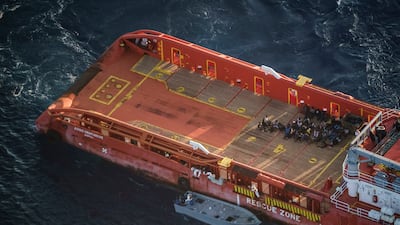
Migrants sit on the deck of the Italian supply vessel ‘Asso Ventinove’ after they were rescued from an unseaworthy boat drifting in the Mediterranean near the Bouri oilfields, north of Libya. -

German volunteers Leona Blankenstein, left, and David Lohmueller aboard 'Seabird', looking for migrant boats in distress. -
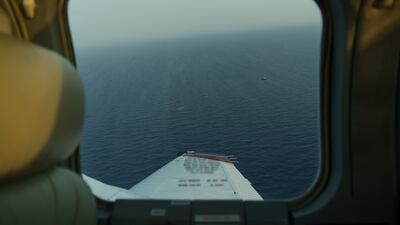
A small migrant boat and a Libyan merchant vessel are visible through the window of the humanitarian aircraft, above the Mediterranean Sea between Libya and Italy.


The Central Mediterranean route has become the world's deadliest migration trail, humanitarian groups say.
Departures surged in 2021, with almost 55,000 migrants reaching Italy in the first 10 months of the year compared to fewer than 30,000 the previous year, Italy says.
The Tunisian Forum for Economic and Social Rights says that over the first three quarters of last year, the coastguard intercepted 19,500 migrants during crossing attempts.
The UN's refugee agency said at least 1,300 disappeared or drowned over that period.

