Lebanon is scrambling to secure money to maintain electricity and fuel subsidies, weeks before the government runs out of cash to cover the payments.
Funding for fuel and electricity subsidies will run out this month and most other subsidies will last until June, caretaker Prime Minister Hassan Diab said on Tuesday.
Efforts are being made to keep the programme going, he said.
"Right now the fuel for the electricity company can last until March-end, but we are making efforts to secure new credit lines to cover needs," Mr Diab told Reuters.
-

An anti-government protester shouts slogans as other demonstrators burn tyres to block the road during a rally against the power cuts, the high cost of living and the low purchasing power of the Lebanese pound, in front of Lebanese Central Bank at Hamra street in Beirut, Lebanon. EPA -

Riot police stands guard in front of Lebanese Central Bank during a rally against the power cuts, the high cost of living and the low purchasing power of the Lebanese pound, at Hamra street in Beirut. EPA -
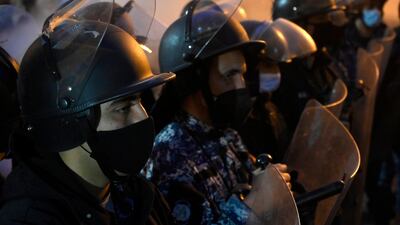
Riot police stands guard in front of Lebanese Central Bank during a rally against the power cuts, the high cost of living and the low purchasing power of the Lebanese pound, at Hamra street in Beirut. EPA -
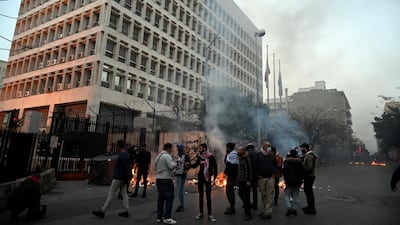
Anti-government protesters burn tyres and rubbish bins to block the road during a rally against the power cuts, the high cost of living and the low purchasing power of the Lebanese pound, in front of Lebanese Central Bank at Hamra street in Beirut. EPA -
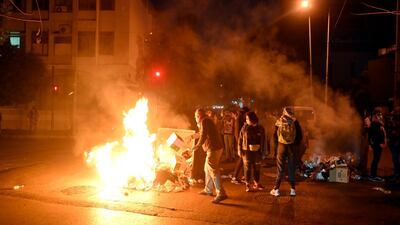
Anti-government protesters burn tyres and rubbish bins to block the main road leading to Hamra street during a rally against the power cuts the high cost of living and the low purchasing power of the Lebanese pound, in Beirut. EPA -
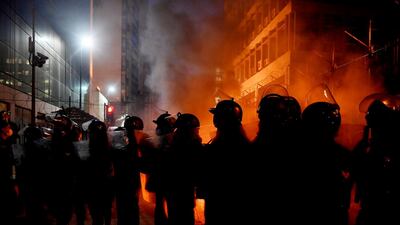
Riot police stands guard in front of Lebanese Central Bank during a rally against the power cuts, the high cost of living and the low purchasing power of the Lebanese pound, at Hamra street in Beirut. EPA -
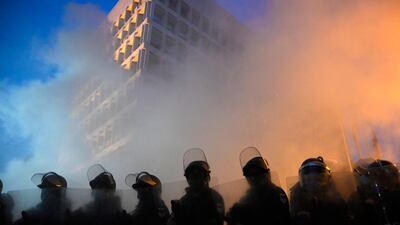
Riot police stands guard in front of Lebanese Central Bank during a rally against the power cuts, the high cost of living and the low purchasing power of the Lebanese pound, at Hamra street in Beirut. EPA


Mr Diab's government is serving in a caretaker capacity since it resigned after the August 4 explosion at Beirut port that destroyed large parts of the capital and killed 200 people.
Lebanon is in the throes of a financial crisis that is posing the biggest threat to its stability since the 1975-1990 civil war.
As dollar inflows dried up, the central bank was drawing on foreign reserves to subsidise three essential commodities – wheat, fuel and medicine – and some basic goods.
Mr Diab told Reuters in December the country could ration reserves left for subsidies to last six months.
"We had feared and warned before of the consequences of continuing to drain reserves," he said on Tuesday
He said he had sent several suggestions for rationing subsidies to parliament since December "but no decision has been taken so far".

