

Lebanon launched a cholera vaccine programme on Saturday as it struggles to contain the fast-spreading disease.
Starting in northern areas, where cases have spread rapidly, the Lebanese health ministry said it hoped to administer 600,000 doses in the next three weeks.
The waterborne disease has spread across the country since the first infections were reported in early October, with more than 3,000 suspected cases so far, the health ministry said.
About a quarter of the cases are in children under the age of five.
-
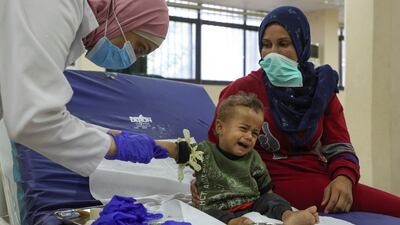
A health worker treats a child who is suspected of having cholera at a field hospital in Bebnine, Akkar district, northern Lebanon. All photos: Reuters -

Lebanon's Ministry of Public Health has reported 130 cases of cholera, taking the total of suspected and confirmed case to 1,225 as of October 28. -
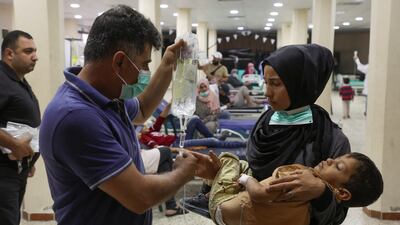
Confirmed cholera cases in Lebanon now stand at 371, with 16 deaths. -
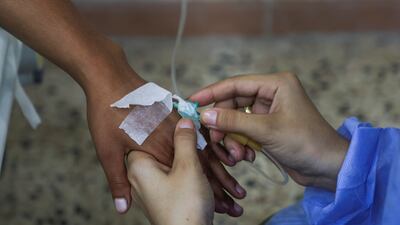
There are 154 cases of cholera in the Lebanese town of Bebnine. -

Lebanon's first case of cholera since 1993 was reported on October 6 in Akkar district, about 20 kilometres north of Tripoli. -
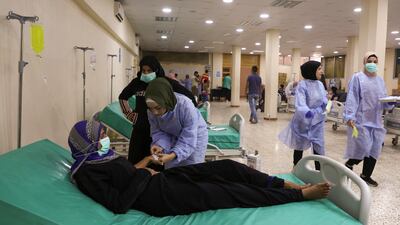
Cholera is an acute diarrhoeal disease that can be treated with oral rehydration but is deadly if left untreated, according to the World Health Organisation. -
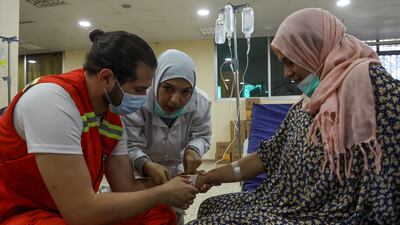
Cholera is spread by unsafe water and food that has been contaminated by human waste. -

Lebanon shares border with Syria, where cases of cholera continue to rise. -
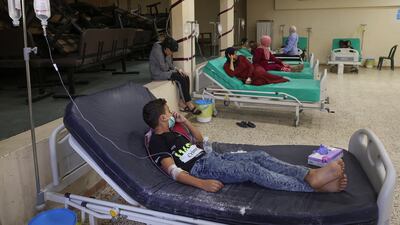
Syria’s cholera outbreak is likely to have started with contaminated water and food irrigated by the Euphrates River, Save the Children says.


A cholera infection is caused by consuming food or water infected with the Vibrio cholerae bacterium. While most cases are mild to moderate, cholera can kill if it is not treated correctly.
The World Health Organisation worked with the Lebanese government to secure the doses, which arrived a few days ago. The WHO has warned that the disease is spreading rapidly.
Lebanon is struggling with an economic crisis that has created fuel and electricity shortages, leaving utilities unable to pump water to households. Most Lebanese now rely on water delivered in tankers by private suppliers, which the state does not test for safety.
Vibrio cholerae bacteria have been found in drinking water, sewer systems and irrigation water across the country.
Firas Abiad, Lebanon’s caretaker health minister, launched the door-to-door vaccination campaign with local NGOs sending teams around the north and east of the country where cholera numbers are higher.
Most cases have been detected in refugee camps, the health ministry said.
The bacterial infection has surged in dozens of countries this year, with outbreaks in Haiti, across the Horn of Africa and the Middle East.
Recently, the WHO announced the temporary suspension of a two-dose vaccination strategy because production could not meet surging demand.
Officials are now administering single doses so that more people can benefit in the short term.

